
By Sheryl Estella, New Energy Skills Manager, New Energy Nexus Philippines
Six months after the Philippines declared a national energy emergency, the rooftop solar installers we work with can get equipment again. Whether a rooftop gets solar now comes down to price, trust and whether a household can pay upfront. That is the main finding of our September follow-up survey of the same installers we surveyed in April, when every one of them named stockouts as their biggest problem.
Filipino households pay the most expensive residential electricity in Southeast Asia, and bills have kept climbing since the Strait of Hormuz effectively closed. Demand for rooftop solar surged, yet Ember estimates installed capacity has reached only about 1% of what the country’s rooftops could support, and a system usually costs more upfront than a household earns in a year. For anyone working on distributed solar elsewhere, the Philippines is a live test of what happens when an energy shock sends households to their rooftops faster than finance and regulation can follow.
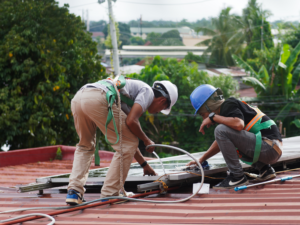
In April, installers’ weekly inquiries had quadrupled. By September, 10KGDC in Bohol, which had 22 projects stuck in April, had cleared its backlog and was installing at least five homes a week. Its operations manager, Zeus Joseph Garcia, described the new problem: “It’s no longer about whether customers are getting solar. It’s about who they should choose, and which brands.”
I hear that line often in my training work, and closing the sale is now harder: some installers convert one inquiry in ten or fewer and lose the rest to cheaper quotes or to households that cannot pay upfront.
At Bangkok Climate Action Week in October, where we co-hosted a session on solar homes with the Global Solar Council, my table on consumers, trust and inclusion kept returning to one point: trust and access are connected, and many households are never reached because the market is built around people who can pay cash.
The Government Service Insurance System’s solar loan for government workers saw 46% of its ₱12.5 billion pool drawn in 27 days, yet some 40 million private-sector workers have no equivalent. If the Social Security System’s planned solar loans let lower-income and self-employed members apply through their installer at the point of sale, solar can reach households without savings.
Trust also depends on quality, as Manilyn Pino of Woodrow Solar in Dipolog explained: “Cheap alone is no longer enough. Serious clients want assurance that the system is reliable and that the company will still be there after installation.”
The installers we spoke to want standards. Yet there is no national accreditation for installers serving households. The DOE’s installer registry is designed for government projects, and registration is voluntary. What matters is whether a two-person firm in a provincial town can meet the standards that emerge.
The skills gap has moved too: 10KGDC struggled to find skilled installers in April, and its hardest hire now is a salesperson who also understands the technical side. Training has to cover the whole business, from system design and honest pricing to customer finance and after-sales service.
Each of these problems runs back to policy. Who can borrow for solar, which equipment gets certified, how installers are trained and accredited, and how utilities treat a household that installs are all being decided now. Since August, utilities cannot require permits or fees for own-use systems that do not export power, and installers will be the first to see whether utilities comply. Yet the people who will carry out these rules are thinly represented where they are drafted, especially outside Metro Manila. Installers meet households at the point of sale, and organized, they can tell regulators what works on a rooftop, where a rule stalls and who is being left out.
Filipino households have made their decision about solar. Whether that 1% grows quickly and reaches families beyond the cities depends on giving the installers who spent six months answering “who should I choose?” a say in how the rules are designed and carried out.
Read the full report here: PH Solar installers Survey (October 2026)