
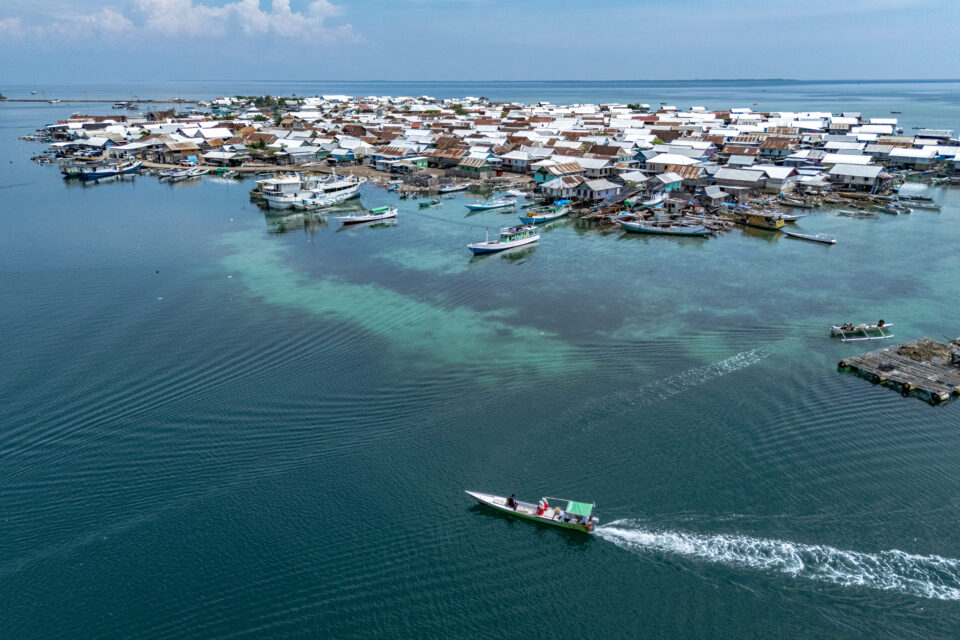
Bungin Island, the second most densely populated island in the world. Photo by Mas Agung Wilis Yudha Bhaskoro
Life on Bungin Island in Indonesia’s Sumbawa Regency can be challenging. With 2,338 people per square kilometer, it’s one of the most densely populated islands in the world. Meanwhile, the residing Bajo Tribe—the world’s largest remaining community of sea nomads—depends almost entirely on the ocean for income. The island has 1,020 to 1,113 active fishers today, all of whom rely on fishing as their main source of livelihood.
But rising fuel prices, unreliable cold storage, and dependence on costly diesel-powered equipment are putting intense financial pressure on the community. Spoilage, long-standing infrastructure gaps, and unstable operating costs are shrinking margins for fishers at a time when every kilogram of catch matters. Globally, weak cold chain systems are known to drive post-harvest losses and depress incomes for small-scale fishers, a challenge documented by the FAO,[1] both of which highlight renewable-powered cold chains as a pathway to higher incomes and reduced losses.
To help address these economic vulnerabilities, New Energy Nexus (NEX) Indonesia partnered with local startups Olat Maras Power and Volto Sea to launch a community-led clean energy pilot focused on strengthening the fishing economy. By introducing solar-powered cold storage units and electric outboard motors, the project aims to reduce losses, stabilize costs, and support the livelihoods of Bungin’s fishers.
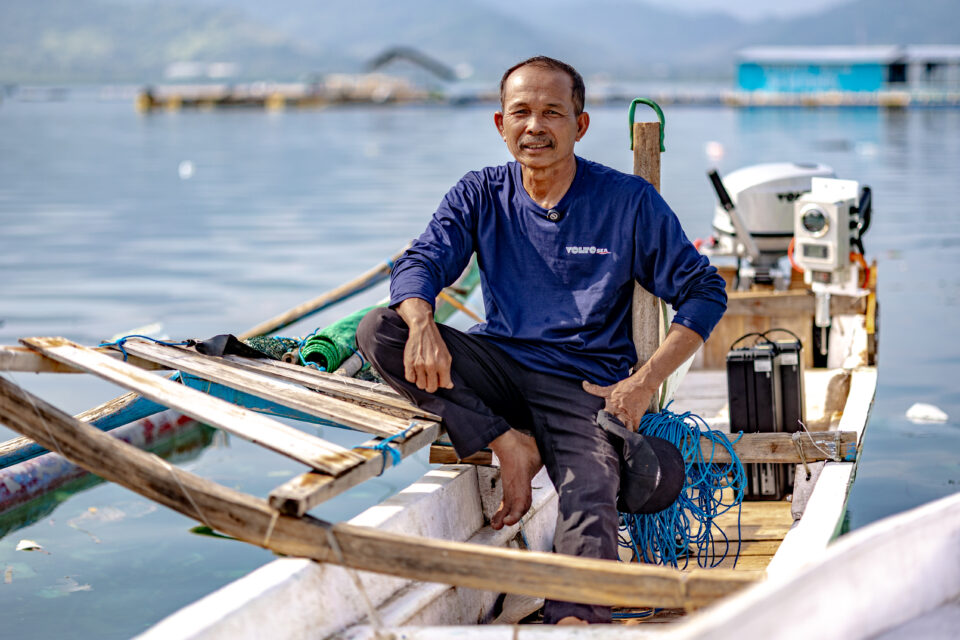
Karyadi has reduced his operational costs by 50% after converting his Lelepa boat from a fossil fuel engine to a Volto Sea electric outboard motor. Photo by Mas Agung Wilis Yudha Bhaskoro
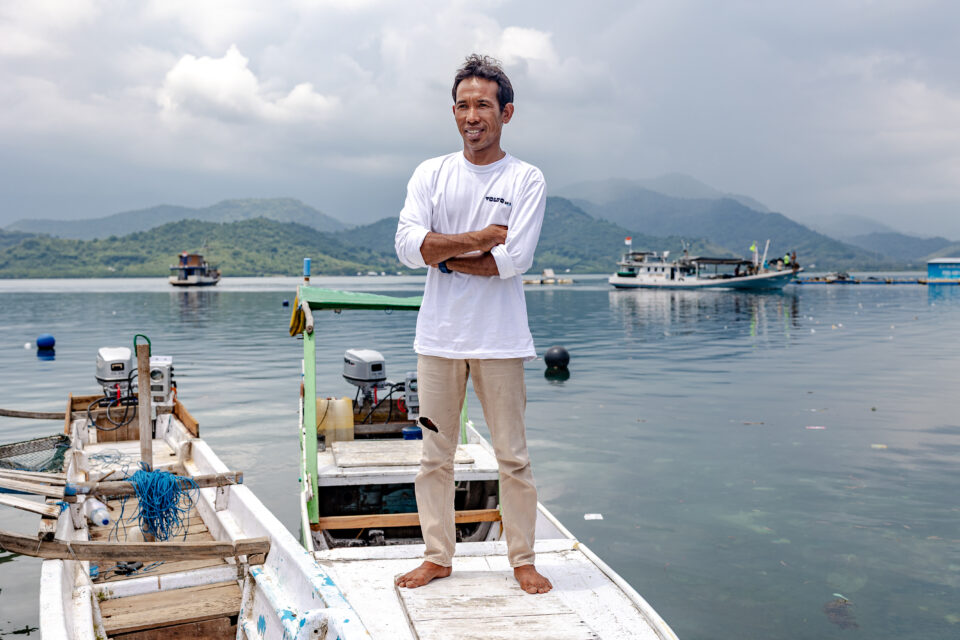
Ismail, one of the local fishers using the Volto Sea electric outboard motor. Photo by Mas Agung Wilis Yudha Bhaskoro
This pilot is part of a larger NEX Indonesia-led initiative supporting Indonesia’s coastal and marine sectors through community outreach, capacity building, and scalable clean energy innovations that directly improve local economic conditions.
“We’ve seen firsthand how much loss fisherfolks experience due to inadequate storage,” said Nova Aryanto, CEO of Olat Maras Power, which deployed 12 solar-powered cold storage units on the island. “Our solar cold storage helps maintain catch quality and cuts daily operating costs. Fishers can save up to IDR 30 million and reduce up to 12.5 tons of CO₂ emissions annually.”
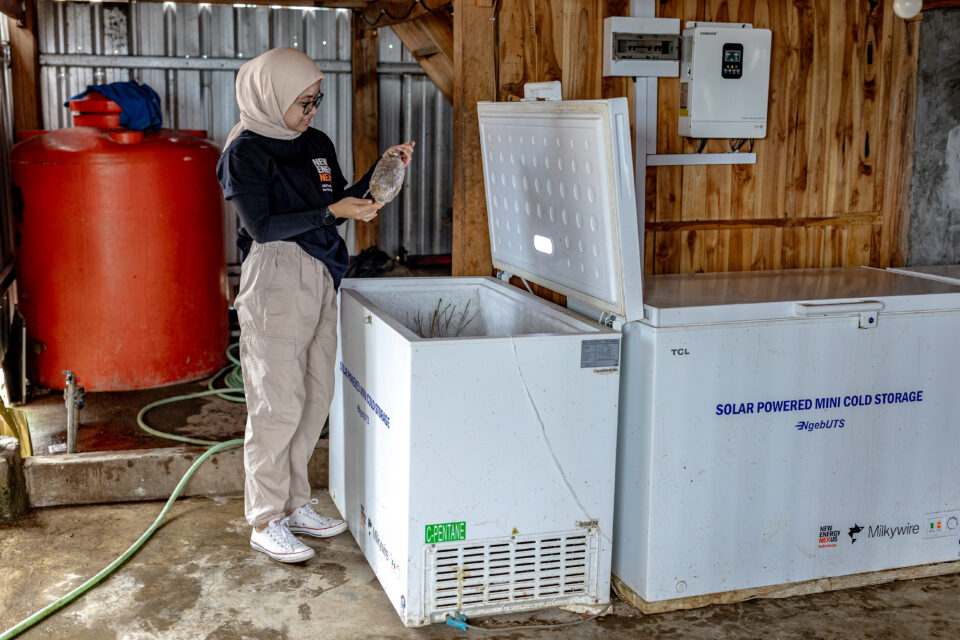
Olat Maras Power has converted the cold storage unit to be powered by three energy sources: grid electricity, batteries, and solar panels. Photo by Mas Agung Wilis Yudha Bhaskoro
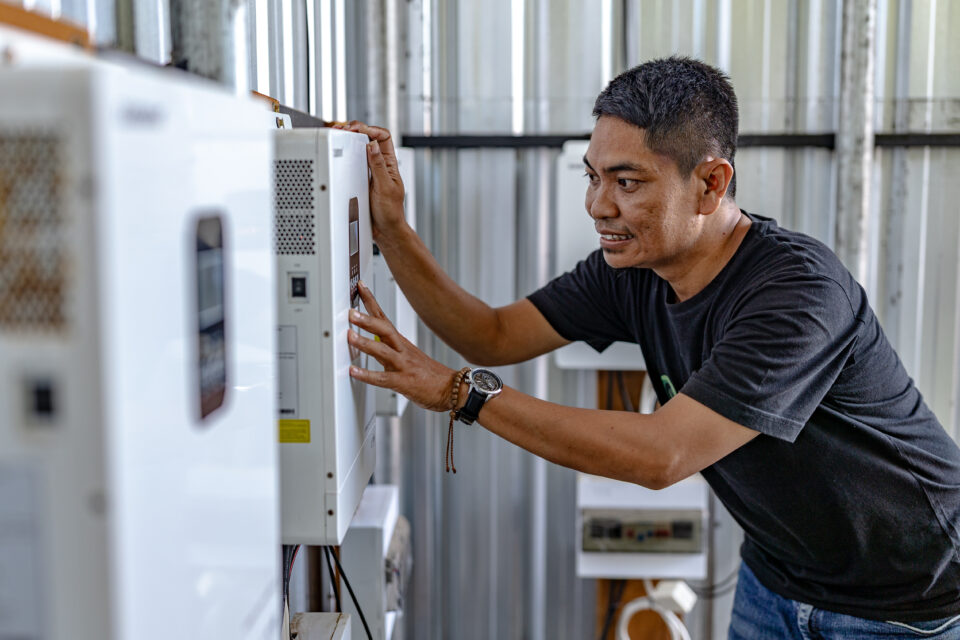
Nova Aryanto, CEO of Olat Maras Power, collaborates with Volto Sea to establish a battery charging station for electric outboard motors on Bungin Island. Photo by Mas Agung Wilis Yudha Bhaskoro
Previously, fish collectors on Bungin were losing up to 1.2 tons of fish during the peak season due to spoilage, putting a major financial burden on families whose income depends on selling each day’s catch. With solar-powered cold storage, catch quality is preserved longer, waste is reduced, and profits become more predictable.
Meanwhile, Volto Sea, a Bali-based startup that develops clean maritime technology, introduced electric outboard motors to replace expensive fuel-powered engines.
“The sea is the heartbeat of life in Bungin,” said Volto Sea CEO Yindy Kurniawan. “By replacing fossil fuel engines with electric motors, we’re not just offering innovation—we’re honoring the maritime way of life and supporting a more sustainable future.”
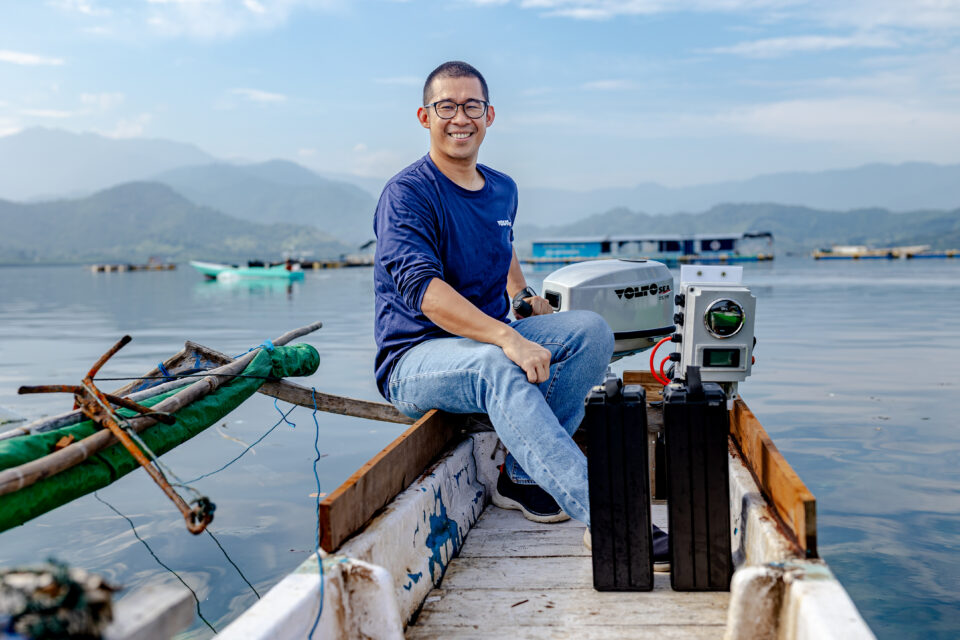
Yindy Kurniawan, CEO of Volto Sea, developed the electric outboard motor for Lelepa boats through a collaboration with New Energy Nexus. Photo by Mas Agung Wilis Yudha Bhaskoro
Switching to electric motors offers fishers major financial relief, with potential annual savings of up to IDR 37 million (US$2,225) per fisher.
The pilot is not only about introducing hardware. For the transition to work, communities must be aware of the benefits, equipped to use the technology, and actively involved in the process. With support from Manussa Consulting, the project began with a feasibility study involving more than 50 respondents and 22 stakeholders, including fishers, aquaculture operators, small businesses, and village leaders. The study highlighted high energy costs, low awareness of alternatives, and infrastructure limitations as key barriers holding communities back.
To address these constraints, the team rolled out workshops, product demonstrations, and public awareness activities. A hybrid-powered charging hub is also being piloted to provide accessible, renewable energy for both cold storage units and electric motors, reducing long-term dependence on costly fossil fuels.
“Introducing electric boats and solar-powered cold storage is a timely response to the economic vulnerabilities and climate crisis impacting Indonesia’s coastal regions,” said Kevin Felix, Senior Program Associate at New Energy Nexus Indonesia. “Together with a hybrid charging hub, these technologies can drive real change, building resilience and improving quality of life for fishing communities.”
For Bungin’s residents, the impact is already tangible.
“We welcome this program as a first step toward building an energy-independent and environmentally friendly coastal village,” said Jaelani, Head of Bungin Village. “This isn’t just about technology—it’s about securing the future for our children and ensuring the long-term sustainability of our local economy.”

Pilot test of Volto Sea’s electric outboard motor. The boat can carry 2–3 people. Photo by Mas Agung Wilis Yudha Bhaskoro
Looking ahead, NEX Indonesia and its partners are developing pathways to help communities adopt these solutions at scale. Flexible financing schemes, youth engagement programs, and collaborations with government agencies are all in the works to expand this model to other coastal areas across Sumbawa and beyond.
As the sun rises over the waters of Sumbawa, so does the hope for a clean energy future: powered by local innovation, supported by global partnerships, and grounded in the everyday lives of its many island communities.
References:
[1] Improved post-harvest practices for fish loss and waste reduction | FAO; and Hidden Harvest: The Global Contribution of Capture Fisheries | World Bank