For countries already struggling with high electricity costs, unreliable grids, and dependence on imported fossil fuels, the oil and gas crisis is deepening existing vulnerabilities. The United Nations recently downgraded global growth forecasts amid the ongoing Middle East conflict, warning that rising fuel and food prices could push an additional 45 million people into acute food insecurity.
But alongside the crisis, another trend is accelerating just as quickly.
Across markets in the Global South, households and businesses are increasingly turning to more reliable, local energy: rooftop solar, battery storage, and decentralized energy systems. And it’s not because of ideology but because, economically, it makes the most sense.
At New Energy Nexus (NEX), we’re seeing entrepreneurs respond in real time: building businesses that help communities lower costs, stabilizing energy access, and gaining greater control over their energy future.
Our recent webinar, Clean Energy SMEs (small and medium enterprises) vs. the Energy Crisis, focuses on the successes, challenges, and impacts of this shift, drawing on insights from ecosystem leaders in our network.
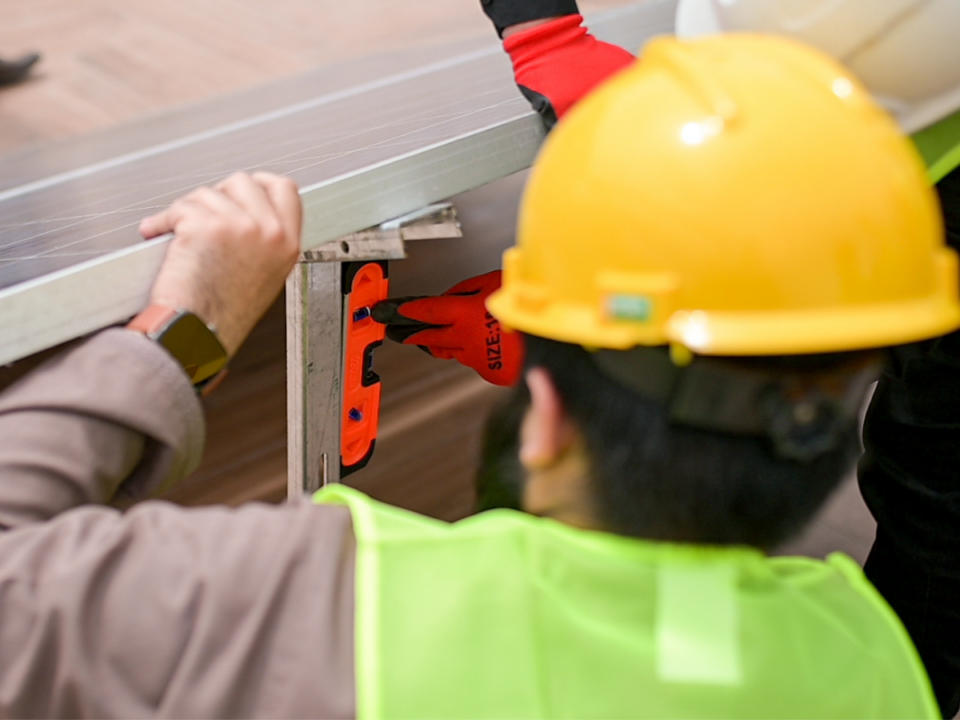
Photo from a New Energy Skills in-person solar installation training in Islamabad, Pakistan.
Pakistan: A citizen-led solar revolution
Pakistan may be one of the clearest examples of how an economic crisis can rapidly accelerate clean energy adoption.
Fossil fuels accounted for 79% of Pakistan’s primary energy supply in FY 2024, with over 40% of that fossil fuel demand met through imports. When global fuel prices surged after 2022, electricity tariffs rose by 155% between 2021 and 2024, while fossil fuel imports consumed 10.6% of the GDP in FY24.
That’s when citizens took matters into their own hands.
“Pakistan is often described as ground zero for the citizen solar revolution… it was a genuine market response to an ongoing crisis,” said Aamna Khaqan, NEX’s Accelerator Manager in Pakistan. “[The country] was essentially cornered into the solar revolution. It then actively chose it.”
According to a Renewables First report, distributed solar generation grew from nearly zero in FY17 to the equivalent of 46% of grid sales by FY25. By 2026, Pakistan had cumulatively imported more than 50 GW of solar PV, helping avoid an estimated US$12 billion in oil and gas imports and contributing to a 40% drop in fossil fuel imports between 2022 and 2024.
The transition, however, has also exposed major financing and equity gaps. With limited access to loans and formal financing products, many lower-income households remain locked out of the transition despite rising demand.
As a result, more than 7.3 million households have adopted solar since 2023, yet that still represents less than one-fifth of Pakistani households.
“[The consumers] absorb the technology risk, and they also have to navigate policy shifts,” Khaqan said. “So the risk does need to be redistributed… [through] blended finance structures, first loss guarantees, or different ways that the capital can be accessed.”
To help close these gaps, New Energy Nexus is working with Renewables First to strengthen Pakistan’s clean energy ecosystem through CLIP (Climate Innovation Pakistan) and New Energy Skills. CLIP supports climate startups in validating their products, testing solutions with real customers, and refining their go-to-market strategies, while also connecting them with mentors, pilots, and investors. Meanwhile, New Energy Skills complements this by expanding access to practical, job-ready training for installers and technicians, building the workforce needed to deliver solar deployment at scale.
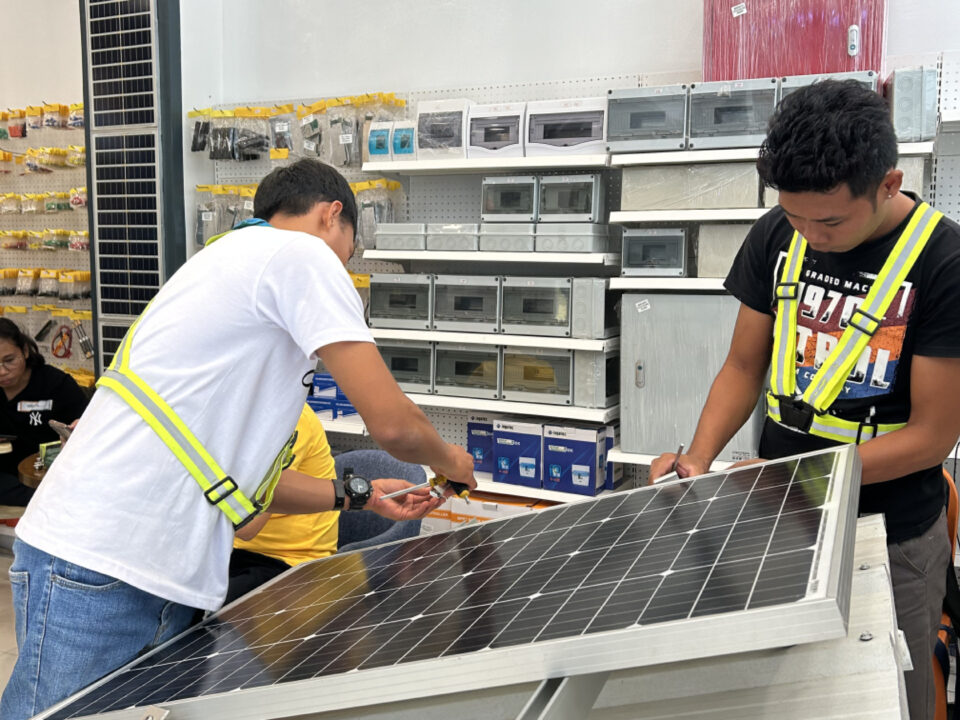
Photo from a New Energy Skills solar training session in the Philippines.
The Philippines: Energy resilience across islands
In the Philippines, the energy crisis is amplified by geography. As an archipelago with fragmented island grids, disruptions in fuel prices and electricity supply ripple quickly across communities.
Rising electricity costs and concerns over energy security are now accelerating demand for distributed solar systems nationwide.
“People are not shifting to solar because it’s trendy,” said Brenda Valerio, NEX Philippines Country Director. “They’re shifting because they want lower electricity costs, more predictable expenses, and greater control over their energy supply.”
In a recent NEX Philippines survey, 28 solar installers reported an average 582% increase in customer inquiries compared to pre-crisis levels. But they are also facing significant bottlenecks as they struggle to meet this surge in demand. Installers noted widespread supply chain disruptions, delayed deliveries, workforce shortages, and increased market pressure from inexperienced new entrants.
The country’s decentralized geography compounds those challenges. Smaller solar companies operating outside major urban centers often struggle to access inventory, skilled labor, and financing as larger suppliers absorb the limited supply.
But as Valerio notes, the opportunity window exists. The question now is whether the country can build the workforce, the financing systems, and the local ecosystems before that window closes.
“If we actually do this right, the Philippines will not only be responding to the energy crisis that we are experiencing right now. We can actually use it as a catalyst to build a more resilient, inclusive, and decentralized energy future,” Valerio said.
With that in mind, NEX Philippines has supported the formation of regional and subregional solar trade associations, helping smaller installers coordinate workforce development, procurement, and policy engagement at the local level. It also has its own New Energy Skills program, training these installers to build quality, scalable solar careers and businesses.
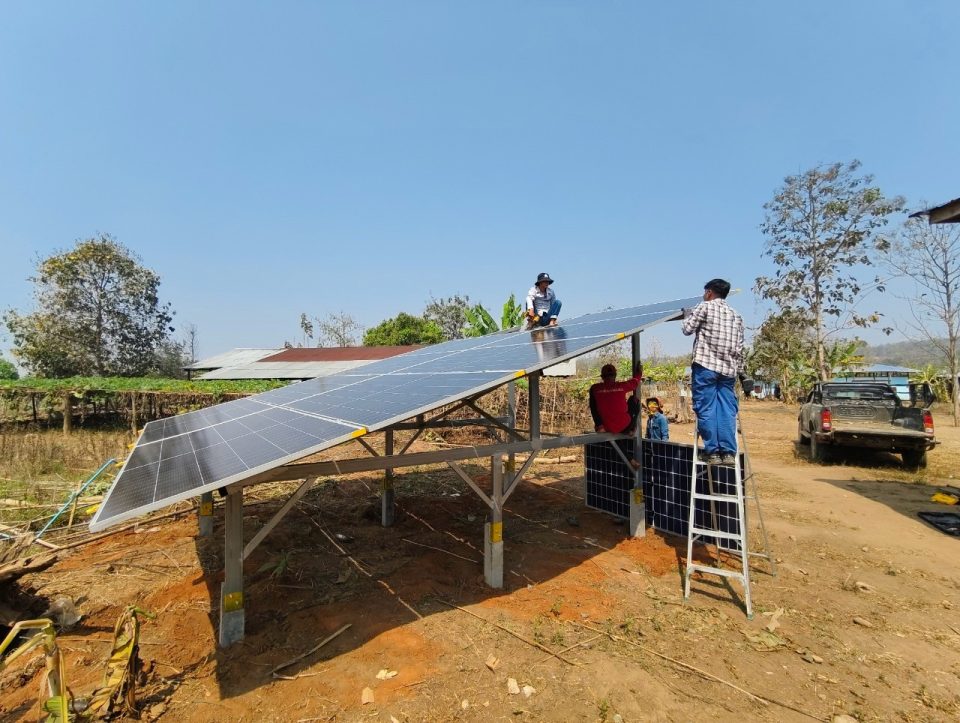
Solar installation at Maw Poe Kay High School. Photo from SunSawang
Thailand: A solar workforce stepping up to rising demand
Thailand’s clean energy transition is being shaped by rising LNG price volatility, government incentives, and growing demand for rooftop solar from both households and businesses.
In response to energy price pressures, the Thai government introduced tax exemptions for rooftop solar, expanded feed-in tariff quotas, and launched soft-loan programs to support solar adoption. The result has been a rapid nationwide increase in demand.
“They created a boom in demand for rooftop solar nationwide,” said Kotchakorn (Build) Khwamchareon, Head of Programs at NEX Thailand.
But as installations rise, so do concerns around quality and workforce capacity. A NEX Thailand survey in April for an upcoming solar installation training program in Phuket drew three to four times the inquiries it would have received before the energy crisis.
“The market really sees the demand,” Khwamchareon said. “We really need more people joining the entrepreneur setting for the solar workforce.”
To help address that gap, NEX Thailand has already trained 250 solar entrepreneurs through its SolarStep program, combining technical and business training. The organization is now partnering with Thailand’s Ministry of Labor to launch a train-the-trainer initiative to rapidly expand the country’s qualified solar workforce.
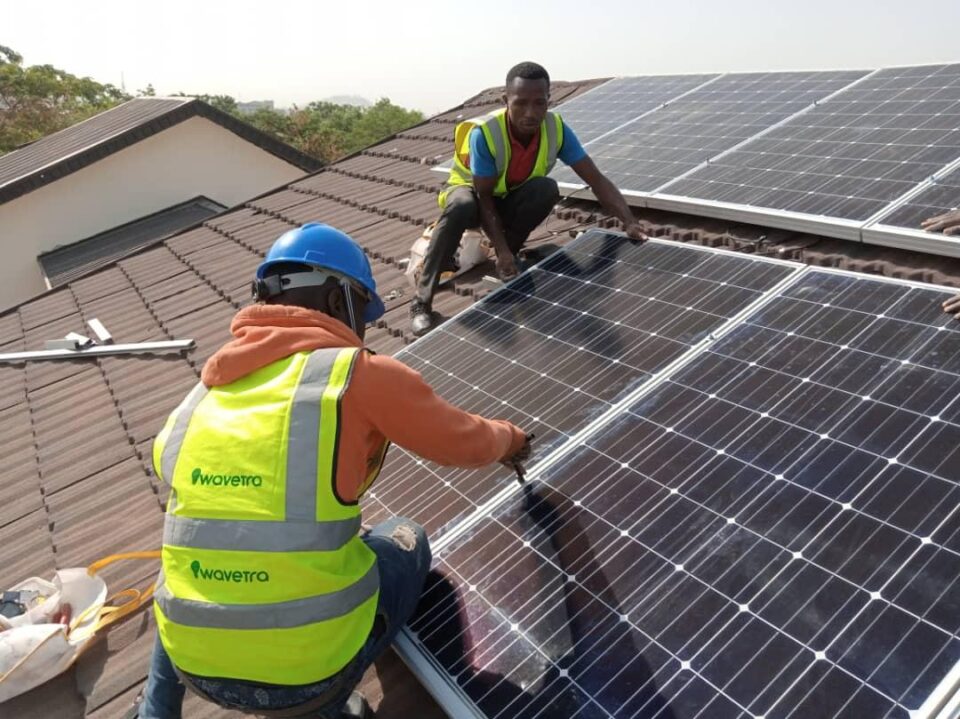
Solar installation in Nigeria.
Nigeria: SMEs taking control of energy generation
In Nigeria, clean energy is increasingly becoming a business survival strategy. The country faces one of the world’s largest energy access gaps, with 90 million people lacking access to electricity and many businesses relying on expensive self-generation to operate.
Meanwhile, Nigerian SMEs spend a significant share of their operating costs on diesel for generators, while commercial areas regularly experience daily outages of 12–18 hours.
“We’re not competing with the grid,” said Ifeoma Malo, CEO and Co-founder of Clean Technology Hub, NEX’s partner in Nigeria. “We’re actually competing with diesel generators.”
As electricity costs rise, businesses are increasingly turning to solar and decentralized clean energy systems to stabilize operations and reduce fuel expenses.
“SMEs are not waiting for the grid. They are building around it,” Malo said. “People now realize… they have absolute control over how they generate [energy].”
Through PREPARED (Programme for Renewable Energy Preparedness, Acceleration & Readiness for Entrepreneurs and Distributors), NEX and Clean Technology Hub are supporting Nigerian clean energy entrepreneurs with financing readiness, market access, technical assistance, and investor connections.
The program has already engaged with 47 clean energy startups and helped power over 9,400 households. By 2028, the initiative aims to reach an estimated 50,000 households with clean power.
Building the ecosystems behind the transition
In these four countries, entrepreneurs are approaching the transition in different ways. But the requisites for scaling their solutions are similar: financing systems, workforce development, policy coordination, supply chains, and local ecosystem support that enable clean energy businesses to grow sustainably.
That is the work New Energy Nexus is focused on globally. NEX is helping build ecosystems in 13 countries worldwide, enabling entrepreneurs to scale solutions at a national and even global scale.
“We have wonderful SMEs and entrepreneurs on the ground that are moving faster than the incumbents.” NEX CEO Andrew Chang said during the webinar. “They’re more agile, they can get to work faster. They can really have an immediate impact in the communities that they’re operating in.”
Whether you’re an entrepreneur ready to scale your solutions or a funder wanting to get more involved in the transition, learn more about our programs here.
You can also listen to the full webinar recording below.