
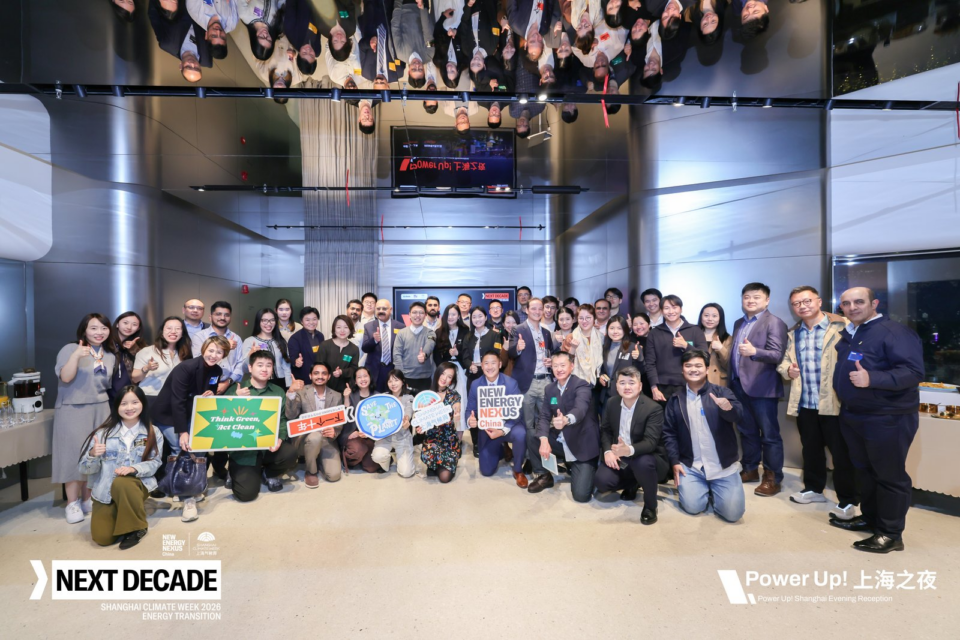
Group shot of New Energy Nexus and the delegations participating in Shanghai Climate Week 2026.
China’s clean energy transition is accelerating at a scale few countries have achieved before. In 2025 alone, the country added more than 430 GW of new wind and solar capacity, pushing renewables to over 60% of its total installed power generation capacity.
But the significance of that progress extends far beyond China itself. As climate pressures intensify across Asia, the technologies, financing models, and industry expertise emerging from China’s transition could play a major role in accelerating clean energy adoption across the region and beyond.
That urgency shaped Shanghai Climate Week 2026, where New Energy Nexus (NEX) China organized six energy transition events under the banner ‘NEXT DECADE:’ convening delegates, companies, policymakers, and ecosystem builders from across Asia to explore how deeper regional collaboration can accelerate the transition in the immediate future.
A delegation of 40 representatives from Thailand, Pakistan and Indonesia joined in the events, led by the Just Transition Initiative (JUTI), with whom we partnered for Bangkok Climate Action Week, and Renewables First, which enables our work with entrepreneurs in Pakistan.
Here are some of the biggest insights that emerged from the week:
Collaboration is key to a faster energy transition
One theme surfaced repeatedly across nearly every event: technology is advancing faster than the mechanisms for cross-border collaboration.
At the Power Up! Shanghai Evening reception (April 21), delegates from Thailand, Indonesia, and Pakistan spoke directly with Chinese companies, including LONGi Green Energy and Jinko Solar, about opportunities to expand renewable energy deployment across Asia. The discussions were practical, focusing on financing, market access, implementation challenges, and local adaptation rather than broad climate ambition alone.
Delegates consistently highlighted growing interest from Chinese companies in working more closely with markets across Southeast and South Asia. Many also expressed optimism about concrete next steps following the week’s exchanges, particularly around technology deployment, industrial cooperation, and future business partnerships.
“China’s role in the Global South’s energy transition is moving from being a technology supplier to shaping the foundations of the next energy economy,” said Zeeshan Ashfaq, CEO at Renewables First. “This is becoming urgent as demand for energy storage accelerates and begins to define how far distributed, solar-led systems can actually scale, with Pakistan now moving from a solar rush into an emerging battery rush.”
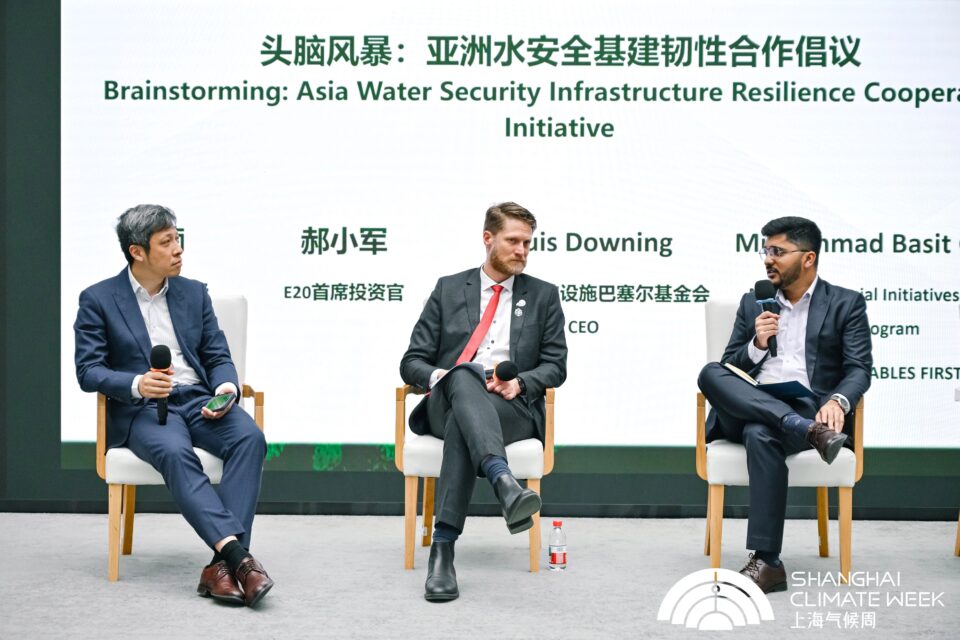
Muhammad Basit Ghauri, Special Initiatives Manager at Renewables First, speaks at a panel.
Our takeaway: The appetite for collaboration already exists. What is needed now are stronger platforms, trusted interlocutors, strong collaborative networks, and sustained engagement to turn conversations into concrete collaboration.
China’s energy transition experience is becoming globally relevant
The Green Practices in Suzhou exchange (April 22) offered international delegates a closer look at how China is implementing green transformation at the city and industrial park level.
The delegates explored distributed renewable energy systems, zero-carbon industrial parks, and integrated planning models alongside Chinese industry leaders and researchers. What stood out was not only the scale of China’s implementation, but how rapidly lessons from those projects could apply elsewhere in Asia.
Delegates were particularly interested in how Chinese companies combine policy coordination, industrial strategy, and infrastructure to accelerate adoption. The discussions also surfaced growing opportunities for joint pilot projects and localized partnerships in Southeast and South Asia.
China’s experience driving industrial decarbonization as a business strategy, with cost savings, operational efficiency, resilience and innovation at its heart, resonated with participants from other countries.
Our takeaway: China’s role in the transition is evolving from manufacturer to ecosystem partner, with an impact that transcends geographical boundaries.
Distributed renewable energy is becoming central to resilience
At the forum on distributed renewable energy cooperation in Suzhou, discussions focused heavily on resilience, particularly in rapidly growing economies vulnerable to climate and grid instability.
Speakers from China, Thailand, Pakistan, and across Southeast Asia emphasized that distributed energy systems are no longer niche technologies. They are increasingly becoming core infrastructure for climate adaptation, energy access, and economic resilience.
Conversations across Southeast Asia highlighted growing interest in adapting China’s experience with distributed renewable energy to local contexts, particularly in areas where centralized infrastructure remains limited or vulnerable.
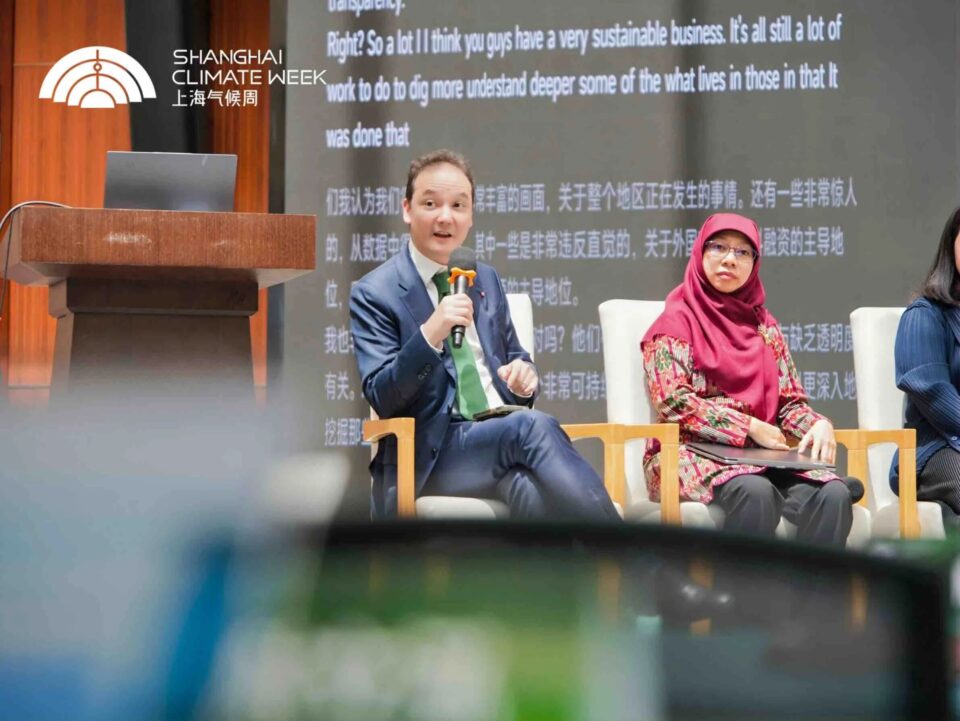
Leo Horn-Phathanothai, CEO of JUTI, speaks at a panel.
Our takeaway: Energy resilience is now inseparable from energy transition planning.
Climate finance needs stronger regional coordination
Across multiple forums, from the insurance-focused Chinese Technology, Global Capital, Insuring a Greener Future session to the Turning Green into Gold dialogue, one issue repeatedly surfaced: financing structures still lag behind climate innovation.
Participants discussed how insurance systems, green finance, blended capital, and standardized investment frameworks will be essential for scaling infrastructure and emerging technologies across Asia.
The conversations also reflected a broader shift in mindset. Climate finance is increasingly viewed not only as risk mitigation, but also as a tool for industrial transformation and regional cooperation.
Delegates from Southeast Asia noted strong interest in building financial partnerships that connect local market demand with Chinese manufacturing and technology capacity.
Our takeaway: Accelerating the energy transition will require financial systems that move as quickly and collaboratively as the technologies themselves.
AI and intelligent manufacturing are reshaping the transition
Several events highlighted how AI and intelligent systems are becoming deeply integrated into the clean energy economy.
At the Green Engine Accelerator 2026 launch and the Climate Lighthouse Forum on intelligent manufacturing, startups and industry leaders showcased solutions spanning AI-powered energy systems, CCUS, green fuels, hydrogen, and advanced manufacturing.
The conversations reflected a growing convergence between digital infrastructure and clean energy infrastructure. Rather than operating as separate industries, participants increasingly framed AI, automation, and energy systems as interconnected drivers of industrial decarbonization.
For many international delegates, this also reinforced China’s growing role in manufacturing clean energy hardware while increasingly shaping next-generation energy ecosystems.
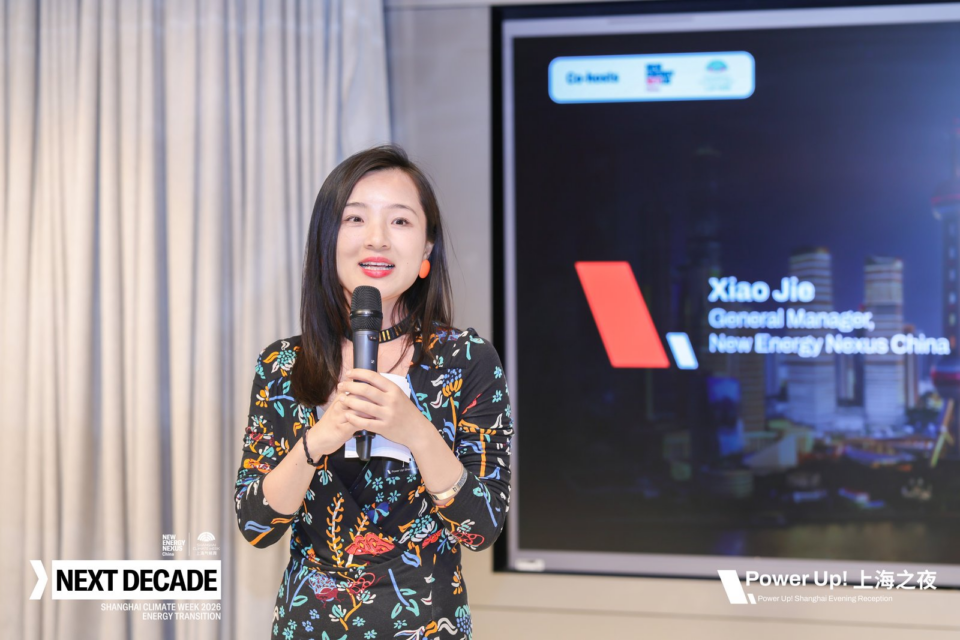
Jie Xiao, General Manager of New Energy Nexus China, speaks during one of the events.
Our takeaway: The convergence of AI, digital infrastructure, and clean energy is now becoming a defining force in how industrial decarbonization will scale across Asia and beyond.
Cities are emerging as climate collaboration hubs
One of the strongest signals from the week came from the discussions around city-led climate cooperation.
At the Climate Week Seasons Connect+ and the Opening Ceremony Roundtable closed-door meetings, leaders connected initiatives from Shanghai, Bangkok, London, and other cities to explore how local climate action platforms can drive global collaboration.
The emphasis throughout these sessions was pragmatic: cities can often move faster than national systems, especially when it comes to piloting solutions, convening industries, and building partnerships.
Our takeaway: These discussions reinforce the importance of regional climate ecosystems that connect entrepreneurs, corporates, governments, and investors across borders rather than operating in isolation.
What comes next
Shanghai Climate Week 2026 showed that Asia’s clean energy transition is entering a new phase. The technologies exist. Manufacturing capacity exists. Capital and policy momentum are growing. The challenge now is building the connective tissue that allows innovation, investment, and implementation to move faster across markets.
That is where New Energy Nexus China continues to play a critical role.
For nearly a decade, NEX China has been running accelerator programs, facilitating matchmaking between founders and funders, and building strong relationships both within and outside the country.
Shanghai Climate Week was never meant to be a one-off exchange, but part of a longer effort to build sustained regional collaboration platforms across Asia’s energy transition ecosystem. In the months ahead, NEX China will continue advancing these connections through regional initiatives, including the Intelligent Manufacturing Expo Southeast Asia 2026 and Bangkok Climate Action Week 2026, where many of the conversations started in Shanghai are expected to evolve into deeper partnerships and concrete projects.
Learn more about our programs in China at newenergynexus.cn.