
Story
China
Pakistan
At Shanghai Climate Week, Asia is quietly comparing notes on clean energy

By Jasper (Shaojie) Shen, New Energy Nexus China

1

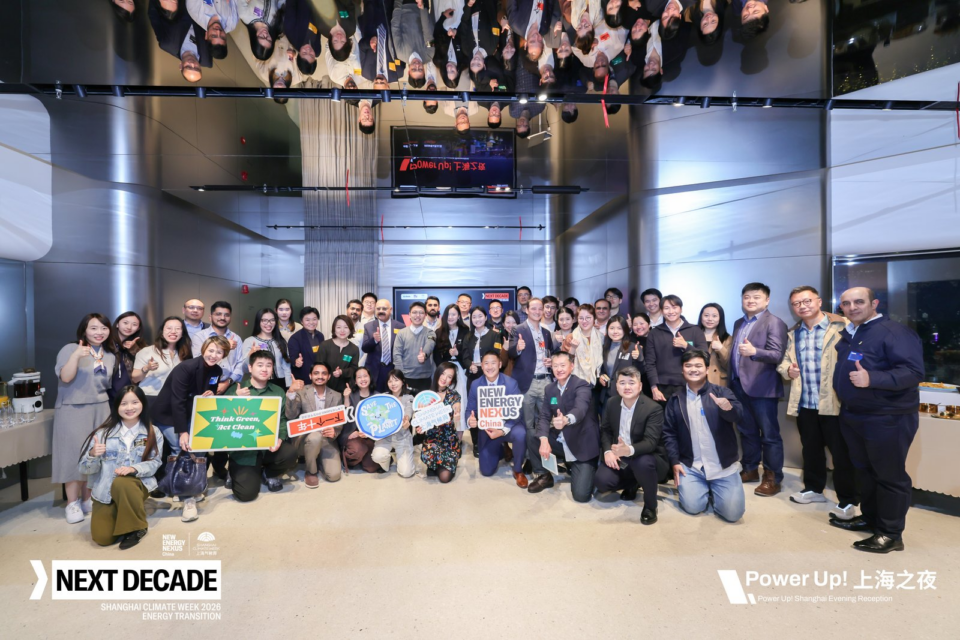
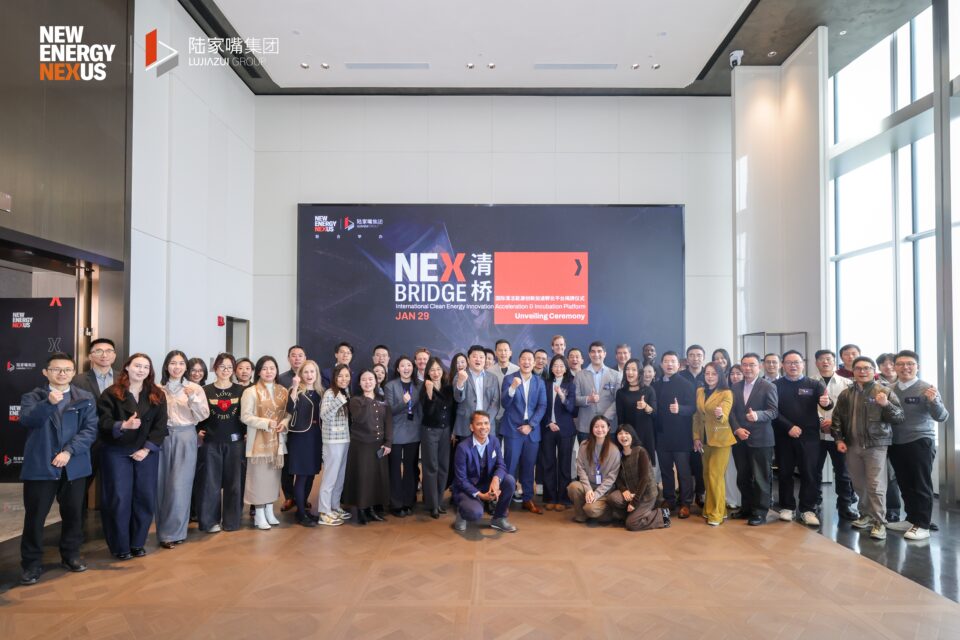
Group shot of our delegation at Shanghai Climate Week 2026.

Shanghai Climate Week 2026 was a pivotal moment for regional collaboration, and New Energy Nexus China played a major role this year. We hosted around 40 members of international delegations from Thailand, Pakistan, Indonesia, Singapore, South Korea, and Japan, and supported a wide range of coordination work.

Looking back now, it’s interesting to remember that this project actually started as a very small idea in mid-March, seeded during conversations with our partners in Thailand (JUTI) and Pakistan (Renewables First).

Both organizations had a strong interest off the bat. They wanted to bring together think tanks, government representatives, and business leaders to better understand China’s energy transition practices.

As preparations moved forward, the delegation lists kept growing. Even one week before the event started, we were still receiving emails asking, “Can we still add one more person?” or “Is it still possible for me to join?” Eventually, many sessions filled up, and we had to close registration.

That process made one thing very clear: the level of curiosity around China’s clean energy transition is high, and growing.

As Leo Horn-Phathanothai, CEO of JUTI, said: “No doubt that China has shown a welcoming attitude and an openness to doing business with the world.”

At the same time, however, I could still feel that there are bottlenecks in cross-border collaboration. One of the barriers I observed was trust, which isn’t solved by new tech or market research but by transparent communication and cooperation.

In many ways, Shanghai Climate Week felt like a process of building trust across different countries and different contexts. Across multiple events we co-hosted and participated in, I’ve noted these insights:

Meaningful conversations bring significant value.

One of my strongest observations was that simply getting people from different countries to sit together and talk meaningfully is already extremely valuable.

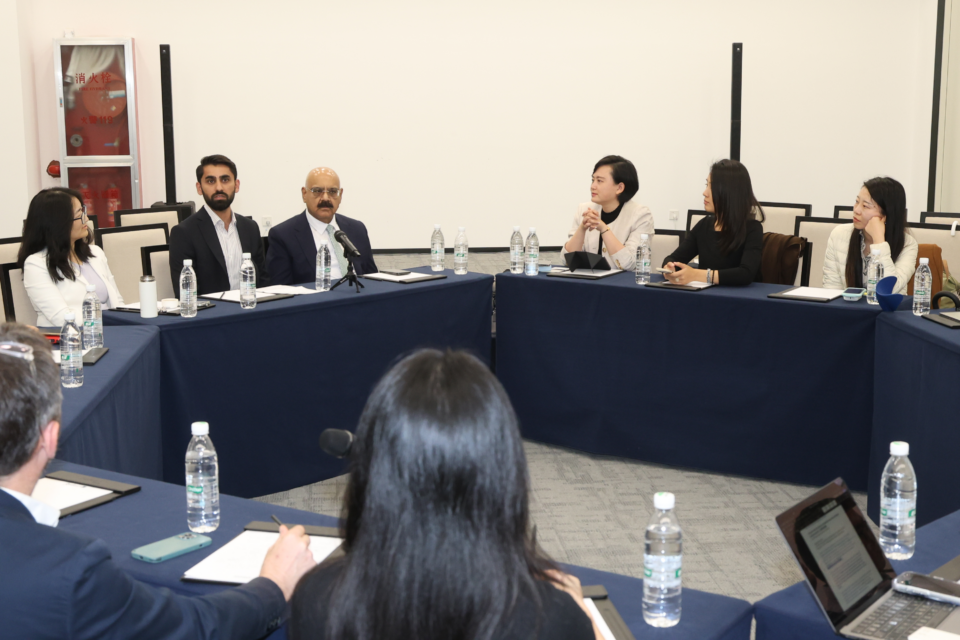
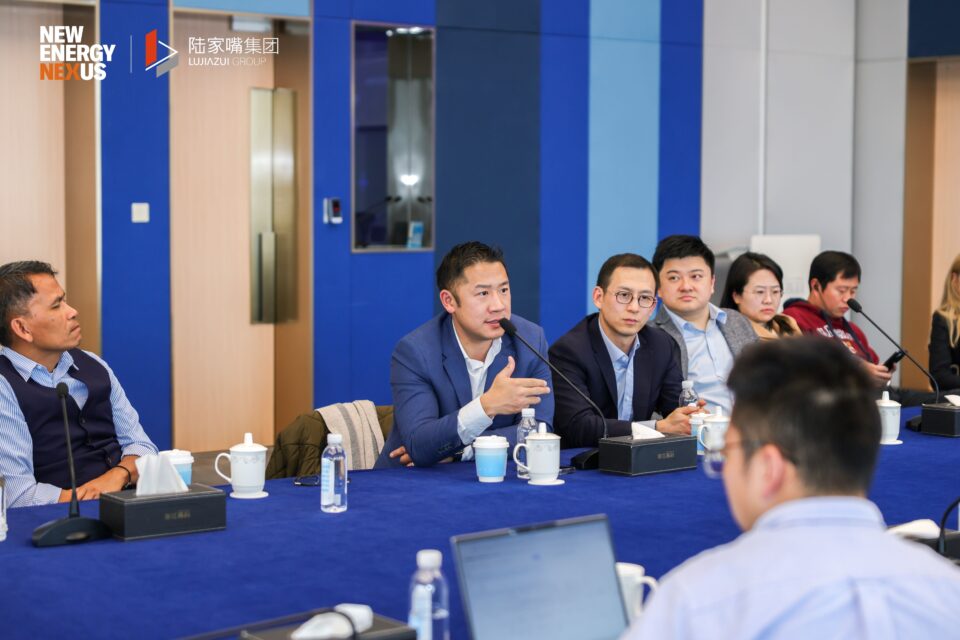
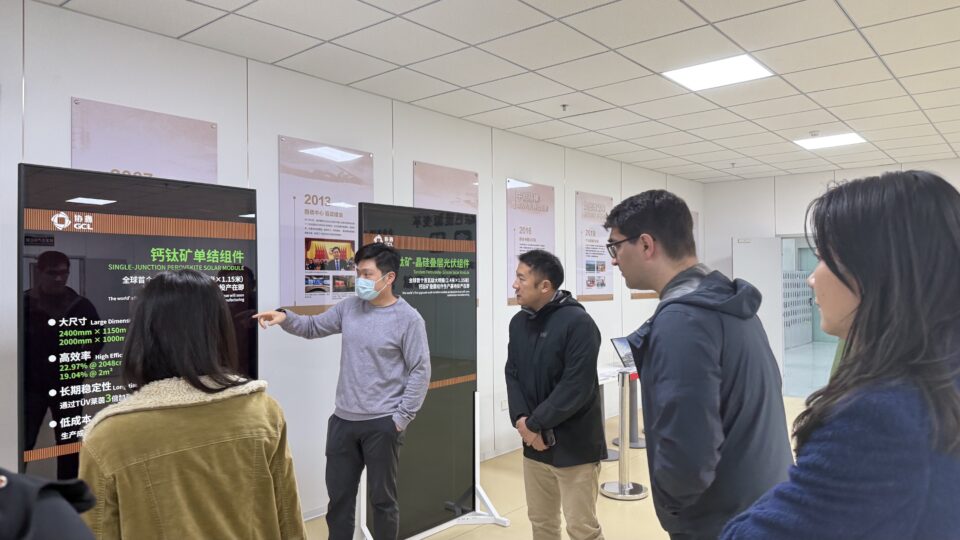
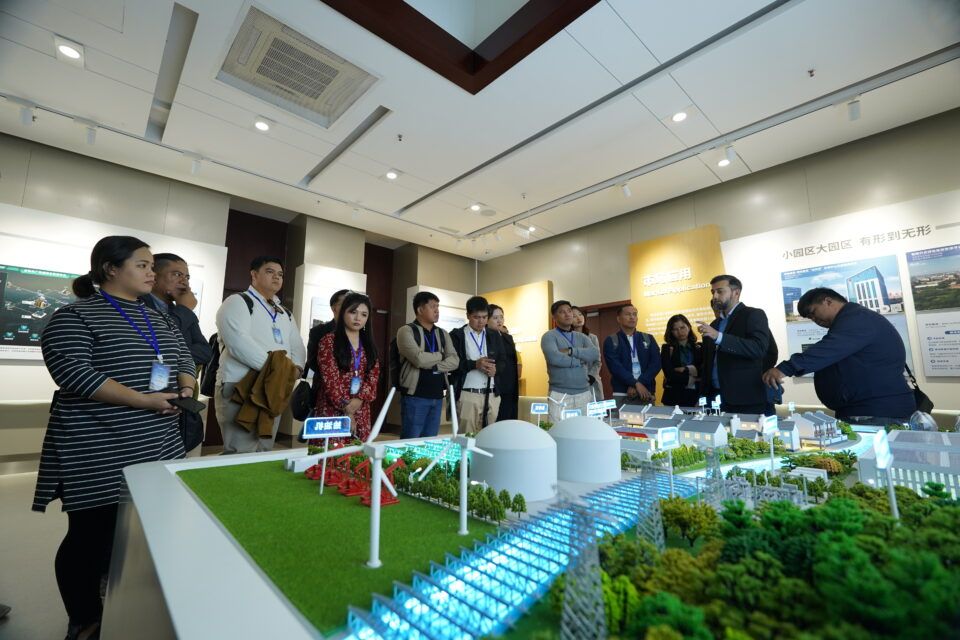
During our visit to Suzhou Industrial Park, we organized a closed-door dialogue on low-carbon industrial parks. Representatives from Indonesia’s Ministry of Industry, Siam Cement Group (Thailand), Renewables First (Pakistan), SIP Urban Development Research Institute, and GCL Energy Technology shared perspectives on how different countries are approaching industrial decarbonization.

What made this different was not formal presentations, but real exchange. Conversations quickly moved into grounded questions:

  • What is the most practical challenge in your country right now?
  • Why does this work in China?
  • Would it translate to Southeast Asia?
  • Who carries the financing risk?
49

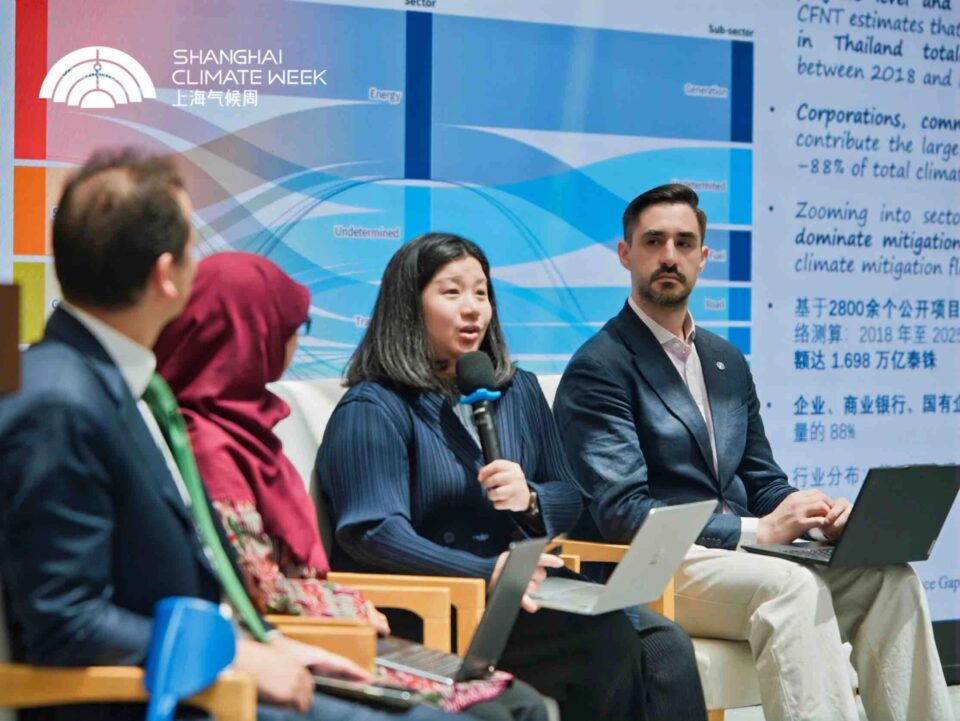
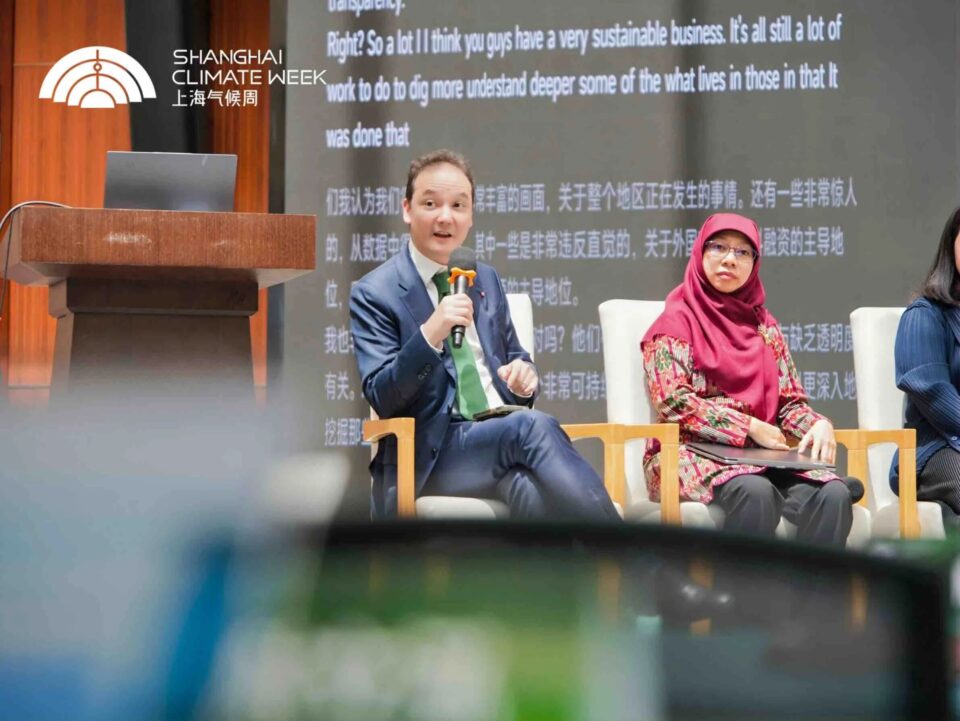
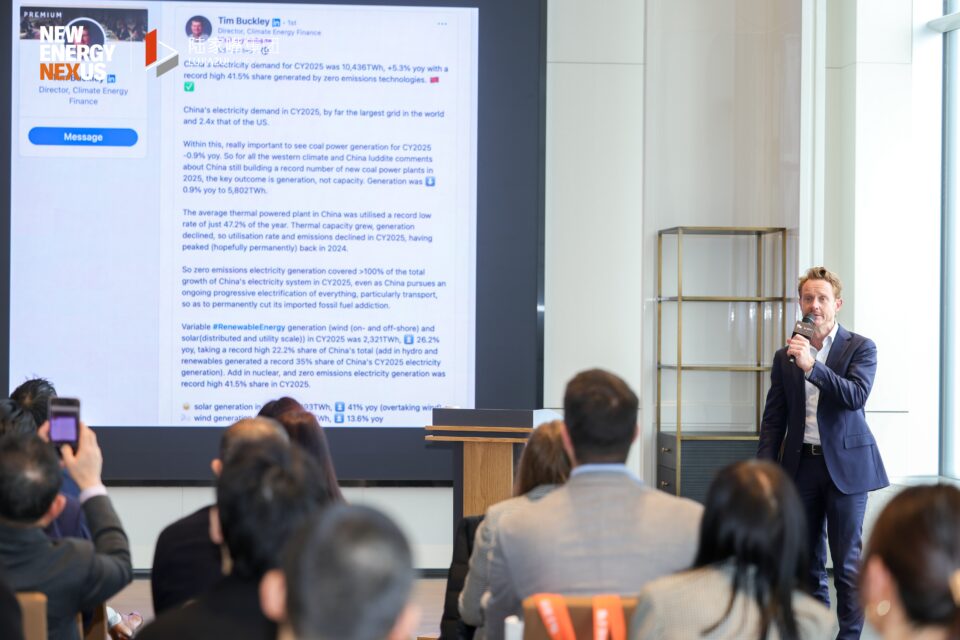
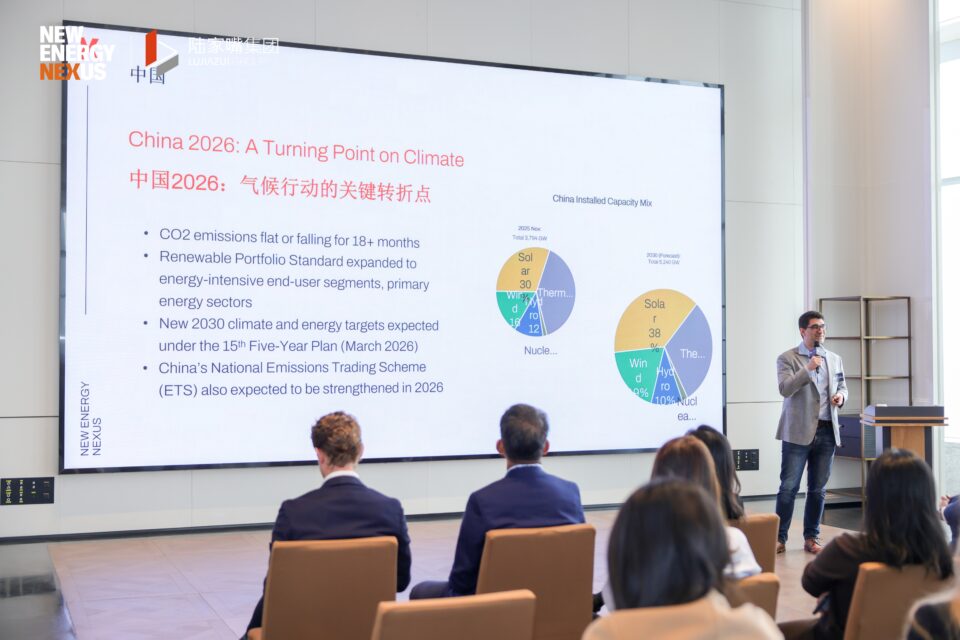
One of the sessions at Shanghai Climate Week 2026.

Countries can accidentally inspire each other.

This was something we did not anticipate at the beginning.

For example, members of the Pakistan delegation shared how the country has experienced a massive rooftop solar boom in recent years. Many households and small and medium enterprises (SMEs) have started purchasing and installing solar systems independently due to concerns about electricity prices and power reliability.

This kind of bottom-up renewable energy demand was very surprising and impressive to the Thailand delegation. Some Thai partners specifically told me that it made them start thinking about whether Thailand could cultivate a similar grassroots-level driving force.

These kinds of sparks are very difficult to generate solely through reports.

Different stakeholders come looking for different things.

Delegation members also arrived with very different priorities. Policy and think tank representatives focused on how China’s systems actually function on the ground. One company in Suzhou, Zooming New Energy, shared a candid view: while policy support matters, long-term success still depends on market demand and customer-driven logic.

Meanwhile, business participants prioritized partnerships. To support this, we organized seven one-on-one matchmaking sessions with companies including Sungrow, Windey International, Tecloman Energy Storage, and WHES Energy Storage Systems.

The key insight: information creates awareness, but collaboration creates engagement.

Trust is also built in quieter ways.

Running multinational events like this is demanding, but it’s often the small details that shape trust and can’t be neglected.

AI translation tools made cross-language discussions seamless for many visitors. Halal meals and dietary accommodations ensured inclusivity. Even informal moments, such as shared meals or cultural exchanges, shaped participants’ experiences throughout the week.

These efforts may seem minor, but they leave strong, lasting impressions.

41

One of the sessions at Shanghai Climate Week 2026.

Overall, facilitating these exchanges reinforced the fact that the energy transition will depend as much on relationships as it does on technology. NEX China hopes to be one of the partners helping build it. Whether you’re interested in supporting our work or you’re a startup looking for pathways to scale, learn more about our programs at newenergynexus.cn.


Jasper (Shaojie) Shen is the Director of Strategy and Market Partnerships at New Energy Nexus China.

Explore More
Story
Southeast Asia
China
Pakistan
Shanghai Climate Week kicks off the next decade of Asia’s clean energy collaboration
1

Group shot of New Energy Nexus and the delegations participating in Shanghai Climate Week 2026.

China’s clean energy transition is accelerating at a scale few countries have achieved before. In 2025 alone, the country added more than 430 GW of new wind and solar capacity, pushing renewables to over 60% of its total installed power generation capacity.

But the significance of that progress extends far beyond China itself. As climate pressures intensify across Asia, the technologies, financing models, and industry expertise emerging from China’s transition could play a major role in accelerating clean energy adoption across the region and beyond.

That urgency shaped Shanghai Climate Week 2026, where New Energy Nexus (NEX) China organized six energy transition events under the banner ‘NEXT DECADE:’ convening delegates, companies, policymakers, and ecosystem builders from across Asia to explore how deeper regional collaboration can accelerate the transition in the immediate future.

A delegation of 40 representatives from Thailand, Pakistan and Indonesia joined in the events, led by the Just Transition Initiative (JUTI), with whom we partnered for Bangkok Climate Action Week, and Renewables First, which enables our work with entrepreneurs in Pakistan.

Here are some of the biggest insights that emerged from the week:

Collaboration is key to a faster energy transition

One theme surfaced repeatedly across nearly every event: technology is advancing faster than the mechanisms for cross-border collaboration.

At the Power Up! Shanghai Evening reception (April 21), delegates from Thailand, Indonesia, and Pakistan spoke directly with Chinese companies, including LONGi Green Energy and Jinko Solar, about opportunities to expand renewable energy deployment across Asia. The discussions were practical, focusing on financing, market access, implementation challenges, and local adaptation rather than broad climate ambition alone.

Delegates consistently highlighted growing interest from Chinese companies in working more closely with markets across Southeast and South Asia. Many also expressed optimism about concrete next steps following the week’s exchanges, particularly around technology deployment, industrial cooperation, and future business partnerships.

“China’s role in the Global South’s energy transition is moving from being a technology supplier to shaping the foundations of the next energy economy,” said Zeeshan Ashfaq, CEO at Renewables First. “This is becoming urgent as demand for energy storage accelerates and begins to define how far distributed, solar-led systems can actually scale, with Pakistan now moving from a solar rush into an emerging battery rush.”

42

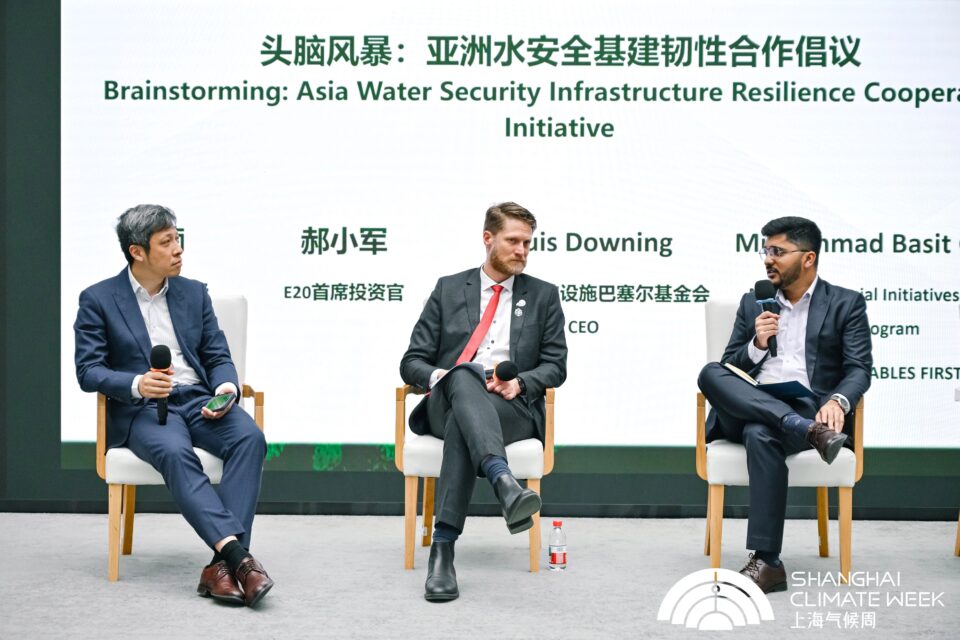
Muhammad Basit Ghauri, Special Initiatives Manager at Renewables First, speaks at a panel.

Our takeaway: The appetite for collaboration already exists. What is needed now are stronger platforms, trusted interlocutors, strong collaborative networks, and sustained engagement to turn conversations into concrete collaboration.

China’s energy transition experience is becoming globally relevant

The Green Practices in Suzhou exchange (April 22) offered international delegates a closer look at how China is implementing green transformation at the city and industrial park level.

The delegates explored distributed renewable energy systems, zero-carbon industrial parks, and integrated planning models alongside Chinese industry leaders and researchers. What stood out was not only the scale of China’s implementation, but how rapidly lessons from those projects could apply elsewhere in Asia.

Delegates were particularly interested in how Chinese companies combine policy coordination, industrial strategy, and infrastructure to accelerate adoption. The discussions also surfaced growing opportunities for joint pilot projects and localized partnerships in Southeast and South Asia.

China’s experience driving industrial decarbonization as a business strategy, with cost savings, operational efficiency, resilience and innovation at its heart, resonated with participants from other countries.

Our takeaway: China’s role in the transition is evolving from manufacturer to ecosystem partner, with an impact that transcends geographical boundaries.

Distributed renewable energy is becoming central to resilience

At the forum on distributed renewable energy cooperation in Suzhou, discussions focused heavily on resilience, particularly in rapidly growing economies vulnerable to climate and grid instability.

Speakers from China, Thailand, Pakistan, and across Southeast Asia emphasized that distributed energy systems are no longer niche technologies. They are increasingly becoming core infrastructure for climate adaptation, energy access, and economic resilience.

Conversations across Southeast Asia highlighted growing interest in adapting China’s experience with distributed renewable energy to local contexts, particularly in areas where centralized infrastructure remains limited or vulnerable.

50

Leo Horn-Phathanothai, CEO of JUTI, speaks at a panel.

Our takeaway: Energy resilience is now inseparable from energy transition planning.

Climate finance needs stronger regional coordination

Across multiple forums, from the insurance-focused Chinese Technology, Global Capital, Insuring a Greener Future session to the Turning Green into Gold dialogue, one issue repeatedly surfaced: financing structures still lag behind climate innovation.

Participants discussed how insurance systems, green finance, blended capital, and standardized investment frameworks will be essential for scaling infrastructure and emerging technologies across Asia.

The conversations also reflected a broader shift in mindset. Climate finance is increasingly viewed not only as risk mitigation, but also as a tool for industrial transformation and regional cooperation.

Delegates from Southeast Asia noted strong interest in building financial partnerships that connect local market demand with Chinese manufacturing and technology capacity.

Our takeaway: Accelerating the energy transition will require financial systems that move as quickly and collaboratively as the technologies themselves.

AI and intelligent manufacturing are reshaping the transition

Several events highlighted how AI and intelligent systems are becoming deeply integrated into the clean energy economy.

At the Green Engine Accelerator 2026 launch and the Climate Lighthouse Forum on intelligent manufacturing, startups and industry leaders showcased solutions spanning AI-powered energy systems, CCUS, green fuels, hydrogen, and advanced manufacturing.

The conversations reflected a growing convergence between digital infrastructure and clean energy infrastructure. Rather than operating as separate industries, participants increasingly framed AI, automation, and energy systems as interconnected drivers of industrial decarbonization.

For many international delegates, this also reinforced China’s growing role in manufacturing clean energy hardware while increasingly shaping next-generation energy ecosystems.

5

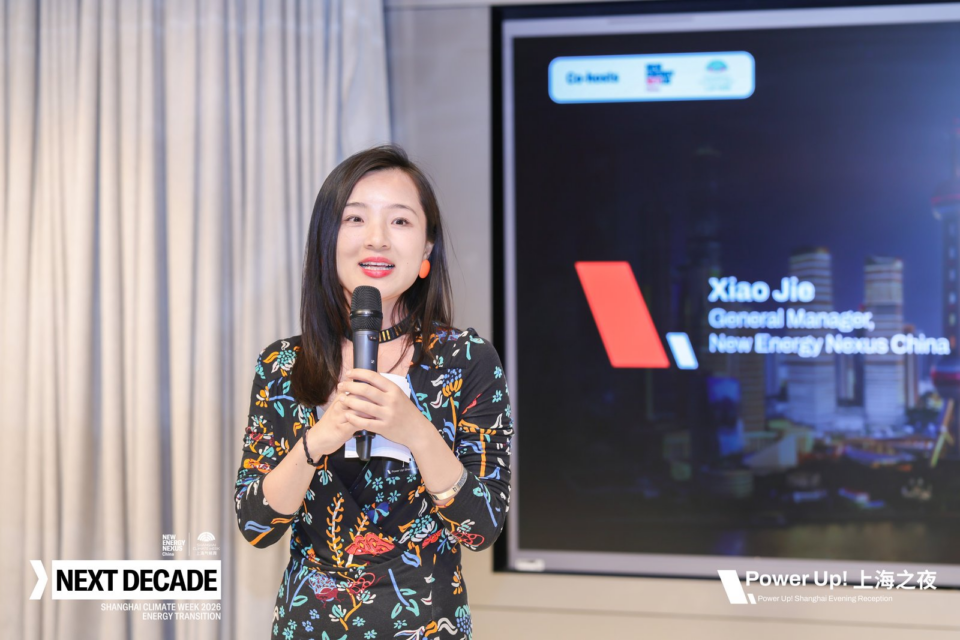
Jie Xiao, General Manager of New Energy Nexus China, speaks during one of the events.

Our takeaway: The convergence of AI, digital infrastructure, and clean energy is now becoming a defining force in how industrial decarbonization will scale across Asia and beyond.

Cities are emerging as climate collaboration hubs

One of the strongest signals from the week came from the discussions around city-led climate cooperation.

At the Climate Week Seasons Connect+ and the Opening Ceremony Roundtable closed-door meetings, leaders connected initiatives from Shanghai, Bangkok, London, and other cities to explore how local climate action platforms can drive global collaboration.

The emphasis throughout these sessions was pragmatic: cities can often move faster than national systems, especially when it comes to piloting solutions, convening industries, and building partnerships.

Our takeaway: These discussions reinforce the importance of regional climate ecosystems that connect entrepreneurs, corporates, governments, and investors across borders rather than operating in isolation.


What comes next

Shanghai Climate Week 2026 showed that Asia’s clean energy transition is entering a new phase. The technologies exist. Manufacturing capacity exists. Capital and policy momentum are growing. The challenge now is building the connective tissue that allows innovation, investment, and implementation to move faster across markets.

That is where New Energy Nexus China continues to play a critical role.

For nearly a decade, NEX China has been running accelerator programs, facilitating matchmaking between founders and funders, and building strong relationships both within and outside the country.

Shanghai Climate Week was never meant to be a one-off exchange, but part of a longer effort to build sustained regional collaboration platforms across Asia’s energy transition ecosystem. In the months ahead, NEX China will continue advancing these connections through regional initiatives, including the Intelligent Manufacturing Expo Southeast Asia 2026 and Bangkok Climate Action Week 2026, where many of the conversations started in Shanghai are expected to evolve into deeper partnerships and concrete projects.

Learn more about our programs in China at newenergynexus.cn.

Explore More

A roadmap for China-Philippines Renewable Energy Cooperation

April 17, 2026
Story
China
Renewable energy tech
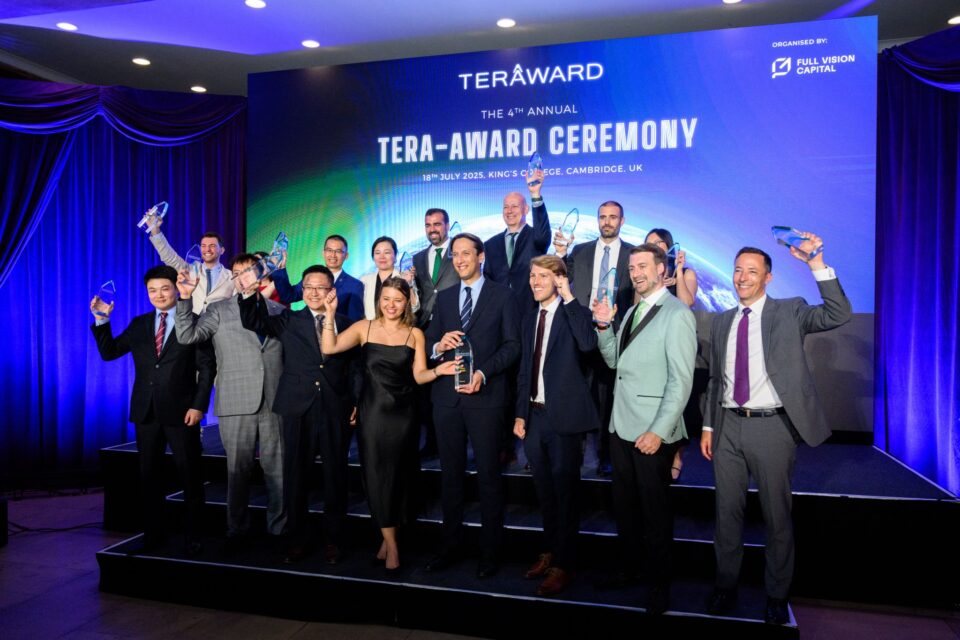
TERA-Award is climate startups’ shot at US$1M and global market access

When it comes to climate tech, building breakthrough solutions is only part of the challenge. The real test is getting those solutions into the market, into supply chains, and into the hands of the people who need them.

In partnership with New Energy Nexus, the TERA-Award is a global competition that identifies and accelerates high-potential climate technologies. With a US$1 million Gold Prize and access to industry applications, funding, and partners across Asia, it helps founders move faster from innovation to real-world impact.

Applications for 2026 are now open. Still deciding? Start by learning what last year’s winners gained from the experience:

barocal 02 2048x1365

Barocal founder and CEO Xavier Moya holds the solid-state refrigerant. Photo from Barocal

1. Barocal

Accessed global markets and partners

For the 2025 Gold Winner, the TERA-Award was more than just its cash prize—it opened doors into the Asian market, one of the most important for energy innovation.

Barocal is rethinking cooling and heating systems using solid-state materials that eliminate harmful refrigerants while improving efficiency and reducing costs.

For its founder, Xavier Moya, the platform’s value was clear.

“It gives us valuable exposure across Asia—a critical market for our cooling and heating technology—and opens doors to a high-quality network of suppliers, partners, and investors.” — Xavier Moya, CEO and founder

For founders looking to expand beyond their home markets, this level of access can define the trajectory of their growth.

feon energy

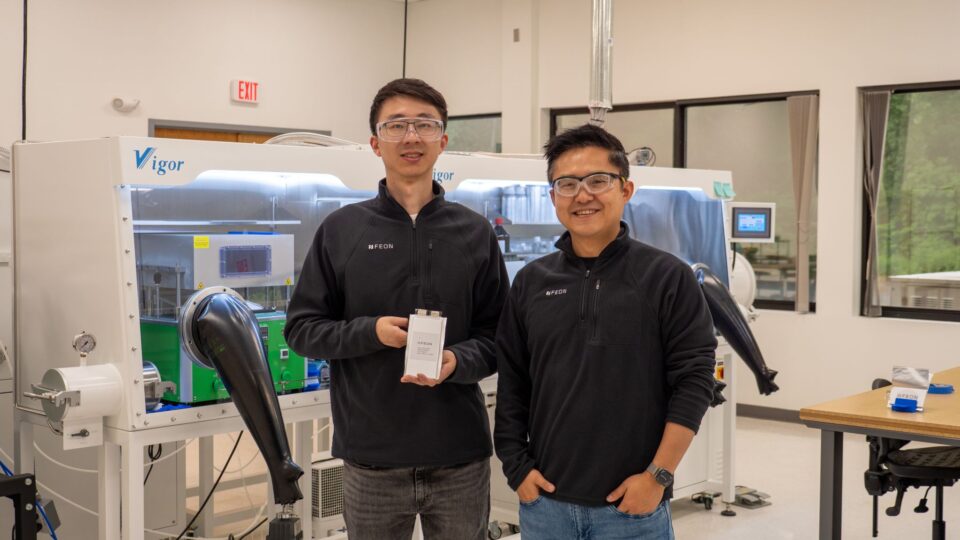
Photo from Feon Energy

2. Feon Energy

Built credibility and unlocked new opportunities

The 2025 Silver Winner is advancing battery technology with new electrolytes that improve safety and performance without disrupting existing manufacturing.

Feon Energy’s solution has strong technical potential, but scaling requires trust, visibility, and the right partnerships.

“Winning the TERA-Award will further strengthen our credibility in the Pan-Asia market, opening doors to new partners and giving us a trusted platform to showcase our technology.” — Wenxiao Huang, CEO and co-founder

Recognition at this level signals to investors, corporates, and partners that a solution is ready for serious consideration.

syzygy plasmonics

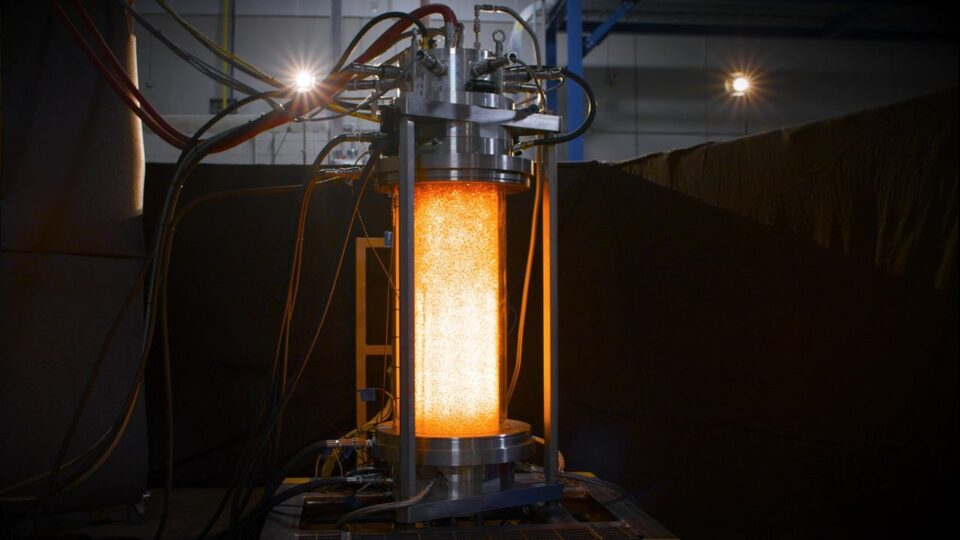
Photo from Syzygy Plasmonics

3. Syzygy Plasmonics

Global exposure

For the 2025 Bronze Winner, the TERA-Award helped accelerate visibility across key markets.

Syzygy Plasmonics’ NovaSAF platform converts biogas into sustainable aviation fuel using light-driven chemical reactions, offering a scalable pathway to decarbonize aviation and waste systems.

“Syzygy has a very innovative solution that needs to be deployed across the globe for maximum impact. We were introduced to a number of high-profile investors and have used the event to grow our exposure across Asia.” — Trevor Best, CEO

For technologies with global relevance, scaling impact depends on reaching the right ecosystems quickly.

tera award

Photo from TERA-Award

Why this matters now

In its previous editions, the TERA-Award has attracted over 1,700 startups from 76 countries, reflecting the growing momentum behind climate innovation.

New Energy Nexus has been a long-standing partner, connecting high-potential startups from its global network to the platform. In 2025, all three top winners were part of that pipeline, demonstrating what is possible when entrepreneurs are backed with the right support and connections.

As the clean energy transition accelerates, the gap is no longer just about innovation. It is about execution, partnerships, and speed. Platforms like the TERA-Award help close that gap.

This year, the TERA-Award 2026 is open to innovators building solutions across:

  • Green fuels and hydrogen
  • Next-generation energy
  • Energy storage and conversion
  • AI for energy systems
  • Energy efficiency and carbon capture
  • Smart energy systems

If you are building in these areas, apply today or before April 22, 2026.

Looking for clean energy and climate opportunities in China and beyond? Find them here.

Explore More

NEX China Impact Report 2025

February 26, 2026
Story
China
Renewable energy tech
Bridges, not walls: Linking China’s clean energy to the world
nex bridge

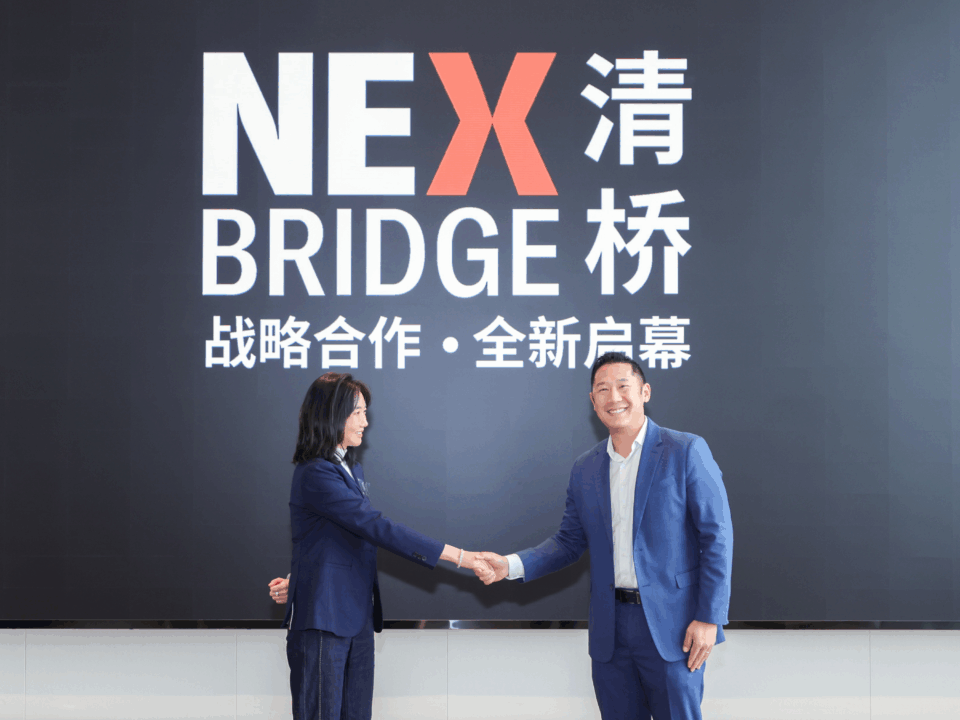
The NEX Bridge Unveiling Ceremony at Zhangjiang Science Gate, Shanghai, China.

Over two days, New Energy Nexus and the Lujiazui Group brought 100 founders, investors, suppliers, and ecosystem partners together in Shanghai to explore one practical question: how can climate solutions move faster across borders?

The challenge isn’t technology. Instead, it’s about deploying clean energy solutions fast enough around the world. To do that, we need trust, partnerships, and pathways that turn manufacturing strength into global impact.

That’s NEX Bridge’s mission: a new initiative that connects China’s clean energy suppliers and global markets. The program provides an incubator space in Zhangjiang, alongside training, events, industry exchanges, and technology demonstrations to help companies scale and reach international opportunities.

Here are five key takeaways from the launch that highlight how NEX Bridge is turning connections into action.

img 2005

Andrew Chang, CEO of New Energy Nexus.

1. Market access is the new climate lever.

For many startups, the problem isn’t building great technology. It’s getting it out to the world. NEX Bridge positions China not just as a manufacturing hub, but as a launchpad for global expansion, while giving international founders a front-row seat to what’s possible here.

“We’re incredibly excited because this is a fantastic opportunity, not only for startups to be able to go out to the world… but also for other startups to be able to see what’s happening within the Chinese market, in this clean energy powerhouse.” Andrew Chang, CEO, New Energy Nexus

When suppliers and startups share the same room, deals happen faster. Pilots happen sooner. Markets open.

nio 02

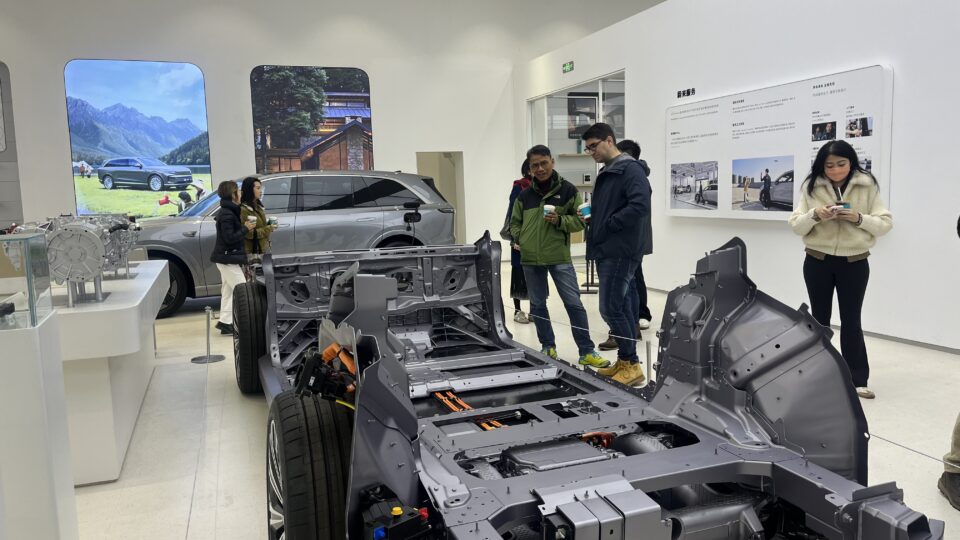
Puon Penn, CEO and Managing Partner of New Energy Nexus Ventures, and David Fishman, Principal at The Lantau Group, during the tour of the NIO House Experience Center.

2. Seeing solutions in person changes everything.

Slides and Zoom calls can only go so far. Walking factory floors, testing vehicles, and meeting founders face-to-face turns abstract ideas into tangible opportunities.

That was clear during visits to the NIO House Experience Center and the GCL Perovskite Facility, where guests saw battery swapping in action and next-generation solar manufacturing at scale.

“Seeing is really believing… having entrepreneurs meet with each other to really witness with their own eyes the solution that’s possible is key for their success.” Puon Penn, Managing Partner, New Energy Nexus

Trust grows faster when you know how the technology works in reality.

unveiling 07 kirk

Kirk McDonald, Project Manager – Supercharge Australia at New Energy Nexus, presents during the Unveiling Ceremony.

3. China’s speed moves the rest of the world faster.

From Southeast Asia to Australia, partners shared the same reality: climate impacts are accelerating, and deployment must match that urgency.

China’s production capacity offers a rare advantage. The challenge now is moving solutions across borders quickly and responsibly.

“China has a huge advantage in the production capacity of renewable energy technologies. The world desperately needs them… and we need to get more of them out of the country as quickly as possible.” Kirk McDonald, Project Director, Supercharge Australia

Bridging supply with demand isn’t just good business. It’s a climate necessity.

unveiling 06 david fishman

David Fishman, Principal of The Lantau Group, presents at the Unveiling Ceremony.

4. The next wave of innovation is about flexibility.

As grids add more renewables, the opportunities shift. It’s not only about generating clean power, but storing it, moving it, and using it smarter.

Entrepreneurs working on storage, demand response, and intelligent energy management will play an outsized role in what comes next.

“Anything that contributes to flexibility should continue to be an extremely important and hot area for innovation.” David Fishman, Principal, The Lantau Group

In other words, the future grid needs as much brains as hardware.

gcl 02

Tour of the GCL Perovskite Facility.

5. Ecosystems beat isolated wins.

No single company can solve climate change alone. What works is a system: incubators, capital, partners, policymakers, and entrepreneurs moving together.

NEX Bridge is designed as that connective tissue, combining workspace, demonstrations, training, and dealmaking under one roof in Zhangjiang.

“One of the most exciting things about Nex Bridge is that we’re bringing a holistic platform together… an incubator space, a demonstration area, expo… workshops and trainings to support clean energy suppliers in China to be able to go to global markets.” — Andrew Chang, CEO, New Energy Nexus

It’s not just a place to meet. It’s a place to move from idea to deployment.

unveiling 05

The NEX Bridge Unveiling Ceremony at Zhangjiang Science Gate, Shanghai, China.

From Shanghai to the world

Clean energy isn’t only about building hardware and generating megawatts. It’s about trusting partners across borders and collaborating to make the clean energy shift happen—the fastest way possible.

At New Energy Nexus, this is how we work everywhere we operate: building ecosystems that help entrepreneurs scale across borders. In China and across 13 more countries, we connect founders with the training, capital, partners, and markets they need to grow.

Want to break down walls and build bridges with us? Take the next big step for your clean energy or climate startup: Check out programs and opportunities from our global network here.

Explore More
Story
China
Energy Finance
Small money, big change: Learnings from rural China’s clean energy pilots
tcl foundation

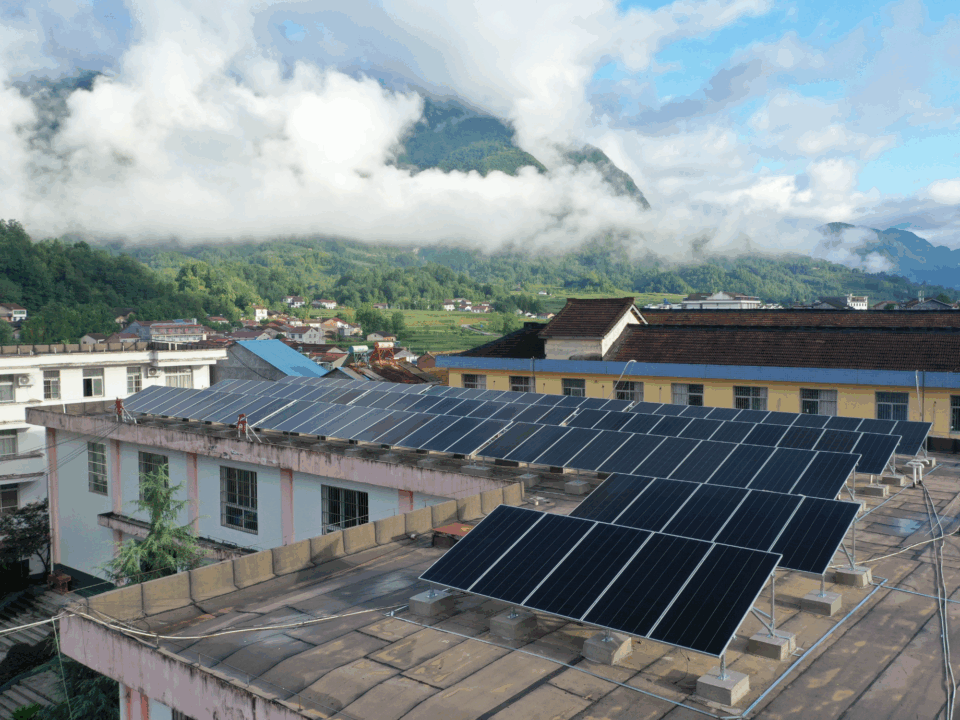
In August 2022, the first batch of TCL solar-powered low-carbon campuses were established in Xixiang County, Hanzhong, Shaanxi.

This year, China has outpaced the world in the shift to clean energy, and it’s quickly progressing into a new phase.

Rural communities will be key to this development. They not only bear the brunt of climate impacts but also hold enormous potential to drive economic growth, social inclusion, and environmental gains. Yet they face persistent energy transition challenges and remain overlooked, with an annual funding gap of roughly 2 trillion RMB [US$282 billion] that government resources alone cannot fill. Addressing this gap requires smart, targeted interventions that can stretch limited funds into transformative impact.

New Energy Nexus China’s “Small Money, Big Change” shows how modest, strategically deployed investments can unlock far larger capital flows. By blending policy, market, and philanthropic resources—and grounding projects in local trust and participation—small sums can generate outsized impact: boosting incomes, cutting emissions, improving living standards, and creating inclusive industries.

China’s rapid clean energy expansion illustrates the power of these approaches, offering lessons that extend across the Global South. Here are five key takeaways:

1. Clean energy boosts rural livelihoods.

Renewable energy is more than a climate solution. When projects address concrete community needs, they create new income streams, strengthen resilience, and improve quality of life.

We learned it from the TCL Foundation’s low-carbon campuses.

1.6 MW of solar power was installed across 27 schools, cutting 40,000 tons of CO₂ and generating 17.4 million RMB (US$2.5 million) for education. This showed how philanthropic capital can fund sustainable infrastructure that benefits communities directly.

2. Blended finance makes the impossible possible.

The biggest wins come when public, market, and philanthropic capital work together. Each plays a unique role, and real breakthroughs happen where they intersect, bridging funding gaps and reducing risk.

We learned it from the Dalad Banner Wind Cooperative.

In Inner Mongolia, 132 village collectives co-invested with the government and banks in a 75.6 million RMB [US$10.7 million] wind farm. Each village received guaranteed annual dividends, demonstrating how blended finance can create both financial viability and equitable local benefits.

3. Technology and governance unlock hidden potential.

Digital tools, fintech, and transparent governance models help rural communities access capital, manage risk, and scale solutions faster. Technology alone isn’t enough—participatory management ensures long-term sustainability.

We learned it from Trina Solar and MYbank’s AI-enabled solar financing model.

Data-driven risk models lowered loan rates by 21% for small PV distributors in the “last mile”, expanding access to solar for households while maintaining zero defaults, illustrating how innovation in financing and governance unlocks local potential.

4. People must be at the center.

A just energy transition puts communities, workers, and women at the heart of clean energy projects. Training, shared ownership, and empowerment ensure projects deliver dignity, opportunity, and lasting benefits.

We learned it from the Tianmen women drone pilots.

A 30,000-RMB (US$4,237) seed fund trained over 100 women to operate agri-drones servicing more than 1 million hectares annually, creating new income streams and reducing pesticide use, showing the power of people-focused interventions.

5. Ecosystems scale solutions, not isolated projects.

Long-term transformation requires collaboration across government, finance, enterprises, and communities. When capital flows, policy innovation, and local participation align, isolated projects evolve into replicable ecosystems.

We learned it from Tencent SSV’s solar trust model.

A “charity + capital” trust funded rooftop PV, while surplus revenues supported health and education programs, providing a blueprint for integrated, community-centered clean energy ecosystems.

Small investments, when paired with trust, technology, and collaboration, can generate systemic impact—showing how inclusive, sustainable clean energy is possible for communities across China and the Global South. Read more about these initiatives and how we can make a bigger impact: Download our casebook today.


New Energy Nexus in China

New Energy Nexus (NEX) is a world-leading clean energy accelerator dedicated to advancing the global energy transition. In China, NEX China carries this mission forward with a local, hands-on approach—providing tailored consulting, business matchmaking, and support to governments, industrial parks, universities, and enterprises of all sizes. By identifying and scaling innovative energy transition solutions, integrating resources, and building both online and offline collaboration platforms, NEX China connects entrepreneurs, investors, research institutions, and policymakers.

Learn more about clean energy opportunities in China here.

Explore More
News
China
Philippines
Renewable energy tech
Philippine-China collaboration sparks new pathways for clean energy development
562397828 719518541162458 5116887250112142542 n

Photo from the People of Asia for Climate Solutions (PACS) Facebook page

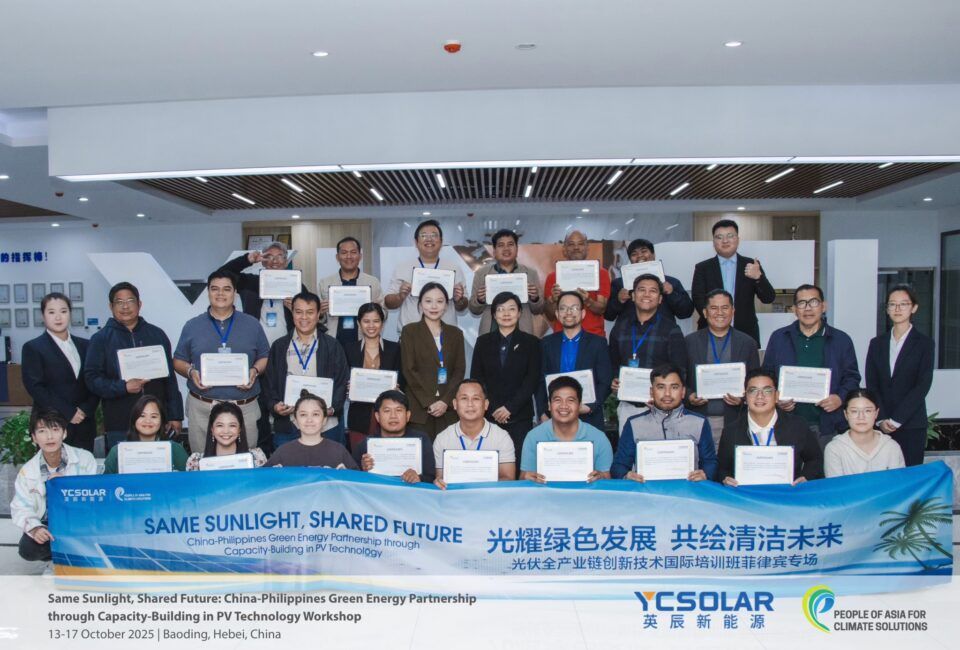
Manila, Philippines, 29 October 2025 – As part of its goal to strengthen renewable energy cooperation between China and the Philippines, New Energy Nexus in partnership with the People of Asia for Climate Solutions (PACS), through the Climate Actions in Renewable Energy (CARE) Project, hosted solar training partners and program alumni in the Solar Photovoltaic (PV) Workshop held in China from October 13 to 16, 2025.

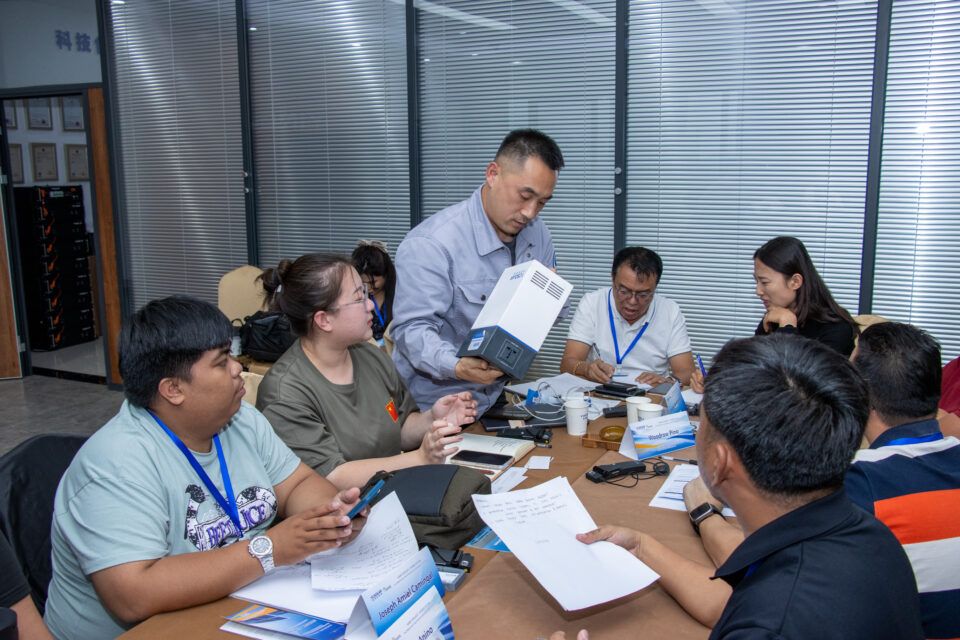
The four-day workshop immersed participants in the latest developments in solar PV technologies with one of China’s pioneering solar panel manufacturers. The sessions also provided insights into emerging trends in distributed renewable energy (DRE), solar manufacturing, and potential areas for collaboration between Chinese and Philippine enterprises.

photo (40 39)

The Solar Photovoltaic (PV) Workshop, organized by New Energy Nexus in partnership with the People of Asia for Climate Solutions (PACS).

“The activity [PV workshop] was an invaluable opportunity to strengthen our local partners’ technical knowledge while building bridges for future cooperation in the renewable energy sector,” said Brenda Valerio, Program Director of New Energy Nexus Philippines.

The visit also contributes to the development of the Project Opportunity Map, CARE’s main output that identifies opportunities for collaboration between Chinese renewable energy enterprises and Philippine stakeholders.

img 082017 0

Participants of the Solar Photovoltaic (PV) Workshop, organized by New Energy Nexus in partnership with the People of Asia for Climate Solutions (PACS).

The Filipino delegation was composed of New Energy Academy solar training partners and Solar Innovation Program alumni who have been instrumental in expanding the country’s clean energy workforce and promoting solar innovation.

“This experience reflects our ongoing commitment to empowering our training partners and alumni with global perspectives and technical expertise. Learning from one of the world’s most advanced solar markets, we hope that these technologies and insights can be adopted and made available in the Philippines, helping our local solar industry champions continue to grow and evolve,” said Jacob Taguinod, Partnerships Manager of New Energy Nexus Philippines.

“The PV workshop in China was inspiring, humbling, and deeply encouraging. It showed us how passionate entrepreneurs can unite around a shared vision for renewable innovation and how advanced PV technology has already become, from solar benches to zero-carbon housing.”

These experiences are critical stepping stones that have bolstered our resolve. They encourage us (solar installers) to push beyond mere profit and focus instead on ambitious advocacy. Having seen these advanced solutions realized in practice, we now know the future we envision for our country is not a distant concept, but a tangible reality we can immediately begin to implement,” said Richmond Reyes, President of EcoSolutions Philippines.

dsc08165

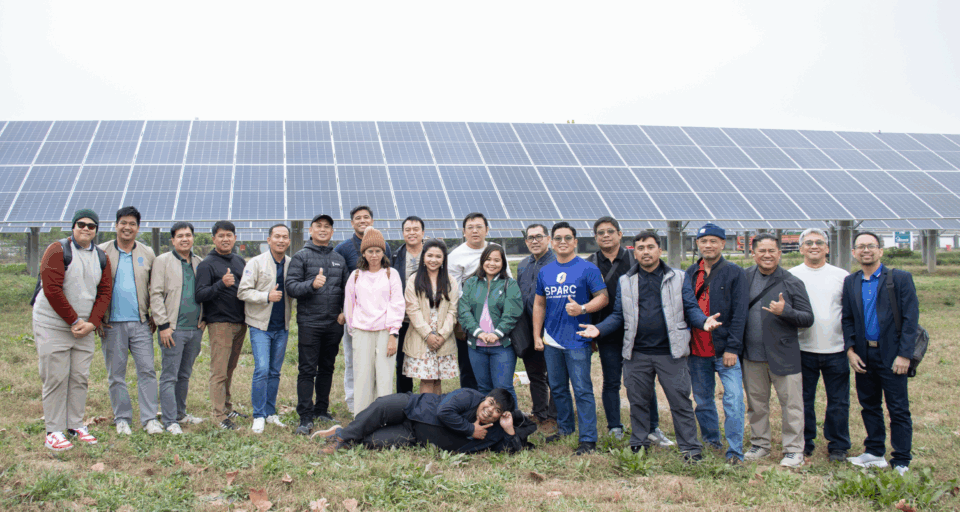
The Solar Photovoltaic (PV) Workshop, organized by New Energy Nexus in partnership with the People of Asia for Climate Solutions (PACS).

Through the CARE Project and initiatives such as the PV Workshop, New Energy Nexus continues to advance cross-border knowledge sharing and support solar entrepreneurs to contribute to advancing the country’s renewable energy market.

About the CARE Project

The Climate Actions in Renewable Energy (CARE) Project is a strategic initiative led by New Energy Nexus (Philippines and China) in partnership with People of Asia for Climate Solutions (PACS). It aims to foster cross-border collaboration in clean energy deployment by supporting Chinese enterprises in navigating the Philippine renewable energy market and promoting knowledge exchange between both countries.

Media contacts:

Dayther Manubag
Communications Lead, New Energy Nexus Philippines
dayther.manubag@newenergynexus.com
(Based in Mandaluyong City)

About New Energy Nexus

New Energy Nexus (NEX) is the world’s leading clean energy ecosystem builder, working toward a 100% clean energy economy for 100% of the population. It does this with a laser focus on diverse entrepreneurs, supporting them with accelerators, funds, skills, and building the local and global connections they need to thrive. NEX has accelerated 1,700+ startups and businesses, empowered over 11,500+ entrepreneurs, and mobilized more than US$5.4 billion in investment.

Since its founding in California in 2004, NEX now operates programs or services in Australia, China, India, Japan, Indonesia, Nigeria, Pakistan, the Philippines, South Korea, Thailand, Uganda, the USA (California and New York), and Vietnam.

Follow NEX on LinkedIn, X, Facebook, and YouTube

Story
China
Southeast Asia
Renewable energy tech
The next phase of China’s clean energy story runs through Southeast Asia

Written by Jie Xiao, Country Director at New Energy Nexus China

I’ve just come back from three of the world’s biggest climate gatherings — New York Climate Week, Bangkok Climate Action Week, and Shanghai Climate Week — and one thing is crystal clear: the center of gravity in the global energy transition has shifted decisively to Asia. Everywhere I went, the same figures echoed: half of the world’s electricity is already consumed in this region, with Southeast Asia on course to account for 25% of global energy demand growth between now and 2035. The question is no longer whether Asia will lead the energy transition, but how.

And here’s the problem. Much of the conversation still focuses on supply and demand — China providing the technology and capital, Southeast Asia absorbing and applying it — rather than on what they can build together. That picture is badly outdated.

If Asia is to decarbonise at the speed required, this relationship must become a partnership of ecosystems, not just markets. What I saw across these climate weeks was the urgent need for entrepreneurship, collaboration, and shared innovation, not simply more shipments of solar panels across borders.

Asia already sits at the centre of this shift. Southeast Asia’s electricity demand is surging, growing nearly twice as fast as the global average. If these countries choose to lock in new fossil infrastructure, the world loses. If they leapfrog straight to clean energy, the world wins.

Bangkok Climate Action Week 2025 - New Energy Nexus China

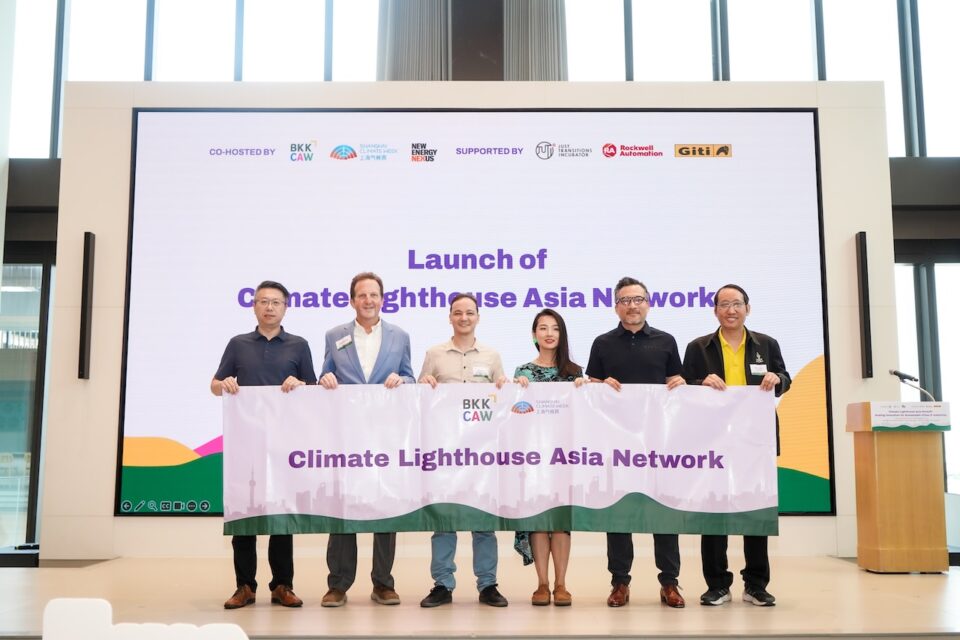
From left: Jason Dong, Executive Director of the Shanghai Climate Week Climate Lighthouse Professional Committee; Peter du Pont, Board Member at New Energy Nexus; Leo Horn-Phathanothai, Founder & Convenor of Bangkok Climate Action Week; Jie Xiao, General Manager of New Energy Nexus China; Ian Shih, Member of the Shanghai Climate Week Executive Committee, and International Advisor to the UNITAR Prosperity Alliance (Shanghai); and Dr. Manaswee Arayasiri, Sanitary Engineer at the Bangkok Metropolitan Administration.

That is why the relationship between China and Southeast Asia is so pivotal. What the climate weeks in Bangkok and Shanghai showed me is that Southeast Asia is not a passive recipient, but a laboratory for innovation. Local entrepreneurs are building new business models: rooftop solar sold on installment plans, mini-grids designed for island communities, efficiency solutions adapted to local commercial buildings.

And yet, the connective tissue between China’s and Southeast Asia’s clean energy innovation ecosystems remains thin. Chinese companies bring unmatched scale, capital, and supply-chain sophistication. But too many still see Southeast Asia as another export market due to limited understanding of local markets and policies, rather than a partner in co-creation. On the other side, Southeast Asian startups are inventive but often under-capitalised, locked out of manufacturing scale, and slowed by fragmented regulation. Both sides would benefit from deeper integration: shared accelerators, joint venture funds, mutual performance guarantees, and training exchanges that allow ideas to flow in both directions.

One moment in Bangkok captured what cross-border collaboration can look like in practice. At an event co-hosted by organisers of Shanghai and Bangkok Climate Weeks with New Energy Nexus China, we saw Chinese and Thai innovators meet not as exporters and buyers, but as partners in the clean energy transition. Corporates like TCL, LONGi, and Saint-Gobain showed how they’re digitalising factories and decarbonising supply chains, while startups such as Brick Technology, i2Cool, and Thailand’s Altotech shared solutions for smart, energy-efficient buildings. In that exchange, a new ecosystem took shape — built on trust, shared learning, and the belief that Asia’s net-zero future will be co-created, not imported.

New Energy Nexus Thailand startup spotlight

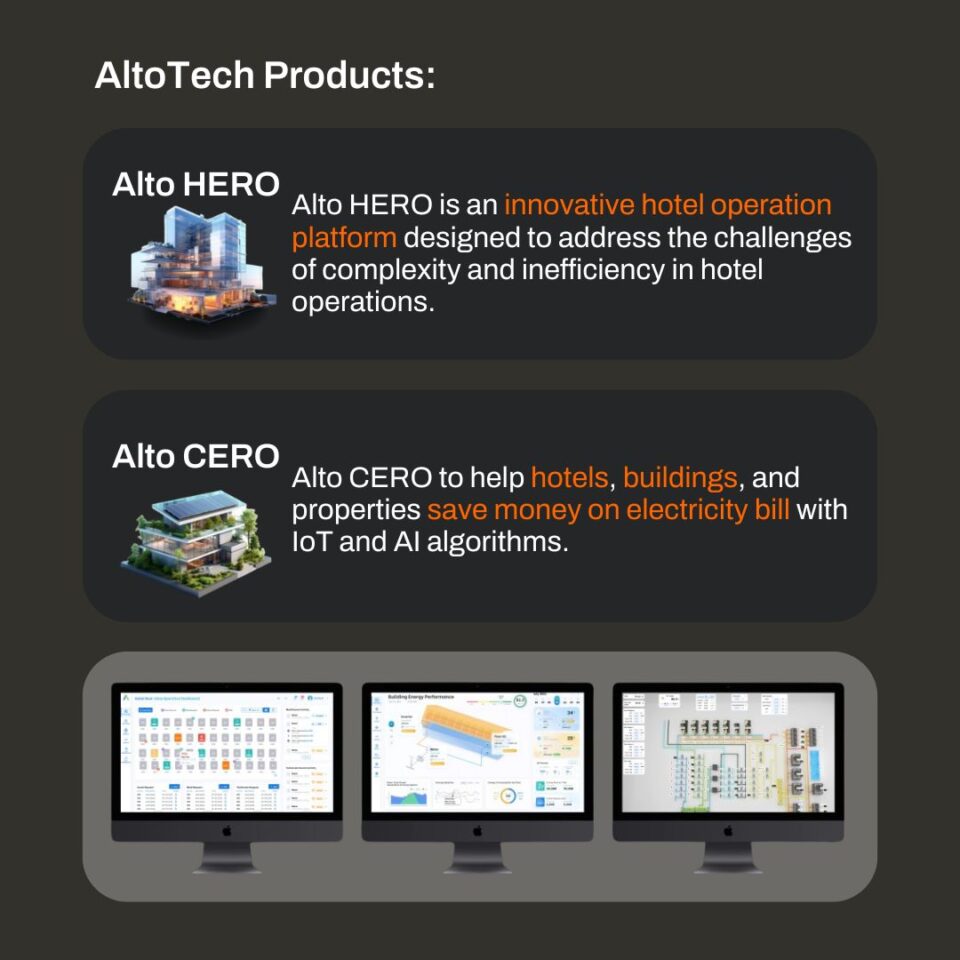
Altotech (Bangkok) provides an integrated AIOT energy management platform for building cooling and air-conditioning system management. It automates building management all in one place, reducing electricity cost by potentially 20-30%. Altotech participated in our Smart Energy Hackathon, Smart Energy Accelerator, the Decarbonize Thailand Sandbox, as well as the NEX COP28 Climate Tech Startup Accelerator.

What struck me most after these three climate weeks is how stark the choice is. Asia can double down on a transactional model — hardware shipped one way, demand absorbed the other — or it can step up to build a genuine partnership of entrepreneurs and innovators. The former may look efficient, but it risks a brittle transition that cannot withstand shocks. The latter is harder, messier, slower to start. But it is the only way to build the resilient and adaptive clean energy systems that can carry half the world’s population into a decarbonised future.

img 6709

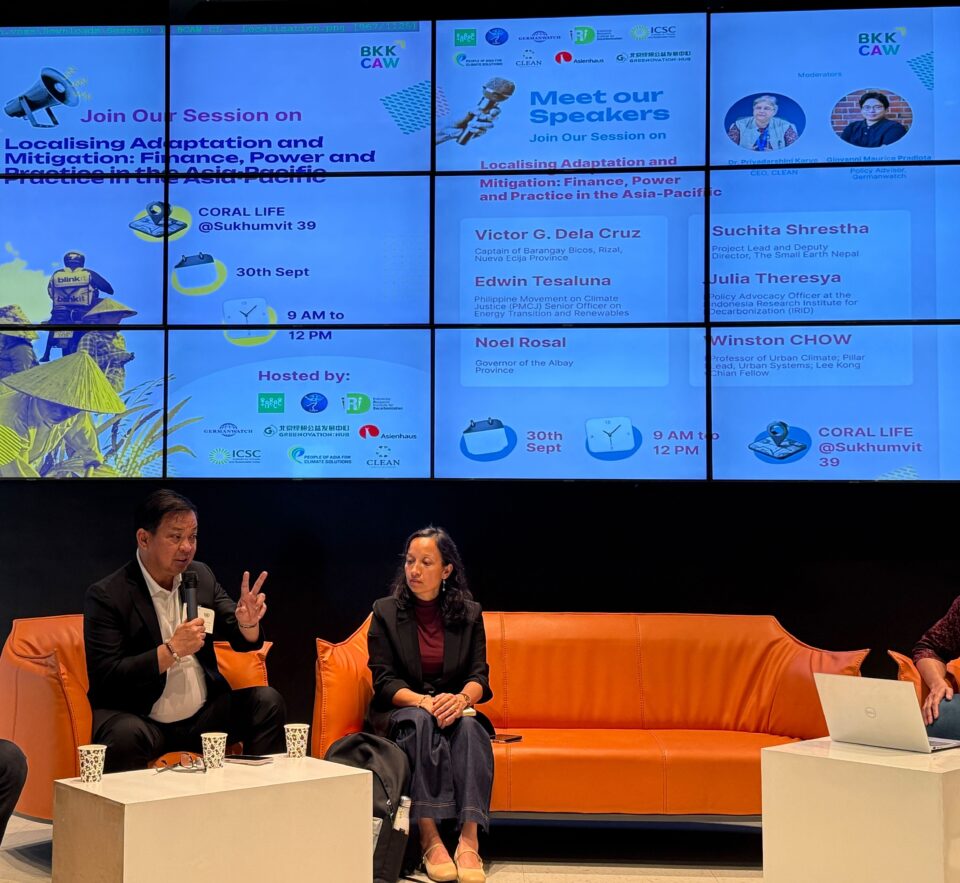
Noel Rosal, Governor of Albay Province, Philippines, at Bangkok Climate Action Week 2025, discusses how local communities and institutions across the Asia Pacific are driving climate adaptation and mitigation through finance, leadership, and practical solutions.

China has much to gain from this shift: opening new markets, diversifying demand, and learning from the hard realities of diverse Southeast Asian geographies. Southwest Asia, in turn, gains access to proven technology and capital, while embedding its own innovators in global supply chains. This is not dependency; it is mutual advantage.

What New York Climate Week – with its big names and Western donors – offered was the view from the top: big finance, global politics, systemic frameworks. But it was Bangkok and Shanghai that offered the view from the ground: dynamic, entrepreneurial, urgent. If we want this to be the Asian decade of climate leadership, that is where our focus must be.

The lesson is simple. Southeast Asia’s clean-tech future will be built on ecosystems of entrepreneurs, investors and innovators working across borders, taking risks together, and co-creating solutions suited to the region’s realities. That was the palpable change I felt in Bangkok and Shanghai, and it is the change we must now scale.

Explore More
Story
China
Southeast Asia
Renewable energy tech
The three forces driving clean energy action at Bangkok Climate Action Week
gigawatt

New Energy Nexus CEO Andrew Chang talks about three emerging themes he observed at Bangkok Climate Action Week, during The NEX Gigawatt event on October 2, 2025.

The clean energy transition is well underway, and nowhere is this clearer than in Asia. From China’s record-breaking renewable capacity to Pakistan’s fast-growing solar movement, this side of the Pacific is setting the pace for the global shift.

But as the region races toward Net Zero, one thing is clear: solutions are needed faster than ever, and collaboration among leaders and innovators will determine how quickly we get there.

With this urgency in mind, New Energy Nexus convened leaders, entrepreneurs, and investors from across Asia-Pacific at the first-ever Bangkok Climate Action Week – spotlighting the people and partnerships at the forefront of this transition.

“This is an incredible time for New Energy Nexus to represent the chapters, the solutions that are happening on the ground,” said Andrew Chang, CEO at New Energy Nexus.

From the week’s panels and startup pitches, Andrew observed three emerging themes: each a driving force toward Asia’s clean energy future.

doy05456

Attendees listen intently to a talk during the Climate Lighthouse Asia Kickoff event on September 29, 2025.

Convergence: A transition beyond borders

“Convergence of technology, convergence of people, convergence of collaborators all across the board.” — Andrew Chang

In a region separated by the sea but bound by shared challenges, no country should face the clean energy transition alone. Convergence can usher in progress faster and together.

This narrative shaped the discussion at Climate Lighthouse Asia Kickoff: Scaling Innovation for Sustainable Cities & Industries, where leaders from Shanghai and Bangkok came together to demonstrate what cross-border collaboration can do for the region’s energy transition.

The session highlighted end-to-end decarbonization, showcasing clean energy tech from East and Southeast Asia, and calling for stronger ecosystems supporting Asia’s innovators.

“I think [Shanghai and Bangkok] share a sense that the energy transition is not something that any city or country can achieve on its own. It only makes sense if you look at the challenge regionally and come together to address this together.” Leo Horn-Phathanothai, Founder & Convenor of Bangkok Climate Action Week and Founder & Executive Director at Just Transition Incubator

New Energy Nexus China General Manager Jie Xiao highlighted how events like these generate opportunities for intersectional collaboration:

“We brought the whole Shanghai Climate Week crew, including founders, big corporates, and small startups, to Thailand to share best practices on green supply chains, industrial parks, and green buildings.”

For startups like i2Cool, a Hong Kong-based venture developing electricity-free cooling solutions, this convergence opens doors to scale their impact.

“From building sectors to the industrial sectors, they all suffer from the heat problem. That’s why we need the cross-border collaboration… so that [our] technology can be well applied in different parts of the world.” Martin Zhu, CEO and Co-founder of i2Cool

doy05377

From left: Jason Dong, Executive Director of the Shanghai Climate Week Climate Lighthouse Professional Committee; Peter du Pont, Board Member at New Energy Nexus; Leo Horn-Phathanothai, Founder & Convenor of Bangkok Climate Action Week; Jie Xiao, General Manager of New Energy Nexus China; Ian Shih, Member of the Shanghai Climate Week Executive Committee, and International Advisor to the UNITAR Prosperity Alliance (Shanghai); and Dr. Manaswee Arayasiri, Sanitary Engineer at the Bangkok Metropolitan Administration.

Pragmatism: A transition that works for everyone

“Being pragmatic, and understanding… who’s our audience, the communities that we want to support, making sure our solutions can connect with them.” — Andrew Chang

Clean energy capacity growth is already outpacing fossil fuels, but ensuring a just, equitable transition requires more than breaking records. It demands pragmatism, a focus on solutions that work on all fronts: policy, economics, and for people.

At Small Money, Big Change: Catalysing Solutions for a People-Centric Energy Transition, co-hosted by New Energy Nexus, AVPN, and The Global Energy Alliance for People and Planet (GEAPP), speakers emphasized that financing, inclusion, and agency are just as crucial as innovation.

“When we think about people-centric [energy transition], the word that comes to mind is agency… We really need to be thinking about what resources are already there in these communities and what they’re already doing to help champion for themselves.” Natasha Allen, Southeast Asia Programme Expert at the Alliance for Rural Electrification

“The lack of knowledge, lack of awareness… makes it difficult for people to really invest in this. Energy workers actually need the reskilling and upskilling in order [for us] to support them, and to be included in the future workforce planning.” Patrick Yeung, Director, Climate Action at AVPN

“We talk about carbon, investment, communities… but in the end, that is all to make sure all the people are benefiting from the energy transition – by getting affordable access to clean energy,” Lucky Nurrahmat, Indonesia Country Lead at GEAPP

The discussion reinforced a simple truth: the clean energy transition relies on hard decisions rooted in the lived realities of local communities. Pragmatism isn’t just a buzzword; it’s an approach that will shape how quickly and fairly the transition occurs.

For more on how clean energy can be realistic while centering communities, read New Energy Nexus China’s casebook, Small Money, Big Change: A Casebook on Rural Revitalization through PV Poverty Alleviation, Village-owned Wind Power Projects, and Youth and Women Empowerment.

doy06038

From left: Patrick Yeung, Director, Climate Action at AVPN; Warisa Sihirunwong, Regional Project Advisor for the Clean, Affordable and Secure Energy Programme, GIZ; Jirapat Horesaengchai, Country Manager at New Energy Nexus Thailand; Natasha Allen, Southeast Asia Programme Expert at the Alliance for Rural Electrification; and Korbinian Stinglhamer, Project Leader at Boston Consulting Group.

People Power: A transition shaped from the ground up

“Last one is people power… People science is just as important as technology science.” — Andrew Chang

At our last event, The NEX Gigawatt: Tapping into ASEAN’s Clean Energy Innovation Ecosystem, people power took center stage.

Entrepreneurs from Vietnam and Thailand showcased breakthrough clean energy solutions, ranging from sand batteries to AI-driven energy management, and grounded in the realities of their own countries and communities.

A highlight of the session was a panel featuring New Energy Nexus leaders from Thailand, Indonesia, the Philippines, Vietnam, China, Supercharge Australia (our collaboration with EnergyLab), and NEX Ventures (a venture fund based in Singapore). Each shared how their local ecosystems are empowering entrepreneurs to drive the clean energy shift.

“New Energy Nexus is unique to have chapters and people on the ground, building these relationships, deploying these technologies, supporting entrepreneurs,” Andrew said. “That’s our superpower.”

From the Philippines, Country Director Brenda Valerio reflected on how people-centered approaches unlock scale:

“New Energy Nexus in the Philippines is creating an ecosystem for different stakeholders, particularly startups and clean energy enterprises. We’re supporting early-stage clean energy startups and micro, small, and medium enterprises (MSMEs) that are working on climate and clean energy.”

In Thailand, Country Manager Jirapat Horesaengchai added:

“The role of New Energy Nexus Thailand is to facilitate the whole process of different stakeholders coming together… and grow the ecosystem for clean energy entrepreneurs.”

The event also bore witness to the solar energy revolution in Pakistan through the lens of industry leader Renewables First. The company is partnering with New Energy Nexus to back the next generation of clean energy innovators in the country. (Find out more about our joint program, Climate Innovation Pakistan, here.)

Together, these voices underscored that true transformation starts with people: founders, workers, and communities co-creating solutions that work in their local contexts and ripple outward across the region.

doy06859

Speakers, panelists, and attendees of The NEX Gigawatt event.


A transition we’re accelerating

Across Asia and beyond, clean energy entrepreneurs are redefining what’s possible. At New Energy Nexus, we’ve not only seen this happen – we’re greasing the wheels on their progress.

For over 20 years now, we’ve supported over 10,000 of these entrepreneurs, helping them turn big ideas into real impact through capital, training, and partnerships.

The insights from Bangkok Climate Action Week are more than talking points and takeaways. They form a roadmap for how to fast-track the transition, and where clean energy innovators come in. When they are empowered to connect across borders, engineer solutions according to people’s needs, and lead from the ground up, they can spark change that scales far beyond their own localities.

In backing their success, New Energy Nexus is not just supporting startups – we’re charting a course towards 100% clean energy for 100% of the population.

Want to get involved? Check out our programs here, and get first dibs on clean energy opportunities when you sign up for our newsletter.

Explore More