She built a breakthrough in battery tech. Now she’s powering others forward.
November 13, 2025
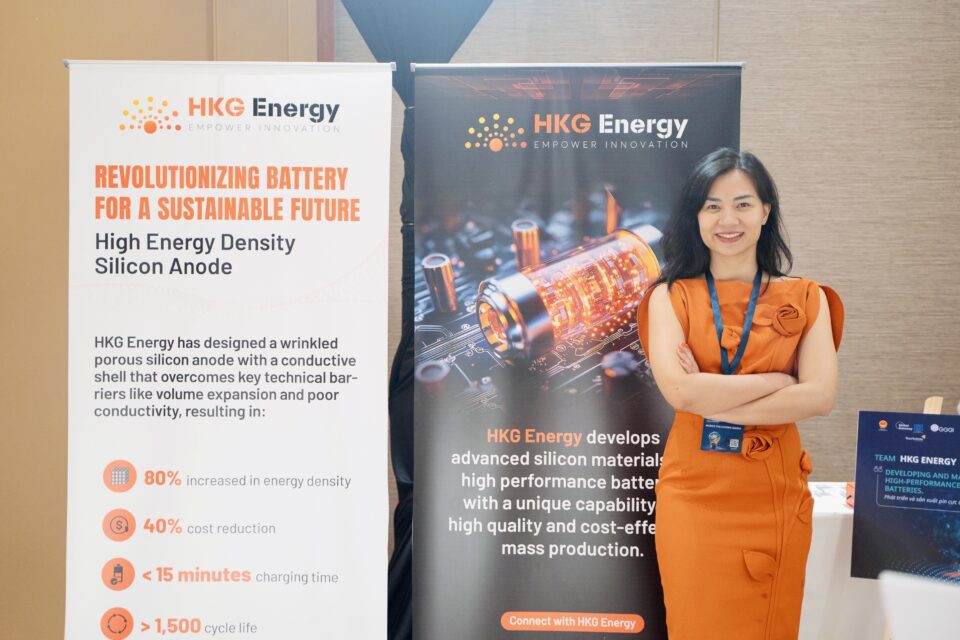
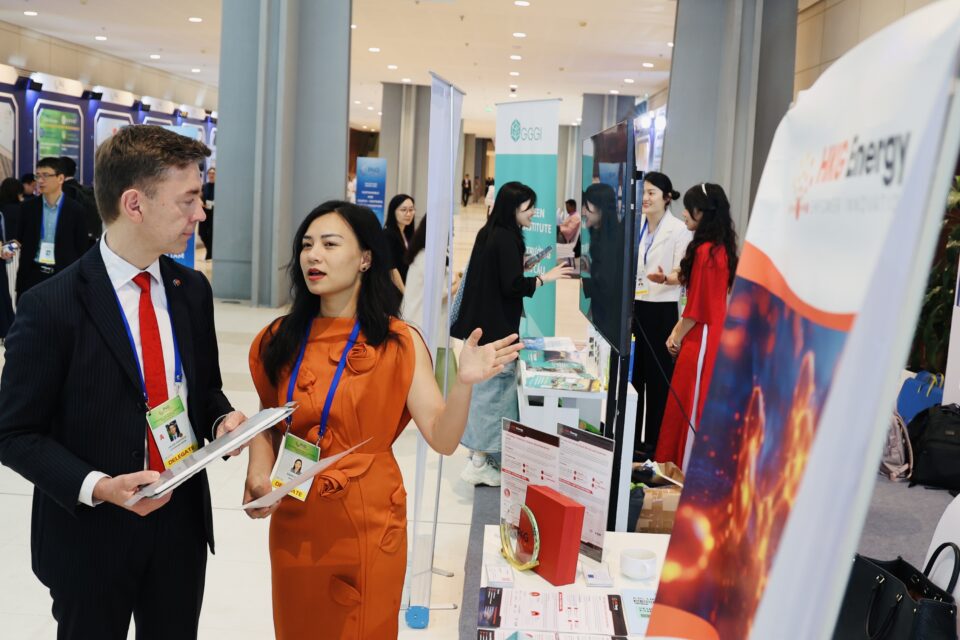
Giang Hoang represents HKG Energy at a 2024 AIS4EE event.
When we first met Giang Hoang, she wasn’t just leading a startup – she was building one from the ground up.
Giang is the CEO and co-founder of HKG Energy, one of New Energy Nexus Vietnam’s corporate partners, which hosted interns through our NEXGen 2024 and Youth Internship Pilot 2025 programs. But even as she helped give young innovators hands-on experience in the country’s fast-growing clean energy, she was still in the process of learning herself; particularly on how to find success in one of the most challenging corners of climate tech.
Giang launched HKG Energy on International Women’s Day, March 8, 2024, and it proved to be more than a coincidence. Working in tech, an industry where women hold only a quarter of CEO positions globally, she has faced her fair share of challenges.
“Being a founder is hard, especially in deep tech,” she said. “In my first three months, most people told me I’d quit within a year. No one trusts you until you deliver. But while some of those voices have since been laid off in today’s tough job market, we’re still here, growing and gaining traction.”
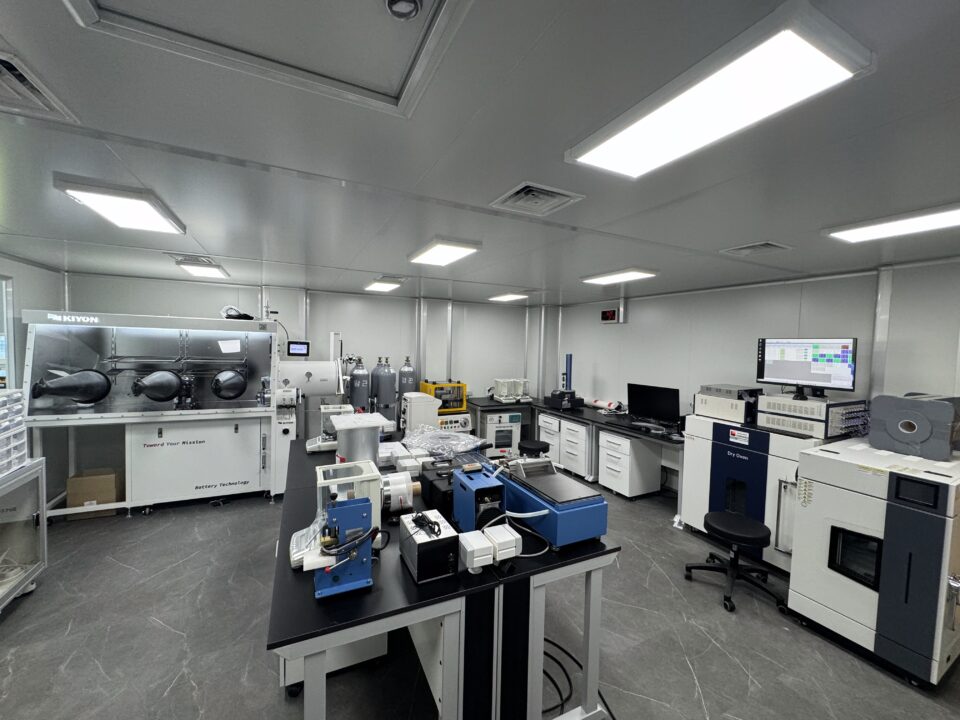
HKG Energy lab in South Korea
Faster charging, better EVs
HKG Energy’s core innovation, Terra Silicon, is a patent-pending nanomaterial that increases battery energy density by up to 80%, helping electric vehicles drive farther, charge faster, and cost less. Beyond mobility, the technology can improve energy storage systems, consumer electronics, and even robotics, expanding access to cleaner, more efficient power.
Since its founding less than two years ago, HKG Energy has moved fast: entering proof-of-concept phases with global OEMs and battery makers, securing millions in LOIs, and receiving clean energy grants from both Vietnam and the US. Moreover, they’re now a member of Greentown Labs, a leading climate incubator based in Boston.
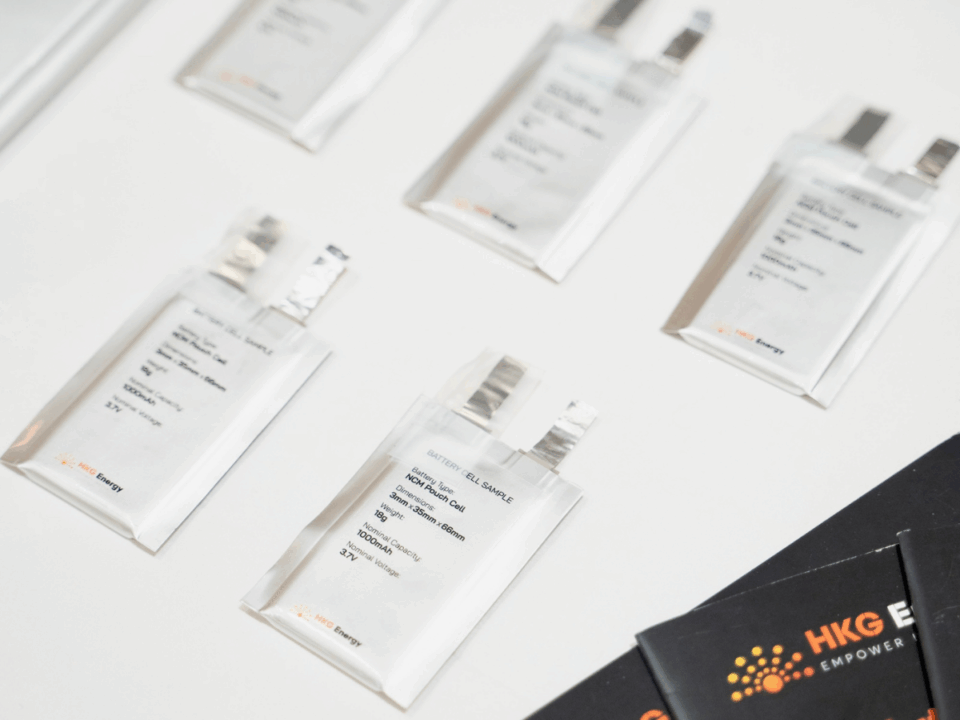
Sample cells made by HKG Energy
But her journey didn’t start in America. Giang’s career began in Vietnam, working her way up toward a leadership position in the Vietnamese EV company VinFast and managing a US$2-billion supply chain.
Now, through HKG Energy’s partnership with New Energy Nexus Vietnam, Giang is paying it forward by opening doors for young people to enter the clean energy sector.
“We’re truly grateful for [New Energy Nexus Vietnam]’s commitment to building a sustainable startup and talent ecosystem. Your support goes beyond programs; it’s a belief in the potential of founders and future leaders.”
Vietnam on the rise
For Giang, success isn’t just about building a company; it’s about building capacity for a nation ready to lead in deep tech.
“Vietnam has a unique window to leap ahead, not just as Southeast Asia’s gateway, but as a global hub for deep-tech manufacturing. The key is not waiting for the ecosystem to mature, but actively building it: invest early in high-quality startups, fund national labs and pilot lines, and de-risk commercialization. It’s not a burden, it’s an opportunity to lead.”
Her vision for Vietnam’s role in the clean energy transition is bold, drawing from her experience managing a US$2 billion supply chain for Vietnamese EV company VinFast.
“From my time at VinFast… I saw Vietnam’s speed and scale. But to lead globally, we must shift from assembly to deep-tech leadership. HKG Energy brings that shift – building homegrown IP and advanced battery materials that can power Vietnam’s rise in the global battery value chain.”
Giang Hoang presents HKG Energy to Julien Guerrier, European Union Ambassador to Vietnam.
Giang’s story goes beyond her success in her tech. She is one of many women and Southeast Asian leaders breaking glass ceilings across the globe. As they do this, more innovators can bring forth solutions that can make the clean energy transition go faster – ensuring a better, more sustainable future for everyone.
“Clean energy isn’t just necessary for the planet, it’s a sound investment. It’s already cheaper than fossil fuels and will define the future of industry. For the next generation, stepping into this space isn’t just a mission – it’s a smart, strategic move.”
Looking for more clean energy stories in Vietnam and beyond? Or are you a founder searching for opportunities? Find out more from New Energy Nexus Vietnam here.
IFC and NEX select 26 women-led startups to drive climate innovation across Southeast Asia
September 8, 2025
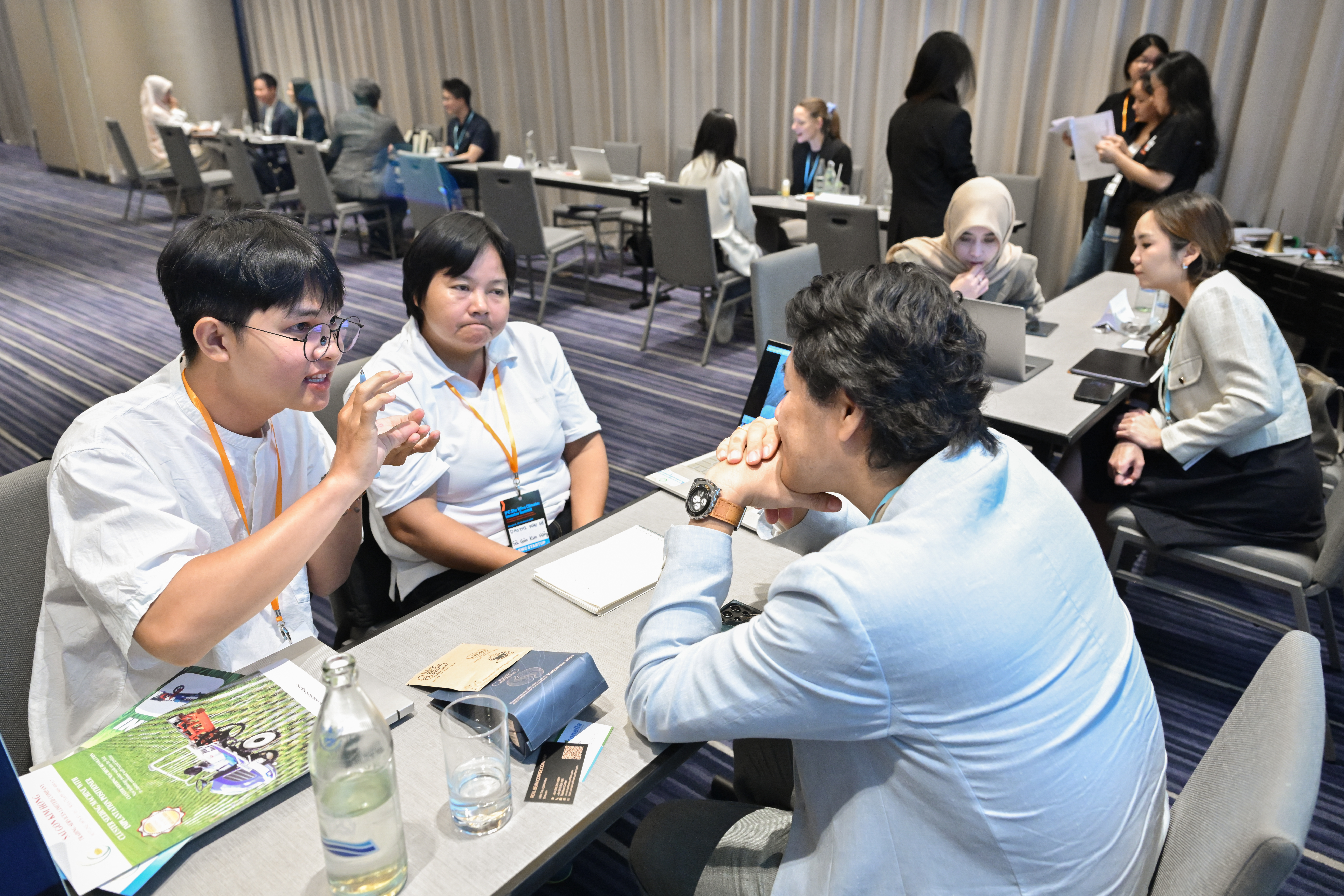
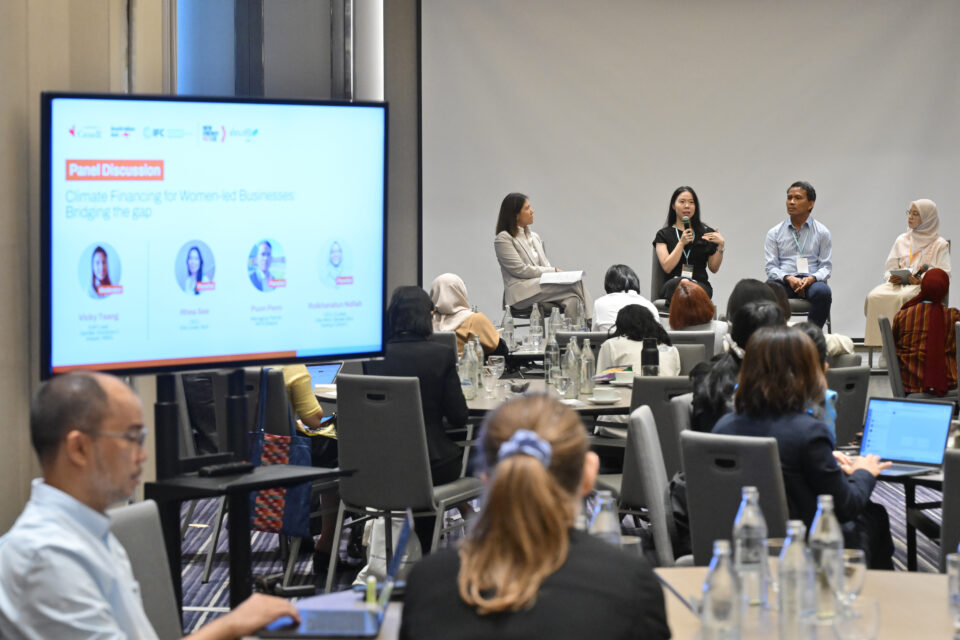
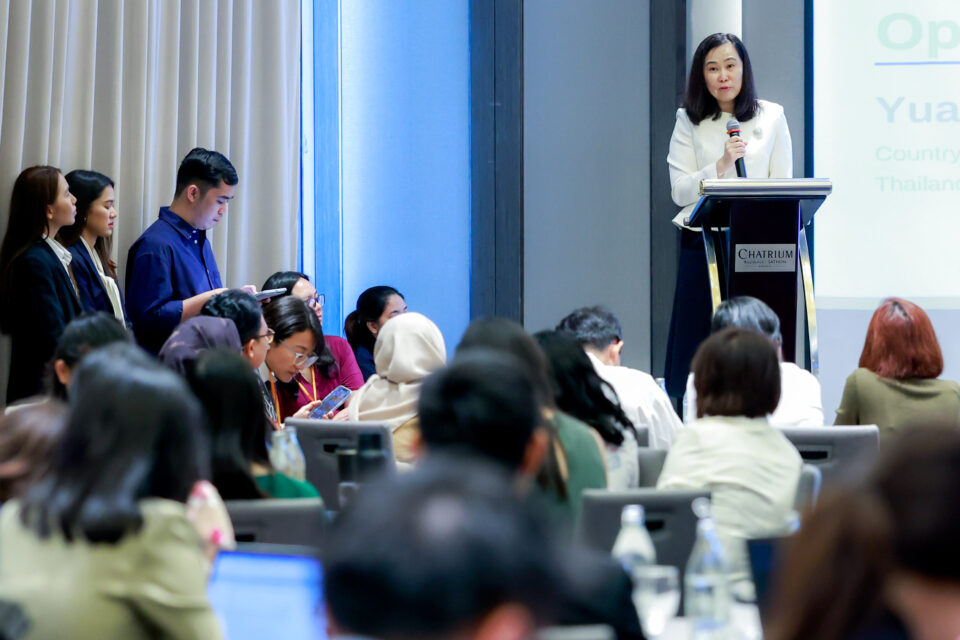
Hong Kong, September 9, 2025 – Twenty-six women-led climate startups from Indonesia, Vietnam, Thailand, the Philippines, Cambodia, Malaysia, and Myanmar have been selected to join a global fast-track investment readiness initiative led by the International Finance Corporation (IFC) and implemented in Southeast Asia by New Energy Nexus (NEX).
Supported by the Governments of Canada and Australia, the She Wins Climate accelerator helps women entrepreneurs to overcome funding barriers and scale their businesses. The program connects entrepreneurs with climate investment opportunities through mentorship, pitch coaching, investor networks, peer learning, and a global community platform.
Sarah Twigg, IFC Gender and Inclusion Lead, Asia Pacific said “Across Southeast Asia, women-led climate startups are tackling some of the region’s most pressing environmental challenges with ingenuity and grit. The She Wins Climate accelerator will amplify women’s businesses, connect them with investors, and unlock the transformative climate innovation the region urgently needs.”
The selected startups operate in diverse climate sectors, including: adaptation and resilience, buildings and urban infrastructure, circular economy and waste management, climate and environmental data, food and agriculture, renewable energy and generation, water and ocean.
“Women-led climate startups have the potential to drive transformative change, yet they face systemic barriers, including limited funding and restricted access to networks, ” said Thao Tran, Country Director at New Energy Nexus Vietnam.
The 26 women entrepreneurs were announced today during the Climate Business Forum: Asia Pacific – co-organized by IFC and the Hong Kong Monetary Authority as the cornerstone event of Hong Kong Green Week – following a highly competitive selection process.
Meet the participating women-led startups:
Agro Agape Co,.Ltd: Providing resource input for solutions in the coffee supply chain and transforming agricultural waste into energy for processing.
BeCool Indonesia: Developing an affordable and scalable solution of solar-reflective coatings to reduce heat and energy use in tropical buildings.
Carbonwize: Offering an AI-powered carbon management platform that simplifies carbon measurement, enabling environmental impact tracking and alignment with environmental standards.
CAS Energy: Offering REGreen, an eco-solar solution designed to support enterprises in their green transition with comprehensive benefits: green spaces, enhanced energy efficiency, and carbon emission reductions.
Earthbound Leaf Leather: Transforming agricultural waste into biodegradable leaf leather with an accessible price, preventing open burning and landfill disposal that emit greenhouse gases and toxic particulates.
Econella: Specializing in bio-additive products, made from agricultural waste, that improve fuel efficiency and reduce emissions in diesel engines while supporting a circular, zero-waste economy.
Enable Earth Co., Ltd.: Transforming landfilled and burnt agricultural waste into high-value carbon-negative products with a scalable, pollution-reducing solution for Southeast Asia.
FoodCycle Farm: Revolutionizing food waste management and urban farming through its circular, sustainable, and decentralized approach of using Black Soldier Fly (BSF) bio-conversion technology.
GAIA Builders: Managing thermal building performance for better energy building efficiency.
Ikanesia: Transforming fish waste, agricultural residues, and local biomass into low-cost, sustainable animal feed through a circular economy model.
Inno Green Tech: Revolutionizing wastewater management through BioCircuit, an AI-integrated bio-electrochemical treatment system that transforms wastewater from a pollutant into a regenerative resource.
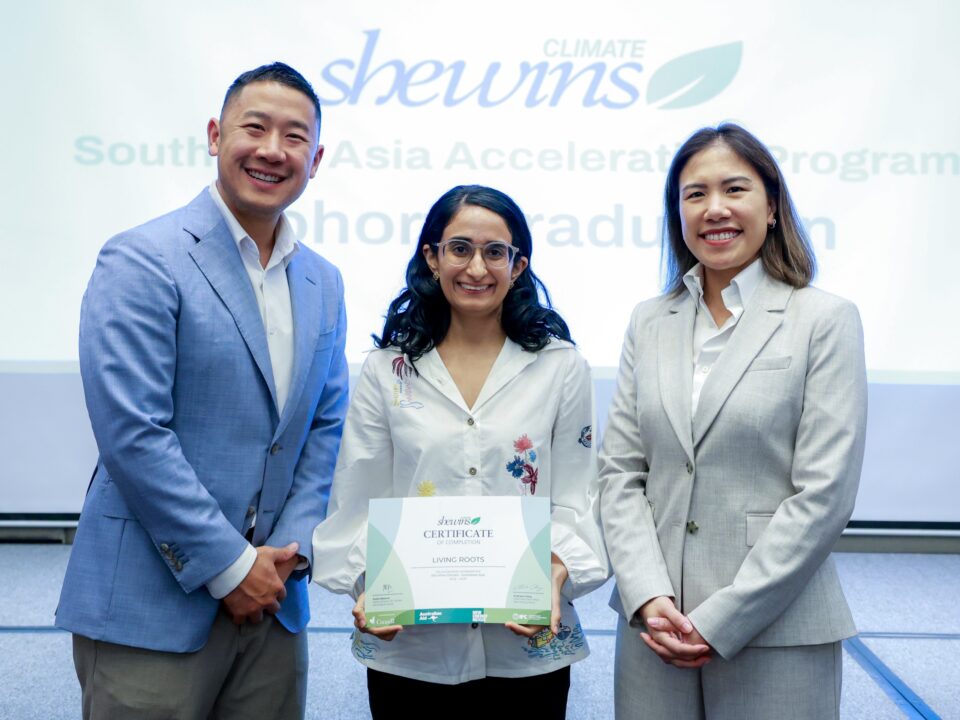
Living Roots: Regenerating agriculture by restoring soil biology, enabling farmers to cultivate thriving, self-renewing ecosystems that nourish land, crops, and communities.
Mangrove Crab Labs: Transforming abandoned ponds into carbon sinks and sustainable livelihoods, empowering communities through the use of recycled crab houses.
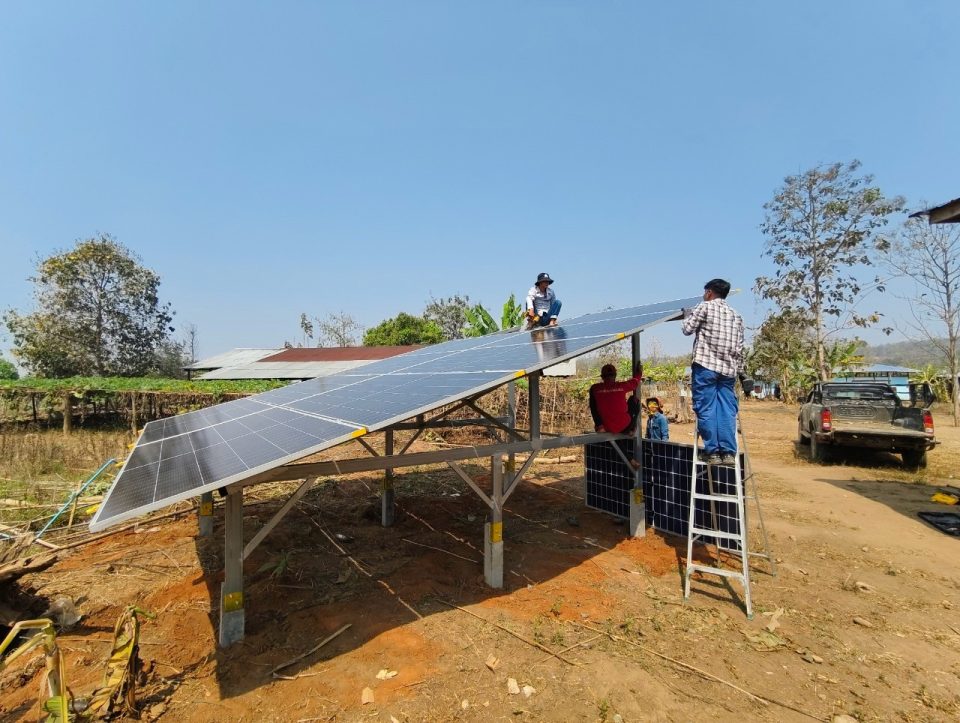
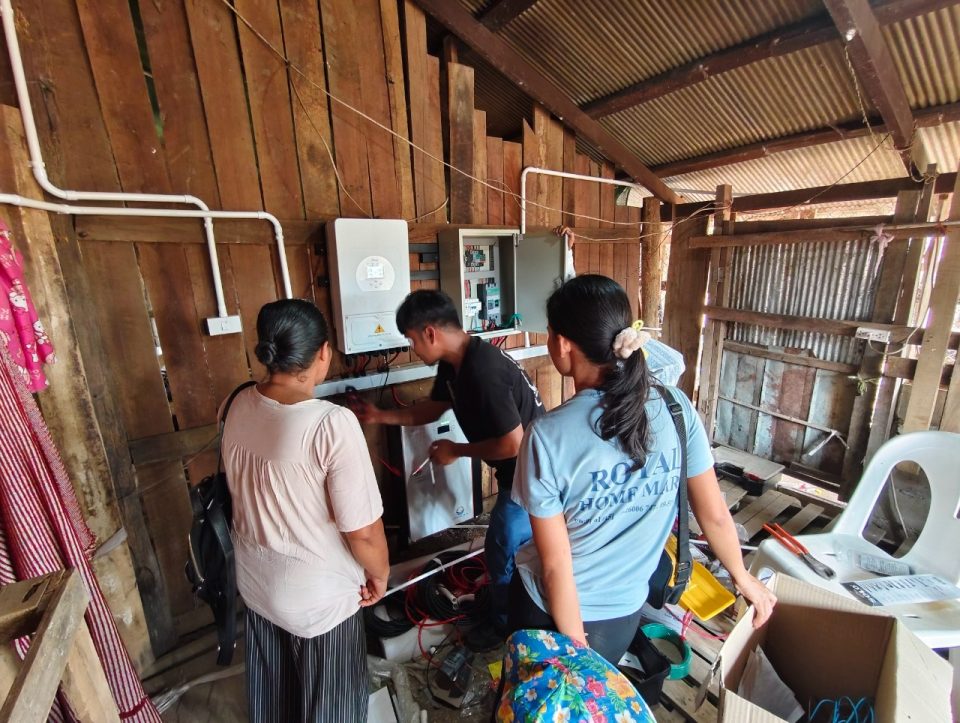
Myanmar Myat Royal: Promoting climate resilience through the installation of affordable solar-powered irrigation for smallholder farmers in Myanmar.
MyPermaSchool: Promoting the solution to develop Healthy Soil, Healthy Food, Healthy Children by training Indonesian teachers how to grow healthy food with children by using natural methods in healthy ecosystems through permaculture.
Nguyen Khoi Green JSC: Pioneering sustainable pig farming in Vietnam, integrating animal welfare, circular agriculture, and green innovation to redefine premium pork through an awarded net-zero model.
PAMMÉ: Transforming collected plastic waste into handcrafted accessories made by incarcerated women, which creates a closed-loop system for social inclusion and waste diversion from landfills.
PT. Eco Karya Teknologi (Crustea): Creating solutions for pond farmers in Indonesia by developing various technologies to increase productivity and efficiency in ponds.
Qarbotech: Developing breakthrough solutions to enhance photosynthesis that results in increased yields and climate resilience through a nanotech-based spray, QarboGrow.
Real Bean Coffee Co., Ltd.: From farm to cup – clean, transparent, and meaningful, Real Bean Coffee is a women-led agritech sustainable specialty coffee supplier from Vietnam.
SUDrain Co., Ltd.: providing an innovative and sustainable wastewater treatment solution by recycling coconut waste into biofilm filters.
Tambanokano Aqua Farm: Providing Crab Condominiums and recirculating aquaculture systems (RAS) to boost harvesting efficiency while promoting a scalable model for climate-resilient aquaculture.
TRI Cycle: Upcycling and recycling post-consumer textile waste into new materials and products while providing waste management services to help brands transition to a more sustainable, circular, and socially just supply chain.
Viginseng Corporation: leading the innovative green processing to transform sustainably cultivated Vietnamese ginseng into high-efficacy health and beauty products, creating a regenerative, forest-based value chain that empowers ethnic minority women, sequesters carbon, and fosters climate resilience
XSolar Energy: Supporting the transition to clean energy with a zero-CAPEX solar leasing model combined with an AI-powered platform for efficient energy management and a measurable reduction in carbon emissions.
Media contacts:
Raisha Fatya, Indonesia Communications Manager – New Energy Nexus
New Energy Nexus (NEX) is an international organization that strives towards a 100% clean energy economy for 100% of the population. It does this with a laser focus on diverse entrepreneurs, supporting them with accelerators, funds, skills, and networks they need to thrive. NEX has accelerated 1,500+ startups, empowered over 10,400+ entrepreneurs, and mobilized over US$4.7 billion in investment. Since its founding in California in 2004, NEX now operates programs or advisory services in Australia, China, India, Indonesia, Nigeria, Pakistan, the Philippines, Thailand, the UAE, Uganda, the USA (California and New York), and Vietnam.
About IFC
IFC – a member of the World Bank Group, is the largest global development institution focused on the private sector in emerging markets. We work in more than 100 countries, using our capital, expertise, and influence to create markets and opportunities in developing countries. In fiscal year 2025, IFC committed a record $71 billion to private companies and financial institutions in developing countries, leveraging private sector solutions and mobilizing private capital to create a world free of poverty on a livable planet. For more information, visit www.ifc.org.
Even in Thailand, a leader in the Asia Pacific region when it comes to women’s leadership in the energy sector, women occupy just 23% of leadership positions.
But when women are at the helm, the impact speaks for itself.
Salinee Hurley. Photo from SunSawang
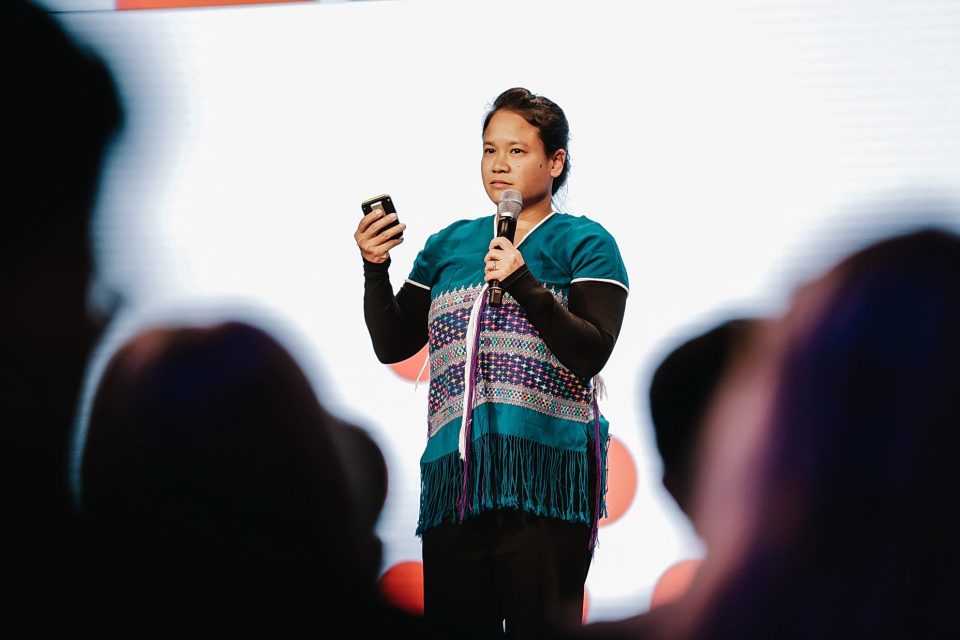
Salinee Hurley is proof that inclusive leadership powers inclusive solutions. A mechanical engineer specializing in solar, she founded SunSawang: a social enterprise bringing solar home systems and lanterns to off-grid villages along the Thailand–Myanmar border. She is also the Project Director at the Border Green Energy Team (BGET), an organization advancing clean energy access in the region.
Salinee’s journey into solar began when she pursued further studies in solar engineering in the United States. Returning to Thailand, she initially implemented solar projects through an NGO model, using grant funding to provide free installations in remote areas. Over time, she realized the approach lacked long-term sustainability.
To address this, Salinee transitioned to a social enterprise model, offering long-term payment plans that support both ongoing maintenance and local ownership.
“Free installations may help in the short term, but the real goal is to empower people to access energy independently in the long run,” she said.
Solar installation at Maw Poe Kay High School. Photo from SunSawang
SunSawang now trains and hires local technicians and sales agents to serve their own communities. This localized model not only keeps systems functioning, but also supports economic activity—access to reliable electricity allows for evening work like weaving, increasing household income.
Salinee’s work also highlights the systemic barriers that persist in Thailand’s solar landscape: high upfront costs, inconsistent regional regulations, and limited financing options for low-income households. Recent steps, including draft laws to simplify rooftop solar permitting and new green loan products, are promising, but access remains uneven.
Last year, she joined New Energy Nexus Thailand’s SolarSTEP initiative, where she shared her expertise and connected with other women leading the shift to a cleaner energy future.
Solar installation at Maw Poe Kay High School. Photo from SunSawang
Supporting women leading the way
SolarSTEP is designed to build skills and leadership among solar technicians and entrepreneurs, with a focus on women, to help accelerate Thailand’s clean energy transition.
This work is spurred on by Thailand’s ambitious target to reach 12,139 MW of solar capacity by 2037, as outlined in its Alternative Energy Development Plan (AEDP). Hitting this target will take more than policy; it requires investing in people, empowering women, and expanding access to rooftop solar across the country.
This is where SolarSTEP comes in. The program has already delivered seven trainings across Thailand’s Central, Northern, and Southern regions, reaching over 200 participants. These efforts have been strengthened through collaboration with key partners, including PEA Encom Smart Solution, PEA Encom International, and LONGi.
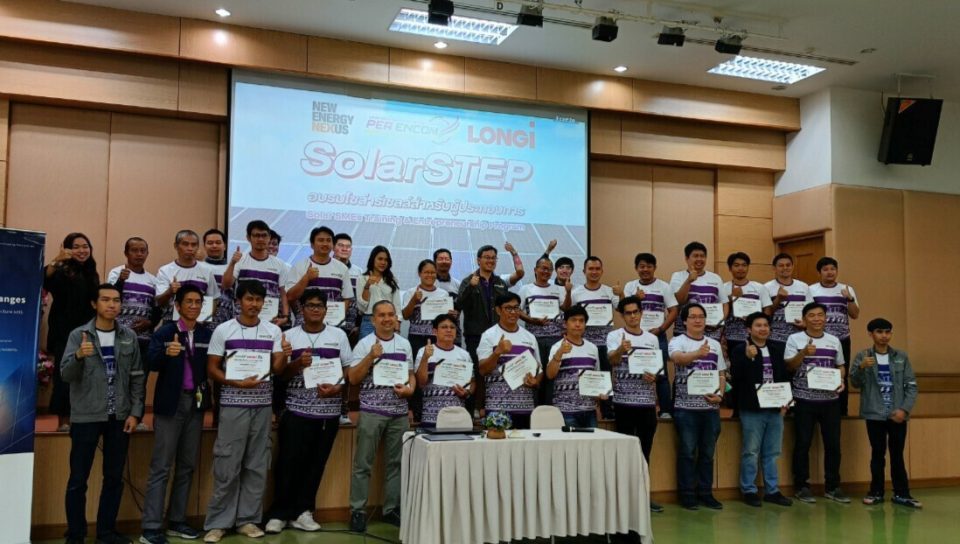
Photo of the SolarSTEP 2024 Training program participants, including Salinee Hurley.
Looking ahead, we’re focused on scaling impact, broadening solar access, and building a sector that mirrors the diversity of the communities it serves.
If we want a just and resilient clean energy future, we need to break down the barriers that keep women on the sidelines and back those already leading the way. Empowering more women to participate and lead in clean energy isn’t just the right thing to do—it’s the smart thing to do.
Want to be part of building an inclusive clean energy sector in Thailand? Learn more about our work here.
IFC and New Energy Nexus launch accelerator for women-led climate startups in Southeast Asia
May 13, 2025
Update: Applications are still open until June 29 — apply now!
Ho Chi Minh – She Wins Climate is a global initiative by the International Finance Corporation (IFC) aimed at accelerating women-led climate startups and increasing their access to climate investment. The Southeast Asia acceleration program, supported by the Government of Canada and the Government of Australia, and delivered in partnership with New Energy Nexus (NEX), is a 12-month program designed to propel 25 promising women climate entrepreneurs in the region to lead the transformation of climate action.
“Women-led climate startups have the potential to drive transformative change, yet they face systemic barriers, including limited funding and restricted access to networks,” said Thao Tran, Country Director at New Energy Nexus Vietnam. “This program is designed to equip female founders with the tools, connections, and confidence they need to scale their solutions and attract investment.”
The twelve-month program aims to enhance investment readiness, expand market access, and strengthen the business capabilities of women entrepreneurs tackling climate challenges. Selected participants will receive tailored mentorship, pitch coaching, and networking opportunities with investors and industry leaders.
The application window for She Wins Climate Southeast Asia is open from May 5 – June 13, 2025. The program kicks off in August with a virtual event, setting clear objectives and fostering collaboration. Participants will engage in a series of curated workshops addressing key challenges faced by women-led climate startups. This hybrid-format program will provide in-depth virtual sessions including mentoring, expert sharing, and peer learning, as well as in-person workshops covering essential topics such as investor pitch networking, overcoming gender biases in the climate business ecosystem, and accessing female-focused markets.
To ensure personalized support, the program includes one-on-one mentoring sessions, expert-led discussions on critical topics such as funding and legal strategies, and peer learning opportunities with the cohort members. Participants will also gain exposure to investors through pitch networking sessions and an investor matching event, helping them navigate the climate investment ecosystem and strengthen their investment readiness.
Additionally, participants will have opportunities to access a network of investors, join the She Wins Climate global alumni community, and increase visibility to showcase their work at IFC and the World Bank Group’s platforms.
About IFC
IFC — a member of the World Bank Group — is the largest global development institution focused on the private sector in emerging markets. We work in more than 100 countries, using our capital, expertise, and influence to create markets and opportunities in developing countries. In fiscal year 2024, IFC committed a record $56 billion to private companies and financial institutions in developing countries, leveraging private sector solutions and mobilizing private capital to create a world free of poverty on a livable planet. For more information, visit www.ifc.org.
Media contacts:
Raisha Fatya, Indonesia Communications Manager – New Energy Nexus raisha.fatya@newenergynexus.com
+628118980051
About New Energy Nexus
New Energy Nexus (NEX) is an international organization that strives towards a 100% clean energy economy for 100% of the population. It does this with a laser focus on diverse entrepreneurs, supporting them with accelerators, funds, skills, and networks they need to thrive. NEX has accelerated 1,500+ startups, empowered over 10,400+ entrepreneurs, and mobilized over US$4.7 billion in investment. Since its founding in California in 2004, NEX now operates programs or advisory services in Australia, China, India, Indonesia, Nigeria, Pakistan, the Philippines, Thailand, the UAE, Uganda, the USA (California and New York), and Vietnam.
Closing the gender gap in Indonesia’s climate sector
March 7, 2025
Rainy Putri with Ima Rida, co-founder of Magi Farm at Magi Farm Centre.
Rainy Putri, Program Manager at New Energy Nexus Indonesia, reflects on the barriers women entrepreneurs face in Indonesia’s climate tech sector.
—
I will never forget the day Mbak Nimas, CEO of BLUE (Warung Energi), walked into our office for a check-in meeting, her young son quietly walking beside her. While he might not have understood the significance of the moment, one thing was clear: his mother was doing something extraordinary.
Warung Energi, founded by a group of young innovators, is more than just a shop. It not only provides environment-friendly technology products and services at competitive rates but also bridges islands across Indonesia with accessible renewable energy solutions. With a mission to make clean energy available across generations, Warung Energi is driving a future where sustainability is within everyone’s reach. In that simple gesture, Mbak Nimas was not only shaping a more sustainable future; she was showing him, firsthand, what it means to lead, to innovate, and to leave the world better for the next generation.
As a woman in climate and clean energy, I don’t just witness these moments, I live this reality everyday. The women I have met, and the stories I have been privileged to be part of have reminded me why this work matters, despite the many challenges that often go unspoken.
Women are leading businesses, pioneering solutions, and driving change—not just for themselves, but for entire communities. However, despite the progress, the reality remains: the world isn’t built equally for men and women. The barriers we face; access to funding, leadership roles, and decision-making spaces, are not due to a lack of capability but systemic biases that continue to hold many of us back. Yet, still, women persist.
Rainy Putri with Ima Rida, co-founder of Magi Farm at Magi Farm Centre.
I think of Mbok Ima from Magi Farm, who inspires me with her work using black soldier fly bioconversion to tackle landfill waste, cut methane emissions, and create a healthier environment. Her work goes beyond food waste reduction, it’s about creating new possibilities for sustainable tourism. With the support of male allies like Bli Soma, they keep me grounded in the fact that male allies matter, that real progress happens when everyone is involved.
Then there’s Mbak Almira from Bionersia, who continues to push for climate action while navigating life as a new mother. Even with a newborn in her arms, she’s leading innovations in biogas technology, bringing cleaner energy solutions to locals in Surabaya.
And Mbak Nafi from Crustea, who is traveling across Indonesia and beyond to spotlight the challenges shrimp farmers face in areas with little access to electricity. Through her work, their voices are finally being heard in the global climate and clean energy space.
These women are redefining what leadership in this space looks like. But their success isn’t just theirs alone. It’s made possible by the allies who choose to support them.
Why gender-inclusive climate solutions require collective support
Helga Tjahjadi, CEO & Co-Founder of Burgreens & Green Rebel, once shared her experience of fundraising while pregnant. Some investors questioned whether maternity leave would slow down her business. But with the right allies, angel investors and venture capitalists who believed in her; she secured funding before giving birth and ensured her business stayed on track. As she put it: “Women have more support now, but there’s still work to be done for investors to fully recognize the value female founders bring.”
Samantha Tedjosugondo from Sweef Capital echoed this sentiment, emphasizing that while risks exist, what truly matters is how they are managed: “We admire founders who acknowledge challenges and actively tackle them. Risks come with opportunities, and strong leaders know how to navigate both.”
But gender bias isn’t just present in investment meetings; it’s also present in communities and cultural norms.
The two years I’ve spent running the Matangi Bali initiative has made me more aware of the everyday realities of patriarchy, subtle yet pervasive barriers that many overlook but deeply affect women’s lives. Have you ever walked into a village meeting and noticed it’s entirely men? Not because women are uninterested, but because there is no seat at the table for them, left without a voice in decisions that shape their families, livelihoods, and futures. Have you ever heard a journalist say they refuse to interview women because “women talk too much”—as if our voices, our experiences, our knowledge, are something to be dismissed rather than valued?
The NEX Indonesia program team attends a village discussion in Desa Beng with Griya Luhu before launching their organic waste management collaboration, supported by New Energy Nexus.
I have. These stories are not just something I read online. They are constant reminders of why I do what I do.
Women continue to face barriers that are recognized but not acknowledged, limiting their full participation. Access to funding, leadership roles, and decision-making spaces remains uneven. Not because of a lack of capability, but because of systemic biases. Policymakers must create inclusive energy policies. Investors need to back women-led solutions. And communities should foster an environment where women’s leadership isn’t the exception; it’s the norm.
Rainy Putri with Desa Adat Keliki representatives; NEX Indonesia held Jelajah Inovasi Iklim at Desa Adat Keliki, inviting young people to understand sustainable waste management practices (TPS3R) in Desa Adat Keliki (Keliki Village), powered by solar energy.
Looking ahead: Big plans ahead for Bali
This year, we’re doubling down on our commitment to clean energy and climate innovation—rooted in a localized approach that truly resonates with Bali. Beyond exploring new ways to showcase its economic potential, we’re taking a holistic, ecosystem-wide approach. That means, equipping Bali-based young journalists to bring climate stories to the forefront and working with policymakers to turn Bali’s Net Zero vision to reality. Sustainability is not just necessary, it’s an opportunity, and we’re making sure it’s one that benefits everyone.
I’m especially excited about the entrepreneurs we’ll be supporting in 2025. We’re committed to supporting 10 innovators to turn their ideas into lab-scale prototypes through capacity building and funding. On top of that, we’re thrilled to announce we will be supporting 2 later stage businesses/startups in scaling their innovations for real community adoption here in Bali.
Our challenge statement remains “Advancing Sustainable Tourism with Low-Carbon Innovation and Climate Entrepreneurship” a commitment we stand by fully. More than ever, we want to see local innovators leading the charge, shaping a future where sustainability and innovation go hand in hand.
Looking for inspiration? Watch below to see the pilot adoptions we supported last year!
Elevating women and diverse entrepreneurs
Of course, it’s not just Bali we’re thinking about. We’re here to support more diverse entrepreneurs across Indonesia who are ready to lead and innovate.
To get you on your feet, I’m thrilled to give you a glimpse of what’s coming next!
For women entrepreneurs and diverse innovators in Indonesia, an acceleration program is on the horizon, designed to take you to the global stage, because your businesses deserve to be seen and heard. But that’s not all: we’re also rolling out a capacity-building program designed for businesses led by women, people with disabilities, and those beyond metropolitan Jakarta. This is about turning ideas into action, giving you the tools to bring your vision to life through pilot projects that create real impact.
The stage is set, and big things are coming. So as we celebrate International Women’s Day today, I hope you’re just as excited as I am for what’s ahead.
When we integrate gender, diversity and social inclusion perspectives into climate action, we don’t just make the transition fairer; we commit to make it stronger. Going above and beyond to improve livelihoods, strengthen local economies, and build long-term climate resilience. Real change doesn’t happen in isolation, so instead of fighting for a seat at the table, women and diverse leaders should already be there; leading, innovating, and shaping the path forward.
So, whether you’re an entrepreneur, an investor, a policymaker, or simply an ally, the question is: What role will you play in building a more inclusive clean energy future?
Happy International Women’s Day! Here’s to the extraordinary grace and resilience to women everywhere. Wishing you the courage to challenge gender norms, surpass every expectation and embrace small successes.
Breaking barriers, scaling solutions: Women in clean energy
March 7, 2025
Kizia Janet, an entrepreneur selling solar-powered products in Kyenjojo, Uganda.
On International Women’s Day, we celebrate the impact women entrepreneurs have on the clean energy transition, overcoming systemic challenges and biases around the world.
—
Clean energy solutions – the very ones that can help address the impacts of climate change – should not be held back by systemic barriers. Yet women entrepreneurs continue to face disproportionate challenges in funding and scaling their clean energy businesses. In fact, only 3% of global venture capital goes to companies founded solely by women, and just 15% of investors in the clean energy space are women.
These data are not just mere numbers on equitable representation: they speak about missed economic and societal potential. For example, the International Monetary Fund states that only 6% of women in advanced economies hold green jobs, whereas more than 20% of employed men work in this sector. The share of women in green jobs is even lower in emerging markets and developing economies.
Tackling this gender gap is crucial for both economic growth and environmental sustainability. According to the IMF, nations with a higher proportion of STEM-educated workers and robust gender equity policies tend to experience greater reductions in greenhouse gas emissions when implementing climate policies. In the countries where NEX works, we see daily that women are developing groundbreaking clean energy solutions, yet they often struggle to access the same resources, visibility, and agency as their male counterparts.
On International Women’s Day, it’s not enough to simply celebrate women founders for the sake of diversity—we must recognize their ingenuity, resilience, and the transformative impact they’re making in the clean energy sector. These entrepreneurs aren’t just numbers on an inclusion story; they’re building tangible clean energy solutions that reflect the needs of their communities.
The question is, how can they break these barriers and scale their solutions?
What we’re doing
At New Energy Nexus, we’re committed to partnering with women-led startups and businesses, and facilitating access to the resources they need to grow. In 2023, we backed 1,100 women entrepreneurs—40% of the total founders we supported—toward the goal of building a more inclusive clean energy sector. This is far from parity but a huge step in the right direction.
This support only elevates the already impactful work these women entrepreneurs are doing. From energy efficiency solutions to improving energy access in off-grid communities, women have their fingerprints all over the global clean energy sector. Here are a few examples across the world:
Community Energy Labs (California, USA)
Community Energy Labs (CEL) is pioneering a low-cost, grid-interactive building control platform that autonomously optimizes energy use, pricing, and comfort. Their innovative solution minimizes the setup and maintenance burden for controls professionals and building operators, making it ideal for K-12 schools, municipalities, and small to mid-sized buildings.
At the helm of CEL is Tanya Barham, a visionary entrepreneur and CEO who is revolutionizing energy management through community-driven, sustainable solutions. With a deep passion for technology and sustainability, Tanya has established CEL as a leader in smart energy systems, empowering communities to reduce costs, lower carbon footprints, and optimize energy efficiency.
Beyond her technical expertise, Tanya is a dedicated advocate for diversity and inclusion in STEM and entrepreneurship
“CalSEED has really enabled our customer focus in a way that I think a lot of technology and R&D organizations don’t necessarily do. So we’ve appreciated that a lot. Also just good people. They’re really just trying to enable you to give you the resources to the network, the opportunities, the visibility to allow you to test your new idea and to allow it to flourish,” said Tanya Barham.
Solar Run Energy (China)
Solar Run Energy is not only a thriving business but also a lifeline for off-grid communities in several countries in Africa, providing solar-powered solutions to millions without electricity.
Founder Xia (Susan) Li grew up in rural China, where she relied on kerosene lamps for light. That firsthand experience shaped her understanding of energy poverty and reinforced her commitment to creating sustainable solutions.
“Today, many girls still have to give up the opportunity to study because they have to fetch water during the day,” Li said. “If there is a light at night, at least they still have a chance to study and read.”
New Energy Nexus China has supported Solar Run Energy, helping scale its impact with access to networks and international markets.
Agrivijay (India)
Co-founded by Shobha Chanchlani, Agrivijay is India’s first curated marketplace for renewable energy products, specifically for farmers and rural households. They have multiple ‘Renewable Energy Stores’ that act as a one-stop shop for solar, biogas, thermal, wind, and electric products.
An alumni of the Women in Energy program we run with Climate Collective, which support the growth of women-led early-stage startups in India, Agrivijay has since established 11 new Renewable Energy Stores and has expanded in the states of Telangana and Andhra Pradesh.
“We’re honored and glad to be part of [New Energy Nexus’] accelerator program, which has helped shape us as an organization with a vision to empower farmers and rural households to fight climate change,” said Chanchlani.
Magi Farm (Indonesia)
The island of Bali in Indonesia has a waste problem, with a large component being food scraps. Led by Indonesian entrepreneur Ima Rida, Magi Farm uses Black Soldier Fly larvae to transform food waste into nutrient-rich compost.
This method not only cuts harmful methane emissions, but also regenerates the environment and opens up possibilities for sustainable tourism.
Magi Farm launched its pioneering, community-focused pilot project with support and a grant from NEX Indonesia.
“Maybe there are Balinese women out there feeling the way I did when I started building my business,” Rida said. “Sometimes the challenge lies in societal expectations: balancing running a business, finding personal time, and participating in traditional community activities.”
GAIA Corp (Philippines)
Women-led startup GAIA Corp is tackling the challenge of heat management in buildings—a critical issue in the Philippines, where rising temperatures are driving up cooling-related energy consumption.
Their insulation technology, The CoolRoof Project, reduces heat absorption in buildings, improving resilience while cutting energy costs.
Operating in a male-dominated industry, founder Eva Lisa Adoremos has faced challenges working primarily with engineers. She overcame this by continuously expanding her expertise through education.
Eva and GAIA Corp are alumni of NEX Philippines’ Startup Acceleration Program, where she gained valuable insights into the administrative side of running a clean energy startup and joined a global network of industry peers.
“I think my role, being a woman in this space, is to become an instrument of promoting equal opportunities for other women who want to be part of this sector,” Adoremos said.
Atchara Poomee, Founder and CEO of PAC Corporation. Photo from PAC Corporation
PAC Corporation (Thailand)
Just a short flight away from the Philippines, Thailand also experiences bouts of extreme heat, partly quelled by air conditioning units. However, emissions from these units contribute to climate change, creating a cycle of rising temperatures and increased energy demand.
PAC Corporation is tackling this issue by producing energy-efficient air conditioning units and water heaters that recycle waste heat, reducing both energy costs and environmental impact.
Founder and CEO Atchara Poomee is also a strong advocate for gender equality, mentoring entrepreneurs of all genders and using her platform to inspire more women to enter the sector.
“I would like them to believe that they are capable, and, regardless of gender, we can succeed if we are determined,” she shared in a UN Women article.
Through NEX Thailand’s Decarbonizing Thailand Sandbox, PAC Corporation was matched with corporate partner B. Grimm, helping scale its solutions for a more sustainable future.
Uganda – Local Organizations and Entrepreneurs
With 60 percent of the population still lacking access to electricity, our Uganda program focuses on supporting local organizations that understand the unique challenges of off-grid communities. We’ve provided funding to groups like Utopia, a faith-based organization empowering rural women entrepreneurs to build clean energy businesses in the Kyenjojo district.
A majority of the entrepreneurs we’re supporting in the country are women, and 70 percent of the jobs created by our programs were taken by women as well.
One such entrepreneur is Kizia Janet, whose solar lantern and panel business is now thriving. Beyond securing a steady income, she is helping her community transition to sustainable energy, improving both quality of life and local economic growth.
Nguyễn Thị Thu Hằng pitching Wiibike on “Shark Tank Vietnam.” Photo from Shark Tank Vietnam
Wiibike (Vietnam)
Nguyễn Thị Thu Hằng founded Wiibike, Vietnam’s first locally made e-bike, to promote both a healthier lifestyle and a shift toward green transportation.
Her journey began as a new mother concerned about air pollution’s impact on her child’s future. What started as a personal mission has grown into a thriving business, with over 1,000 e-bikes sold and an ambitious goal of reaching 2 million units by 2030. Hằng even pitched Wiibike on Shark Tank Vietnam, showcasing the potential of sustainable mobility.
Wiibike participated in New Energy Nexus Vietnam’s Cohort 2 program, where the team refined their business model, gained insights into fundraising, and built strategic partnerships to scale their impact.
—
From California to Ho Chi Minh City, these women are demonstrating that when diverse founders have the right support, they don’t just succeed—they redefine industries, drive innovation, and accelerate the clean energy transition.
Their businesses are not only creating jobs and cutting emissions, but also highlighting that women entrepreneurship holds the key to an inclusive clean energy future.
Be part of our movement for a more equitable clean energy transition. If you’re an entrepreneur, check out how our programs can accelerate your growth here. Or if you’re a donor or potential partner that wants to scale your impact, let’s talk!
In response, its agricultural sector is embracing climate adaptation, powered by brilliant women entrepreneurs whose products are helping the region build resilience.
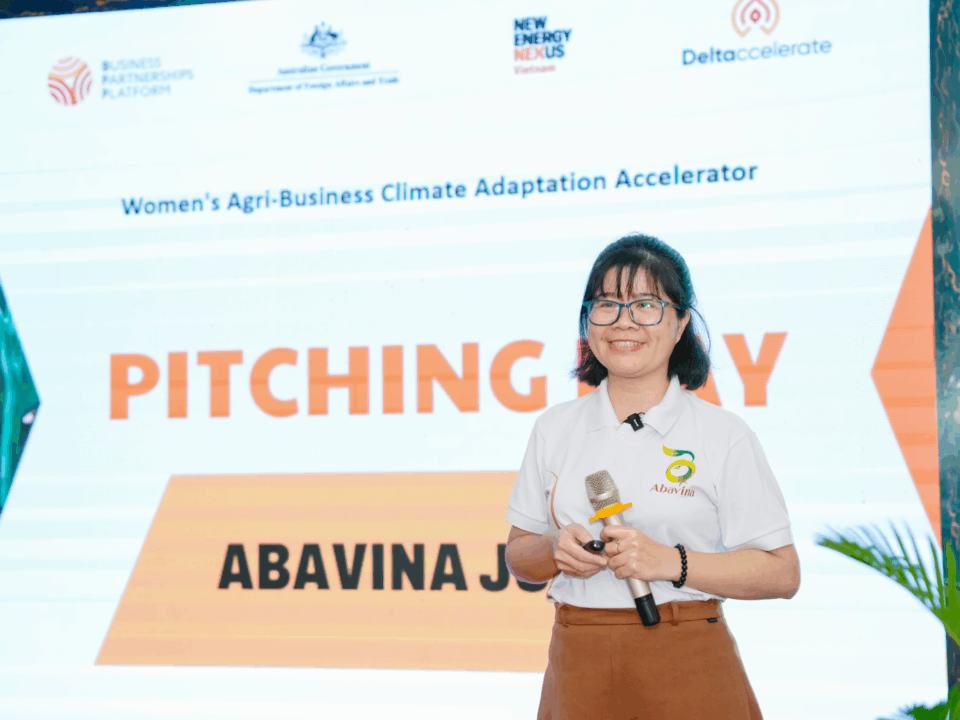
Through the Deltaccelerate program, funded by the Australian Government and managed by New Energy Nexus, six women entrepreneurs with climate-adaptive products received up to VND 1 billion (over US$39,000) to scale their businesses and strengthen their sustainable practices. These entrepreneurs were selected out of 14 competitive participants, all of whom underwent tailored training and gained networking opportunities.
The six women entrepreneurs receiving funding from the Deltaccelerate program.
Whether they’re using coffee to make mugs, or cat houses from water hyacinth, here are the women-led businesses at the forefront of climate innovation in the Mekong Delta:
Founded by Hoang Thanh Thuy, the company produces quality cosmetic and food products made from coconut oil in the Ben Tre province. They have been utilizing and preserving over 10,000 hectares of coconut trees, estimated to have absorbed 75,000 tons of CO2.
Lam Ngoc Tu’s business uses macapuno coconuts to produce confectionery, baking ingredients and drinks. Cultivated by the Khmer community of Tra Vinh province, macapuno coconuts are known for their high saline tolerance—making them an ideal climate-adaptive crop.
Co-founded by Chau Ngoc Diu, the company produces Palmania, an organic sugar substitute made of sweet nectar from palmyra trees in An Giang province. The business provides jobs to indigenous farmers and taps palmyra trees in a way that does not shorten the trees’ 100-year lifespan.
Represented by Chief Strategic Officer Tran Thanh Thao, AirXCarbon turns materials such as coffee grounds, rice, and coconut husks into bioplastics, used to make zero-carbon products ranging from mugs to alternative packaging.
Led by Quang Chan Chan, this company manufactures and distributes handicrafts made entirely from natural materials in the Ha Giang province—including water hyacinth, bulrush, rattan, bamboo, and macrame. Their products include bags, coasters, and even cat houses.
About Deltaccelerate
Deltaccelerate is made possible by a unique partnership between the Australian Government and New Energy Nexus through the Business Partnerships Platform (BPP) Climate Adaptation Partnerships in the Mekong Delta, announced in November 2023.
Deltaccelerate is a business accelerator funded by the Australian Government providing direct support, tailored training, and networking opportunities for enterprises that work in the Mekong Delta’s agricultural sector, which are led by or significantly benefit women and contribute to the sector’s resilience to climate adaptation.
The Partnerships are part of the Australian Government’s AU$94.5 million investments for climate change adaptation in the Mekong Delta.
Six women-led agricultural enterprises secure investment to tackle climate adaptation in the Mekong Delta
December 3, 2024
Six women-led agricultural enterprises across the Mekong Delta in Vietnam have successfully secured up to AUD60,000 (VND1 billion) each to take their businesses to the next level, thanks to Deltaccelerate.
Deltaccelerate is a women’s agribusiness climate adaptation accelerator funded by the Australian Government that provides customised training and tailored support for women-focused small and medium enterprises (SMEs) in Mekong Delta to build their capacity in sustainable business practices and strengthen their resilience to climate adaptation.
The six successful businesses were selected from a cohort of 14 Deltaccelerate participants following a competitive Pitch Day event on 17 October 2024 in Can Tho city. They include:
Mekong Coconut Oil Company Limited (Cocovie)
Producing and trading high-quality cosmetic and food products from coconut oil in Ben Tre province, focusing on preserving and utilizing coconut trees over 10 years old, which can absorb 75 tons of CO2 per hectare per year.
Cau Ke Macapuno Coconut Processing Co., Ltd (VICOSAP)
Specialising in confectionery products, baking ingredients and drinks made from macapuno coconuts, a specialty of Tra Vinh province cultivated by the Khmer community and known for their high saline tolerance, making them an ideal climate-adaptive crop.
Palmania JSC
Creating healthy, organic products from palmyra trees using sustainable farming methods rooted in the indigenous Khmer community in An Giang province.
AirXCarbon/Veritas Vietnam JSC
Transforming biomaterials, including coconut husks from the Mekong Delta, into zero-carbon consumer products.
Dam Doi Sesarmid Cooperative
Producing a range of sustainable products from locally-caught sesarmids and shrimps in Ca Mau province.
Ecoka JSC
Producing and trading handicrafts made from adaptive materials, including water hyacinth and bulrush, from Hau Giang province on global e-commerce platforms.
Each enterprise will now receive this financial support to scale their business through trade promotion, marketing, product development and training initiatives. Deltaccelerate’s total contribution of AUD250,000 (VND4 billion) will also leverage AUD320,000 (VND5 billion) in co-funding from the enterprises to further amplify its impact.
The Deltaccelerate program is part of the Business Partnership Platform (BPP), an Australian Government initative implemented by Palladium. Deltaccelerate is managed by New Energy Nexus Vietnam (NEXVN) and continues to foster innovative solutions for climate adaptation and sustainable development in the Mekong Delta.
About the Business Partnerships Program (BPP)
The BPP supports business partnerships between DFAT and inclusive, commercially sustainable businesses to deliver strategic development outcomes, with a focus on gender equality, disability, social inclusion and climate impact. Since 2016, it has supported 75 partnerships in 21 countries, partnering with 147 organisations across the private sector, social business, NGOs and academic institutions.
The Australian Government has invested more than AUD31 million in BPP partnerships, with partners contributing more than AUD51 million.
About the Deltaccelerate
Deltaccelerate is made possible by a unique partnership between the Australian Government and New Energy Nexus through the Business Partnerships Platform (BPP) Climate Adaptation Partnerships in the Mekong Delta, announced in November 2023.
Deltaccelerate is a business accelerator funded by the Australian Government providing direct support, tailored training, and networking opportunities for enterprises that work in the Mekong Delta’s agricultural sector, which are led by or significantly benefit women and contribute to the sector’s resilience to climate adaptation.
The Partnerships are part of the Australian Government’s AUD94.5 million investments for climate change adaptation in the Mekong Delta.
New Energy Nexus (NEX) is an international organization that strives towards a 100% clean energy economy for 100% of the population. It does this with a laser focus on diverse entrepreneurs, supporting them with accelerators, funds, skills, and networks they need to thrive. NEX has accelerated 1,500+ startups, empowered over 10,400+ entrepreneurs, and mobilized over US$4.7 billion in investment. Since its founding in California in 2004, NEX now operates programs or advisory services in Australia, China, India, Indonesia, Nigeria, Pakistan, the Philippines, Thailand, the UAE, Uganda, the USA (California and New York), and Vietnam.
6 principles we apply to empower Bali’s women entrepreneurs
March 8, 2024
I have been involved in many climate and sustainability projects, but The Bali Women Climate Entrepreneurs project (which has now evolved into The Matangi Bali Project) has been both humbling and exhilarating, unlike any other. Discussions on women, climate, and entrepreneurship has been a journey of discovery – gradually revealing new perspectives and cultivating an atmosphere where trust and empowerment flourish.
“Matangi” directly translates to “wake up” and embodies the essence of reviving Balinese communities and their symbiotic unity with nature. The Matangi Bali Project aims to develop an innovative and entrepreneurial approach to sustainable growth in Bali.
When thoughts turn to Bali, visions of its mesmerizing azure skies, enchanting oceans and stunning architecture immediately come to mind. Indeed, Balinese culture has embraced the ethos of harmonious coexistence with nature. Renowned for its deeply ingrained and rich cultural heritage, this ethos permeates every facet of its community.Despite being entrenched in patriarchal norms and cultural favoritism towards men, the lasting impact of Balinese culture and its identity, which has fuelled a tourism-driven economy to the island, owes much of its influence to the women. Balinese women, who play pivotal roles in various spheres of life – be it within the family, in economic pursuits, or in upholding traditions, are often overlooked. Their culture places the responsibility of shaping the nation’s next generation squarely on the shoulders of mothers to instill cultural values such as moral integrity, spirituality and environmental consciousness.
How will these women, deeply rooted in community values yet constrained by a strong patriarchal system navigate the path towards climate entrepreneurship? It’s a question that invites exploration.
Here are six valuable learnings that have shaped my perspective on this project.
1. Admitting and embracing the unknown
The first and most crucial lesson learned is admitting our own limitations. Rather than succumbing to preconceptions, we chose humility and opted to inquire. We met the women entrepreneurs where they are, seeing the world through their eyes. Understanding the context and cultural nuances has been essential in tailoring our program to the unique challenges women in Bali face.
Navigating the intricacy of Bali’s patriarchal landscape comes with challenges. Setting realistic expectations has been crucial. Our goal was never about changing millenia-old cultural beliefs. Instead, it has always been about recognizing that men and women are capable of equality and that entrepreneurship is a pursuit open to both genders.
For generations, Balinese culture has embraced the ideals of a circular economy. Amid rapid urbanization and burgeoning tourism, these concepts seem to have been overlooked.
Our goal is to shed light on the untapped economic potential inherent in these principles, fostering a diverse range of economic activities across Bali. The profound impact of COVID-19 pandemic, particularly with the cessation of tourism, has understored the urgency of our mission.
We are steadfast in our commitment to position entrepreneurship as a key catalyst for economic resurgence in Bali. While the path might be bumpy, the commitment to progress remains unwavering.
4. Beyond ‘preaching to the choir’
It’s not enough to preach to the perfect-sounding choir. Instead, we orchestrate concerts, inviting others to listen and sing along.
Choosing to become an entrepreneur is a career path that is often frowned upon by many Balinese. Countless individuals have expressed that it can be a solitary journey, which frequently acts as a barrier to actively participate in climate efforts. This applies even more for mothers, who may only find time for such pursuits once everyone else is asleep.
This can compound issues such as diminished self-esteem, resulting in a lack of competitive drive, especially amidst existing biases against local products and services in a landscape heavily influenced by foreign perspectives on sustainability, often perceived as superior or even ideal.
Creating inclusive spaces where diverse voices are heard and valued is crucial for fostering a supportive environment for women entrepreneurs.
5. Respecting women’s agency
We strive to unlock a path where every woman can chart their own course. Empowering these entrepreneurial spirits goes beyond mere encouragement; it’s about honoring their autonomy and granting them the reins to shape their own stories.
Picture this: women juggling countless responsibilities, squeezed for time, and stretched thin by limited budgets. Yet, amid these challenges, they persist, prioritizing the needs of others while silently battling the stigma of environmental indifference. In the northern reaches of Bali, an economically disadvantaged region where meeting basic needs takes precedence, these women are unfairly scapegoated for their plastic usage, despite it being a convenient and affordable option for them.
And did you know? In the realm of waste management education, it’s the women who consistently bear the brunt of blame, their shoulders weighed down by the burden of societal expectations.
These stories form the basis of our understanding for running this critical project . Our role is simple yet important: to stand beside them, offering support as best as we can, to navigate their entrepreneurial journeys with confidence and resilience.
6. Meeting halfway
By continuously assessing the program’s needs, we ensure that we are making a tangible difference in the lives of women entrepreneurs. The impact goes beyond economic success; it extends to personal transformation, newfound confidence, and a deepened sense of belonging within their community.
At each twist and turn, we encounter multiple challenges. It’s a voyage that demands patience, empathy, and a whole lot of collaboration. Despite these challenges, we remain committed to being responsive and resilient. We’re ready to transform the insights gleaned from the grassroots levels to innovative solutions, ensuring we always meet those we support.
As we embark on the second phase of the program, these learnings will serve as our guiding light, propelling us towards innovative solutions despite gender barriers within the climate sector in Bali.
The Matangi Bali Project
The Matangi Bali Project aims to develop an innovative and entrepreneurial approach to sustainable growth in Bali.
Our journey in Bali began in 2021, where we extended capacity building support to women climate entrepreneurs, fostering innovative solutions despite gender barriers within the climate sector. Recognizing the limitations of solely empowering one group, we have pivoted our approach to encompass broader participation, encouraging all stakeholders – including men, women, youth, government, and communities – to embrace and cultivate leadership organically. This effort ensures that diverse voices contribute to sustainable solutions addressing climate change effectively.
This project is initiated by New Energy Nexus Indonesia as part of the Bali Net Zero Emissions Coalition with CAST Foundation, IESR & WRI Indonesia. Matangi Bali is supported by ClimateWorks Foundation and ViriyaENB.