Story
California
Indonesia
New York
Women
Youth
6 ways NEX supports diverse clean energy innovators around the world

From swappable batteries in Indonesia to decarbonizing New York’s legacy buildings, clean energy entrepreneurs around the world are helping fix our planet and make energy more accessible.

Read on to discover 6 entrepreneurs in our portfolio that are setting the benchmark for impact and innovation.

As the world’s leading ecosystem of funds and accelerators, New Energy Nexus supports diverse clean energy entrepreneurs, giving them the tools, networks or funds they need to thrive.
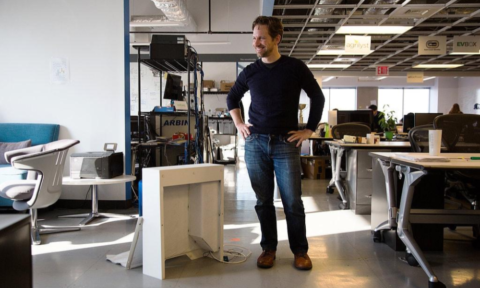
marshall and cozy

”New Energy Nexus and The Clean Fight positively impacted Radiator Labs’ growth by way of supportive programming and high-level corporate and investor introductions.” Marshall Cox, CEO of Radiator Labs

1. Decarbonizing New York’s legacy buildings

The Radiator Labs system provides room level temperature control and eliminates overheating in radiator-heated buildings. Their innovative ‘Cozy’ is a revolution in radiator heating, saving up to 45% on heating costs and their installations are 100% financeable through subsequent energy savings. 

NEX’s New York program, The Clean Fight awarded Radiator Labs with a financing grant of US$150,000 to expand their team and two pilot grants of US$97,000 & US$150,000 to support a hybrid electrification and an energy efficiency project. 

In 2021 Radiator Labs completed 15 projects installing approximately 3,500 units, mitigating approximately 1,800 tons of carbon annually.

2. Harvesting value from agricultural & forest waste

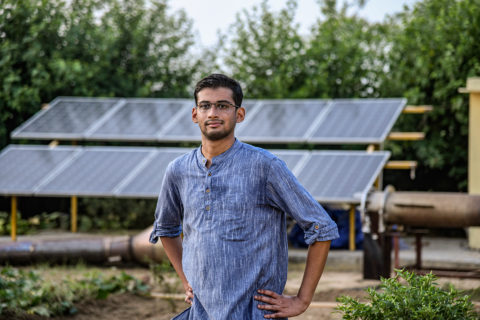
Takachar is on a mission to fight climate change by transforming massive amounts of waste biomass into marketable products around the world. 

Around US$120 billion of agricultural waste is generated every year. The burning of agricultural waste causes air pollution impacting human health and the global atmosphere. Using a novel concept called oxygen-lean torrefaction, Takachar has developed and patented the design of a small-scale, low-cost, portable equipment to convert waste biomass into solid fuel, fertilizer, and other specialty chemicals. If scaled, Takachar’s technology could reduce smoke emissions from agricultural waste by up to 98% and cut a billion tons of carbon dioxide a year.

NEX’s California programs, CalSEED & CalTestBed awarded a US$600,000 grant in non-dilutive funding and a voucher of ~$260,000 respectively, to conduct prototype testing at UC Santa Barbara’s Renewable Natural Gas Development Laboratory.

takachar 1

“If scaled widely, the Takachar technology can enable rural communities to create significantly more value from their un-merchantable crop and forest residues, thereby reducing the risks of wildfires, air pollution, and carbon footprint.” Kevin Kung, Founder and CTO
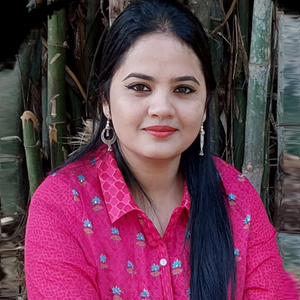
*Photo is of Vidyut Mohan, CEO and Co-Founder of Takachar.

screenshot 2021 12 12 at 15.44.22 768x396 1 e1639382823746

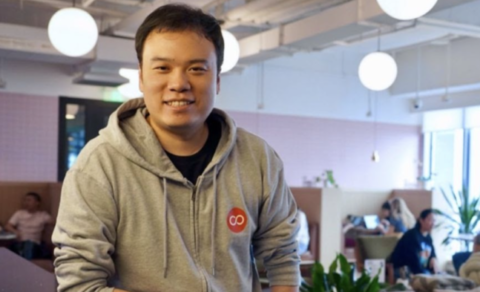
“When questioning myself about why I am here, I find the answer in promoting social progress and making the world a better place are aligned with New Energy Nexus’ mission.” Felix Wu, CEO and Founder, Seniverse

3. Using big data to make clean energy more efficient 

Seniverse is a big data company, leveraging satellite data, AI, machine learning and IoT to deliver asset-level physical risk predictions on a computing platform. Seniverse’s technology predicts average power consumption with 3.02% greater accuracy, which both lowers the cost, and increases generation, of solar and wind power. 

Seniverse is a member of New Energy Nexus’ second EXCEL Accelerator cohort. During the program, NEX provided deep-dive workshops with leading corporations, one-on-one interviews with business units, connected Seniverse with investors and recommended them for various international awards.

4. Supplying clean energy products to refugee communities

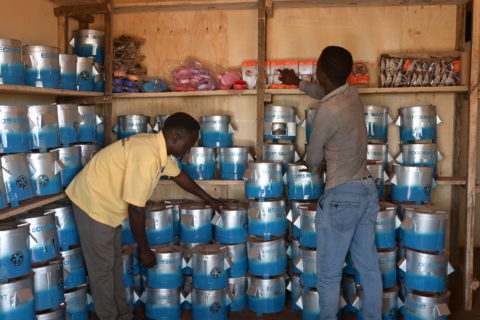
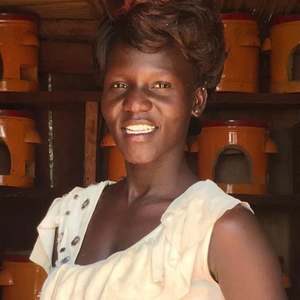
Kiryandongo Refugee Settlement is an off-grid community hosting over 65,000 people from countries bordering Uganda. The majority of the households rely on firewood for cooking, kerosene for lighting and drink unsafe water. Children’s Hope International Ministry is a community-based organization (CBO) extending psychosocial support to children and women and increasing energy access by distributing and selling clean energy products in the settlement.

The organization has reached over 100 households and hopes to expand and create awareness of clean energy products, especially cookstoves and solar lanterns. It has also earned revenue from the profits to run more activities. NEX introduced the CBO to the clean energy business model, provided training to increase sales and run a business. We also offered stock capital to start the business as the CBO had no funds or collateral to present to banks to access financial assistance. 

reverand and daniel of children's hope ministry in kiryandongo refugee settlemet taking count of their stock in their energy business. we recently extended our model to humanitarian settings

“Clean energy products reduce stress on environmental resources. I hope that our work can help the community appreciate the importance of the cookstoves, briquettes and solar lanterns so they can become self-appointed ambassadors and users.” Deacon Rwemigio Raphael, Founder and Director of Children’s Hope International Ministry

solar panels

“I have been in the renewable sector for six years. But the amount of knowledge or confidence I am getting after being associated with [this program] is something beyond my expectations. The most amazing part is that all the mentors try their best to associate us with various opportunities that comes along the way. Thanks.. for giving [me] this opportunity to grow…” Saikrishna Mohanty, Founder & Managing Partner, Solar Infra

5. Accelerating adoption of solar energy systems

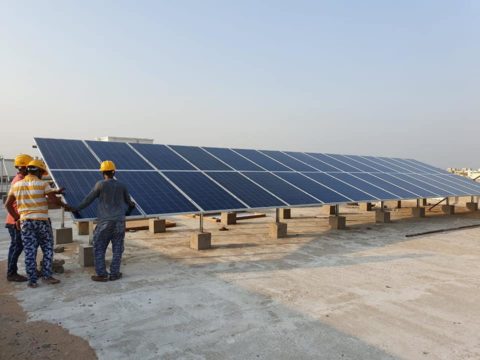
Solar Infra specializes in solar installation, project works, assembling, and supplying solar products. Solar Infra has installed more than 2.5MW of solar products. Their household products use brushless DC motors which lower electricity consumption. Through all the solar products installed and sold, Solar Infra has reduced ~1.8 tons of GHG emissions. Their solar products such as solar sewing machine, incense machine, solar-operated drip irrigation for farmers, and rope making machines have provided livelihood opportunities for more than 700 households.

Solar Infra is a part of NEX’s Climate Ready for Women in Energy program (in partnership with Climate Collective) which has provided business literacy skills, support on their pitch deck for investors and mentorship support to launch new livelihood products.

6. Pioneering swappable battery infrastructure in Indonesia

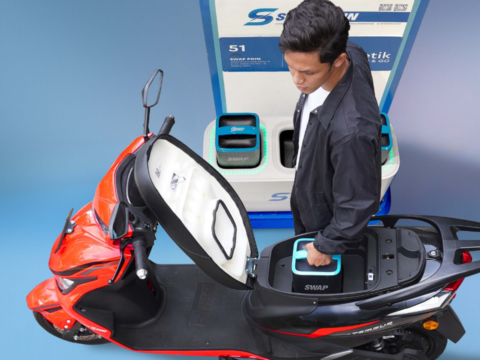
The two biggest problems with e-motorcycles, a potentially massive mode of transport in Indonesia, are perceptions about their range and the longer time it takes to charge. SWAP is city-based infrastructure of battery swapping stations for e-motorcycle riders. No more cords, no more hassle, battery is being swapped with a fully-charged battery within 9 seconds.

SWAP has 350+ units of e-motorcycles on the road, 250+ battery swapping stations deployed, 440,000+ cumulative kilometers driven, 37 tons of total CO2e reduced, and a charging station network in four cities.

NEX introduced SWAP to potential investors, supported the SWAP team to prepare funding documents, how to calculate their GHG reduction and offered mentoring services to help them develop their business management skills.

untitled design (22)

“Nexus has motivated SWAP to focus on the single thing that mattered – build something impactful for the new era of energy.” 
Kevin Phang, Co-founder of Swap Energi Indonesia

Explore More
Story
Women
What challenges do women face to become clean energy entrepreneurs?

What are the unique challenges and hurdles women face to become clean energy entrepreneurs? What needs to be done to break down these structural barriers? And what advice do other women in the clean energy ecosystem have for up and coming talent? We asked some experts around the world at New Energy Nexus.

Only 20% of global startups are led by women (2019), while women represent only 32% of the workforce in the renewable energy sector. 

The challenges are social, cultural and financial…

In the United States, female founders remain far behind their male counterparts in raising venture capital. According to an article published by Bloomberg: “Female founders secured only 2% of venture capital in the U.S. in 2021, the smallest share since 2016 and a sign that efforts to diversify the famously male-dominated industry are struggling.” This means that women need to find alternate means of raising the funds to support the development and commercialization of their innovations. 

‘’Considering these hurdles, incubators, accelerators and other government programs are working hard to deliver funding, education and resources at the right time to female entrepreneurs to close this gap. NEX is on the forefront of this mission, seeking to provide critical support to a diversity of entrepreneurs so that they can be successful despite lack of venture capital funding.’’ Tenley Dalstrom, Director at CalTestBed (our California program)

mia perez

Mia Perez of Solarwise PH, a startup that offers a centralized one-stop online platform linking solar customers, installers & suppliers, supported by NEX Philippines.

In the Philippines and India, the socio-cultural conditioning and gender biases significantly disadvantage women in business, especially in the energy sector, which is perceived to be a male-dominated industry. Another challenge is the lack of strong women role models in the industry to look up to or engage with as mentors.

”There are still informal and social myths and constraints that women face which can stem from lack of strong women role models in energy entrepreneurship to societal expectations that women are less likely to bear harsh working conditions’’ – Brenda Valerio, NEX Philippines Program Manager 

In Uganda, some of the main challenges faced by female entrepreneurs are related to access to training. Most women entrepreneurs hesitate to start clean energy enterprises due to beliefs that they should have expertise in manufacturing and repairing clean energy products. They are unsure of the requirements by financial institutions and ways in which they can access financing for energy related businesses. This has resulted in the under-representation of women at all levels in the energy sector. 

‘’Financial structural impediments to gender equality translate into barriers to access investment capital. Most financial institutions require assets for one to access credit, yet in the past women were denied property ownership rights to their father’s assets which limits their access to credit’’ Mackline Banaga, Program Analyst at ENVenture (powered by New Energy Nexus)

untitled design (11)

Heather Hochrein, Founder and CEO of EVmatch, said “This Rapid Response grant will immediately strengthen EVmatch’s ability to sustain our community-based EV charging network and grow our network at multi-family residential properties throughout California.”

How does NEX support women entrepreneurs?

A 100% clean energy economy for 100% of people requires us to rebalance the scales of power and money: shifting resources to support innovation where it’s needed most, empowering those traditionally excluded from the start-up ecosystem, and focusing on clean energy adoption as much as clean energy innovation. That’s why striving for justice, equity, diversity, and inclusion is fundamental to our mission.

The New Energy Nexus California Programs, CalSEED and CalTestBed, support women and entrepreneurs from underrepresented communities, via an “equity in – equity out” framework. Both programs are committed to ensuring diverse communities across California have the opportunity to participate in the development and implementation of their clean energy solutions. To achieve this goal, the teams actively conduct targeted outreach to ensure that the applicant pool is representative of all Californians. Entrepreneurs are also encouraged to explore innovative ways to bring equitable and impactful clean energy solutions and opportunities to California’s most disadvantaged populations.

NEX California was also awarded a Wells Fargo/National Renewable Energy Lab IN2 Rapid Response grant to support underrepresented entrepreneurs affected by the covid-19 pandemic who contribute significant social impact. The awardees for these grants were female founders who each received US$15,000 non-dilutive grants, networking, and professional development that helped them survive the challenges posed by the pandemic.

In the Philippines, NEX events are designed to incorporate safe spaces where everyone can voice their opinions and insights. The team constantly seeks feedback from the participants on how they can be better supported and create more impact. 

untitled design (10)

Saikrishna Mohanty of Solar Infra, a startup supported by NEX India in partnership with Climate Collective

NEX India supports aspiring women graduates and university students to take up entrepreneurship in clean energy and energy access through a unique startup simulation approach. NEX India also runs early stage accelerator programs for women-led startups in clean energy and energy access to bridge knowledge gaps, build business literacy, build networks and increase confidence to scale up.

‘’NEX India has built an integrated approach to run programs that support a higher number of women to take up entrepreneurship in clean energy and energy access. They support women-led startups in early stages to build capacity and ensure diverse pipelines’’ Jui Joshi, NEX India Program Lead, Women in Energy Entrepreneurship

ENVenture, powered by New Energy Nexus offers women entrepreneurs business management training, mentorship and coaching programs aimed at improving their business acumen skills and giving them practical experience to run sustainable energy enterprises in the last mile. An effective a loan product has also been designed with women in mind, to address traditional impediments of access to capital. 

‘’We prioritize women and create an environment for them to start sustainable businesses by providing them renewable energy stock loans, cash to boost, accelerate, and grow their clean energy businesses. For instance, 70% of our enterprises in our program are women-led’’ Robert Birungi, Head of Credit at ENVenture, powered by New Energy Nexus

What advice do you have for women entrepreneurs with a clean energy idea or want to create a startup?
untitled design (12)

Rose Juliet Tabu, a clean energy entrepreneur selling cookstoves and solar supported by NEX in the Bidi refugee settlement in West Nile.

The three pieces of advice were repeated by experts from across New Energy Nexus:

  • Build your network: join professional organizations that are focused on your field, participate in webinars, networking events, make contacts, and follow up.
  • Nurture a team of mentors and champions: It is important to build these relationships through authentic interactions, rather than transactional requests. Make sure you bring something to the table instead of only asking for help.
  • Know your stuff: Make sure that you understand what problem your innovation is solving, the stakeholders involved, your product-market fit, the details of your technology, impact goals, technology readiness level and next steps toward commercialization.

According to the World Bank Gender performance indicator report (2013), women perform better in loan repayment as compared to their male counterparts. They should believe in themselves and be confident enough to acquire credit to start clean energy businesses. Also, one doesn’t necessarily need the technical expertise in manufacturing and repairing clean energy products to run a successful clean energy business, just basic business literacy and understanding of business models is essential. Thus women should step up and start up clean energy businesses being at the forefront of increasing energy access. 

If you’re a woman entrepreneur with a clean energy or climate  innovation waiting to take off, get in touch and check out our programs around the world!
Explore More
Story
Women
Empowering more women-led climate entrepreneurs in Southeast Asia – NEX virtual meet up

20191123 101517

Women-founded and led startups are receiving more attention in Southeast Asia, but they still represent a very small fraction. This is the focus of a webinar bringing together entrepreneurs and experts at Women Empowerment in Southeast Asia’s Clean Energy Economy virtual meetup on 9 March, one day after International Women’s Day.

The situation in Southeast Asia reflects a global trend: only 20% of global startups are led by women (2019), while women represent only 32% of the workforce in the renewable energy sector. Exploring the barriers to women-led climate entrepreneurship, as well as the support up-and-coming women entrepreneurs can tap into will be crucial to ensure the benefits of clean energy and climate solutions are distributed more equitably and sustainably.

Hosted by New Energy Nexus, the panel of speakers includes representatives from startups, supporting organizations, and venture capital: 

  • Chi Trinh is the Vietnam Country Manager of Clime Capital. Clime Capital identifies and creates investment opportunities founded on long-term, stable cash flow assets that contribute towards reducing climate change impacts, alleviating infrastructure gaps, and building sustainable economies.
  • Laurie B. Navarro is the President of CSi Energy Solutions International. CSi is a consulting company on energy and environment based in the Philippines and providing services in the region. 
  • Maaike Doyer is founder of Epic Angels – a network of female executives and operators who have built and expanded multiple companies in all parts of the world. Epic Angels has the ambition to become the largest female-only angel network in Asia. 
  • Mada Ayu Habsari is Managing Director of PT. Enertec Mitra Solusi – a women-led startup based in Indonesia that is focusing on energy service, energy efficiency, and renewable energy. Enertec started its journey as an energy services company with the focus of providing energy efficiency solutions on existing buildings and retrofit public facilities.
  • Phattanan Supasatian, Chief Executive Officer, Godung Faifaa – a new online market that collects complete solar system equipment.
  • Stanley Ng is the Southeast Asia Program Director at New Energy Nexus – an international nonprofit that supports diverse clean energy entrepreneurs with funds, accelerators, and networks.

Topics covered in the virtual meet up:

  1. Opportunities and challenges for women-led clean energy and climate startups and enterprises
  2. Perspective on the performance of women-led clean energy and climate startups and enterprises
  3. Supports available from the community for clean energy and climate female founders, entrepreneurs, and innovators

​Register at: https://bit.ly/WomenEmpowerment22 

About New Energy Nexus:

New Energy Nexus (NEX) is an international nonprofit supporting diverse climate entrepreneurs to accelerate the transition to 100% clean energy for 100% of the population. New Energy Nexus provides funds, accelerators and networks, with initiatives in China, India, Indonesia, Nigeria, the Philippines, Singapore, Thailand, Vietnam, Uganda and the USA.

Media contact: Tristan Tremschnig, Global Communications Director, New Energy Nexus, tristan.tremschnig@newenergynexus.com (based in Hong Kong)

Explore More
Story
Indonesia
Women
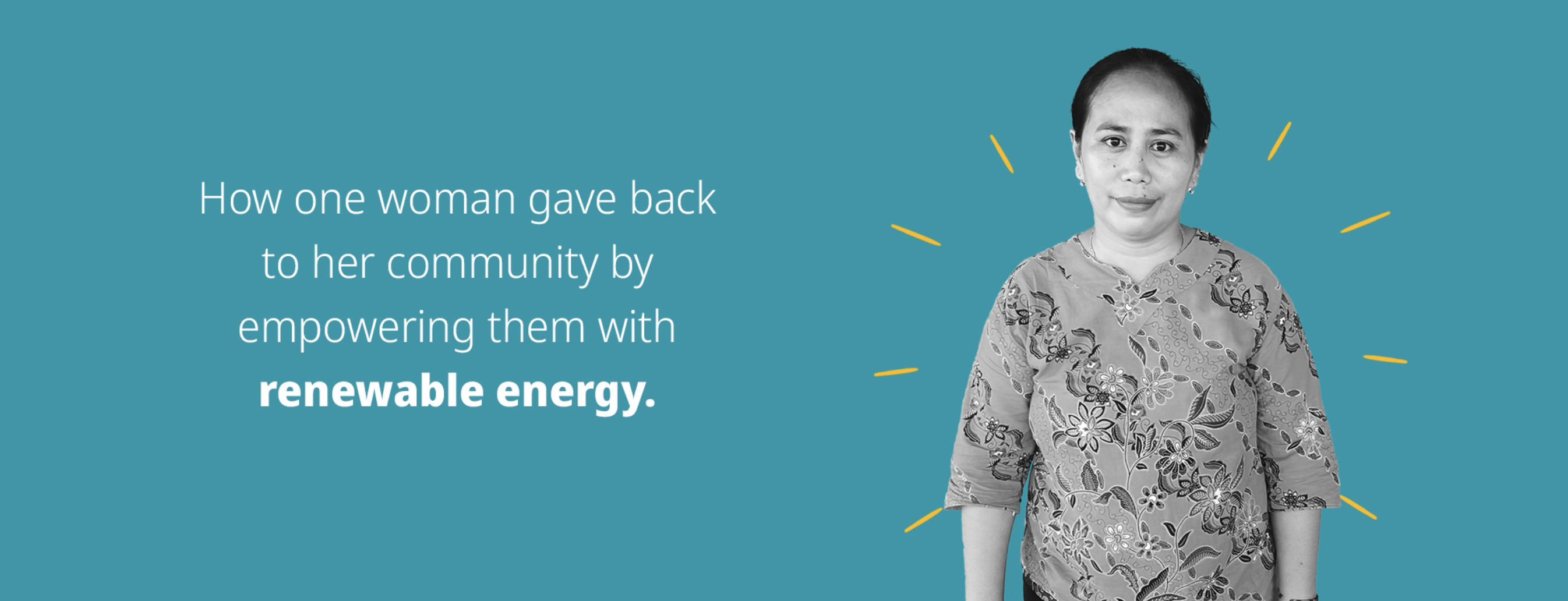
Empowering women with renewable energy in Indonesia

rambu yati

Rambu Yati Radandima, a finance manager in Indonesian start-up Sumba Sustainable Solutions (3S), is giving back to her community. A start-up with a focus on inclusive and sustainable innovations in Sumba Island, 3S provides local schools, villages and community health centres with access to solar power.

Rambu Yati’s work has personal meaning. She knows what it’s like to live without reliable access to electricity. Sumba, an island in the East Nusa Tenggara Province of Indonesia, has a unique geographical character that makes tapping into the national electricity grid difficult. In the past, over 500,000 families living there—roughly 38% of the island’s population—struggled with little or no electricity.

Rambu Yati says: “Life in the village was very different. Back in the 90s, my family relied on kerosene lamps to light up our home when we cooked or when we wove palm mats. We had to manually pound rice and corns because we had no access to milling machines.”

While the Indonesian government committed to electrifying the entire country by 2020 (RUEN 2017)[1], only 62% of the East Nusa Tenggara population has access to electricity, the lowest energy access level in Indonesia (IESR, 2019).

Stepping stones

In 2000, Rambu Yati enrolled in the Warmadewa University in Bali. She successfully graduated with an undergraduate degree in Agricultural Science. Today, as finance manager at 3S, Rambu Yati is involved in solving energy access issues in her community by providing solar-powered technologies to local institutions. An ethical, profitable business, 3S’s work focuses on bridging the energy gap in rural communities.

The distribution of solar-powered lighting solutions has significantly improved Rambu Yati’s community. Today, Sumba’s children can finally do their homework and study at night. Power has also improved people’s livelihoods, allowing more hours for local artisans to weave tenun ikat, a traditional handwoven fabric. Unique to Sumba, tenun ikat is part of Indonesia’s artistic heritage.

Mission for productivity

3S also provides solar systems for people’s homes and solar-powered productivity centres, which are energy hubs for the community. These solutions are powering livelihoods in Sumba by enabling villagers to mill crops and process bamboo. They are not only making people’s livelihoods more sustainable but are also improving the quality of life for many women in Sumba.

Before, women had to spend several hours a day pounding corn and were left with just half a day free. The solar-powered productivity centres enable villagers to make better use of their time. The men take corn to the mill while the women shell candlenut, which they can later sell at a higher price.

Renewable energy is also saving money and improving people’s health. According to the Indonesian Central Agency of Statistics, villagers typically spend 10% of their monthly living costs on expensive fossil-fuel-based lighting, like kerosene lamps, which emit harmful fumes that can damage the lungs.

With solar-power solutions, Sumba’s villagers now have a greatly reduced electricity bill. Rambu Ina is one of 3S’s local customers. She says: “In the past, we only used the kerosene candle for one hour because it was too expensive. In the evenings, now I have light for four or more hours. At night, often we sit around and talk to our neighbours while shelling our candlenuts or working on woven palm mats to be sold at the market.”

Work in progress

Rambu Yati aspires to keep helping Sumba’s local communities to access renewable energy, so they can increase their incomes and afford a better education for their children. Ensuring 3S has operational and financial sustainability is crucial so they can maintain the solar home systems and solar-powered productivity centres that the villagers depend on.

Like many other start-up employees, Rambu Yati struggled with data collection and creating a balance sheet that was fundamental to 3S’s growth. That’s where New Energy Nexus stepped in.

New Energy Nexus connected Rambu Yati and her colleagues to experts in HR, marketing communications and finance, through a programme called Mentor-in-Residence. Thanks to this programme, Rambu Yati now has the essential resources and skills to move forward. She can confidently draft financial forecasts to determine what the start-up needs to scale up, and ultimately, empower more villages with renewable energy.

3S is no longer a start-up struggling to survive but a sustainable business instilled with a healthy company culture that upholds transparency and communications between team members and stakeholders. And the skills Rambu Yati has learned in areas like communications are helping her nurture a new generation of skilled workers on the island.

She says: “Before we started with the New Energy Nexus accelerator, we were just dealing with problems as they came up, feeling like there must a better way. With New Energy Nexus’ guidance, we now have a clear plan for all parts of the business and our whole team is committed to achieving the goals that we have set together.

“I feel that we now have a shared responsibility to make our company vision and mission—to empower rural communities through access to energy and appliances for productive use—a success.”

[1] Indonesia’s National Energy Plan (Rencana Umum Energi Nasional (RUEN)).

Explore More