News
Indonesia
Youth
New Energy Nexus launches Indonesia’s first youth-driven policy hackathon
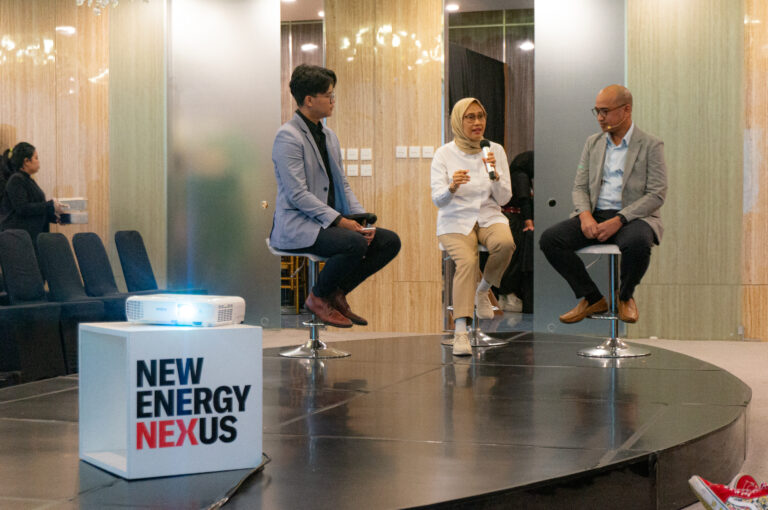
ki ka mujab generasi perintis mulya amri golkar institute sripeni inten tenaga ahli menteri esdm bidang ketenagalistrikan 768x510

From left: Mujab (Founder, Generasi Perintis), Sripeni Inten Cahyani (Expert Staff for the Minister of Energy and Mineral Resources), and Mulya Amri (Faculty Chair, Golkar Institute) discuss Indonesia’s energy policy and the role of young people in shaping the country’s sustainable energy future.

Jakarta, 15 July 2024 – New Energy Nexus (NEX) Indonesia is today launching [RE]Power, Indonesia’s first youth-driven energy policy hackathon. The initiative convenes the next generation of Indonesian policymakers and thinkers to accelerate the development of future-proof policies for the country’s clean energy transition.

“The [RE]Power Policy Hackathon is a platform where young minds can engage with real-world energy challenges. It also represents a significant step in empowering Indonesia’s youth to actively participate in shaping our energy policies,” said Diyanto Imam, Program Director at New Energy Nexus Indonesia.

“By bringing together aspiring policymakers and experienced mentors, we aim to spark innovative ideas that will shape Indonesia’s sustainable energy landscape. We’re eager to see the creative and impactful solutions that will emerge from this initiative.”

As the first youth-driven policy hackathon, the program focuses on empowering young people through an innovative approach that actively engages them in energy policy. Participants will delve into critical topics in the clean energy space, such as financing and investment, planning and roadmap making, research and development, infrastructure and technology, and public-private partnerships.

They will also benefit from mentorship, networking opportunities with policymakers and experts, and have the chance to win a total prize of IDR 45,000,000 (US$2,780). Participants will also have the opportunity to present their policy recommendations at the final pitch day in September.

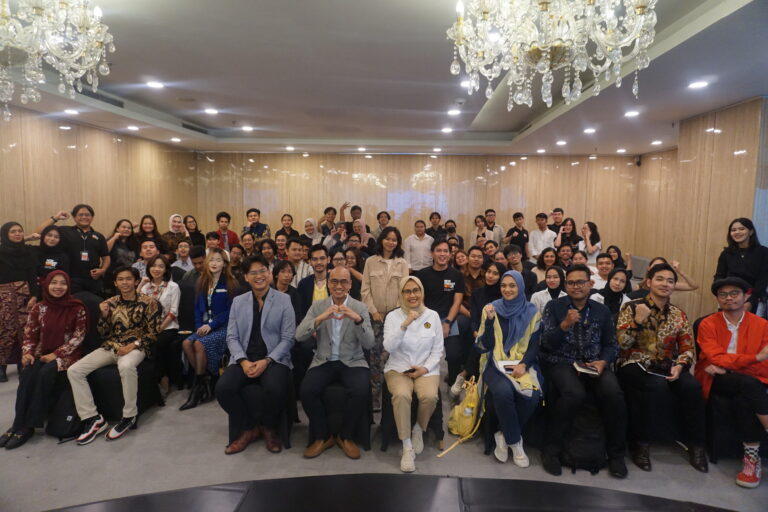
crowd photo 768x512

Mujab (Founder, Generasi Perintis), Sripeni Inten Cahyani (Expert Staff for the Minister of Energy and Mineral Resources), and Mulya Amri (Faculty Chair, Golkar Institute) sit with attendees of the [RE]Power Policy Hackathon launch.

Nizhar Marizi, Director of Energy Resources, Mineral, and Mining, Ministry of National Development Planning, at the launch event said: “The Ministry of National Development Planning is proud to support the [RE]Power Policy Hackathon. This initiative not only underscores the importance of youth involvement in the energy sector but also highlights the critical role they play in driving innovation and sustainable practices. We look forward to the insights and recommendations that will emerge from this hackathon,”

Sripeni Inten Cahyani, Expert Staff for the Minister of Energy and Mineral Resources, said: “The [RE]Power Policy Hackathon represents a powerful opportunity for Indonesia’s youth to contribute to a sustainable and inclusive energy future, By empowering young leaders to engage in policy-making and innovation, we are ensuring that diverse voices and perspectives are included in the decision-making process, and we are honored to support this initiative:”

The hackathon is the highlight of six sub-national workshops NEX Indonesia has organized in 2024. With over 260 applicants across the first four workshops, it is evident that the youth are eager to shape Indonesia’s future energy policies. This hackathon serves as an ideal platform for them to kickstart their journey in the energy policy sector.

NEX Indonesia is proud to partner with over 10 youth-led communities such as BEM FH Universitas Indonesia, Climate Rangers Jakarta, Economy for Ecology, Environmental Law Society Fakultas Hukum Universitas Indonesia, Green Welfare Indonesia, School of STEM Universitas Prasetya Mulya, Society of Renewable Energy Institut Teknologi Bandung, Society of Renewable Energy Institut Teknologi Kalimantan, Society of Renewable Energy Universitas Indonesia & Teens Go Green Indonesia, whose instrumental support has sparked exciting discussions and engagement. The support from Bappenas and KESDM has also been pivotal in ensuring the success of this initiative.

Applications are open until August 15th, 2024 to Indonesian youth aged 18-24 who are dedicated to clean energy and climate solutions. Those interested can apply here.

Selected photos here.

About New Energy Nexus Indonesia

In Indonesia, New Energy Nexus works to support the development of ecosystems that can support the needs of not only innovators, startups, and entrepreneurs, but also other stakeholders in the clean energy and climate solutions sectors.

Media contacts:

Raisha Fatya
Communications Manager, New Energy Nexus Indonesia
raisha.fatya@newenergynexus.com

About New Energy Nexus

New Energy Nexus (NEX) is an international organization that strives towards a 100% clean energy economy for 100% of the population. It does this with a laser focus on diverse entrepreneurs, supporting them with accelerators, funds, skills, and networks they need to thrive. NEX has accelerated 1,500+ startups, empowered over 10,400+ entrepreneurs, and mobilized over US$4.7 billion in investment. Since its founding in California in 2004, NEX now operates programs or advisory services in Australia, China, India, Indonesia, Nigeria, Pakistan, the Philippines, Thailand, the UAE, Uganda, the USA (California and New York), and Vietnam.

Follow NEX on LinkedIn, X, Facebook, and YouTube

Story
Indonesia
Women
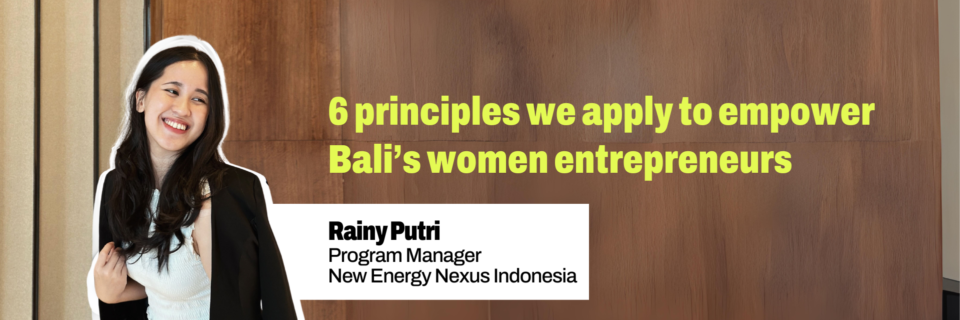
6 principles we apply to empower Bali’s women entrepreneurs 

I have been involved in many climate and sustainability projects, but The Bali Women Climate Entrepreneurs project (which has now evolved into The Matangi Bali Project) has been both humbling and exhilarating, unlike any other. Discussions on women, climate, and entrepreneurship has been a journey of discovery – gradually revealing new perspectives and cultivating an atmosphere where trust and empowerment flourish.

“Matangi” directly translates to “wake up” and embodies the essence of reviving Balinese communities and their symbiotic unity with nature. The Matangi Bali Project aims to develop an innovative and entrepreneurial approach to sustainable growth in Bali.

When thoughts turn to Bali, visions of its mesmerizing azure skies, enchanting oceans and stunning architecture immediately come to mind. Indeed, Balinese culture has embraced the ethos of harmonious coexistence with nature. Renowned for its deeply ingrained and rich cultural heritage, this ethos permeates every facet of its community.Despite being entrenched in patriarchal norms and cultural favoritism towards men, the lasting impact of Balinese culture and its identity, which has fuelled a tourism-driven economy to the island, owes much of its influence to the women. Balinese women, who play pivotal roles in various spheres of life – be it within the family, in economic pursuits, or in upholding traditions, are often overlooked. Their culture places the responsibility of shaping the nation’s next generation squarely on the shoulders of mothers to instill cultural values such as moral integrity, spirituality and environmental consciousness.

How will these women, deeply rooted in community values yet constrained by a strong patriarchal system navigate the path towards climate entrepreneurship? It’s a question that invites exploration.

Here are six valuable learnings that have shaped my perspective on this project.

1. Admitting and embracing the unknown

The first and most crucial lesson learned is admitting our own limitations. Rather than succumbing to preconceptions, we chose humility and opted to inquire. We met the women entrepreneurs where they are, seeing the world through their eyes. Understanding the context and cultural nuances has been essential in tailoring our program to the unique challenges women in Bali face.

2.  The art of community and collaboration

To overcome deeply ingrained cultural practices, collaboration with the community is key. The Matangi Bali Project actively contributes to the growth of the community while seeking input from its members. By acknowledging that societal change is a collective effort, we empower women to step into leadership roles and challenge the status quo.

3.  Setting realistic expectations

Navigating the intricacy of Bali’s patriarchal landscape comes with challenges. Setting realistic expectations has been crucial. Our goal was never about changing millenia-old cultural beliefs. Instead, it has always been about recognizing that men and women are capable of equality and that entrepreneurship is a pursuit open to both genders.

For generations, Balinese culture has embraced the ideals of a circular economy. Amid rapid urbanization and burgeoning tourism, these concepts seem to have been overlooked.

Our goal is to shed light on the untapped economic potential inherent in these principles, fostering a diverse range of economic activities across Bali. The profound impact of COVID-19 pandemic, particularly with the cessation of tourism, has understored the urgency of our mission.

We are steadfast in our commitment to position entrepreneurship as a key catalyst for economic resurgence in Bali. While the path might be bumpy, the commitment to progress remains unwavering.

4. Beyond ‘preaching to the choir’

It’s not enough to preach to the perfect-sounding choir. Instead, we orchestrate concerts, inviting others to listen and sing along.

Choosing to become an entrepreneur is a career path that is often frowned upon by many Balinese. Countless individuals have expressed that it can be a solitary journey, which frequently acts as a barrier to actively participate in climate efforts. This applies even more for mothers, who may only find time for such pursuits once everyone else is asleep.

This can compound issues such as diminished self-esteem, resulting in a lack of competitive drive, especially amidst existing biases against local products and services in a landscape heavily influenced by foreign perspectives on sustainability, often perceived as superior or even ideal.

Creating inclusive spaces where diverse voices are heard and valued is crucial for fostering a supportive environment for women entrepreneurs.

5. Respecting women’s agency

We strive to unlock a path where every woman can chart their own course. Empowering these entrepreneurial spirits goes beyond mere encouragement; it’s about honoring their autonomy and granting them the reins to shape their own stories.

Picture this: women juggling countless responsibilities, squeezed for time, and stretched thin by limited budgets. Yet, amid these challenges, they persist, prioritizing the needs of others while silently battling the stigma of environmental indifference. In the northern reaches of Bali, an economically disadvantaged region where meeting basic needs takes precedence, these women are unfairly scapegoated for their plastic usage, despite it being a convenient and affordable option for them.

And did you know? In the realm of waste management education, it’s the women who consistently bear the brunt of blame, their shoulders weighed down by the burden of societal expectations.

These stories form the basis of our understanding for running this critical project . Our role is simple yet important: to stand beside them, offering support as best as we can, to navigate their entrepreneurial journeys with confidence and resilience.

6. Meeting halfway

By continuously assessing the program’s needs, we ensure that we are making a tangible difference in the lives of women entrepreneurs. The impact goes beyond economic success; it extends to personal transformation, newfound confidence, and a deepened sense of belonging within their community.

At each twist and turn, we encounter multiple challenges. It’s a voyage that demands patience, empathy, and a whole lot of collaboration. Despite these challenges, we remain committed to being responsive and resilient. We’re ready to transform the insights gleaned from the grassroots levels to innovative solutions, ensuring we always meet those we support.

As we embark on the second phase of the program, these learnings will serve as our guiding light, propelling us towards innovative solutions despite gender barriers within the climate sector in Bali.


The Matangi Bali Project

The Matangi Bali Project aims to develop an innovative and entrepreneurial approach to sustainable growth  in Bali.

Our journey in Bali began in 2021, where we extended capacity building support to women climate entrepreneurs, fostering innovative solutions despite gender barriers within the climate sector. Recognizing the limitations of solely empowering one group, we have pivoted our approach to encompass broader participation, encouraging all stakeholders – including men, women, youth, government,  and communities – to embrace and cultivate leadership organically. This effort ensures that diverse voices contribute to sustainable solutions addressing climate change effectively. 

This project is initiated by New Energy Nexus Indonesia as part of the Bali Net Zero Emissions Coalition with CAST Foundation, IESR & WRI Indonesia. Matangi Bali  is supported by ClimateWorks Foundation and ViriyaENB.

Explore More
News
Indonesia
Renewable energy tech
Indonesian climate tech startups secure US$31 million in funding despite sector-wide funding drought

Jakarta, 18 January 2024 – Three climate tech startups from New Energy Nexus Ventures’ (NEX Ventures) portfolio in Indonesia – Swap Energy, SolarKita, and Synergy Efficiency Solutions – have secured additional investments totalling US$31 million for 2023, including follow-on funding.

“Despite a 40% decrease in global funding across the climate tech sector last year, these three startups have demonstrated their resilience by achieving success in fundraising,” said Yeni Tjiunardi, Managing Director at NEX Ventures.

“We are committed to supporting disruptive and agile startups and founders that can accelerate the clean energy transition. Our optimism extends to the potential opportunities for emerging early-stage ventures in addressing climate challenges, not only in Indonesia but also in other Southeast Asian countries, such as the Philippines and Vietnam.”

The three startups are deploying solutions critical to Indonesia’s climate and energy goals, ranging from solar to energy storage:

  • SolarKita is a solar energy company that provides end-to-end solar services for the residential market in order to build an integrated community of rooftop solar users in Indonesia.
  • Synergy Efficiency Solutions (SES) is mainstreaming energy efficiency  in Southeast Asia by designing, financing, and implementing a range of energy efficiency solutions.
  • Swap Energy is rolling out swappable battery technology that allows riders to effortlessly exchange depleted batteries, propelling the EV revolution of two-wheelers in Indonesia.

NEX Ventures aims to catalyze early-stage investments in the clean energy and climate sector by investing and collaborating with other investors, and providing strategic guidance to support its portfolio companies. Indonesia 1 Fund has co-invested with Schneider Electric Energy Access Asia (SEEAA) in SolarKita and with Southeast Asia Clean Energy Facility (SEACEF) in SES. Additionally, Swap Energy secured US$22 million investments for their Series A round by the end of December 2023.

NEX Ventures, through its Indonesia 1 Fund, has invested in seven climate tech companies and deployed four follow-on investments since 2020. These companies have been performing strongly, attracting over US$70 million of investments from other investors since joining the fund while also tackling climate and energy challenges. To date, Indonesia 1 Fund’s portfolio companies have reduced over 165,000 tons of CO2 emissions, equivalent to planting almost eight million trees.

SolarKita

“The funding received from Indonesia 1 Fund and SEEAA allows more rapid penetration into the residential market. This milestone marks the initial phase of SolarKita’s overarching expansion plan to reach 18MWp solar PV installations equivalent to 6000 houses by the next three years,” said Amarangga Lubis, CEO of SolarKita.

The funding will strengthen the company’s fundamentals, refine product quality, and expand its network of installers and sales partners across Indonesia.

“As part of SEEAA’s mandate to accelerate the transition towards renewable energy and net-zero, we are excited to support SolarKita in their mission to make solar rooftop solutions accessible for residential homeowners and small businesses. Sustainability calls for collective action and we believe this joint investment from SEEAA and New Energy Nexus will be a critical catalyst in helping more people be part of the energy transition journey,” said Gilles Vermot Desroches, President of Schneider Electric Energy Access Asia (SEEAA).

Synergy Efficiency Solution

Synergy Efficiency Solutions (SES) intends to utilize the funding from Indonesia 1 Fund and SEACEF to fund capital expenditures for its growing portfolio of energy-saving projects. The timing of this follow-on investment coincides with the award of the Energy Transition Partnership (ETP) Grant to SES.

Swap Energy

Swap Energy has successfully raised a total of US$22 million in its Series A round in December 2023. This latest round was led by Qiming Venture Partners, with participation from GGV Capital and existing investor Ondine Capital. The company has more than 1300 battery swapping stations across Indonesia. They have also partnered with many companies such as Grab to develop an integrated EV ecosystem in Indonesia.

Media contacts:

Tristan Tremschnig
Global Communications Director, New Energy Nexus (based in San Francisco)
tristan.tremschnig@newenergynexus.com 

About New Energy Nexus

New Energy Nexus (NEX) is an international organization that strives towards a 100% clean energy economy for 100% of the population. It does this with a laser focus on diverse entrepreneurs, supporting them with accelerators, funds, skills, and networks they need to thrive. NEX has accelerated 1,500+ startups, empowered over 10,400+ entrepreneurs, and mobilized over US$4.7 billion in investment. Since its founding in California in 2004, NEX now operates programs or advisory services in Australia, China, India, Indonesia, Nigeria, Pakistan, the Philippines, Thailand, the UAE, Uganda, the USA (California and New York), and Vietnam.

Follow NEX on LinkedIn, X, Facebook, and YouTube

Story
Indonesia
4 takeaways from our biggest clean energy hackathon in Indonesia

a7302229

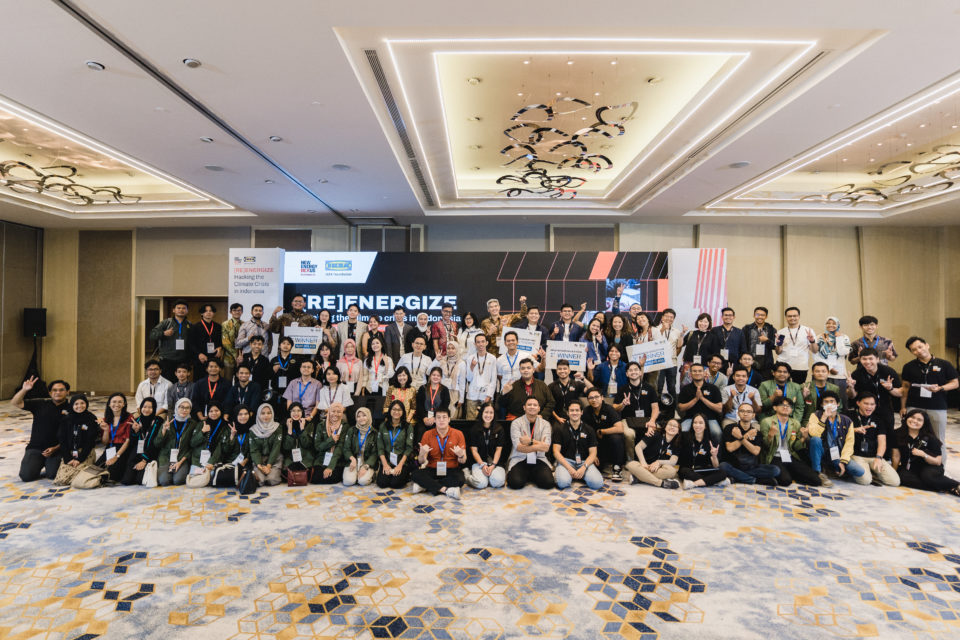
New Energy Nexus Indonesia recently held its fourth hackathon with hundreds of participants across the clean energy, impact investment, and climate tech sectors. Here are four key takeaways for aspiring and current entrepreneurs looking to enter the space.

The clean energy transition must be about “significant structural” changes

a7301878 (1)

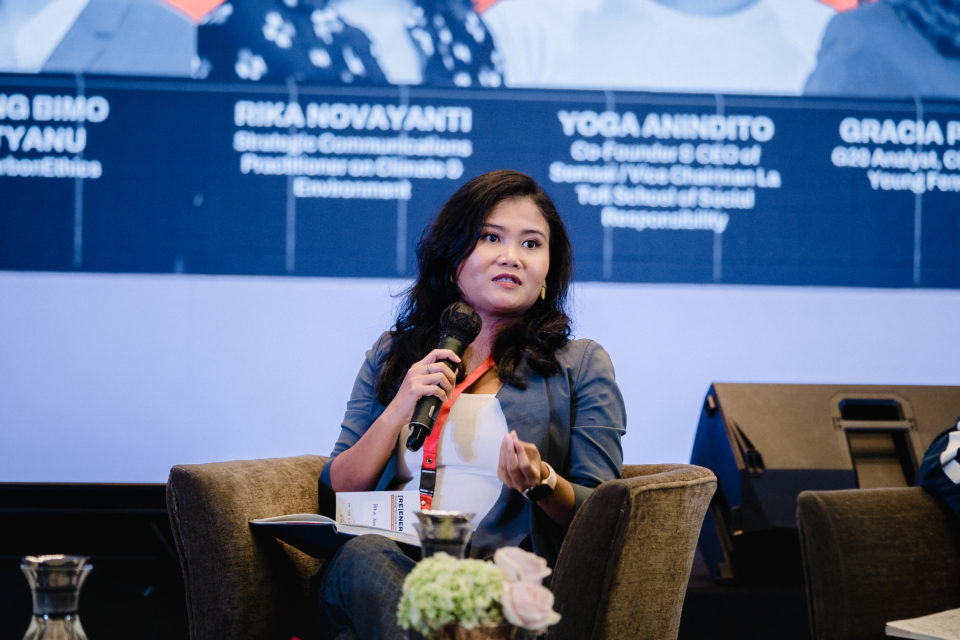
‘’When we talk about the energy transition, we need to highlight the significant structural changes in the energy system. It has to be a systematic change, not individual by individual, that changes the connection between energy demand and supply. I also want to highlight two things: energy efficiency, which to me is very important but still left behind and not discussed enough, and the second one is carbon emissions.’’

Rika Novayanti – Strategic Communications Practitioner on Climate & Environment

A clean energy startup’s success depends on how adaptable it is

a7301929

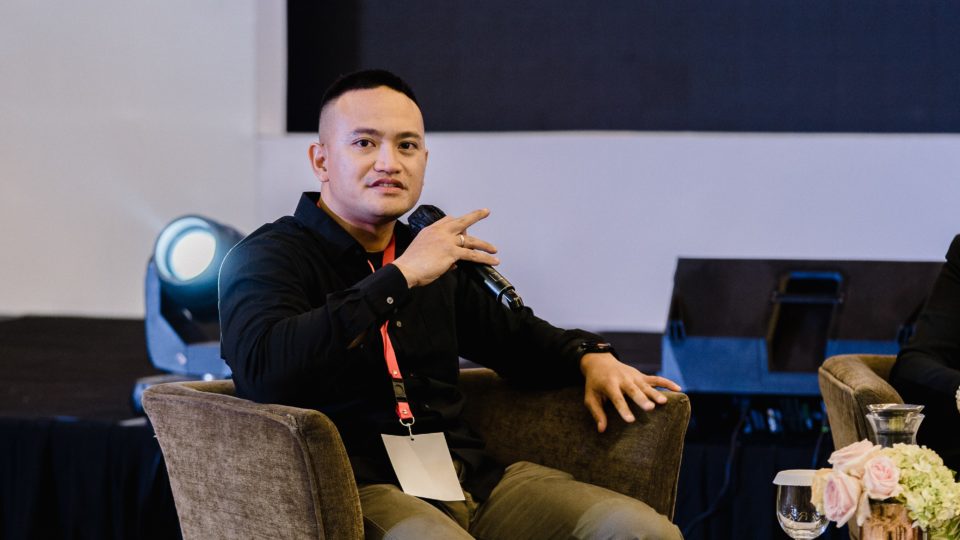
‘’We need to be able to adapt. We need to be able to stay up-to-date and pivot. If you don’t have the talent to learn fast and be adaptable, you can get demotivated. Moreover, it’s crucial to embrace technology. Technology is intertwined with our culture and the people who drive it. Technology allows us to track data streamline tasks, and all in all, validate our credibility.  Technology alone cannot replace people. But people who can use technology well (e.g., generative AI)  can substitute those who don’t.’’

Agung Bimo Listyanu – CEO CarbonEthics

Understand what grassroots stakeholders need before you tackle the big picture

a7301954

‘’Agriculture is one of the biggest contributors to carbon emissions in the world; therefore, we need to address this. However, there is a discrepancy between policymakers, startups, and people in the field because we all have different challenges we’re addressing. Therefore, if you want to get your feet wet in this industry, you need to go to the field and deal with the local authority and stakeholders as well.’’

Yoga Anindito, Co-Founder & CEO of Semaai / Vice Chairman La Tofi School of Social Responsibility.

We must motivate more aspiring entrepreneurs to join the fray

a7302254

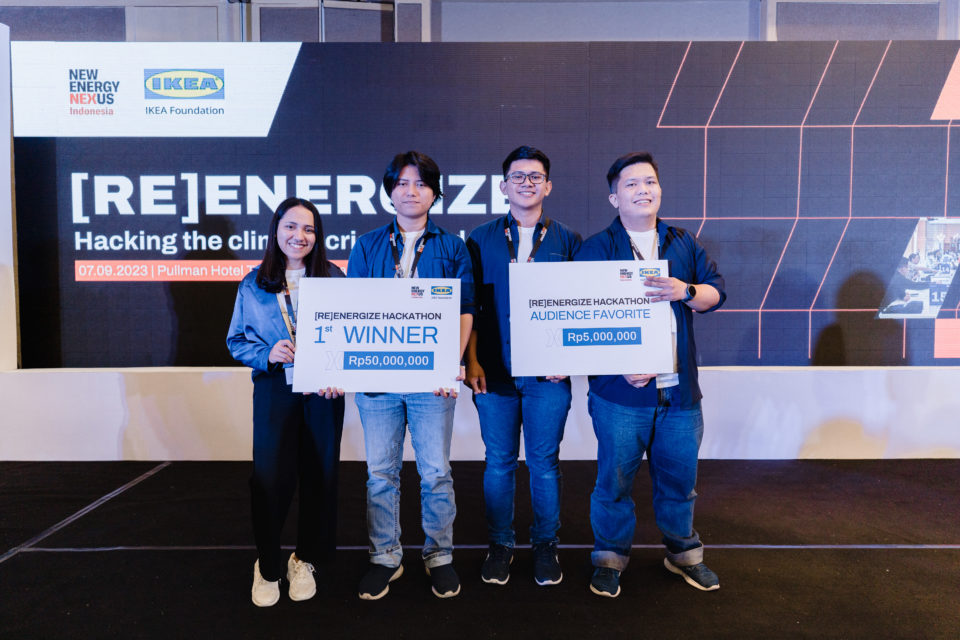
Bagas attended the [RE]Spark Hackathon in 2022, but this year, he decided to compete in the 2023 Hackathon.

“To my surprise and delight, I managed to secure the second-place position in the hackathon. This journey has been a testament to my commitment to continuous learning and growth. It’s not just about winning accolades; it’s about the progress I’ve made and the knowledge I’ve gained in my quest to find solutions that can contribute to mitigating the impacts of the climate crisis. This experience has reaffirmed my dedication to the cause, and I’m more determined than ever to make a meaningful difference in addressing the challenges of our changing climate.”

Bagas Prakoso Ajie – Team Leader at Terra Verde; [RE]Energize Hackathon 2nd Winner


Explore More
News
Indonesia
Indonesia missing out on economic opportunities without more government support for clean energy startups

Jakarta, 13 September 2023 – The government of Indonesia should play a more active role in growing the country’s nascent cleantech startup ecosystem, which is critical to accelerating the energy transition and unlocking the economic potential of clean energy, according to a report from New Energy Nexus Indonesia: Clean Energy Technology Startups in Indonesia: How the Government Can Help the Ecosystem.

Clean energy technology startups in Indonesia: How the government can help the ecosystemGovernment support is crucial given that the majority of cleantech startups in Indonesia are still in the early stage of development, and often struggle to obtain support and funding for their technology and business.
“The Indonesian government should learn from other countries, and create an environment for cleantech startups to thrive. This support could be in the form of fiscal, financial, and non-financial support accessible to actors in the cleantech startup ecosystem such as startups, venture capital, incubators, and others,” said Pamela Simamora, the lead author of the report at New Energy Nexus Indonesia.

“The support needed for clean energy startups is different from any other established digital startups for instance, the majority of these startups are hardware-based and require a more intensive R&D for their technology development.”

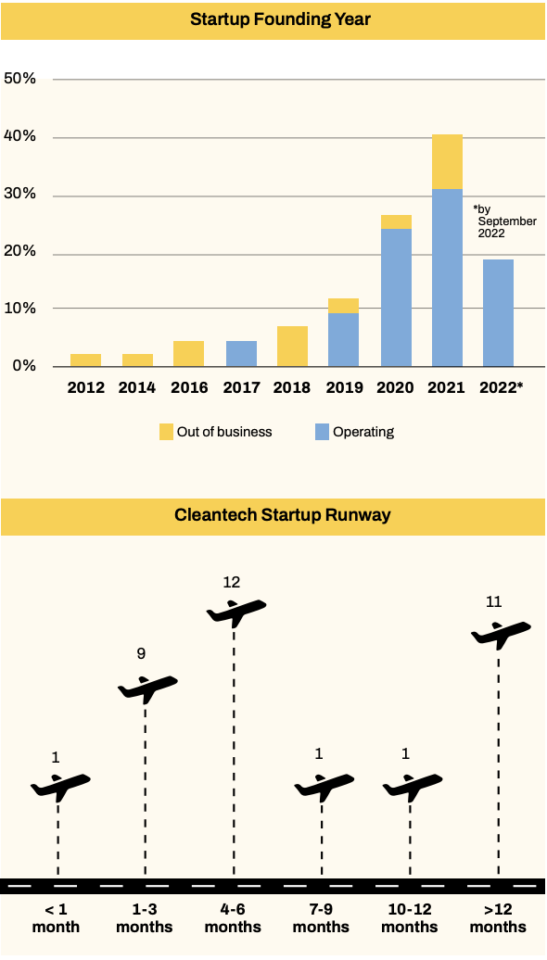
The report survey showed that 22 out of 35 cleantech startups have a runway of less than six months – whereas startups should ideally have a runway of at least 18 months. The survey results also show that the majority of cleantech startups in Indonesia are still bootstrapping and have not been able to secure external funding.

The report highlights several challenges faced by cleantech startups, ranging from difficulty in accessing funding, limited R&D funds for technology development, difficulty in finding a skilled workforce in the clean energy technology field, as well as the weak regulatory framework in the sector. In addition, the majority of venture capital firms mentioned in the report that the limited number of cleantech startups in their portfolios is not due to a lack of interest in this sector, but rather due to the high risks in the clean energy sector in Indonesia given inadequate policies and regulations. The same is mentioned by business incubators and similar organizations surveyed in this report.

Steps the government can take to support cleantech startup.

“Indonesia can learn from other countries that have already developed cleantech startup ecosystems. For example, the provincial government of British Columbia in Canada provides incentives in the form of tax credits for investors who invest in early-stage companies in the clean energy technology sector.”

“In addition, incubation programs, accelerations, and startup competitions organized by various ministries and government agencies need to be aligned to maximize their impact on the startup ecosystem and eliminate overlapping programs,” said Pamela Simamora, the lead author of the report at New Energy Nexus Indonesia.

“The government, for example, can differentiate each program based on the Technology Readiness Level (TRL) of startups participating in programs like Startup4industry, ETIC KESDM, PLN Elevation, and PPBR BRIN. This aligns with best practices in countries like the United States, Chile, and Morocco.”

Additional recommendations:

  • The government could catalyze private investment in cleantech startups by mobilizing state-owned venture capital for investment in the cleantech sector and providing a fund-of-funds scheme where the government becomes an investor in selected venture capital funds for early-stage cleantech startup investments. This mechanism is widely used in countries like China and Singapore, which have successfully developed their startup ecosystems, including cleantech startups.

“The government should focus more on early-stage startups rather than late-stage ones to prevent public funds from crowding out private capital from the market,” said Pamela.

  • The government needs to ensure that the policy and regulatory framework in the energy sector facilitates a conducive investment climate for the use and development of clean energy technology in Indonesia.
  • Strengthening cooperation between the public and private sectors to increase investment in startups, providing testbed facilities to support research and development of clean technology, mandating green procurement practices for the government, and enhancing STEM education and vocational training to prepare a skilled green workforce in Indonesia.

The growth of this sector has tremendous potential for job creation, economic development, and technological innovation. By supporting cleantech startups, the Indonesian government can achieve its climate goals, promote economic growth, ensure energy resilience, and enhance the country’s competitiveness in the global market

View the report here.

Media contacts:

Tristan Tremschnig
Communications Director, New Energy Nexus
tristan.tremschnig@newenergynexus.com
(based in San Francisco, USA)

About New Energy Nexus

New Energy Nexus (NEX) is an international organization that strives towards a 100% clean energy economy for 100% of the population. It does this with a laser focus on diverse entrepreneurs, supporting them with accelerators, funds, skills, and networks they need to thrive. NEX has accelerated 1,500+ startups, empowered over 10,400+ entrepreneurs, and mobilized over US$4.7 billion in investment. Since its founding in California in 2004, NEX now operates programs or advisory services in Australia, China, India, Indonesia, Nigeria, Pakistan, the Philippines, Thailand, the UAE, Uganda, the USA (California and New York), and Vietnam.

Follow NEX on LinkedIn, X, Facebook, and YouTube

Story
Indonesia
Women
Advice from women founders leading the way on climate innovation in Indonesia

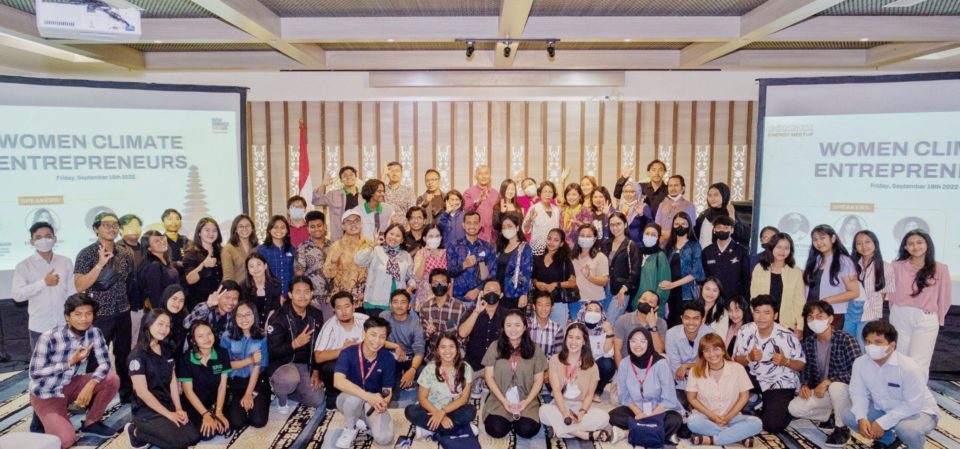
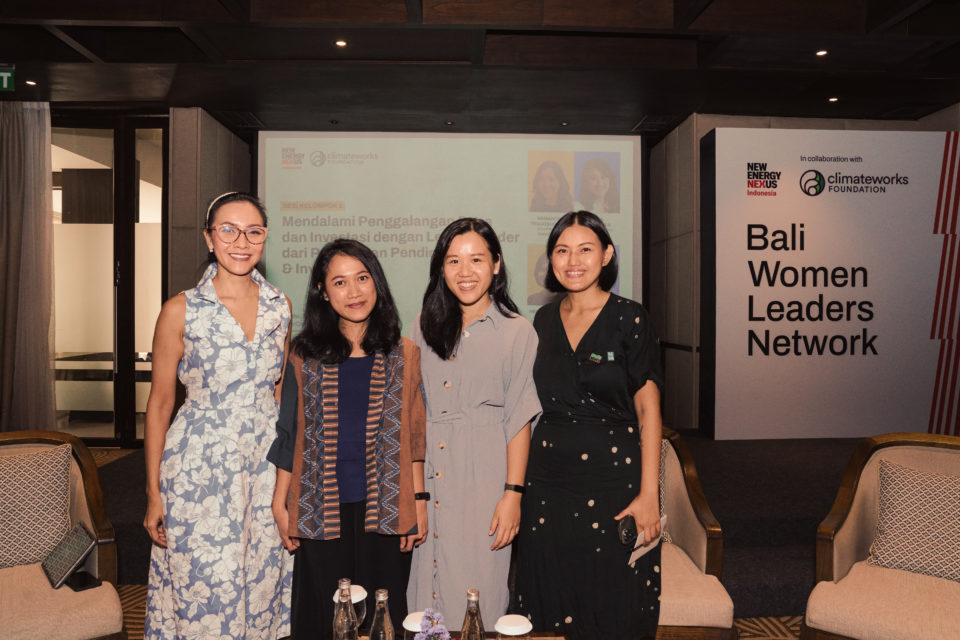
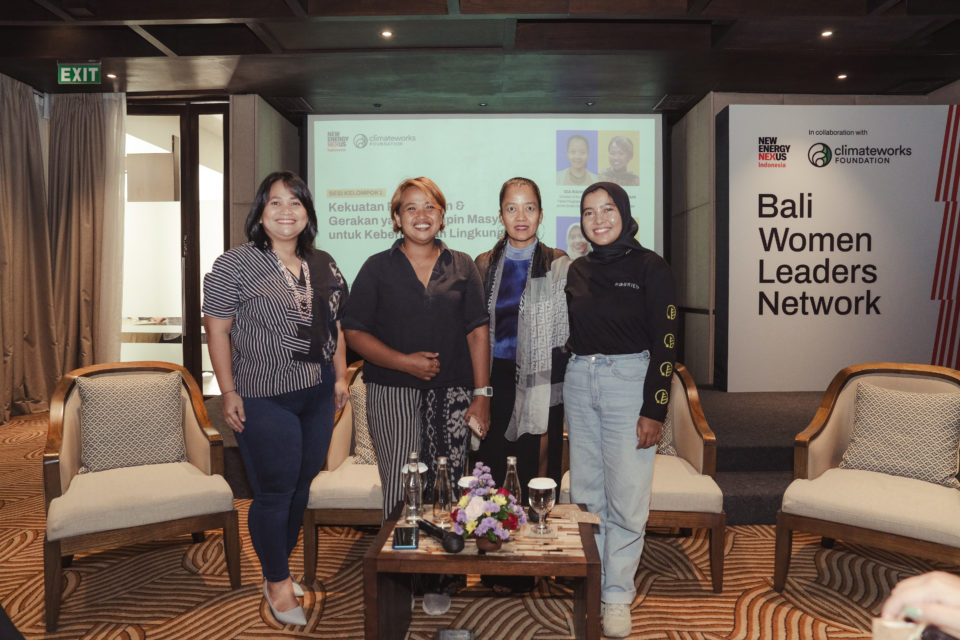
We recently hosted around 200 women leaders, startups, youth, industry experts and community advocates at the ‘Bali Women Leaders Network’.  When you have that much talent in one room, we knew we had to ask them to share their advice!

The event, in partnership with ClimateWorks Foundation and facilitated by Pratisara Bumi Foundation, showcased the tremendous potential of women entrepreneurs in driving sustainability and climate action. Among the many women-led climate startups we invited we also celebrated 8 women-led start-startups that successfully completed our ‘Business Incubation and Acceleration Program’.

Here  are some key takeaways.

Have absolute clarity on your intentions and motivations before you begin your entrepreneurial journey

Lala Maelani, the CEO of Gumitri, highlighted the significance of understanding the motivations behind one’s actions.

“Find that common ground, discover the reasons why you do what you do. When you have a clear understanding of your motivations, even in the face of challenges, those reasons will reignite your passion and empower you to overcome obstacles. It is also vital to have a shared mission with your partners, ensuring that regardless of the path ahead, the commitment among colleagues remains unwavering due to the shared vision, mission, and values.”

Find mentors and enroll in programs that help improve your business acumen and industry knowledge

Yufi Gobel, the Founder and CEO of Chickbecik, emphasized the importance of having a mentor during the startup development process.

“Having a mentor is crucial when building a startup. When I connected with the New Energy Nexus Indonesia team, I learned to refine my ideas and challenge my assumptions while understanding the realities of the market. This led to a transformation in our business approach. My message to those interested in developing a startup or innovation is to seek out a mentor. With the guidance of mentors, we can conduct more focused and measurable product testing, and make better decisions regarding every risk and opportunity.”

Find a safe and empowering environment that truly supports female entrepreneurs

Marcella Steffany, Communications and Business Development Officer at Tri Hita Consulting, emphasized the importance of establishing an empowering environment for women to thrive in their careers.

“Creating an enabling environment plays a vital role in our success as women professionals. Having a supportive team, mentors who believe in us, and an environment that values our contributions based on our capabilities rather than our gender are key factors that contribute to our growth and achievements.”

bali women leaders network 05

Dini Septiani (AVPN), Atika Benedikta (ANGIN), Samantha Tedjosugondo (Sweef Capital), Helga Tjahjadi (Burgreens)

During the event, another insightful session on fundraising and gender-lens investing, moderated by Dini Septiani, ASEAN Regional Director of AVPN, featured an open and candid discussion between two gender-lens investors and a female founder. Helga Tjahjadi, the CEO & Co-Founder of Burgreens & Green Rebel, shared her journey of building a successful food and beverage business alongside her partner, Max Mandias.

“Throughout our fundraising journey, I encountered discrimination from certain venture capitalists who believed that my maternity leave would impact our business milestones. However, we were fortunate to connect with angel investors and venture capitalists who were supportive of my pregnancy and played a pivotal role in our business’s growth.

“As a result, we secured funding prior to my maternity leave and devised plans to ensure the company’s continuity during my absence. Today, women have more allies and support to pursue their goals, but there is still progress to be made within the system for investors to fully recognize and embrace the value that female founders bring.”

Atika Benedikta emphasized the significance of gender-lens investing and women’s empowerment:

“Supporting and fostering an enabling environment that empowers women as stakeholders, contributors, doers, and decision-makers is crucial. The contributions and perspectives of women hold equal importance. It’s not about power or competition but about empowering everyone equally.”

Establish a well-organized administrative system for operational efficiency

Tasya Karissa, the Founder and Executive Director of Biorock Indonesia, shared her experience in overcoming challenges caused by having two distinct entities, a foundation and a PT.

“One of the difficulties I encountered was managing the administrative tasks effectively due to Biorock Indonesia’s dual structure. As a leader, I realized the importance of overseeing multiple aspects, and establishing a well-organized administrative system became critical for our operational efficiency. Thanks to the guidance of mentors through the New Energy Nexus Indonesia’s Bali Women Climate Entrepreneur Project, I now have a standardized operating procedure for administration.”

Learn to recognize business risks and have strategic mitigation plans

Samantha Tedjosugondo highlighted the importance of acknowledging and addressing challenges in entrepreneurship:

“Recognizing risks and challenges is crucial, but what matters more is having an effective mitigation strategy. We admire startup management teams that openly acknowledge and actively tackle the obstacles they encounter. Risks coexist with promising opportunities, and it’s essential for both leaders and team members to be aware of this reality.”

Sukriyatun Niamah, the Founder and Marketing Director of Robries, discussed her company’s efforts in recycling plastic waste. Despite facing challenges as a young female leader in business, she refused to be underestimated. Niam emphasized the importance of collaborating with diverse partners, embracing different habits and mindsets. Her determination to realize her ambitious vision surpasses these obstacles. Currently, Robries has successfully partnered with over 100 individuals from diverse communities and waste collectors.

bali women leaders network 09

Thilma Komaling, Aniek Puspawardhani (Kelecung Village Eco Tourism), Ida Rahayu (Seeds to Table), Sukriyatun Niamah (Robries)

Aniek Puspawardani, the project lead for Desa Wisata Kelucung, expressed her concerns about the impact of land use changes on the livelihoods of the farming community in Kelucung Village. She highlighted the importance of creating sustainable employment opportunities, such as homestay businesses, culinary ventures, merchandise, and other tourism-supporting enterprises, to increase their income. However, this must be accompanied by training programs to develop professional skills across various professions in Desa Kelucung. Additionally, support from stakeholders is crucial to achieving self-sufficiency and empowerment for the village.

Ida Rahayu, the Creator of Seeds to Table, shared insights into her permaculture-based program that tackles waste and food production challenges. She emphasized the importance of paying attention to food labels and understanding the impact of our consumption on our health and well-being. Ida highlighted key steps we can take, such as growing our own food or supporting local farmers, minimizing packaging waste, opting for organic food, and practicing proper waste sorting. She also encouraged cooking our own meals to gain a better understanding of what we consume.

Women are paving the way to become leaders in their communities. Our programs in New Energy Nexus Indonesia aim to close the gender gap and increase women’s participation in  clean energy and climate solutions sectors, helping to improve women’s response and adaptation to climate change.

Learn more New Energy Nexus Indonesia

Explore More

Clean energy technology startups in Indonesia: How the government can help the ecosystem

August 15, 2023
Story
Indonesia
How to craft a winning pitch deck for your climate startup
web banner (1)

Senior Investment Associate, New Energy Nexus Indonesia

”As a senior investment associate at New Energy Nexus Indonesia, I’ve reviewed hundreds of pitch decks from startups seeking funding.

It’s no easy task creating a well-narrated pitch deck that captures investors’ attention and effectively communicates your startup’s value proposition. But, here are five essential tips to help you create a killer pitch deck that will maximize your chances of securing funding for your climate startup.”

1. Start with a compelling problem statement

Begin your pitch deck by defining the problem related to climate change that your startup is addressing. Show the urgency and significance of the problem, highlighting not only the destructive impact to the environment but more importantly, the pain points experienced by the users/customers (“the impacted stakeholders”) and its relevance to the local context. You can use statistics, visuals, or real-world cases to make it more compelling. A great problem statement will grab investors’ attention and help them recognize the urgency, relevance, and necessity of your solution.

2. Articulate your unique value proposition

After presenting the problem, you now need to present your startup’s innovative solution. Clearly explain how your technology or product addresses the problem more effectively than existing solutions. Investors need to see the uniqueness and potential for disruption in your approach, why your solution is better than any other solution out there, and why customers would want to buy your product or service. Your solution should be clear and concise, focusing on the heart of the problem, not every last feature.

Explaining the product features with a short video demo or a diagram can be presented in another section of the deck (the product section), while the solution slide should only be telling us: “why instead of doing that, we do this.” Investors shouldn’t spend minutes digesting the content — it should be obvious and to the point. So keep the visuals lightweight in this slide.

3. Showcase your market opportunity

Investors want to know how big the market size is, and how you are going to capture that market. Provide a reasonable Total Addressable Market (TAM), Serviceable Addressable Market (SAM), and Serviceable Obtainable Market (SOM) and translate that into $$ value.

You can also include data such as growth rate, key market trends, and highlight any regulatory or policy support that could further catalyze your startup’s growth. A clear market assessment will instill confidence in investors regarding the scalability and potential for profit and impact of your venture.

4. Present a solid business model

Illustrate your business model to demonstrate how your startup generates revenue and achieve profitability as well as impact. Clearly explain your revenue streams, pricing strategy, and financial viability. A well-defined business model will convince investors of your ability to generate sustainable returns on their investments.

5. Highlight your team members

Investors place emphasis on the execution capabilities of the founding team. Therefore it is crucial to fit in a dedicated page in your deck  to introduce key members of your team and highlight their relevant experience and expertise. Showcase any previous achievements, partnerships, or notable milestones that demonstrate your startup’s progress and momentum. Let them know how strategic and capable your team is!

Lastly, there is no such thing as a one deck-fits-all. You need to craft each pitch decks according to whom you are addressing and identifying each investor’s focus or appetite. But all pitch deck require compelling storytelling, market insights, and financial viability. Be sure to iterate and refine your pitch deck based on feedback and learnings from each interaction with investors and practice your presentation skills.

If you’re in Indonesia and  looking for the best-fitting investors to help with your startup journey, New Energy Nexus Indonesia is hosting an Investment Speed Dating event for clean energy and climate tech startups. The event is happening on 7 September 2023 and we are accepting applications from 5 June to 14 July  2023.

Are you ready? Submit your pitch deck now!

Explore More
Story
Indonesia
Transportation tech
The startup on a mission to electrify Indonesia’s 125 million motorcycles

Battery life is a crucial pain point for EV users. SWAP Energi aims to solve this by building a network of battery swapping stations for e-motorcycle riders. New Energy Nexus introduced SWAP to potential investors, helped prepare funding documents, and offered business acceleration program support. The startup now has more than 800 swap charging stations in 14 provinces.

We spoke to the team at SWAP Energi about their mission to electrify Indonesia’s booming two-wheeler market.

“Lots of prospective users are curious. Our duty is to explain to them so they will be interested,” said Irwan Tjahaja, CEO at Swap Energi Indonesia. So far, SWAP Energi Indonesia has been educating people about electric vehicles and “Swap Stations” by collaborating with their users, and making them a brand ambassador.

Potential users have many questions: is this vehicle strong enough and can it match gasoline fueled vehicles in terms of cruising range? Also, how cheap are the spare parts and maintenance?

Irwan Tjahaja, CEO at Swap Energi Indonesia

Irwan Tjahaja, CEO at Swap Energi Indonesia

In 2021, the startup launched its electric motorcycle brand Smoot. A year later, Swap Energy and Smoot partnered with Grab and state-owned electric company PLN to develop an integrated EV ecosystem in Indonesia.

“Every Smoot motorcycle user is a brand ambassador,” said Keving Phang, CPO of Swap Energi Indonesia. Kevin believes when a user is satisfied with the product and finds it convenient, they will share their experience with their family and friends, and even form a community that can raise awareness of EVs with their immediate community.

Later on, SWAP Energi Indonesia began focusing on the development of the Swap Energi app, making it more sophisticated and user-friendly.

“A key feature of the app is the ability to find the nearest Swap Station, integrated with Google maps, and track your battery reservation , find parking, analyze the machine’s health, and receive a notification for service or change spare parts,” Kevin said.

These convenient features have been noticed by users.

SWAP Energi Indonesia

“SWAP Energi app is easy, everything is there. There is no more coming and finding out that the station has run out of battery,” said Ongko, one of the users of electric motorbike Tempur from Smoot Motor Indonesia.

As an office worker, he admits that electric motorbikes make his life easier.

“I don’t need a charging station at home. It is like you go to the gas station but with an electric motorbike and the app makes it more efficient as I don’t have to wait in line.”

Andi, an online taxi driver has the same experience. “I changed to an electric motorbike because it is environmentally friendly and cheaper. I don’t have to pay for routine services such as getting an oil change.

An online taxi driver such as  him covers a lot of ground: “It could be tens of kilometers each day.”.

However, this isn’t a problem because there are more than 350 points in Jabodetabek (an area of Jakarta, the capital city of Indonesia. He no longer worries about running out of battery while carrying passengers. SWAP Energi Indonesia also provides a special price for battery exchange for online taxi drivers, which is IDR 17,000 (US$1.14)/100 km. This price is twice as cheap as petrol fuel.

Since 2019, New Energy Nexus Indonesia in collaboration with IKEA Foundation acts as a bridge between different sectors and stakeholders, running incubation, acceleration, and funding programs to urgently develop the clean energy startup ecosystem. Find out more.

Explore More
News
Indonesia
Transportation tech
The startup on a mission to electrify Indonesia’s 125 million motorcycles

Battery life is a crucial pain point for EV users. SWAP Energi aims to solve this by building a network of battery swapping stations for e-motorcycle riders. New Energy Nexus introduced SWAP to potential investors, helped prepare funding documents, and offered business acceleration program support.. The startup now has more than 800 swap charging stations in 14 provinces.

We spoke to the team at SWAP Energi about their mission to electrify Indonesia’s booming two-wheeler market.

“Lots of prospective users are curious. Our duty is to explain to them so they will be interested,” said Irwan Tjahaja, CEO at Swap Energi Indonesia So far, SWAP Energi Indonesia has been educating people about electric vehicles and “Swap Stations” by collaborating with their users, and making them a brand ambassador.

Potential users have many questions: ; is this vehicle strong enough and can it match gasoline-fueled vehicles in terms of cruising range? Also, how cheap are the spare parts and maintenance?

In 2021, the startup launched its electric motorcycle brand Smoot. A year later, Swap Energy and Smoot partnered with Grab and state-owned electric company PLN to develop an integrated EV ecosystem in Indonesia.

“Every Smoot motorcycle user is a brand ambassador,” said Keving Phang, CPO of Swap Energi Indonesia.. Kevin believes when a user is satisfied with the product and finds it convenient, they will share their experience with their family and friends, and even form a community that can raise awareness of EVs with their immediate community.

Later on,  SWAP Energi Indonesia began focusing on the development of the Swap Energi app, making it more sophisticated and user-friendly.

“A key feature of the app is the ability to find the nearest Swap Station, integrated with Google maps, and track your battery reservation , find parking, analyze the machine’s health, and receive a notification for service or change spare parts,” Kevin said.

These convenient features have been noticed by users.

“SWAP Energi app is easy, everything is there. There is no more coming and finding out that the station has run out of battery,” said Ongko, one of the users of electric motorbike Tempur from Smoot Motor Indonesia.

As an office worker, he admits that electric motorbikes make his life easier.

“I don’t need a charging station at home. It is like you go to the gas station but with an electric motorbike and the app makes it more efficient as I don’t have to wait in line.”

Media contacts:

Tristan Tremschnig
Communications Director, New Energy Nexus (based in San Francisco, USA)
tristan.tremschnig@newenergynexus.com 

About New Energy Nexus

New Energy Nexus (NEX) is an international organization that strives towards a 100% clean energy economy for 100% of the population. It does this with a laser focus on diverse entrepreneurs, supporting them with accelerators, funds, skills, and networks they need to thrive. NEX has accelerated 1,500+ startups, empowered over 10,400+ entrepreneurs, and mobilized over US$4.7 billion in investment. Since its founding in California in 2004, NEX now operates programs or advisory services in Australia, China, India, Indonesia, Nigeria, Pakistan, the Philippines, Thailand, the UAE, Uganda, the USA (California and New York), and Vietnam.

Follow NEX on LinkedIn, X, Facebook, and YouTube