Oakland, 26 de marzo de 2024 – California está captando sólo el 2.4% de los empleos previstos en las operaciones planificadas en la cadena de suministro de baterías de litio de la nación, y la mayoría van a parar a estados que ocupan puestos bajos en términos de protección laboral, salud y seguridad de los trabajadores, y leyes salariales.
Las conclusiones publicadas hoy en un nuevo informe de New Energy Nexus, en colaboración con el Instituto para la Transformación Social de la Universidad de California en Santa Cruz, y socios del Centro Laboral de la Universidad de California en Berkeley, detallan cómo la propia iniciativa estatal del “Valle del Litio” en la región del mar Salton no aprovechará el creciente auge del litio, donde menos del 1% de los empleos están asociados con la extracción de litio. Se prevé que la inmensa mayoría de los más de 100.000 nuevos empleos serán en la fabricación de baterías y vehículos eléctricos (VE)..
El informe – “Generando prosperidad: Creando una cadena inclusiva de suministro de litio en la región del mar Salton de California” – analiza los datos de empleo en la cadena de suministro a través de una plataforma interactiva en línea, “Lithium Battery Supply Chains of North America,” (Cadenas de suministro de baterías de litio de Norteamérica), que por primera vez traza un mapa de los empleos en relación con los indicadores laborales, climáticos y de justicia económica. También recomienda cómo la región podría captar más empleos “de alto nivel” y beneficios comunitarios de la extracción de litio con un mayor enfoque político, inversiones públicas específicas y asociaciones sólidas entre la industria, los trabajadores, las comunidades y las tribus.
“Las decisiones que se tomen ahora determinarán si el auge de las baterías de litio será una carrera hacia la cima o una carrera hacia el fondo”, afirmó Rebecca Lee, coautora del informe y Directora General de New Energy Nexus California.
“California ha sido líder mundial en innovación de vehículos eléctricos y baterías, y para mantenerse a la vanguardia, necesita apoyar a las empresas que tomen la vía alta, y que se queden y fabriquen sus tecnologías en el estado. Esto podría ser un modelo global de prosperidad compartida, generando empleos que sustenten familias y beneficios para las comunidades locales, y al mismo tiempo descarbonizando la economía.”
La región del mar Salton en California es un rincón del estado en el que no se ha invertido lo suficiente, y donde una cuarta parte de la población total y la mitad de la población nativa americana de la región vive por debajo de los índices de pobreza. También alberga algunas de las mayores reservas de litio del mundo, lo que ha dado lugar al nombre de “Valle del Litio”.
La Ley Bipartidista de Infraestructuras y la Ley de Reducción de la Inflación crearon importantes incentivos financieros para la producción nacional de baterías de litio y vehículos eléctricos. Crear una cadena nacional de valor del litio – desde el procesamiento, la fabricación de baterías y el reciclaje- podría crear buenos empleos, nuevas oportunidades comerciales y beneficios significativos para las comunidades locales.
“Tenemos que asegurarnos de que los empleos en la extracción de litio en el condado de Imperial sean buenos empleos, pero un beneficio mayor para la región podría surgir de la ubicación conjunta de la fabricación de baterías y vehículos eléctricos”, afirmó Chris Benner, coautor del informe y profesor y director de la facultad del Instituto para la Transformación Social de la Universidad de California, Santa Cruz.
“Las empresas de baterías y vehículos eléctricos que se instalen aquí obtendrían beneficios en términos de reputación y de mercadotecnia por estar vinculadas a una de las fuentes de litio más limpias del planeta, así como un acceso cercano a un gran mercado de consumidores concienciados con el medio ambiente – la base de consumidores de vehículos eléctricos más grande del país.”
Conclusiones clave:
Noemí O. Gallardo, Comisionada de la Comisión de Energía de California: “La visión del Valle del Litio tiene el potencial de proporcionar una tremenda oportunidad económica que eleve simultáneamente a la industria, los trabajadores y los residentes. Basándose en los esfuerzos estatales existentes, las recomendaciones descritas en este informe pueden ayudar a hacer realidad esta posibilidad e impulsar la región del mar Salton.”
Brigette Browning, Secretaria General Ejecutiva del Consejo Laboral de los Condados de San Diego e Imperial: “Este informe muestra que California debe consolidar urgentemente su liderazgo en energías limpias y asegurarse de captar y conservar empleos que sustenten familias en el auge de las baterías de litio. Tanto en la fase de construcción de los proyectos como en las operaciones y el mantenimiento en curso, el sector debe apoyar buenos empleos sindicales y vías profesionales en los nuevos empleos de las industrias verdes, especialmente para los residentes locales.”
Sanjiv Malhotra, fundador y director ejecutivo de Sparkz: “Hemos visto un verdadero valor en adoptar el enfoque de “alto nivel” en el Valle del Litio, enfocándonos en la innovación, invirtiendo en nuestra fuerza laboral y generando buenos empleos. Estamos orgullosos de asociarnos con el sindicato United Auto Workers para asegurar al trabajador estadounidense un lugar en la nueva economía de la energía, y al mismo tiempo desarrollar la cadena de suministro de baterías a nivel nacional.”
California podría proporcionar un modelo global del desarrollo económico inclusivo y favorable al medio ambiente de las cadenas de suministro de litio y baterías. Las recomendaciones incluyen:
El informe y el mapa Lithium Battery Supply Chain (Cadena de Suministro de Baterías de Litio) cuentan con el apoyo de una subvención de la Fundación James Irvine, y representan la culminación de más de un año de investigación, que incluye aportaciones de una amplia gama de partes interesadas de los sectores laboral, comunitario, industrial, público y tribal.
Notas para los redactores:
Resumen del informe (en español)
(1) California ocupa el primer lugar, Arizona el 18 y Nevada el 20, según el Índice de Mejores Estados para Trabajar de Oxfam. Best States to Work Index.
(2) Este cálculo se basa en la cantidad anual de litio extraído de todas las plantas geotérmicas existentes y utilizado para fabricar baterías
(3) Al menos dos empresas promotoras han firmado acuerdos de proyectos laborales (PLA por sus siglas en inglés) con sindicatos del sector de la construcción para la fase de construcción de los proyectos.
Acerca de New Energy Nexus:
New Energy Nexus es una organización sin fines de lucro que lucha por una economía 100% de energía limpia para el 100% de la población en el menor tiempo posible. Con 20 años de experiencia, ofrecemos aceleradores, financiación y capacitación de primera clase para ayudar a diversos emprendedores a desarrollar una transición energética limpia, más justa y equitativa..
New Energy Nexus comenzó en California en 2004 y ahora opera programas en Nueva York, China, India, Sudeste Asiático, África Oriental y Occidental, y Australia. Desde 2016, hemos apoyado a 1.200 empresas emergentes, más de 8.000 emprendedores y movilizado más de 3.700 millones de dólares en inversiones. Más información en: www.newenergynexus.com/california
Acerca del Instituto para la Transformación Social de UC Santa Cruz
El Instituto, integrado en la División de Ciencias Sociales de UC Santa Cruz, el Instituto apoya la investigación innovadora que cambia al mundo. El instituto es un centro intelectual y social crítico, que conecta a académicos de toda la UC Santa Cruz y a socios de fuera de la universidad, creando soluciones basadas en la investigación de urgentes problemas sociales, medioambientales y políticos del mundo. La investigación del instituto tiene como objetivo comprender y transformar las causas sistémicas subyacentes de los problemas en estas áreas, y aporta la experiencia basada en la investigación y los recursos de UC Santa Cruz a colaboraciones con otras entidades comprometidas con la creación de sociedades locales y globales que se basan en la equidad, el acceso y las oportunidades para todas las personas, la regeneración del medio ambiente y la revitalización democrática. https://transform.ucsc.edu/
Acerca del Centro Laboral de UC Berkeley
El Centro de Investigación y Educación Laboral de UC Berkeley es un programa de servicio público y divulgación del Instituto de Investigación sobre Trabajo y Empleo. Fundado en 1964, el Centro Laboral lleva a cabo investigación y educación sobre temas relacionados con el trabajo y el empleo. Los currículos del Centro Laboral y las capacitaciones de liderazgo sirven para educar a una nueva generación diversa de líderes laborales. El Centro Laboral lleva a cabo investigaciones sobre temas como la calidad del empleo y el desarrollo de la fuerza laboral, y trabaja con sindicatos, gobiernos y empleadores para desarrollar programas y perspectivas políticas innovadoras. El Centro también ofrece una importante fuente de investigación e información sobre los sindicatos y la evolución de la fuerza laboral para estudiantes, académicos, legisladores y el público en general. https://laborcenter.berkeley.edu/
Contacto para los medios de comunicación:
Tristan Tremschnig, Director de Global Communications, New Energy Nexus, correo electrónico: tristan.tremschnig@newenergynexus.com (con sede en San Francisco)

Tristan Tremschnig
Director de Global Communications (con sede en San Francisco)
correo electrónico: tristan.tremschnig@newenergynexus.com
About New Energy Nexus
New Energy Nexus (NEX) is the world’s leading clean energy ecosystem builder, working toward a 100% clean energy economy for 100% of the population. It does this with a laser focus on diverse entrepreneurs, supporting them with accelerators, funds, skills, and building the local and global connections they need to thrive. NEX has accelerated 1,700+ startups and businesses, empowered over 11,500+ entrepreneurs, and mobilized more than US$5.4 billion in investment.
Since its founding in California in 2004, NEX now operates programs or services in Australia, China, India, Japan, Indonesia, Nigeria, Pakistan, the Philippines, South Korea, Thailand, Uganda, the USA (California and New York), and Vietnam.
Oakland, 26 March 2024 – California is capturing only 2.4% of projected jobs in planned operations in the nation’s lithium battery supply chain, with most going to states that are ranked low in terms of labor protection, worker health and safety, and wage laws.
The findings released today in a new report from New Energy Nexus, with partners at the Institute for Social Transformation at UC Santa Cruz and the UC Berkeley Labor Center, detail how even the state’s very own “Lithium Valley” initiative in the Salton Sea region is projected to miss out on the growing lithium boom, where less than 1% of jobs are associated with lithium extraction. The vast majority of the more than 100,000 expected new jobs are projected to be in battery and electric vehicle (EV) manufacturing.
The report – “Powering Prosperity: Building an Inclusive Lithium Supply Chain in California’s Salton Sea Region” – analyzes employment data in the supply chain through an interactive online platform, “Lithium Battery Supply Chains of North America,” which for the first time ever maps jobs in relation to labor, climate, and economic justice indicators. It also recommends how the region could capture more “high-road” jobs and community benefits from lithium extraction with greater policy focus, targeted public investment, and stronger industry, labor, community and tribal partnerships.
“The decisions taken now will determine whether the lithium battery boom will be a race to the top or a race to the bottom,” said Rebecca Lee, co-author of the report and Managing Director of New Energy Nexus California.
“California has been a world leader in EV and battery innovation, and to stay ahead of the curve, it needs to support companies that take the high-road, and that stay and manufacture their technologies in the state. This could be a global model for shared prosperity, generating family-supporting jobs and benefits for local communities, while also decarbonizing the economy.”
California’s Salton Sea region is an underinvested corner of the state where a quarter of the total population, and half of the region’s Native American population, live below the poverty line. It is also home to some of the largest lithium reserves in the world, which has given rise to the name “Lithium Valley.”
The Bipartisan Infrastructure Law and Inflation Reduction Act created major financial incentives for domestic lithium battery and EV production. Building out a domestic lithium value chain – from processing, battery manufacturing, and recycling – could potentially create good jobs, new business opportunities, and meaningful benefits for local communities.
“We need to ensure that the jobs in lithium extraction itself in Imperial County are good jobs, but a larger benefit to the region could come from co-locating battery and electric vehicle manufacturing,” said Chris Benner, co-author of the report and Professor and Faculty Director at the Institute for Social Transformation, UC Santa Cruz.
“Battery and electric vehicle firms locating here would gain reputational and marketing benefits of being tied to one of the cleanest sources of lithium on the planet, as well as close access to a large environmentally conscious consumer market – the largest consumer base for electric vehicles in the country.”
Key findings:
Noemí O. Gallardo, Commissioner, California Energy Commission: “The Lithium Valley vision has the potential to provide tremendous economic opportunity that simultaneously uplifts industry, workers, and residents. Building on existing state efforts, the recommendations outlined in this report can help realize this possibility and boost the Salton Sea region.”
Brigette Browning, Executive Secretary-General, San Diego and Imperial Counties Labor Council: “This report shows that California must urgently build on its clean energy leadership, and ensure it captures and retains family supporting jobs in the lithium battery boom. Both in the construction phase of projects and ongoing operations and maintenance, the sector must support good union jobs and career pathways in new green industries jobs, especially for local residents.”
Sanjiv Malhotra, Founder and CEO, SPARKZ: “We’ve seen real value in taking the “high-road” approach in Lithium Valley, focusing on innovation, investing in our workforce, and generating good jobs. We are proud to partner with the United Auto Workers to secure the American worker’s place in the new energy economy, while also growing the battery supply chain domestically.”
California could provide a global model for the inclusive and environmentally friendly economic development of lithium and battery supply chains. Recommendations include:
The report and the Lithium Battery Supply Chain map are supported by a grant from The James Irvine Foundation, and represents the culmination of more than a year of research, including input from a wide range of labor, community, industry, public sector and tribal stakeholders.
Notes to editors:
(1) California comes in first, Arizona at 18th, and Nevada at 20th according to Oxfam’s Best States to Work Index.
(2) This calculation is based on the annual amount of lithium extracted from all existing geothermal plants and used to make batteries.
(3) At least two developers have signed project labor agreements (PLAs) with building trades unions for the construction phase of the projects.
About the Institute for Social Transformation, UC Santa Cruz
Rooted in the Social Sciences Division at UC Santa Cruz, the institute supports innovative scholarship that changes the world. The institute is a critical intellectual and social hub, connecting scholars across UC Santa Cruz and partners beyond the university, developing research-based solutions to urgent social, environmental and political problems in the world. The institute’s research aims to understand and transform the underlying systemic causes of problems in these areas and brings the research-based expertise and resources of UC Santa Cruz to collaborations with others committed to building local and global societies that are rooted in equity, access and opportunity for all people, environmental regeneration and democratic revitalization. https://transform.ucsc.edu/
Tristan Tremschnig
Global Communications Director, New Energy Nexus (based in San Francisco)
tristan.tremschnig@newenergynexus.com
About New Energy Nexus
New Energy Nexus (NEX) is the world’s leading clean energy ecosystem builder, working toward a 100% clean energy economy for 100% of the population. It does this with a laser focus on diverse entrepreneurs, supporting them with accelerators, funds, skills, and building the local and global connections they need to thrive. NEX has accelerated 1,700+ startups and businesses, empowered over 11,500+ entrepreneurs, and mobilized more than US$5.4 billion in investment.
Since its founding in California in 2004, NEX now operates programs or services in Australia, China, India, Japan, Indonesia, Nigeria, Pakistan, the Philippines, South Korea, Thailand, Uganda, the USA (California and New York), and Vietnam.

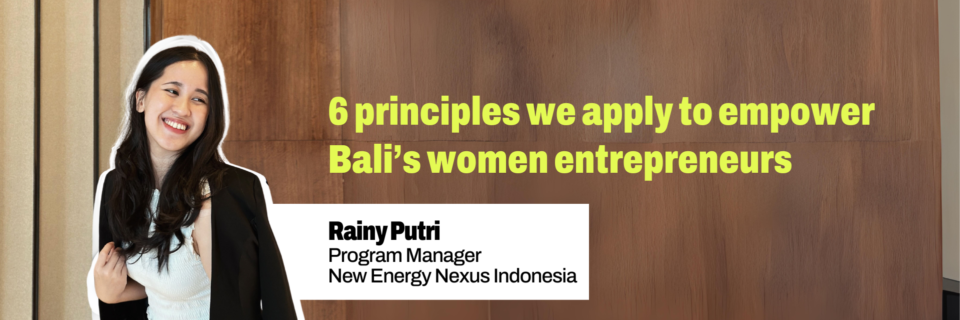
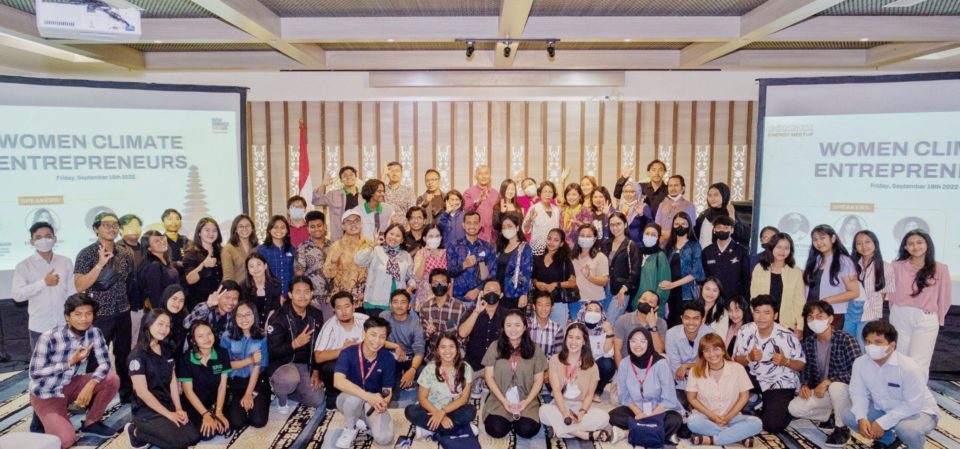
I have been involved in many climate and sustainability projects, but The Bali Women Climate Entrepreneurs project (which has now evolved into The Matangi Bali Project) has been both humbling and exhilarating, unlike any other. Discussions on women, climate, and entrepreneurship has been a journey of discovery – gradually revealing new perspectives and cultivating an atmosphere where trust and empowerment flourish.
“Matangi” directly translates to “wake up” and embodies the essence of reviving Balinese communities and their symbiotic unity with nature. The Matangi Bali Project aims to develop an innovative and entrepreneurial approach to sustainable growth in Bali.
When thoughts turn to Bali, visions of its mesmerizing azure skies, enchanting oceans and stunning architecture immediately come to mind. Indeed, Balinese culture has embraced the ethos of harmonious coexistence with nature. Renowned for its deeply ingrained and rich cultural heritage, this ethos permeates every facet of its community.Despite being entrenched in patriarchal norms and cultural favoritism towards men, the lasting impact of Balinese culture and its identity, which has fuelled a tourism-driven economy to the island, owes much of its influence to the women. Balinese women, who play pivotal roles in various spheres of life – be it within the family, in economic pursuits, or in upholding traditions, are often overlooked. Their culture places the responsibility of shaping the nation’s next generation squarely on the shoulders of mothers to instill cultural values such as moral integrity, spirituality and environmental consciousness.
How will these women, deeply rooted in community values yet constrained by a strong patriarchal system navigate the path towards climate entrepreneurship? It’s a question that invites exploration.
Here are six valuable learnings that have shaped my perspective on this project.
The first and most crucial lesson learned is admitting our own limitations. Rather than succumbing to preconceptions, we chose humility and opted to inquire. We met the women entrepreneurs where they are, seeing the world through their eyes. Understanding the context and cultural nuances has been essential in tailoring our program to the unique challenges women in Bali face.
To overcome deeply ingrained cultural practices, collaboration with the community is key. The Matangi Bali Project actively contributes to the growth of the community while seeking input from its members. By acknowledging that societal change is a collective effort, we empower women to step into leadership roles and challenge the status quo.

Navigating the intricacy of Bali’s patriarchal landscape comes with challenges. Setting realistic expectations has been crucial. Our goal was never about changing millenia-old cultural beliefs. Instead, it has always been about recognizing that men and women are capable of equality and that entrepreneurship is a pursuit open to both genders.
For generations, Balinese culture has embraced the ideals of a circular economy. Amid rapid urbanization and burgeoning tourism, these concepts seem to have been overlooked.
Our goal is to shed light on the untapped economic potential inherent in these principles, fostering a diverse range of economic activities across Bali. The profound impact of COVID-19 pandemic, particularly with the cessation of tourism, has understored the urgency of our mission.
We are steadfast in our commitment to position entrepreneurship as a key catalyst for economic resurgence in Bali. While the path might be bumpy, the commitment to progress remains unwavering.
It’s not enough to preach to the perfect-sounding choir. Instead, we orchestrate concerts, inviting others to listen and sing along.
Choosing to become an entrepreneur is a career path that is often frowned upon by many Balinese. Countless individuals have expressed that it can be a solitary journey, which frequently acts as a barrier to actively participate in climate efforts. This applies even more for mothers, who may only find time for such pursuits once everyone else is asleep.
This can compound issues such as diminished self-esteem, resulting in a lack of competitive drive, especially amidst existing biases against local products and services in a landscape heavily influenced by foreign perspectives on sustainability, often perceived as superior or even ideal.
Creating inclusive spaces where diverse voices are heard and valued is crucial for fostering a supportive environment for women entrepreneurs.
We strive to unlock a path where every woman can chart their own course. Empowering these entrepreneurial spirits goes beyond mere encouragement; it’s about honoring their autonomy and granting them the reins to shape their own stories.
Picture this: women juggling countless responsibilities, squeezed for time, and stretched thin by limited budgets. Yet, amid these challenges, they persist, prioritizing the needs of others while silently battling the stigma of environmental indifference. In the northern reaches of Bali, an economically disadvantaged region where meeting basic needs takes precedence, these women are unfairly scapegoated for their plastic usage, despite it being a convenient and affordable option for them.
And did you know? In the realm of waste management education, it’s the women who consistently bear the brunt of blame, their shoulders weighed down by the burden of societal expectations.
These stories form the basis of our understanding for running this critical project . Our role is simple yet important: to stand beside them, offering support as best as we can, to navigate their entrepreneurial journeys with confidence and resilience.

By continuously assessing the program’s needs, we ensure that we are making a tangible difference in the lives of women entrepreneurs. The impact goes beyond economic success; it extends to personal transformation, newfound confidence, and a deepened sense of belonging within their community.
At each twist and turn, we encounter multiple challenges. It’s a voyage that demands patience, empathy, and a whole lot of collaboration. Despite these challenges, we remain committed to being responsive and resilient. We’re ready to transform the insights gleaned from the grassroots levels to innovative solutions, ensuring we always meet those we support.
As we embark on the second phase of the program, these learnings will serve as our guiding light, propelling us towards innovative solutions despite gender barriers within the climate sector in Bali.
The Matangi Bali Project aims to develop an innovative and entrepreneurial approach to sustainable growth in Bali.
Our journey in Bali began in 2021, where we extended capacity building support to women climate entrepreneurs, fostering innovative solutions despite gender barriers within the climate sector. Recognizing the limitations of solely empowering one group, we have pivoted our approach to encompass broader participation, encouraging all stakeholders – including men, women, youth, government, and communities – to embrace and cultivate leadership organically. This effort ensures that diverse voices contribute to sustainable solutions addressing climate change effectively.
This project is initiated by New Energy Nexus Indonesia as part of the Bali Net Zero Emissions Coalition with CAST Foundation, IESR & WRI Indonesia. Matangi Bali is supported by ClimateWorks Foundation and ViriyaENB.
Shanghai, 29 January 2024 – The New Energy Nexus (NEX) 2024 Climate Fintech Accelerator is now open for applications. The accelerator aims to foster innovation in the climate finance sector, providing startups with resources for business growth, product buildup, and extensive networking opportunities.
Last year marked the launch of the first NEX Climate Fintech Accelerator, which hosted 14 startups over an eight-month program, supporting 51 entrepreneurs, and more than 15 industry-specific events.
This year, we’re embarking on another journey. The 2024 NEX Climate Fintech Accelerator will focus on two key application areas: Web3 in Sustainability and Cross-Border Carbon Management. The program will cover eight domains, including Payments, Banking, Lending, Investing, Trading, Risk Analysis, Insurance Technology (Insurtech), and Regulatory Technology (Regtech).
The year-long program is for startups around the globe and designed to support the most innovative and impactful climate fintech entrepreneurs. In addition to mentorship and industry networking, the accelerator will focus on customer acquisition and capacity building.
We welcome all entrepreneurs who have passion in decarbonization and climate innovations and confidence in their technology and products. Apply for the 2024 Climate Fintech Accelerator: English and Chinese.
There will be a rolling recruitment, with the deadline for priority applications on March 24, 2024.
Program contacts:
Contact for more information: Luna Zhang, Climate Fintech Associate, New Energy Nexus, su.zhang@newenergynexus.com
Tristan Tremschnig
Global Communications Director, New Energy Nexus (based in California)
tristan.tremschnig@newenergynexus.com
Jasper Shen
Communications Manager, New Energy Nexus China (based in Shanghai)
jasper.shen@newenergynexus.com
About New Energy Nexus
New Energy Nexus (NEX) is the world’s leading clean energy ecosystem builder, working toward a 100% clean energy economy for 100% of the population. It does this with a laser focus on diverse entrepreneurs, supporting them with accelerators, funds, skills, and building the local and global connections they need to thrive. NEX has accelerated 1,700+ startups and businesses, empowered over 11,500+ entrepreneurs, and mobilized more than US$5.4 billion in investment.
Since its founding in California in 2004, NEX now operates programs or services in Australia, China, India, Japan, Indonesia, Nigeria, Pakistan, the Philippines, South Korea, Thailand, Uganda, the USA (California and New York), and Vietnam.
From more aerodynamic trucks, through to non-flammable batteries, we’re proud to announce the six winners of the CalSEED program’s sixth annual Prototype Awards.
Funded through the California Energy Commission’s US$130 million-a-year EPIC program, these awards aim to surface some of the most cutting edge clean energy technologies being developed in California, and ultimately help them commercialize faster.
The awardees were selected through a rigorous business plan competition, closely coordinated with Cleantech Open (CTO), where companies demonstrated the commercial promise of their innovations. Each winner will receive US$500,000 to bring their technology closer to market.
“The companies selected for these awards not only showed commercial promise, but they demonstrated how scaling their technology could result in other benefits that go beyond reducing emissions and cutting costs. There is something about each of these innovations that is easier to install, easier to manufacture, and easier to deploy, and these things can increase access and resilience.”
Joy Larson, Director of CalSEED at New Energy Nexus
Community Energy Labs (CEL) has developed a cheaper and simpler building control system, which can increase energy savings by up to 23%, reduce peak demand by up to 30%, and drive adoption of renewables through load shifting. Due to the low up-front costs, customers pay back their initial investment in months, not years.
Building control systems are the systems that typically automate centralized control of a building’s HVAC, electrical, lighting, shading, access control, and security systems. CEL’s solutions can be installed in under a week (as opposed to months or years for transitional Building Automation Systems), requiring minimal intervention or engineering.
“With the CalSEED Prototype Aware we plan to build support tools that smooth customer acquisition and onboarding in a friendly, consistent, and scalable way. The proposed enhancements are central to supporting CEL’s go-to-market strategy and ability to convert pilots and demonstrate scalability to potential investors.”
Tanya Barham, CEO at Community Energy Labs


Tyfast is building high-performance Lithium-ion batteries (LiBs) in heavy duty, construction, and military vehicle applications.
Tyfast has developed a proprietary vanadium-based anode called LVO, which delivers 10-times faster charging (in less than 10 minutes) resulting in shorter downtimes, and increasing the lifecycle 10-fold. It can also be charged at sub-zero temperatures (-40C).
“With the CalSEED Prototype Award, we aim to fabricate and deliver >5 Ah Li-ion cells to our diesel OEM customers for evaluation of this breakthrough technology at the cell and early module/pack level.”
GJ la O’, CEO at Tyfast
Solvari SR is a ready-to-install, all-in-one residential solar panel that ships as a single unit with everything needed to install it. It installs four-times faster than current options, reducing cost by as much as 25%.
Rooftop solar typically has an average of 425 individual parts for a typical 7kW residential solar system. Solvari has simplified this to only 22 modules, resulting in a 50% reduction in operation and installation costs.
“Solvari plans on completing two key automation manufacturing stations of the Solvari SR product to reduce manufacturing costs. We will also complete certification of the Solvari SR module to close out its final market requirement.”
Samuel Truthseeker, Founder and CEO at Solvari


Ariya Energy is developing a proprietary, low-cost, non-flammable battery for stationary storage. The team estimates that this battery can save commercial and industrial ratepayers up to 25% on their electricity bill, and residential ratepayers up to 20%.
Ariya’s battery uses a water-based electrolyte and zinc, making the battery both non-flammable much more robust. A lower cost is achieved with readily available (inexpensive) materials that can easily be recycled. The low battery price could enable a “Energy Storage as a Service” (eSaaS) that provides storage as a guaranteed service for a monthly fee. Little or no upfront payment is required, and the monthly fee never exceeds the ratepayer’s monthly savings.
“With the Prototype Award, we will perform further technical development of our low cost stationary energy storage battery. Specifically, we plan to increase the storage capacity of our prototype battery to bring it closer to commercialization.”
Arthur Kariya, Founder at Ariya
Aeromutable is developing more aerodynamic trucks, with a simple, low-profile device added to the back of trucks. It could improve the energy efficiency of the trucking industry by up to 16%.
The design changes the aerodynamic signature of a tractor trailer to minimize drag and reduce energy consumption and emissions by injecting air into the back of the trailer in a unique way.
Unlike the static technologies on the market today, this technology provides dynamic, real-time aerodynamic optimization.
“To accelerate our entry to market, Aeromutable is proposing to develop a faster testing method. By leveraging additional testing platforms that will allow us to work both on in-house development and advancing our on-road testing through commercial developmental pilots we can demonstrate performance improvements our device provides for heavy vehicles.”
Sandra Manosalvas-Kjono, Co-Founder and COO at Aeromutable


Climformatics builds models to simulate the global climate using state-of-the-art, Nobel-Prize winning algorithms. It predicts with a high degree of certainty the climate and weather state for long-term timescales at specific geographic locations.
Climformatics has developed innovative technology using climate and weather models together with machine learning that can anticipate the extreme climate events well before they are imminent (beyond a week or two). This data empowers utilities to prepare and protect their installations.
”… the “CALSEED Prototype award will help Climformatics build an innovative decision support tool for energy utilities and grid operators to help them decide how to meet the increased energy demand for cooling and at the same time mitigate the fire-risk ignition.”
Subarna Bhattacharyya, Co-Founder and CEO at Climformatics
CalSEED is funded through the CEC’s EPIC program which invests approximately $120M annually for innovative clean energy technologies and approaches benefiting the ratepayers of California’s three largest electric investor-owned utilities. Through the CalSEED initiative $25M will be deployed to back over 80 startups in coming years. CalSEED is administered by New Energy Nexus.
The California Clean Energy Fund (CalCEF) realised over a decade ago that batteries play a critical role in the energy transition. Since its inception, CalCEF, which evolved into New Energy Nexus in 2016, has been at the forefront of global initiatives to foster a robust and inclusive advanced battery ecosystem.
Reflecting on the end of the CalCharge program that started it all, New Energy Nexus CEO Danny Kennedy shares insights into the role the organization played in connecting the dots between energy storage technology, innovation, and policy.

Batteries are the secret ingredient to unlocking the potential of renewable energy, but it wasn’t always inevitable that this nascent technology would take off as it has this decade. CalCEF – the organization I led back in 2106 and which later became New Energy Nexus – had seen the importance of lithium-ion batteries for electric mobility potential; in fact, it had even invested in a fledgling company called Tesla, that some of you may know, around 2005. Several CalCEF board members and staff, who included long time solar and utility executives, knew that grid storage would become “a thing” as the penetration of variable renewable energy increased on the grids.
Fast forward to 26 January this year, the UN’s first ever International Day of Clean Energy, and I’m at the groundbreaking of California’s first commercial lithium production facility, and the world’s first “fully integrated lithium facility and clean energy campus”. Picture this: John Podesta is leading the groundbreaking with a Congressman, Assembly member, and union heads. Senior officials from Sacramento have trekked down to this side road off Highway 111 near Niland (look it up on Google Maps – we’re not in Kansas nor the California many know) along with former Secretary of Transport, Rod Slater. Rod Colwell, the CEO of Controlled Thermal Resources, the startup commissioning this billion dollar facility, is beaming from head to toe after years of talking about getting this thing going.
Key to the story of Lithium Valley is the buy-in of the traditional custodians of the place, the Torres Martinez tribe of the Cahuilla Bands of Indians, who live throughout this part of desert California and northern Mexico. Councilman Butcher was present at the ceremony and his community are working to host energy projects to power some of the Lithium processing that will ensue from commercial production of the powder. Questions remain about the footprint of all this industrial activity and as Eduardo Garcia, the local representative, said the skeptics have to be given a hearing, which they will. But the prospect of a green Lithium battery supply chain, powered by renewable electricity throughout the manufacturing, which could provide enough batteries for all the cars in America, is tantalizingly close. Even a pundit who has long poo-poo’ed this possibility is changing his tune in the LA Times.
Living the CalCharge dream: 2012-2016
This was always the dream of CalCharge: to engender a soup-to-nuts, next-gen technology based on the brains and clean resources of the Golden State, rich with good, so-called “high road” jobs capable of paying family-supporting wages while ushering in climate solutions.
There was no certainty batteries would even be a big part of the mix, given the hype cycles that ensued about everything from a nuclear renaissance to hydrogen. Solar and wind were far from streaking ahead as they are now. As such, storage on the grid wasn’t perceived to be that important and people thought cars would be “fueled” forever. But CalCEF’s founders had also seen the green shoots of effort by entrepreneurs in California doing creative things with an alphabet soup of chemistries (Li, Zn, Br, Na) and their job was to support these entrepreneurs, which they did systematically.
In particular, in 2012 we formed a new trade association for energy storage companies called CalCharge around a cluster of around 18 startups. The mandate was to create a “center of gravity” for the California energy storage sector that enables diverse stakeholders to collaborate, identify barriers to emerging technology success, and develop solutions that help clear the path to commercialization.
In the early years of Calcharge the main event was literally an event known as the “Bay Area Battery Summit”. This gathering of geeks and scientists and journalists covering new tech was held each year at one of the Bay Area’s three national labs – Lawrence Livermore, Lawrence Berkeley or SLAC, the Stanford Linear Accelerator. It became the place “to be” if you were in batteries in the United States of America. I remember the first BABS (as it became known) that I attended in 2015. It was thrilling in only the way that a lecture theater behind the high security fence line of one of the US’ national labs can be!
We were discussing information that seemed critical for national and dare I say it, planetary security. Speaker after speaker talked of the potential of breakthroughs in energy density and other improvements in battery storage that would allow renewables to take up more than 100% of power demand by pairing wind and solar with the right storage. That their energy density could also move cars, bikes and all modes of transport quickly and cheaper became clearer as well. But challenges for this fledgling industry were also clear.
Supercharging the work: 2017-2021
This is when the CalCharge board decided to supercharge the information-sharing. We made a proposal to the federal government to develop a national networked manufacturing initiative on advanced batteries called Supercharge. This NNMI was supposed to bring together all of the interests, not only in California but across the country, including the American Jobs Project, many labor unions, some of the automobile industry, and New York’s Battery Energy Storage Technology (BEST). Over the course of 2016 we put together a powerful coalition of state agencies and industry, unions and universities and presented to the Department of Commerce our proposed strategy. In October 2016 we were deemed to be worthy of federal support and approved for a US$70 million grant to build out the vision.
As you might remember a month later a new government was formed in the United States, which did not seem interested in the energy transition or promoting new technologies with industrial strategies. We were never awarded the actual funds from the grant despite winning the bid, and instead the United States went into a period of uncoordinated effort around these issues.
There was a small grouping inside the federal government known as the Federal Consortium on Advanced Batteries (FCAB) that kept the light on for such thinking and of course many entrepreneurs and scientists and others in nonprofit and for-profit sectors, who pursued better batteries for those four years of the Trump administration. In parallel, the European Union, China and many other nations really stepped up their efforts in the formation of their own industrial strategies for batteries.
Back to the future: 2021-now
By the time Trump lost his second election the United States was behind, and in some ways had had a sort of “Sputnik moment” – bested in its own tech. Lithium-ion chemistries in particular, which American companies and scientists had contributed to more than any, were now being made at scale mostly in China and in a value chain that mostly left America out except as the buyer of these batteries.
On the first day of the Biden administration an executive order was put out to work out the problem of dependency that America had on a number of critical supply chains including pharmaceuticals, semiconductors and batteries. CalCEF, now known as New Energy Nexus, was asked along with the NY BEST and NattBatt, the national battery industry association, to support the government in its quest to solve this problem.
New Energy Nexus was engaged a number of times by LG Energy Solutions, at the time the top battery maker in the world, to find the best and brightest chemists and startups in the battery space. These “Battery Challenges”, which we went on to develop for Kia and Hyundai as well, have helped keep the Korean battery industry abreast of the cutting edge in chemistries.
We also grew our programs in California to support energy storage companies because so much of the state’s climate and energy mandate required more storage on the grid. We developed support for dozens of startups including Cuberg, Coreshell, Sepion and SparkZ. In New York we teamed up with Stan Whittingham’s lab and our old friends at New York BEST and others upstate to pitch to the Department of Commerce again a vision called New Energy New York. And in Australia we built a program to decarbonise the upstream production of raw lithium from spodumene resources through our innovation challenge with our partner, EnergyLab.
Bringing it home
In a little known corner of the country, literally where Arizona and Mexico meet California there is a nationally significant resource of lithium coming out of the geothermal brines that also produce about 5% of California’s electricity. If this resource were turned into reserves and a productive capacity, which has been the focus of many startups since 2010 with a company called Simbal, then America could provision its own batteries with a no-carbon source of lithium. As incredible as that sounds this is the prospect facing California and in particular Imperial County with its Lithium Valley now that CTR has begun building a Li powder and power production facility.
Lithium Valley is the name that has been given to this potential eco-industrial precinct that could grow up around the geothermal power plants already operating by the Salton Sea. Here in the poorest county in California there is an opportunity to produce clean lithium and turn it into precursor chemicals, active cathode materials, battery cells and ultimately battery packs. We published a report “Building Lithium Valley” in 2020, which became the basis for consideration by a Blue Ribbon Commission of the California Legislature and other efforts around the vision of a clean industry hub in the southern Californian inland counties. The local indigenous community have taken a lead in advancing this vision, governed by their values and long-term commitment to the place. Watch this space for more on this concept soon.
New Energy Nexus now stands ready to work with the Torres Martinez and the Cahuilla Indians, on whose land this potential could be achieved. Our aim is to do this right, by which we mean include communities who have historically been taken advantage of by extractive industries at the design phase of the industrial development.
If lithium is recovered from the geothermal sector at scale and gigafactories spring up in and around Imperial County it will be important that the tribal communities as well as farm workers and others who live in the area are at the table. To enable this, we are working with the Torres Martinez on a tribal innovation accelerator proposal, as well as with young people interested in STEM education on a Youth Entrepreneurship Accelerator (YEA!) last year.

Youth Entrepreneurship Accelerator (YEA!)
Just Batteries
Across the globe, New Energy Nexus teams are looking for ways to advance this linchpin technology – batteries – in ways that are just and equitable. Our impact reports have started to track our progress with the cohorts of entrepreneurs who we train and introduce to partners and capitalise each year. We call this updated vision Just Batteries and look forward to keeping you posted on our progress.
The exciting prospect is that we imagine a world just a few decades hence wherein sufficient lithium and other battery metals have been recovered from the earth’s crust or its brines and need never be extracted again as virgin raw material. Instead, by the ‘40s we could be in a fully circular economy, recovering sufficient material for our energy storage needs from an urban mining process which will be much more economic than new mines or geothermal recovery of lithium. If this is to be realized it is important that those communities this decade and next, from whose land lithium and other battery metals will be recovered, are involved in the full cradle-to-cradle value chain of better batteries.
As for CalCharge, we have wound it up (as of late January 2024, I am resigning as President and we have mothballed the entity and its CRADAs with the national labs). Entrepreneurs looking for support from New Energy Nexus in California for battery-related technologies can apply to our CalSEED and CalTestBed programs. These offerings have all of the advantages and many more than Calcharge provided. Moreover we think we have come to a time that requires global collaboration – not just national – in order to both advance advanced batteries and ensure that they do not become the plaything of geopolitics. Charge on!
In Uganda, only 19% of rural communities have access to electricity, and less than 2% enjoy modern cooking facilities. Instead of leaning into fossil fuels, these communities have an opportunity to leapfrog to safe clean energy.
New Energy Nexus has championed clean energy entrepreneurs longer than any other accelerator in Uganda. ENVenture, a program run by New Energy Nexus Uganda, has significantly contributed to addressing the energy access gap in off-grid communities.
These last-mile communities form an integral part of our global network of clean energy entrepreneurs, working towards achieving 100% clean energy for 100% of the population. Our mission also includes reducing the depletion of Uganda’s forest cover, which has decreased at a rate of 13% since 2000. This is achieved by supporting last-mile energy entrepreneurs who promote the adoption of various clean cooking technologies.
In Uganda, we’re empowering hundreds of Community Based Organizations (CBOs) through financial support, skill development, and innovative mobile technology solutions. Since 2016 we’ve supported:
Our award-winning model harnesses the untapped power of Community Based Organizations (CBOs) and Village Savings and Loans Associations (VSLAs) to incubate clean energy entrepreneurs. These CBOs provide many essential services – supporting better health, education, sanitation and work for local people. Since we started operating in Uganda in 2016, we learned very quickly that these organizations have the networks, trust, and community reputation to bring new technologies, such as solar lighting, water filters, briquettes and clean energy cookstoves to rural villages.
Hundreds of entrepreneurs are part of the quiet clean energy transition taking place in Uganda’s last-mile and refugee communities. Let’s meet some of them…
Beatrice Kitaliraba is an enthusiastic shopkeeper hired by Utopia, a Community-Based Organization(CBO) in Kyenjojo. Beatrice educates potential customers how solar lamps can be beneficial for their businesses.
Utopia, backed by an energy startup loan from our ENVenture program, aims to enhance access to affordable clean energy products in their communities. The CBO is actively promoting the adoption of these products, particularly to extend working hours for rural women entrepreneurs who rely on affordable lighting for their businesses. Utopia’s clean energy store offers a range of products, including solar lanterns and improved cookstoves.


Meet David Kamoomo, a 46-year-old entrepreneur who runs a poultry business in Nsinde. In the past, he faced challenges in providing adequate light for his birds, resorting to kerosene lamps, flashlights, and candles as the only available options. Recognizing the potential dangers and high costs associated with these methods, David sought an alternative solution.
Kitara Community Seed Bank, one of our entrepreneurial partners, offered David a solar loan product. This alternative not only addressed the safety concerns but also proved to be a cost-effective and sustainable solution for illuminating his poultry house. David, now equipped with solar-powered lighting, has experienced significant energy savings, allowing him to reinvest in and expand his poultry business.
Meet Karungi Annet, a 36-year-old homemaker and mother of three, demonstrating the use of a Lorena stove. Trained by Utopia, a startup from our ENVenture program, Karungi was inspired by the success of their cookstove business. Responding to numerous requests from the community for an alternative cookstove suitable for preparing local dishes, Utopia introduced this improved traditional outdoor cookstove. Efficient and safe, it aims to address the specific cooking needs of the community.
Karungi attests to the positive impact, noting a reduction in her cooking time and experiencing less coughing compared to when she used her traditional three-stone cookstove.


In Kyenjojo, Kizia Janet stands out as a local entrepreneur, catalyzing positive change through her flourishing solar business that specializes in solar lanterns and panels. Utopia provided essential support for her solar venture. Kizia embodies the impactful collaboration between local entrepreneurs and Community-Based Organizations. The solar products she offers serve as a clean and sustainable energy source, reducing reliance on traditional, environmentally harmful alternatives and elevating the overall quality of life for residents.
Well-lit homes, students studying after sunset, and businesses extending their operating hours are just a few of the tangible benefits. Moreover, Kizia’s solar business contributes to local economic empowerment by not only generating income but also fostering financial resilience within the community.
What energy access looks like in off-grid communities.
Meet John Male at his rural home, where he utilizes solar power to illuminate his living space. The lanterns he proudly owns were purchased from Utopia, a beneficiary of our ENVenture program in Nsinde, Kyenjojo, Uganda. In this photo, you can see John Male tending to his small farm at his rural home in Nsinde. In the background, a solar panel can be spotted on his roof.


Christine Kimera uses the improved cookstove from Safeplan Uganda for her meals. She highlights the stove’s speed and efficiency, noting a significant reduction in the use of firewood. Christine also utilizes a solar lamp from Safe Plan Uganda to read the Bible to her grandchild in Katagurukwa, Masindi, Uganda. Her commitment to clean cooking and sustainable lighting reflects her dedication to a healthier and more environmentally conscious lifestyle.
New Energy Nexus is proud to be backing these entrepreneurs. Through affordable loan terms and hands-on support from our expert team on the ground, these entrepreneurs have successfully expanded their businesses, created jobs, boosted their income, and contributed to Uganda’s transition to clean energy.
Join us in bringing clean energy technologies to the heart of last mile communities. https://www.newenergynexus.com/
Jakarta, 18 January 2024 – Three climate tech startups from New Energy Nexus Ventures’ (NEX Ventures) portfolio in Indonesia – Swap Energy, SolarKita, and Synergy Efficiency Solutions – have secured additional investments totalling US$31 million for 2023, including follow-on funding.
“Despite a 40% decrease in global funding across the climate tech sector last year, these three startups have demonstrated their resilience by achieving success in fundraising,” said Yeni Tjiunardi, Managing Director at NEX Ventures.
“We are committed to supporting disruptive and agile startups and founders that can accelerate the clean energy transition. Our optimism extends to the potential opportunities for emerging early-stage ventures in addressing climate challenges, not only in Indonesia but also in other Southeast Asian countries, such as the Philippines and Vietnam.”
The three startups are deploying solutions critical to Indonesia’s climate and energy goals, ranging from solar to energy storage:
NEX Ventures aims to catalyze early-stage investments in the clean energy and climate sector by investing and collaborating with other investors, and providing strategic guidance to support its portfolio companies. Indonesia 1 Fund has co-invested with Schneider Electric Energy Access Asia (SEEAA) in SolarKita and with Southeast Asia Clean Energy Facility (SEACEF) in SES. Additionally, Swap Energy secured US$22 million investments for their Series A round by the end of December 2023.
NEX Ventures, through its Indonesia 1 Fund, has invested in seven climate tech companies and deployed four follow-on investments since 2020. These companies have been performing strongly, attracting over US$70 million of investments from other investors since joining the fund while also tackling climate and energy challenges. To date, Indonesia 1 Fund’s portfolio companies have reduced over 165,000 tons of CO2 emissions, equivalent to planting almost eight million trees.
SolarKita
“The funding received from Indonesia 1 Fund and SEEAA allows more rapid penetration into the residential market. This milestone marks the initial phase of SolarKita’s overarching expansion plan to reach 18MWp solar PV installations equivalent to 6000 houses by the next three years,” said Amarangga Lubis, CEO of SolarKita.
The funding will strengthen the company’s fundamentals, refine product quality, and expand its network of installers and sales partners across Indonesia.
“As part of SEEAA’s mandate to accelerate the transition towards renewable energy and net-zero, we are excited to support SolarKita in their mission to make solar rooftop solutions accessible for residential homeowners and small businesses. Sustainability calls for collective action and we believe this joint investment from SEEAA and New Energy Nexus will be a critical catalyst in helping more people be part of the energy transition journey,” said Gilles Vermot Desroches, President of Schneider Electric Energy Access Asia (SEEAA).
Synergy Efficiency Solution
Synergy Efficiency Solutions (SES) intends to utilize the funding from Indonesia 1 Fund and SEACEF to fund capital expenditures for its growing portfolio of energy-saving projects. The timing of this follow-on investment coincides with the award of the Energy Transition Partnership (ETP) Grant to SES.
Swap Energy
Swap Energy has successfully raised a total of US$22 million in its Series A round in December 2023. This latest round was led by Qiming Venture Partners, with participation from GGV Capital and existing investor Ondine Capital. The company has more than 1300 battery swapping stations across Indonesia. They have also partnered with many companies such as Grab to develop an integrated EV ecosystem in Indonesia.
Tristan Tremschnig
Global Communications Director, New Energy Nexus (based in San Francisco)
tristan.tremschnig@newenergynexus.com
About New Energy Nexus
New Energy Nexus (NEX) is the world’s leading clean energy ecosystem builder, working toward a 100% clean energy economy for 100% of the population. It does this with a laser focus on diverse entrepreneurs, supporting them with accelerators, funds, skills, and building the local and global connections they need to thrive. NEX has accelerated 1,700+ startups and businesses, empowered over 11,500+ entrepreneurs, and mobilized more than US$5.4 billion in investment.
Since its founding in California in 2004, NEX now operates programs or services in Australia, China, India, Japan, Indonesia, Nigeria, Pakistan, the Philippines, South Korea, Thailand, Uganda, the USA (California and New York), and Vietnam.