TERA-Award is climate startups’ shot at US$1M and global market access
March 24, 2026
When it comes to climate tech, building breakthrough solutions is only part of the challenge. The real test is getting those solutions into the market, into supply chains, and into the hands of the people who need them.
In partnership with New Energy Nexus, the TERA-Award is a global competition that identifies and accelerates high-potential climate technologies. With a US$1 million Gold Prize and access to industry applications, funding, and partners across Asia, it helps founders move faster from innovation to real-world impact.
Applications for 2026 are now open. Still deciding? Start by learning what last year’s winners gained from the experience:
Barocal founder and CEO Xavier Moya holds the solid-state refrigerant. Photo from Barocal
1. Barocal
Accessed global markets and partners
For the 2025 Gold Winner, the TERA-Award was more than just its cash prize—it opened doors into the Asian market, one of the most important for energy innovation.
Barocal is rethinking cooling and heating systems using solid-state materials that eliminate harmful refrigerants while improving efficiency and reducing costs.
For its founder, Xavier Moya, the platform’s value was clear.
“It gives us valuable exposure across Asia—a critical market for our cooling and heating technology—and opens doors to a high-quality network of suppliers, partners, and investors.” — Xavier Moya, CEO and founder
For founders looking to expand beyond their home markets, this level of access can define the trajectory of their growth.
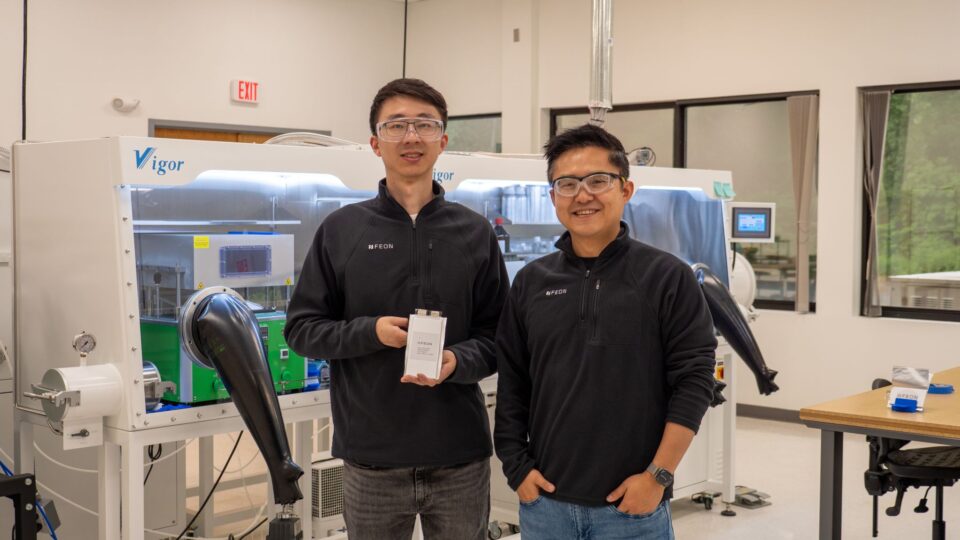
Photo from Feon Energy
2. Feon Energy
Built credibility and unlocked new opportunities
The 2025 Silver Winner is advancing battery technology with new electrolytes that improve safety and performance without disrupting existing manufacturing.
Feon Energy’s solution has strong technical potential, but scaling requires trust, visibility, and the right partnerships.
“Winning the TERA-Award will further strengthen our credibility in the Pan-Asia market, opening doors to new partners and giving us a trusted platform to showcase our technology.” — Wenxiao Huang, CEO and co-founder
Recognition at this level signals to investors, corporates, and partners that a solution is ready for serious consideration.
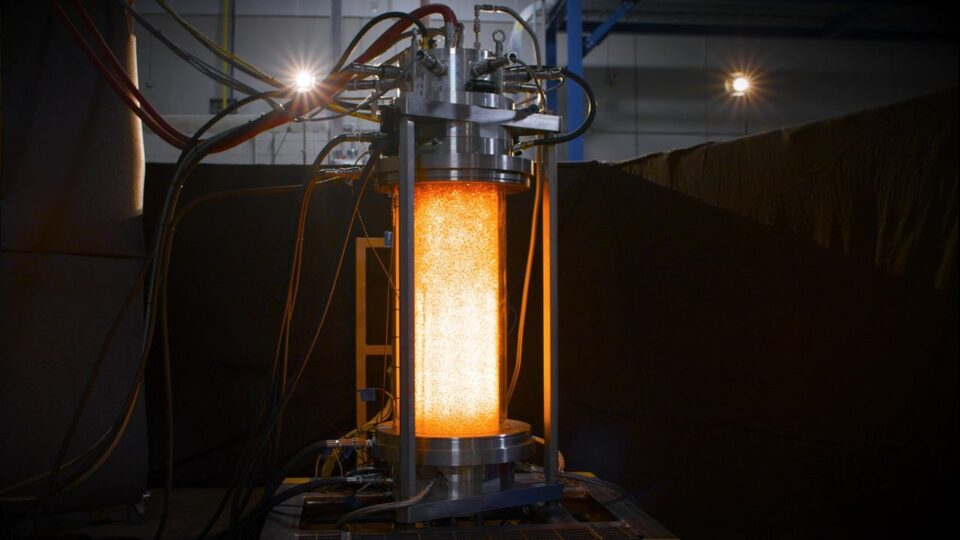
Photo from Syzygy Plasmonics
3. Syzygy Plasmonics
Global exposure
For the 2025 Bronze Winner, the TERA-Award helped accelerate visibility across key markets.
Syzygy Plasmonics’ NovaSAF platform converts biogas into sustainable aviation fuel using light-driven chemical reactions, offering a scalable pathway to decarbonize aviation and waste systems.
“Syzygy has a very innovative solution that needs to be deployed across the globe for maximum impact. We were introduced to a number of high-profile investors and have used the event to grow our exposure across Asia.” — Trevor Best, CEO
For technologies with global relevance, scaling impact depends on reaching the right ecosystems quickly.
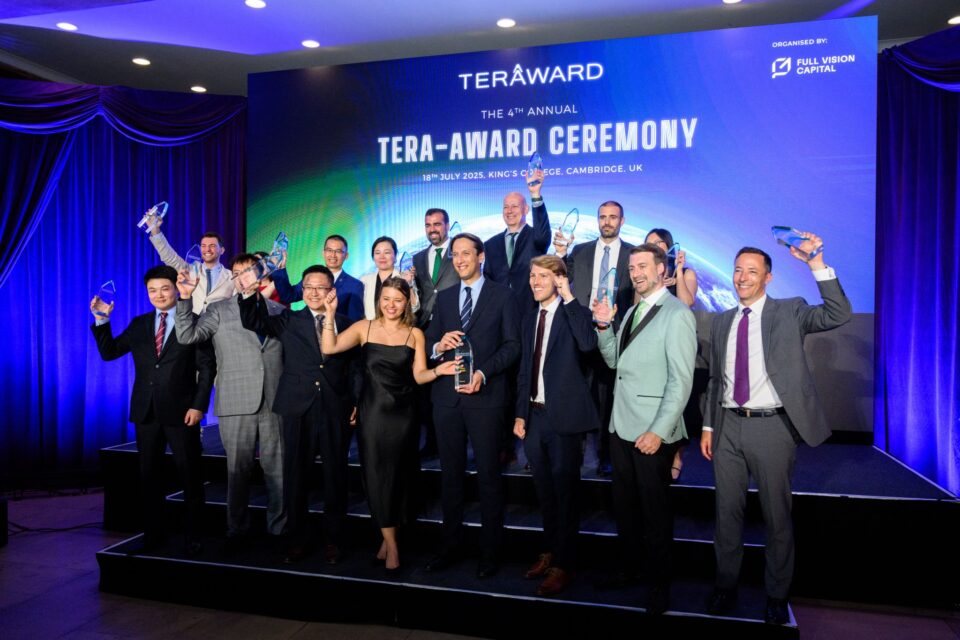
Photo from TERA-Award
Why this matters now
In its previous editions, the TERA-Award has attracted over 1,700 startups from 76 countries, reflecting the growing momentum behind climate innovation.
New Energy Nexus has been a long-standing partner, connecting high-potential startups from its global network to the platform. In 2025, all three top winners were part of that pipeline, demonstrating what is possible when entrepreneurs are backed with the right support and connections.
As the clean energy transition accelerates, the gap is no longer just about innovation. It is about execution, partnerships, and speed. Platforms like the TERA-Award help close that gap.
This year, the TERA-Award 2026 is open to innovators building solutions across:
Green fuels and hydrogen
Next-generation energy
Energy storage and conversion
AI for energy systems
Energy efficiency and carbon capture
Smart energy systems
If you are building in these areas, apply today or before April 22, 2026.
Looking for clean energy and climate opportunities in China and beyond? Find them here.
Taking California’s clean energy testbed model global, starting with Australia
March 8, 2026
The gap nobody talks about
Here’s a problem that doesn’t get nearly enough attention: a startup has a promising clean energy technology. It works in theory or in the lab. It has credible science behind it. And it has a founder willing to bet years of their life on it. But to get to the next stage — real-world pilot, third-party validation, investor-ready data — they need access to specialized equipment that costs millions of dollars to build and operate.
Most early-stage startups simply cannot afford it.
This is the quiet bottleneck sitting in the middle of the energy transition. Governments invest in basic research. Investors come in once a technology is proven. But the messy, expensive, technically risky middle — the stage where a promising prototype becomes a bankable asset — is where innovation can sometimes go to die. Not because the ideas aren’t good enough. Because the infrastructure to prove them isn’t accessible.
California decided to fix that. What it built is worth understanding — because it works, and because it can be replicated around other parts of the world. Here’s how.
The pipeline that changed the game
The California model runs in two stages, and both matter.
It starts with CalSEED – the California Sustainable Energy Entrepreneur Development Initiative – which, after passing through a due diligence process, provides non-dilutive, non-matching grants to clean energy entrepreneurs at the earliest stage of development, when they have a concept but not yet a prototype. No equity surrendered. No requirement to find private co-investment first. Just capital at the moment when an idea is most fragile and most fundable by nearly nobody else, combined with post-grant guidance and support. CalSEED was deliberately designed to reach the founders that conventional funding filters out – people without investor networks, working on technologies that take years to mature, from communities that have historically been locked out of the innovation economy.
The pipeline leads to CalTestBed: a voucher program that gives clean energy entrepreneurs up to US$300,000 worth of vouchers to access world-class testing facilities at University of California campuses and Lawrence Berkeley National Laboratory at no cost to them. No equity. No matched funding. No IP claims. Just access to the equipment and expertise needed to turn a working prototype into something an investor can actually underwrite.
The jump in Technology Readiness Level – the internationally recognized scale from basic concept (TRL 1) to full commercial deployment (TRL 9) – that companies make through CalTestBed averages 1.6 levels. That doesn’t sound like much until you understand what it means in practice: the difference between a technology that sits in a drawer and one that lands a strategic partner, a major funding round, or a commercial contract.
Since CalTestBed launched in 2019, the 64 companies it has supported have collectively raised an estimated US$438 million in follow-on private investment – from US$16.5 million in testing vouchers. And it started because government was willing to be the first risk-taker in the room, so that other capital could follow with confidence.
Both programs are funded through EPIC – the California Energy Commission’s ratepayer-funded R&D initiative, built on a simple public compact: utility customers invest in the innovations that will ultimately make their energy cheaper, cleaner, and more reliable. It is public money deployed at the stages where private capital won’t go, in service of outcomes the market alone won’t deliver.
What this looks like for a real company
Coreshell Technologies is the story of the right support arriving at the right moment.
Jonathan Tan spent a decade commercializing membrane technology for industrial applications before co-founding Coreshell in 2017 around a deceptively simple problem: every time you charge a rechargeable battery, a little bit of it dies. That gradual capacity fade is one of the core barriers to affordable, long-lasting batteries for electric vehicles and grid storage – and it was a problem nobody had solved at scale. Coreshell’s answer was a nanolayer coating applied to the inside surface of battery electrodes, preventing degradation without requiring manufacturers to change their existing production lines.
CalSEED was one of Coreshell’s very first backers. That early, non-dilutive support gave Jonathan and his team the runway to develop their concept without giving up equity, IP, or spending the company’s early months chasing investors rather than doing science. From CalSEED, they moved into CalTestBed: accessing UCLA facilities and Lawrence Berkeley National Laboratory simulation tools that would otherwise have been far beyond their budget.
Coreshell has since raised close to US$40 million, including a US$24 million strategic round in March 2025. They won the Startup World Cup’s US$1 million grand prize. They are now delivering commercial battery samples to global automakers from a manufacturing facility in San Leandro, California. The California Energy Commission and New Energy Nexus California were among their earliest supporters. The market came in once the science was proven.
That is what the pipeline is designed to produce. And Coreshell is not an exception; it is a representative example of what happens when you remove the access barrier at the right moment.
Gridware is another. The company came into CalTestBed (and later CalSEED) with technology that monitors electricity distribution lines in real time, catching faults before they cause outages or wildfires. After testing through the program, Gridware’s Gridscope technology was integrated by S&C Electric into a grid-resilience product now being deployed by utilities across the US. The CalTestBed validation gave a major industrial partner the confidence to build Gridware’s technology into their own product. That kind of outcome — a startup’s technology embedded in an industry leader’s commercial offering — is extraordinarily difficult to achieve without the credibility that independent, third-party testing provides.
Why most countries don’t have this
The underlying logic of CalTestBed is simple: the infrastructure already exists. Universities and national laboratories have some of the most sophisticated research equipment in the world. But it was built for academic research, and most of it remains largely inaccessible to the startups that need it most.
The reason most countries don’t have a program like this isn’t lack of will. It’s a default assumption baked into most public funding design: that government should wait for private capital to show up first, and only then provide support. Match requirements, co-investment conditions, milestone-based tranches – all of them are designed to reduce government risk by making sure someone else has already committed. The effect is to make government funding available only to the companies that often least need it: those that already have networks, credibility, and backing.
California inverted that logic. Government goes first. It backs the science before the market will. And in doing so, it creates the conditions for the market to follow – at scale, and with confidence. The return, across CalTestBed alone, has been roughly US$26 in private investment for every public dollar in vouchers – or to put it another way, US$438 million in follow-on funding from US$16.5 million in public vouchers.
That model is not California-specific. It is replicable anywhere with research infrastructure, early-stage startups, and a government willing to act as a first mover rather than a last resort.
Australia is where we’re starting to expand
Australia has committed over AU$70 billion to decarbonising Australia’s economy over the coming decades. It has world-class universities, abundant critical minerals, a strong engineering tradition, and a generation of clean energy entrepreneurs who are ready to build. What it has lacked is a reliable, structured, funded pathway to turn early-stage innovation into investment-ready technology – the same gap the California pipeline was built to close.
The problem is structural. Australian early-stage grant funding programs almost universally require matched private investment, which creates exactly the barrier that California removed. The Investor Group on Climate Change has put a number on the consequence: 61% of institutional investors cite a lack of investment-ready opportunities as their reason for staying on the sidelines. The capital is there. The ambition is there. The pipeline between them is not.
AusTestBed is our response to that.
Modeled directly on CalTestBed, it will give Australian clean energy startups non-matching vouchers to test their prototypes at Australian universities and research institutions: the same model, the same logic, applied to Australian infrastructure and Australian founders. The pilot program, supported with seed funding from Boundless Earth, will see three battery and energy storage startups — Powerblocks, Adoxima, and Carbophite — each receive AUD$50,000 to begin testing at Australian facilities.
But testing is only half the pipeline. AusSEED — modeled on CalSEED — is the next piece: non-dilutive, non-matching concept grants for Australian founders at the very earliest stage, building the pipeline that feeds into AusTestBed. Together, they would give Australia what California spent years building: a coherent, no-match, equity-free pathway from first concept to investor-ready asset.
The AusTestBed pilot launched at Sydney Climate Action Week 2026, with California Energy Commission Chair David Hochschild — under whose leadership CalSEED and CalTestBed were funded and scaled — in Sydney for the occasion. His presence reflects something important: this isn’t a theory being imported from abroad. It is a proven model, with five years of data behind it, being deliberately adapted for Australian conditions by the people who built the original.
We are working with EnergyLab to grow AusTestBed and potentially AusSEED into national programs, universities, and state and federal governments. Initial testbed partners include TRaCE (a partnership between UNSW and the University of Newcastle), which will provide access to testbed facilities, alongside the University of Melbourne.
We believe the model has potential beyond Australia too: there are markets across the Asia-Pacific and beyond where the same pipeline problem exists and the same solution could take root. But that ambition starts here, with this pilot, and with the question of whether Australia is ready to back its founders the way California backed its own.
We think the answer is yes. And we believe the returns — for founders, for investors, for the energy transition — will speak for themselves.
California’s pioneering clean energy testing program lands in Australia
March 8, 2026
Sydney, Australia, 9 March 2026 – A program that has helped California clean energy startups collectively raise over half a billion dollars in follow-on investment is coming to Australia. New Energy Nexus and EnergyLab today announced the launch of the AusTestBed pilot: a first-of-its-kind, non-matching grant that gives Australian clean energy entrepreneurs free access to university testing facilities to validate their technologies and move closer to commercial deployment.
The launch has brought California Energy Commission (CEC) Chair David Hochschild to Climate Action Week Sydney. He oversees the highly successful California model, CalTestBed, which AusTestBed is based on.
The pilot program, made possible by seed funding from Boundless Earth, will see three Australian startups each receive AUD$50,000 to test their clean energy technologies at Australian tertiary, government and private research institutions — at no cost to them, and with no requirement to find matched private investment, and no IP claims. Initial testbed partners include TRaCE (a partnership between UNSW and the University of Newcastle), which will provide access to testbed facilities, alongside the University of Melbourne. The three battery and energy storage startups are: Powerblocks, Adoxima, and Carbophite.
The announcement is being made at Climate Action Week Sydney, where California Energy Commission Chair David Hochschild is in Australia as a keynote speaker. Hochschild, who Governor Gavin Newsom appointed as Chair of the CEC in 2019 and reconfirmed to a third term in 2024, oversees the EPIC program – the California ratepayer-funded research and development initiative that gave birth to CalTestBed and CalSEED.
“California didn’t become a global clean energy leader by accident. It happened because we deliberately invested in the innovation pipeline, not just policies and targets. We built public infrastructure and developed programs that got money to entrepreneurs at key moments when private capital wasn’t yet activated. It’s exciting to see the launch of AusTestBed, which will offer Australia that same clean energy innovation leverage,” said David Hochschild, Chair, California Energy Commission.
AusTestBed is modeled directly on CalTestBed, a voucher program administered by New Energy Nexus California on behalf of the CEC since 2019. CalTestBed has to date supported 64 clean energy companies and distributed more than US$16.5 million (AUD$23.28 million) in testing vouchers across more than 70 University of California and national laboratory facilities.
The companies that have gone through the program have collectively raised an estimated US$438 million (AU$617.9 million) in follow-on private investment since participating — a figure that reflects the commercial momentum that third-party testing validation unlocks for startups seeking to attract serious capital. The program has helped companies advance an average of 1.6 Technology Readiness Levels (TRL) through participation — a meaningful jump on the internationally recognized scale that runs from basic concept (TRL 1) to fully commercial deployment (TRL 9), and one that can determine whether a technology attracts investment or stalls entirely.
The opportunity in Australia is huge. The country has committed over AU$70 billion to decarbonising Australia’s economy over the coming decades and it has world-class university research infrastructure. However, Australia’s early-stage funding programs usually require matched private investment, creating a structural bottleneck – one that the CalTestBed program was specifically designed to remove in California. The Investor Group on Climate Change has explicitly identified this bottleneck: 61% of institutional investors cite a lack of investment-ready opportunities as a reason for staying on the sidelines.
“We’ve watched California prove, over five years, that removing the match requirement and giving startups access to world-class testing infrastructure is one of the most effective things a government or philanthropic funder can do to accelerate commercialization of clean energy startups. Australia has the research assets. It has the startups. AusTestBed is what connects them,” said Andrew Chang, CEO, New Energy Nexus.
“One of the biggest hurdles for Australian startups is the ‘validation gap’ — the distance between a prototype and the independent data required to secure investment. AusTestBed bridges this by providing the third-party proof and de-risking that founders need to move toward commercial deployment at scale,” said Megan Fisher, CEO, EnergyLab.
New Energy Nexus and EnergyLab are calling on the Australian federal government to fund a full national rollout of AusTestBed. Expanding access to non-matching early-stage funding is a key lever to accelerate systemic progress in Australia.
Notes:
[1] Startups that have participated in New Energy Nexus’ CalTestBed program have secured US$438 million or AUD$617.9 million in follow-on funding.
“California didn’t become a global clean energy leader by accident. It happened because we built deliberate public infrastructure around the innovation pipeline — not just policies and targets, but programs that actually got money to entrepreneurs at the stages where private capital wouldn’t go. EPIC is one part of that story — ratepayer-funded R&D program that has expedited movement of clean energy technologies toward the market. California is now more than two-thirds powered by clean energy, our battery storage fleet has grown nearly 2,000% in six years, and the companies that went through CalTestBed alone have collectively raised nearly half a billion dollars in follow-on private investment.
When government acts as the first and most patient risk-taker – removing the need for startups to find a private match before they can prove their science – it changes the development trajectory completely. Australia has the science, the universities, and the policy ambition. What AusTestBed offers is the structural mechanism to turn that ambition into a pipeline of commercially validated technologies that investors can actually back. I’m proud to be here for its launch.”
“New Energy Nexus has spent 21 years working out what actually moves clean energy entrepreneurs from concept to market — across California, China, Southeast Asia, and now Australia. The answer is rarely more complexity. It’s usually simpler: reduce the friction at the moments that matter most.
For hardware startups, the moment that matters most is when you have a working prototype and need to prove it performs. That’s where the testing bottleneck sits. That’s where CalTestBed intervenes in California, and that’s what AusTestBed is designed to do here.
The pilot we’re launching today is small by design — three startups, three vouchers, one clear question: does the model translate? We already know the answer from five years of evidence in California, but a pilot is how you build the institutional confidence to fund it properly. We’re grateful to Boundless Earth for backing that first step, and we’re calling on Australia’s federal government to back the next one.”
“EnergyLab works with Australian clean energy startups every day, and the conversation we have most often is about the gap between what a founder has built and what an investor needs to see before they’ll commit. It’s not a confidence gap. It’s a validation gap. Founders have prototypes. They have the science. What they don’t have is the independent, third-party testing data that turns a compelling pitch into a fundable opportunity.
That gap exists because accessing Australia’s world-class research infrastructure as an early-stage startup is genuinely difficult. The facilities are there. The expertise is there. But the pathway in — the admin, the cost, the negotiation — is not designed for a team of three people trying to commercialise a new battery chemistry or an industrial heat solution.
AusTestBed removes that barrier entirely. No cost to the startup. No equity. No matched funding requirement. Just access to the facilities they need, at the moment they need them, with the backing of a program that has already proven it works at scale in California. For Australian deep tech founders, this is genuinely new. And it’s long overdue.”
“Companies that come out of programs like CalTestBed are categorically easier to fund. They arrive with data from credible, independent facilities. They’ve already iterated on the back of that testing. And they have a clearer picture of where their technology performs and where it doesn’t – which is exactly the kind of honesty that builds investor confidence. AusTestBed brings that same de-risking infrastructure to Australia to enable far more rapid funding and scaling of urgently needed clean energy deep tech solutions.”
“The AusTestBed program provides Adoxima with access to the funding and facilities required to further develop and strengthen our core IP. Over the next six months, we expect to generate the critical data needed to confidently move upstream into multiple high-value markets.”
Gabriella Nunes | Director, Research & Commercialisation, TRaCE (a collaborative partnership between UNSW and University of Newcastle)
“Our labs were built for research, but research doesn’t end at the journal article – it ends when the technology reaches the people who need it. AusTestBed and similar models run under the TraCE program, such as our R&D Vouchers, creates a direct pathway between our facilities and the startups that are closest to making that happen. It brings real-world commercial problems into our labs and creates exactly the kind of applied collaboration that startups are after and universities are increasingly expected to deliver.”
About EnergyLab
EnergyLab is Australia’s largest climate tech startup accelerator and innovation network, backing founders who are building the technologies that will accelerate the transition to net zero. With more than 300 startup alumni, EnergyLab connects entrepreneurs with the mentors, partners, and investors they need to grow and scale. Each year, EnergyLab delivers ten programs that support founders at every stage of development – from ideation and launch to global expansion – helping position Australia as a leader in clean energy and climate innovation.
New Energy Nexus (NEX) is the world’s leading clean energy ecosystem builder, working toward a 100% clean energy economy for 100% of the population. It does this with a laser focus on diverse entrepreneurs, supporting them with accelerators, funds, skills, and building the local and global connections they need to thrive. NEX has accelerated 1,700+ startups and businesses, empowered over 11,500+ entrepreneurs, and mobilized more than US$5.4 billion in investment.
Since its founding in California in 2004, NEX now operates programs or services in Australia, China, India, Japan, Indonesia, Nigeria, Pakistan, the Philippines, South Korea, Thailand, Uganda, the USA (California and New York), and Vietnam.
What Japanese climate tech startups learned from going global
March 7, 2026
As more Japanese climate tech startups look to scale internationally, a familiar question keeps coming up: what actually breaks when you leave a mature home market?
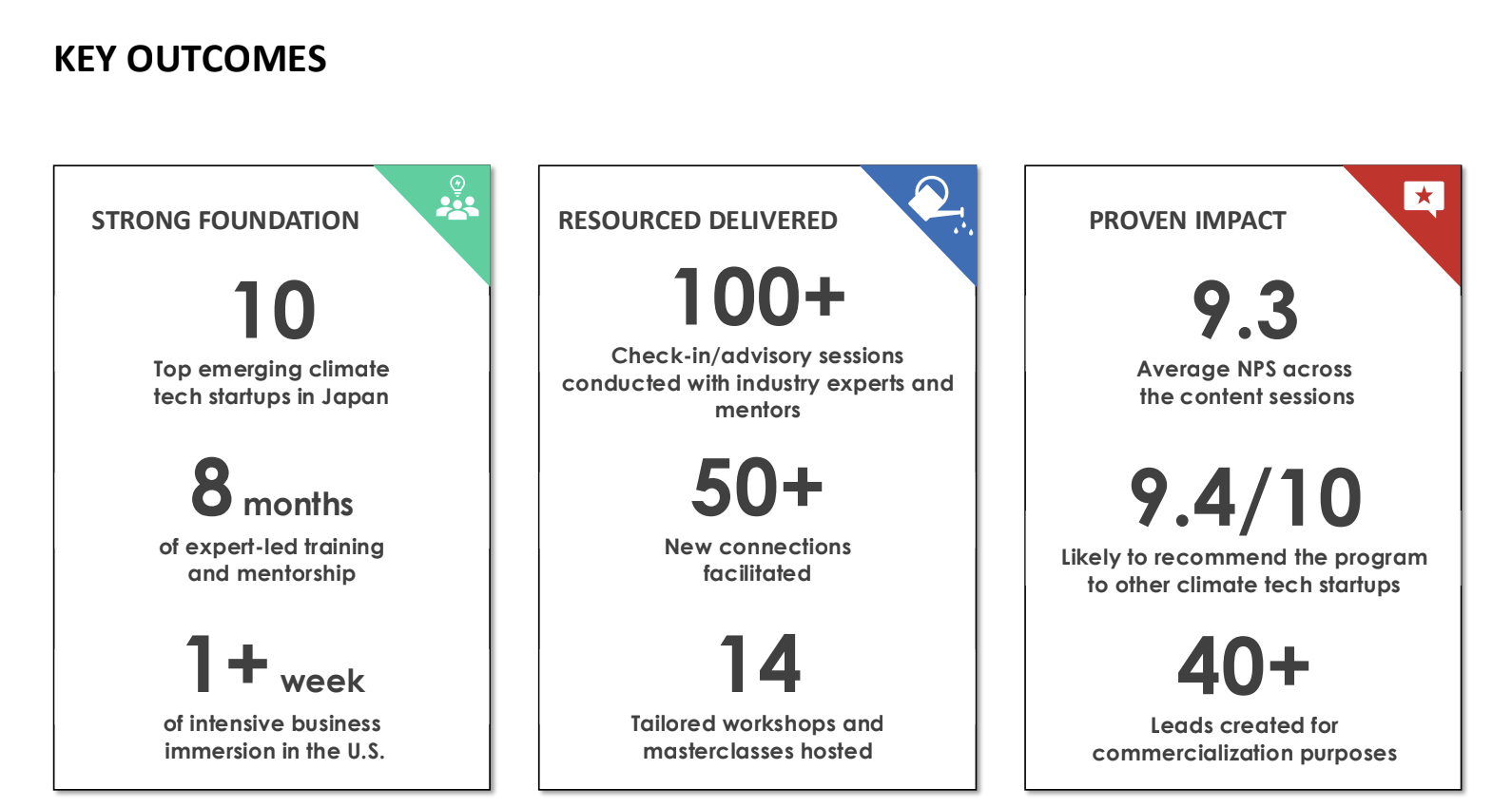
Working alongside JETRO, Third Derivative, and Japan Energy Fund to support a cohort of Japanese founders exploring expansion into the US and Southeast Asia, a set of consistent patterns emerged — not from pitch decks, but from real market conversations with investors, corporates, and partners.
Across the Global Startup Accelerator Program (GSAP), founders kept running into the same friction points.
The first was translation.
Technologies that were technically sound and well-received in Japan often landed very differently overseas. Partners pushed for clearer commercial logic, tighter value propositions, and more direct answers to who the customer really is and how buying decisions get made.
Then came speed.
Markets like the US, Singapore, and Thailand move fast and expect iteration. Long timelines and carefully sequenced pilots were less persuasive than momentum and learning-by-doing. That tension surfaced gaps early — and forced sharper prioritisation.
Finally, trust.
Successful market entry hinged less on pricing models and more on relationships, local credibility, and understanding informal power structures that rarely show up in market reports.
Participating startups
The selected startups represent cutting-edge innovation across climate and energy sectors — aligned with the growing global demand for scalable decarbonization solutions.
Throughout the program, they engaged in:
Go-to-market workshops focused on U.S. and Southeast Asian expansion
One-on-one mentorship with industry leaders and climate investors
Commercial partner introductions and strategic advisory support
A one-week U.S. immersion, including exhibition at VERGE and investor pitch sessions, which attracted over 100 participants, from investors, corporates, and local startups.
1. Aqua Theon: Seaweed-based biomaterials for food, packaging, and medical applications.
2. Atierra: CO₂ removal via microalgae bioreactors—turning emissions into biomass and bioactive ingredients.
3. E-ThermoGentek: Converts industrial waste heat into electricity using thermoelectric technology.
7. Miibio, Inc: Light-switchable protein tech for precision biomanufacturing—fermentation, reagents, and biosensors.
8. Planet Savers, Inc: Developing a scalable DAC system using proprietary CO₂ adsorbent technology.
9. Rhinoflux Inc.: Converts biomass to energy while capturing CO₂—integrating bioenergy and carbon sequestration. (Kyoto University spin-out)
10. Sun Metalon Inc.: Metal recycling with integrated CO₂ reduction, targeting industrial waste streams.
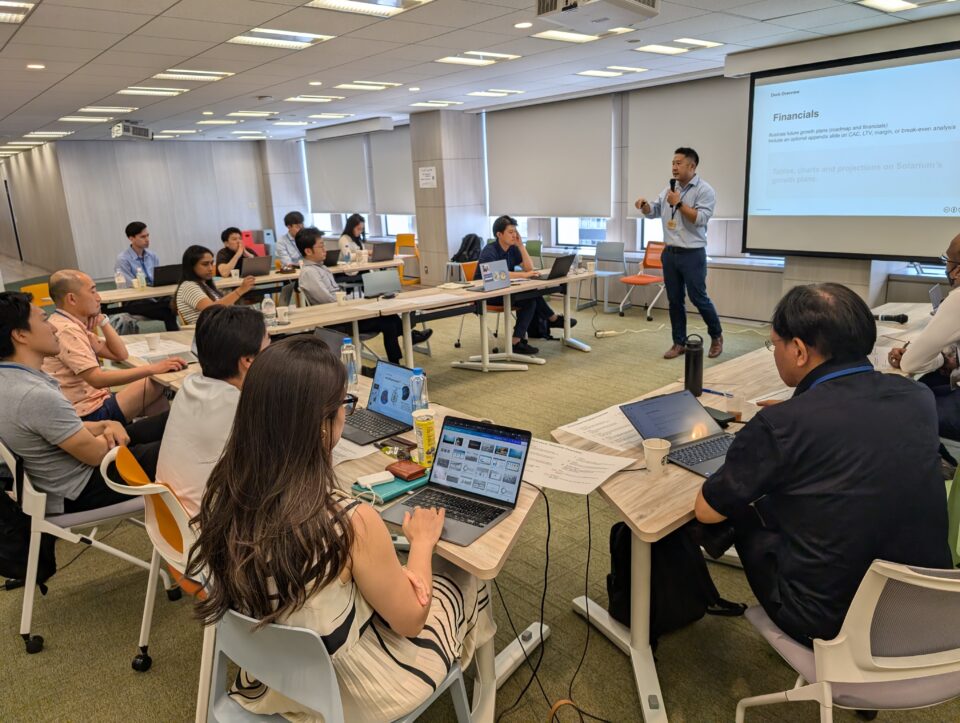
New Energy Nexus CEO Andrew Chang speaks to the GSAP participants.
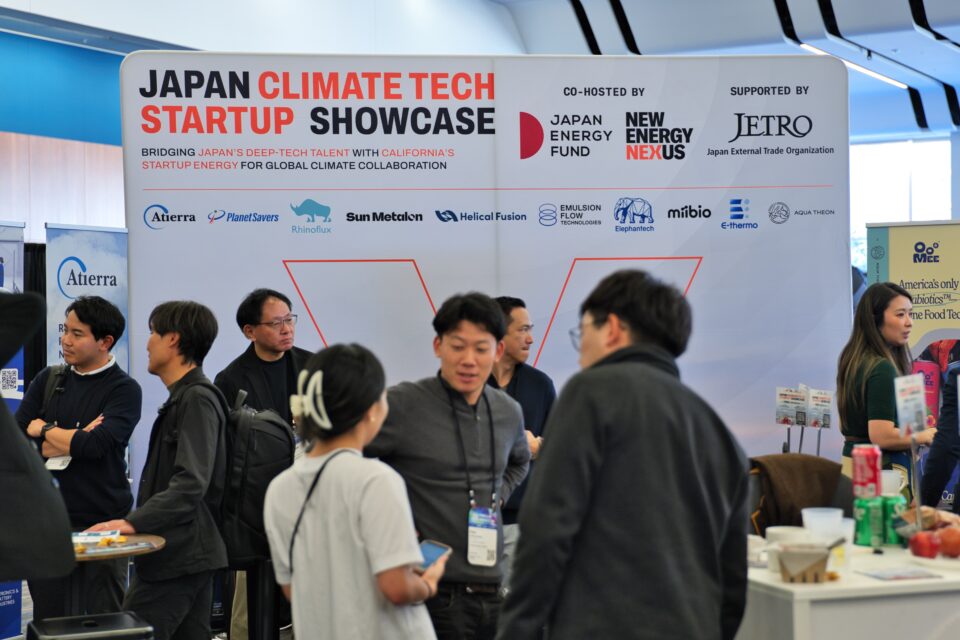
The Japan Climate Tech Startup Showcase at VERGE 2025 in San Jose, California.
Looking ahead
As climate challenges intensify, cross-border collaboration is essential to accelerate innovation and deployment. This program marks not an endpoint, but the beginning of sustained international engagement for Japan’s next generation of climate tech leaders.
If you are interested in this initiative or exploring collaboration opportunities, we would be happy to connect. Please contact japan@newenergynexus.com
Inclusion is empowerment: Women with disabilities at the heart of climate solutions
March 2, 2026
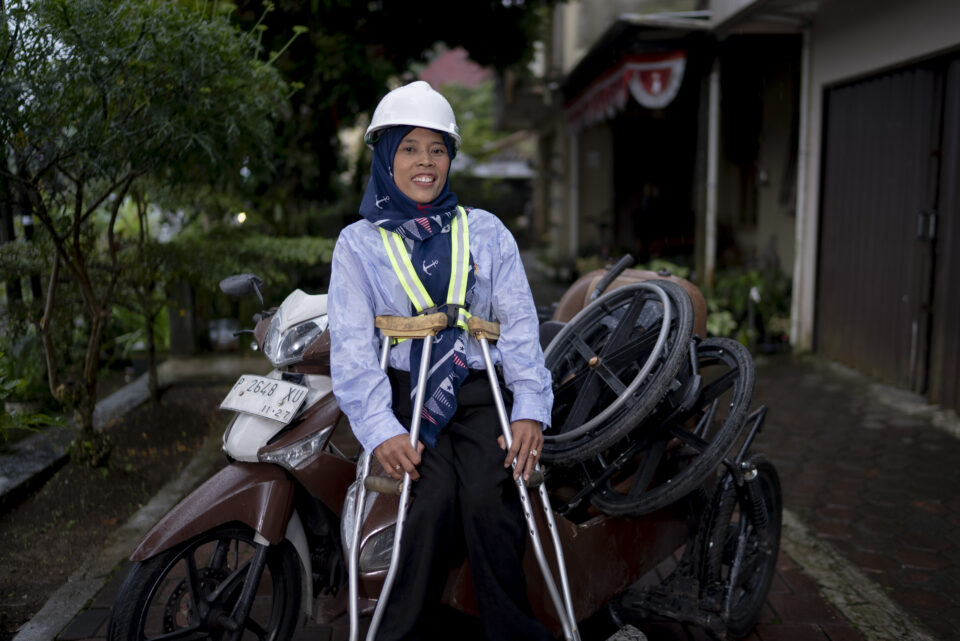
Maryam, Founder of CV Cahaya Inklusi
Maryam | Photo by: Jefri Tarigan
Within Indonesia’s social landscape, I see gender, disability, and environmental issues often appear side by side, yet they are still frequently treated as separate challenges. For me, and for many women with disabilities living in rural areas such as Wonosobo, Central Java, these three issues are deeply interconnected and form very real structural inequalities. As national development continues to accelerate, my lived experience shows that not all citizens are moving forward at the same pace.
Data from Statistics Indonesia (BPS) shows that there are approximately 22.97 million persons with disabilities in Indonesia, or about 8.5 percent of the total population. However, this figure is not matched by the fulfillment of basic rights. Based on my experience and observation, access to education, employment, and social participation remains very limited. Only around 2.8 percent of persons with disabilities complete higher education, while participation in the labour market is also low. Many survive in the informal sector without social protection, and nearly 90 percent are not recorded as part of the active workforce. These statistics are not merely numbers. They represent the daily realities faced by me and my community.
This situation remains far from the country’s commitments. Law Number 8 of 2016 on Persons with Disabilities clearly positions the state as the primary entity responsible for fulfilling our rights, including the rights to education, employment, and accessibility. Articles 18 and 19 guarantee equal accessibility and public services. Yet, based on my experience, the implementation of these policies has barely been felt, especially at the local level.
I have experienced these gaps firsthand. I have encountered government buildings without ramps, public transportation that is inaccessible to persons with disabilities, and service facilities that do not consider diverse user needs. Even for basic administrative matters, I often had to rely on assistance from others due to the absence of fundamental access. These experiences made me realize that public infrastructure development still lacks an inclusive perspective.
This awareness encouraged me to join the Indonesian Women with Disabilities Association (HWDI) in 2017. There, I found a space to share experiences and collectively advocate for our rights. Many women with disabilities grow up in environments that limit their life choices, including access to education and skills development. I witnessed how available options were often narrowly directed based solely on physical conditions, rather than on individual potential and aspirations.
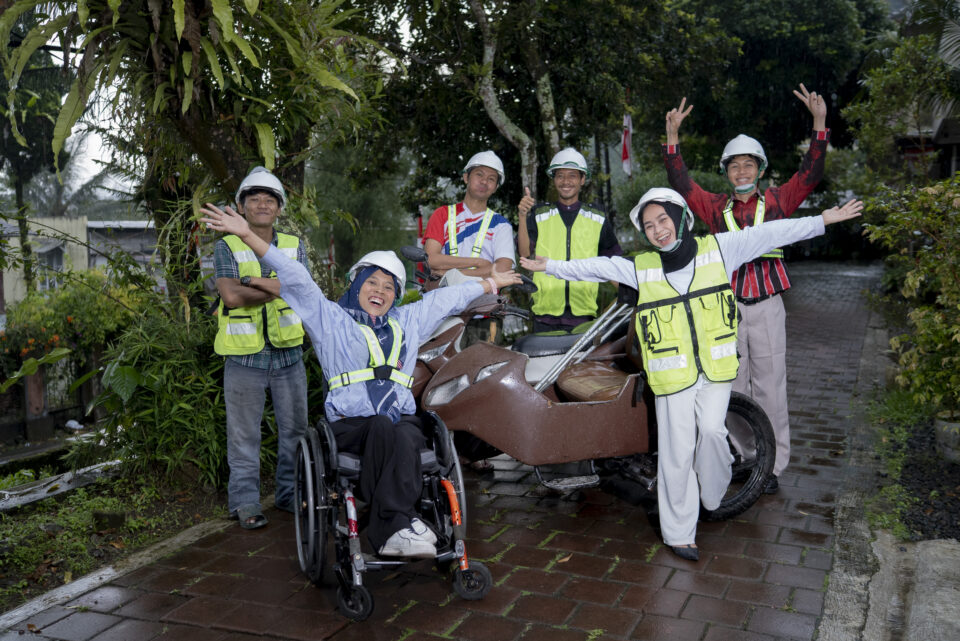
Maryam and her team. Photo by: Jefri Tarigan
Together with the organization, I began engaging in more systematic advocacy. We held consultations with various local government agencies, participated in public consultation forums, and directly conveyed the urgency of inclusive infrastructure development. In 2017, out of dozens of public service buildings in our region, only a small portion had disability-friendly facilities, and many of them still failed to meet technical standards. I personally observed how facilities were built merely to fulfill administrative obligations, without considering safety or ease of use. In fact, Minister of Public Works and Housing Regulation Number 14/PRT/M/2017 has clearly outlined accessibility standards for persons with disabilities.
Change began to emerge when disability groups were more actively involved in policymaking processes. In 2023, through an Indonesia–Australia partnership program focused on inclusive infrastructure, I was directly involved in developing procedures for inspecting public service buildings. For the first time, the perspective of persons with disabilities became part of the recommendations for issuing Certificates of Feasible Building Function.
Building on these experiences, the initiative to establish CV Cahaya Inklusi emerged in September 2023. Through CV Cahaya Inklusi, we conducted assessments of 42 public service buildings and found that around 80 percent did not meet accessibility standards. For me, these findings confirm that infrastructure development still requires fundamental correction to truly achieve fairness.
From this assessment process, an innovation in portable ramps was developed, designed based on direct user experience. This innovation not only addresses accessibility challenges, but also opened my awareness to the connection between disability and environmental issues. In rural areas, I observed that wood waste from cooking activities is often discarded into rivers, polluting the environment. We then processed this waste into low-emission materials for portable ramps, creating dual benefits: improved accessibility and reduced environmental impact.
This approach aligns with the direction of national development policies. The National Medium-Term Development Plan (RPJMN) 2020–2024 emphasizes inclusive and sustainable development, as well as strengthening community participation in achieving the Sustainable Development Goals (SDGs), particularly in reducing inequality and addressing climate change. Beyond improving accessibility and environmental protection, this waste processing initiative also generates economic value for rural households. Waste that previously held no value now becomes an additional source of income and encourages behavioural change in environmental management.
My experience in Wonosobo shows that solutions to disability and environmental challenges do not always depend on large-scale projects. Policy commitment, consistency in implementation, and partnerships with local communities are key factors. Local governments that create participatory spaces and involve persons with disabilities in assessment processes provide good practices that should be replicated. Approaches like this deserve greater attention and should be mainstreamed in many other regions.
Future challenges are likely to grow as budget efficiency policies are implemented by both central and local governments. From my observation, under fiscal pressure, support for community initiatives and civil society organizations tends to shrink. Meanwhile, the RPJMN explicitly emphasizes the importance of multi-stakeholder collaboration. Budget efficiency must therefore prioritize collaborative strategies so that inclusion initiatives that have been gradually built can grow stronger.
For me, this experience reinforces that inclusion cannot stop at the level of regulation. It requires sustained policy commitment, serious implementation, and recognition that citizens, including vulnerable groups, are partners in development. Mainstreaming the perspectives of women and persons with disabilities is essential in development planning and implementation, so that social justice, as mandated by the Constitution, can be fully realized down to the local level.
CV Cahaya Inklusi is one of the startups nurtured through the KINETIK NEX program. KINETIK NEX is an initiative implemented by New Energy Nexus in collaboration with KINETIK, the Australia–Indonesia Climate, Renewable Energy, and Infrastructure Partnership, a flagship program aimed at fostering Indonesia’s green economy and accelerating the energy transition.
KINETIK NEX promotes inclusive growth by supporting clean energy and climate technology startups in Indonesia. It is designed to empower local innovators, create green jobs, and deliver climate solutions beyond major urban centers, supporting bold ideas for a prosperous Indonesia and a sustainable planet.
Five journalists win KINETIK NEX Media Awards on climate and clean energy reporting
February 28, 2026
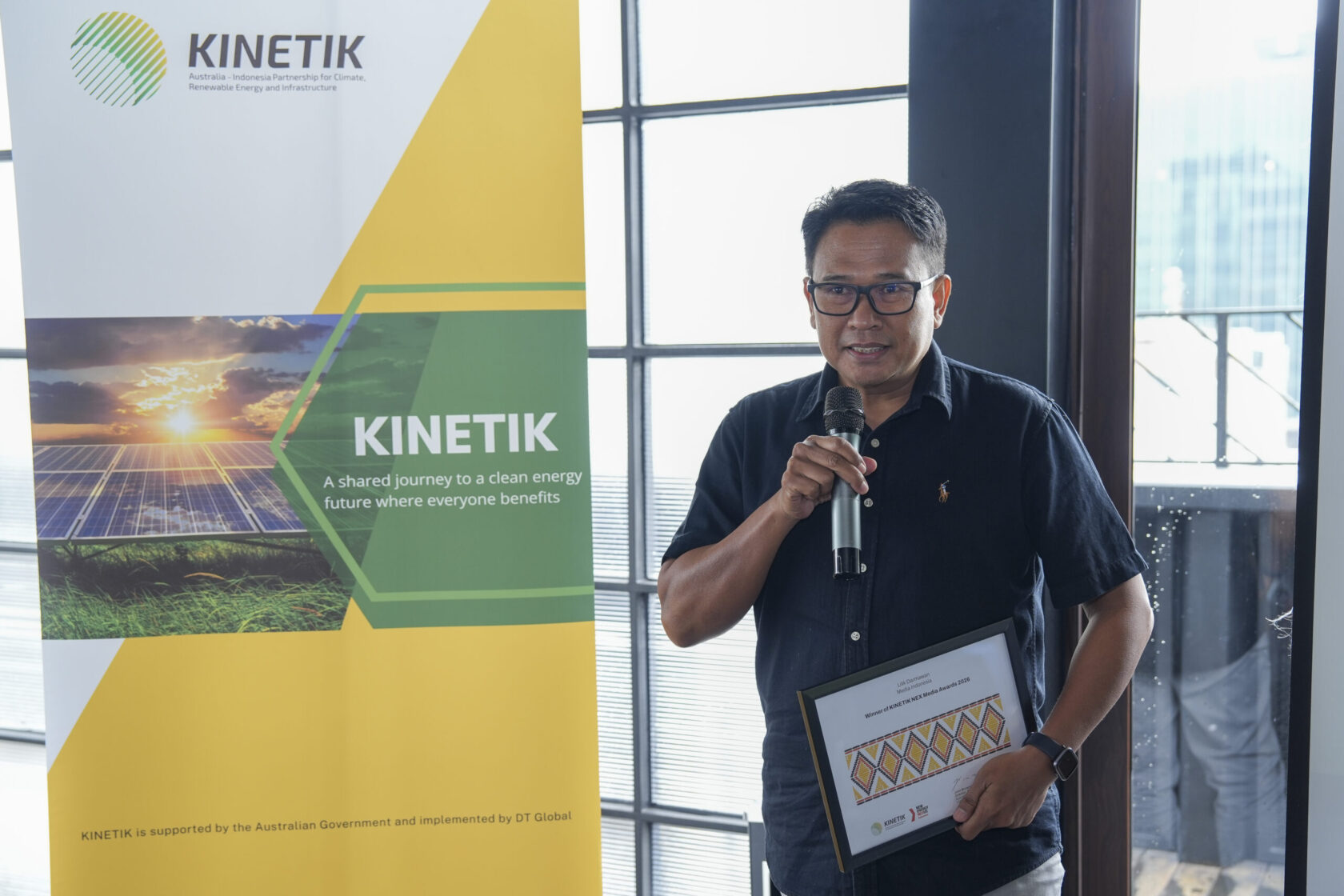
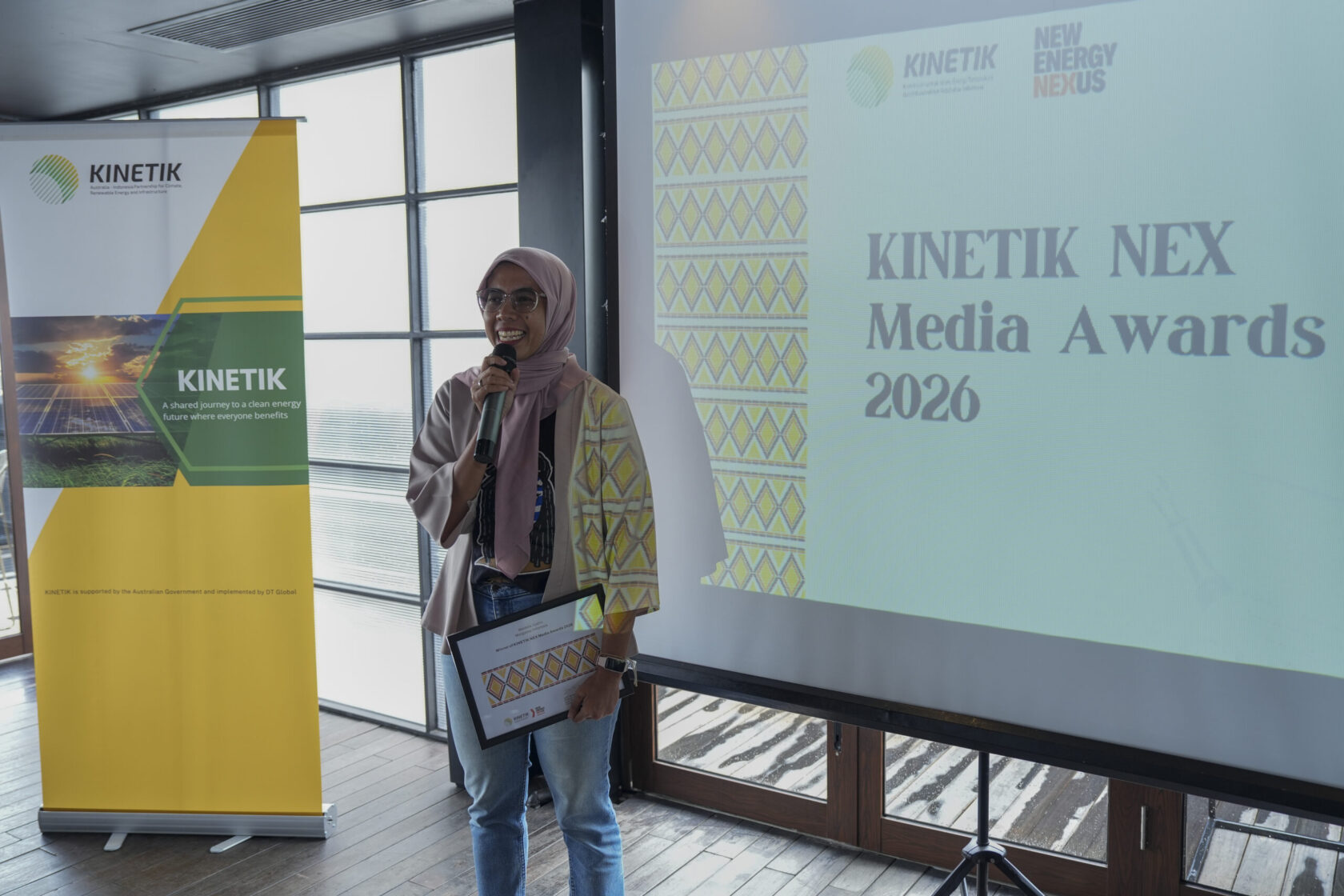
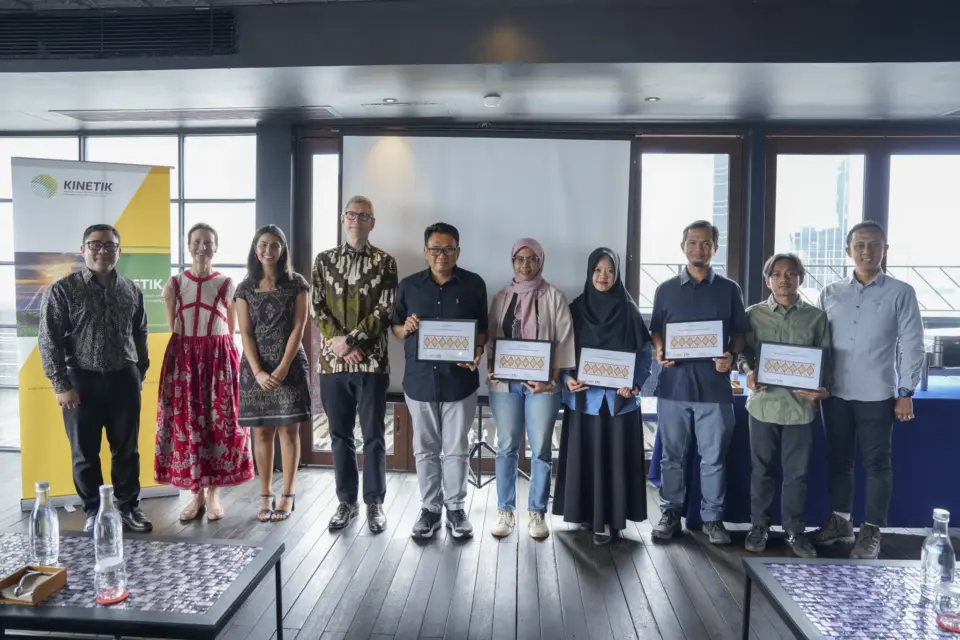
Five journalists from across Indonesia have been recognised for their reporting on green entrepreneurship and climate innovation through the KINETIK NEX Media Awards, announced on National Press Day on February 9, 2026. Each winner received an award and a prize of IDR 5 million in recognition of their contributions to advancing public understanding of clean energy and climate solutions.
The winning journalists are:
Arifin Al Alamudi – IDN Times Sumatera
Relying on renewable energy, NusaCube boosts fishers’ welfare.
The five winners were selected from a group of 15 journalists who participated in the KINETIK NEX journalist training program. The training introduced solutions journalism approaches that highlight how local climate and energy startups contribute to Indonesia’s just energy transition. As part of the program, each journalist was paired with a startup from the KINETIK NEX Entrepreneurs’ Program. They conducted in-depth interviews with founders to explore their challenges, breakthroughs, community impact, and potential for scale.
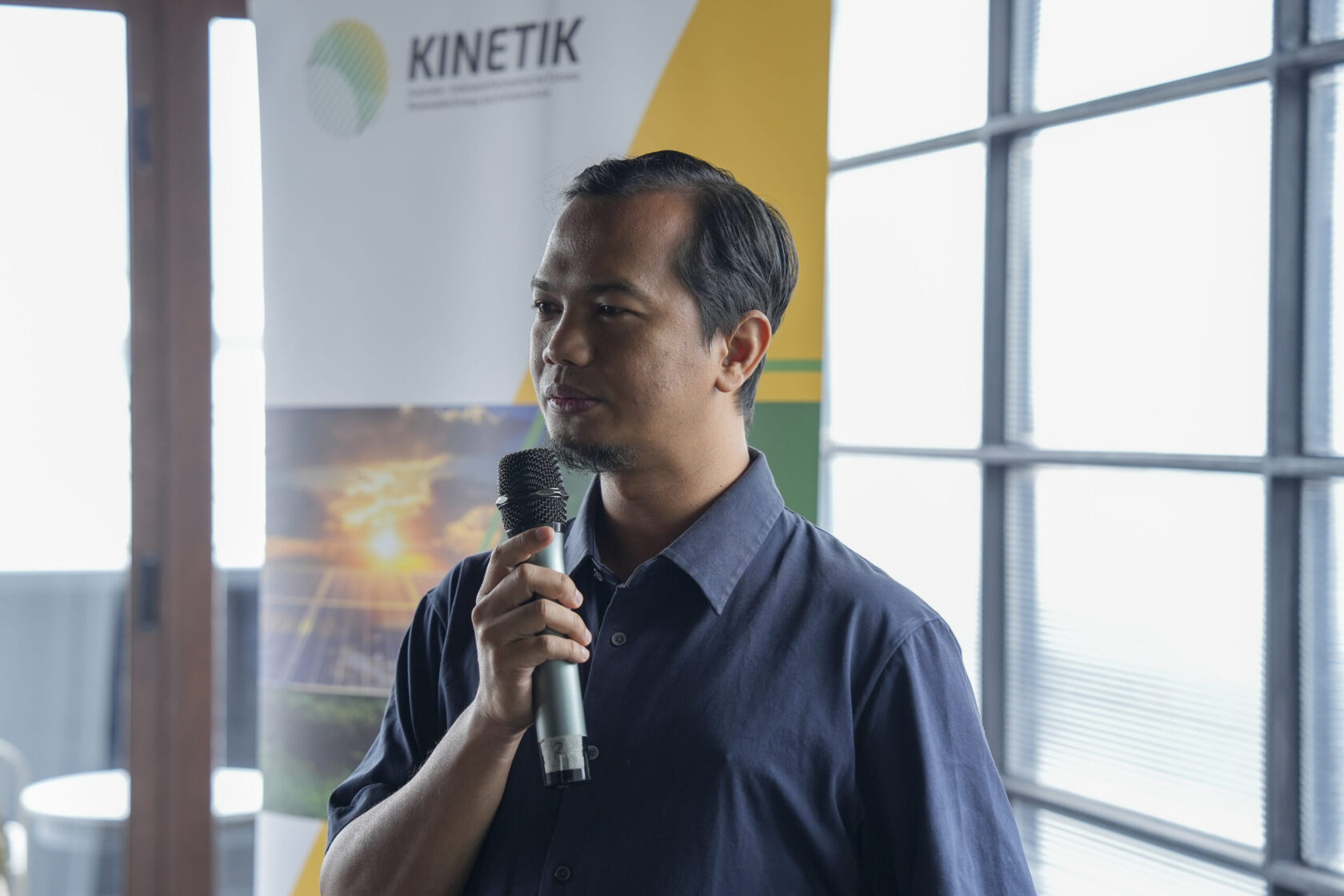
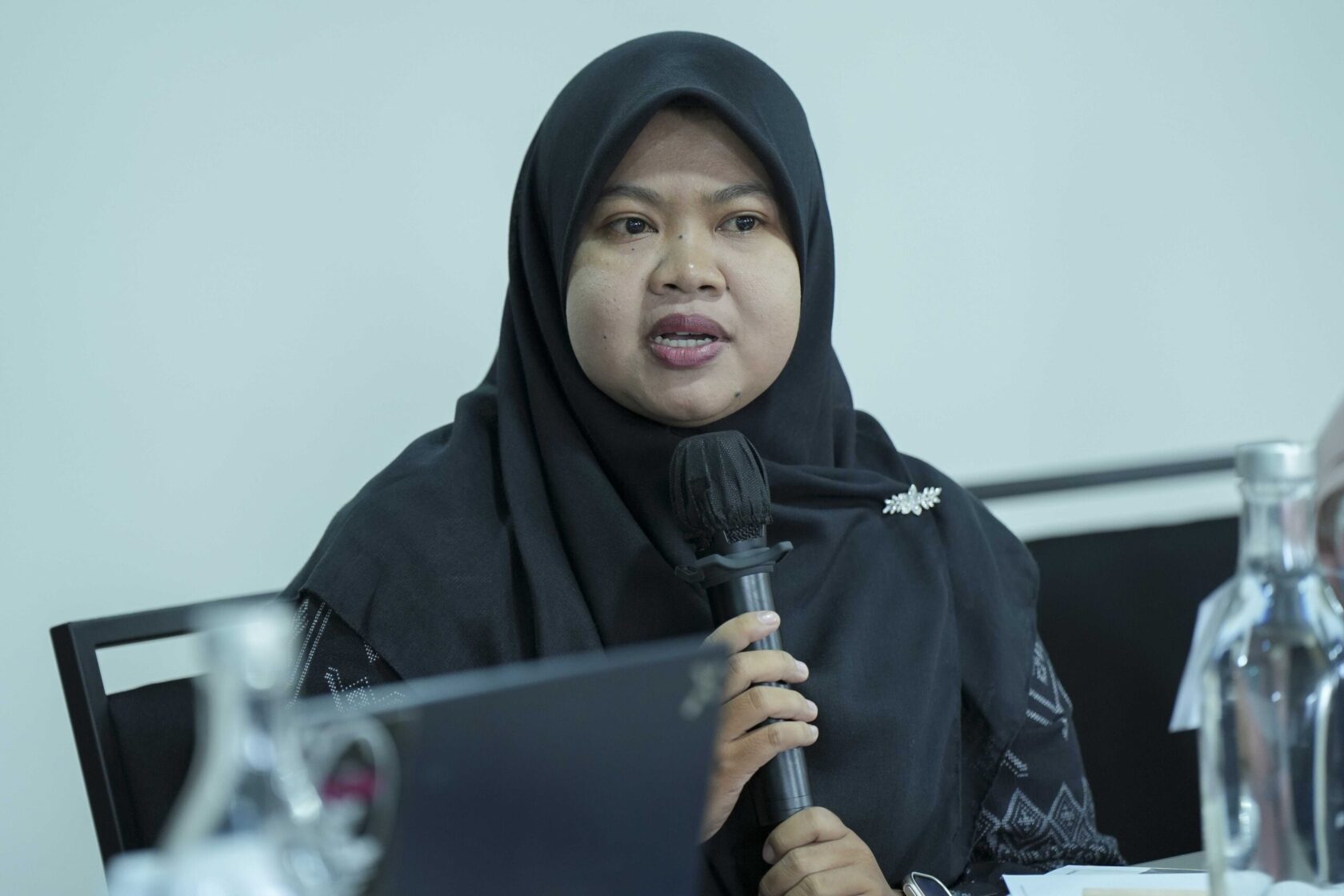
Tahnia Allauddin, Second Secretary Climate and Infrastructure at the Australian Embassy, said she was pleased to celebrate quality journalism that contributed to public awareness of renewable energy, climate action and inclusive economic development. “These issues are all very close to our hearts in the KINETIK partnership, which is the Australia-Indonesia Climate, Renewable Energy and Infrastructure Partnership,” she said.
“KINETIK is … investing in Indonesian businesses that focus on clean energy and climate change and also supporting earlier stage climate startups that are championing local solutions for the challenges that are brought by climate change.”
Stories that go beyond technical narratives
Journalist and editor at IDN Times, Dhana Kencana, one of the competition judges, said the evaluation focused on depth of reporting, clarity of storytelling, originality, accuracy, use of data, and potential impact on public understanding.
“These five best works did more than meet journalistic standards. They found the ‘soul’ behind the technical issues of clean energy and climate,” Dhana said. He noted that the winning stories captured a wide range of climate and development challenges, including energy access in frontier and disadvantaged regions, biodiversity opportunities, grassroots circular economy practices, and the resilience of young innovators.
According to Dhana, the winning stories demonstrate that climate and clean energy topics can resonate strongly with public audiences. “In their hands, these issues became stories about hope, solutions to poverty, business opportunities, and food sovereignty,” he said.
Exploring climate innovation through field reporting
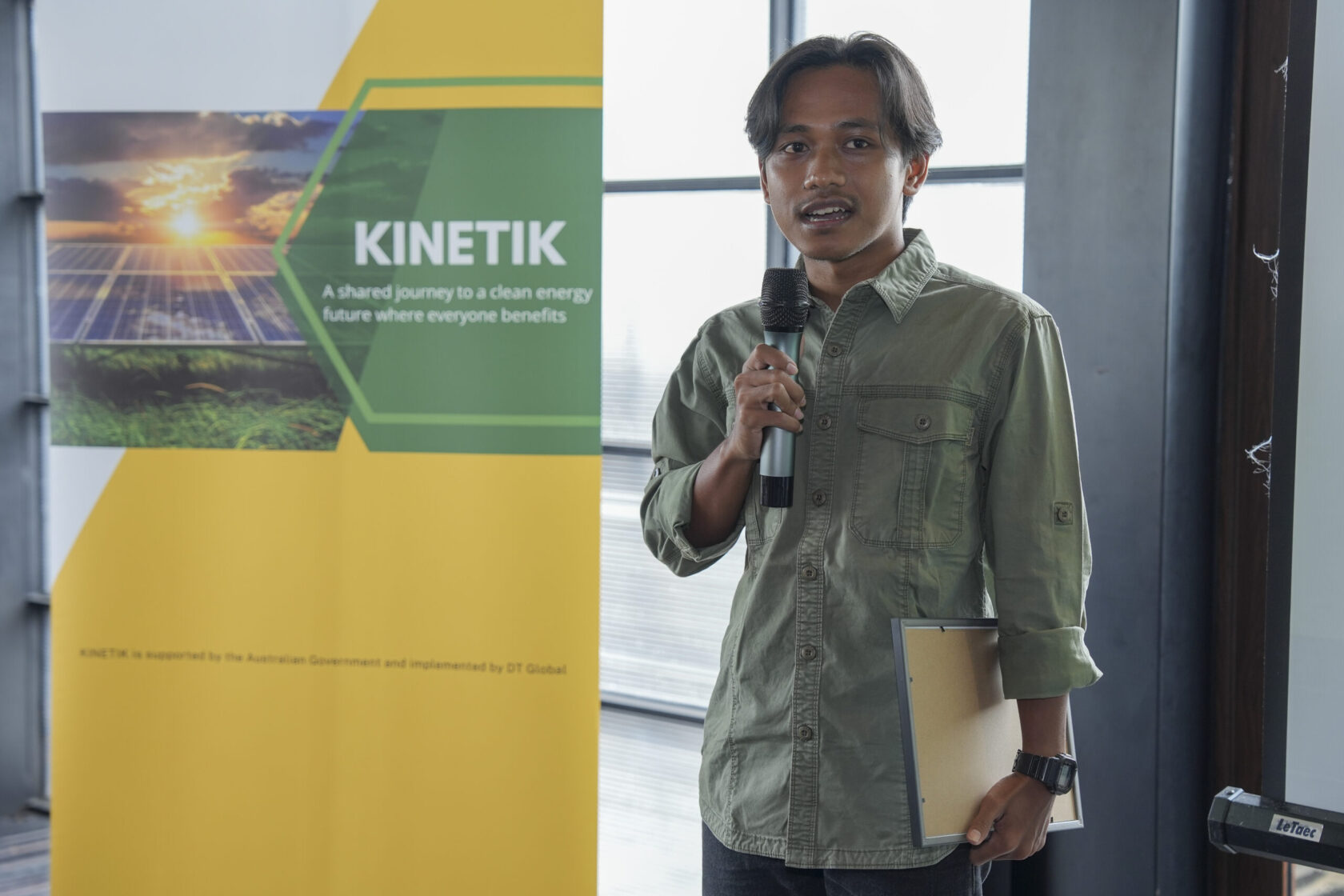
One of the winners, Meidella Syahni from Mongabay Indonesia, said she joined the training to strengthen her reporting approach by incorporating solutions-focused perspectives. “I’ve been writing environmental stories since 2017, and many of them focus on recurring environmental problems,” Della said.
Through the program, she profiled Algatech Nusantara, a company researching microalgae as a carbon capture solution with potential applications in food and energy. “They have been working on this research since the 1980s, and the potential is enormous. But they still face limited support,” she said. “Through this article, I hope more people become aware of their work and support their development.”
Youth innovation driving the energy transition
Another award recipient, Lilik Darmawan from Media Indonesia, highlighted STB Pellet, a startup founded by university students in Madiun, East Java, during the COVID-19 pandemic. The startup converts agricultural and industrial waste into biomass pellets as an alternative fuel to coal.
Lilik said the idea was inspired by a landfill fire incident that prompted the students to rethink waste. “They asked a simple but powerful question: if waste can burn, why can’t it be transformed into fuel?” he said. He added that his story emphasised the role of youth-driven initiatives in advancing Indonesia’s energy transition.
The role of journalism in driving public understanding
KINETIK Director John Brownlee said journalism could help people have a clearer picture of what initiatives to tackle climate change and support a just green transition are all about. Stories like these show that despite challenges, positive change is possible. “Stories like these genuinely show that this is something important. That change can happen not just from high level policies and in large businesses, but can also grow from the grassroots.”
New program launched to strengthen solar training across the Philippines
February 25, 2026
Manila, Philippines – As the Philippines accelerates its transition toward clean energy, the demand for skilled solar professionals continues to rise. Recognizing the critical role of local training partners in building this workforce, New Energy Academy (NEA), a program of New Energy Nexus, has officially launched the Training Partners Development Program (TPDP) in the Philippines.
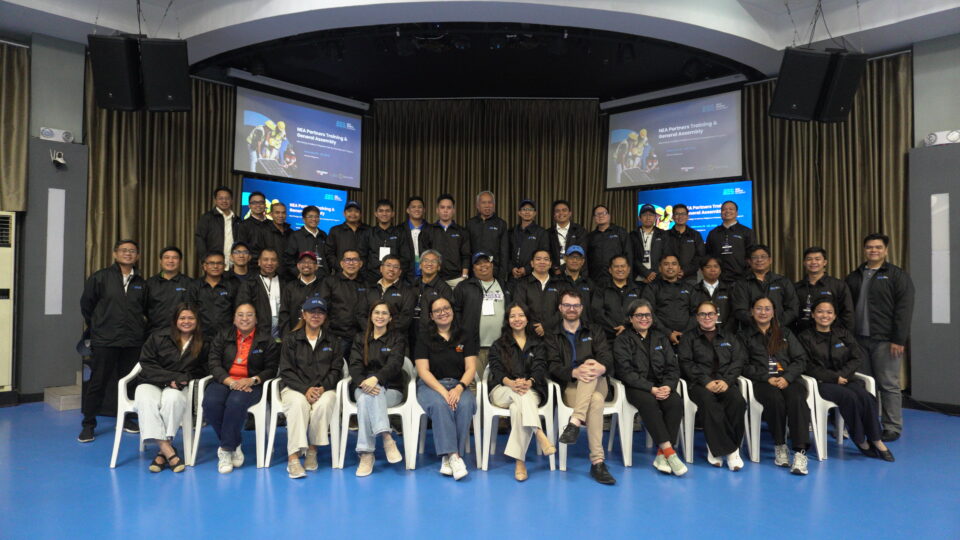
Twenty three (23) NEA training partners gathered during the TPDP event together with representatives from GSES Australia.
The initiative ensures that its partners remain at the forefront of industry innovation, instructional excellence, and sustainable business growth. It focuses on three core pillars:
Strengthening training effectiveness and instructional design
Deepening technical expertise in emerging solar technologies
Enhancing business development capacity with an emphasis on inclusive growth
Rather than being a one-time training event, the TPDP represents NEA’s commitment to continuous learning and long-term capacity building within the solar sector.
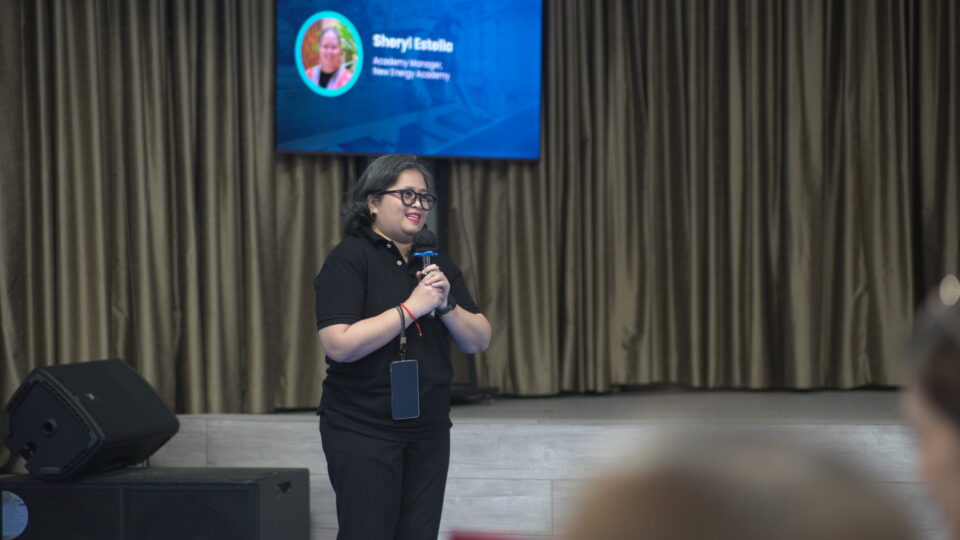
Ms. Sheryl Estella [NEA Academy Manager] shares the objectives of the two-day TPDP event.
“We [New Energy Academy] are here to grow alongside you, to invest in you, and to build something lasting together. The work we do is not just technical. It is transformational. Behind every training we deliver with you is a Filipino worker gaining a skill, a livelihood, and a future in clean energy,” said Sheryl Estella, Philippines Academy Manager of New Energy Academy.
A stronger solar training network
In an industry shaped by rapid technological change, continuous upskilling is no longer optional. It is essential.
A key outcome of the program is the formalization of the NEA Training Partners Network. It is a platform that brings together local solar companies, facilitating hands-on training across the country. The network aims to standardize training quality, encourage innovation in delivery methods, and strengthen the collective impact of NEA’s partners.
For many participants, the value of the program lies not only in technical knowledge but in the relationships built.
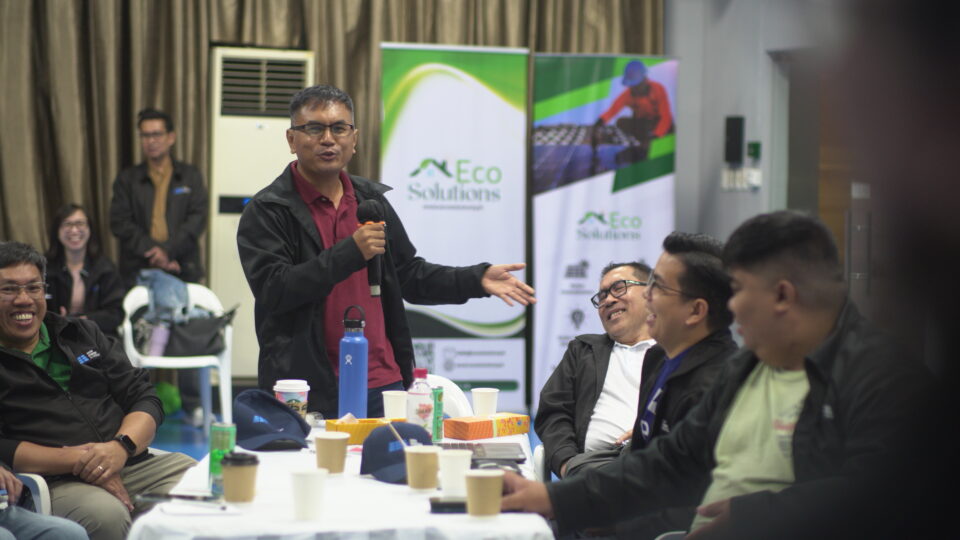
Mr. Rowellson Paras from Sonnelink Greenbuilders, shares his experience as a new NEA training partner.
“Maganda ang goal ng NEA to ensure that solar installers and EPCs are trained properly, because we are really the ones on the ground advancing the solar industry in the Philippines. In this industry, strong networks and partnerships are essential. If we want to last long-term, we need a solid foundation and collaboration.” said Mr. Rowellson Paras of Sonnelink Greenbuilder, one of NEA’s newest training partners.
Investing in training partners is investing in the future of the Philippine solar industry. The ripple effect is significant. Better-equipped trainers produce better-trained solar professionals, which ultimately supports stronger project implementation, improved system performance, and increased confidence in renewable energy adoption nationwide.
The TPDP is scheduled for full implementation from January to March 2026, combining in-person workshops, collaborative network-building sessions, and online learning components delivered through NEA’s digital platform.
As the clean energy transition gains momentum, New Energy Academy continues to champion a simple but powerful principle that sustainable growth begins with empowered people, and empowered partners. Find out how we can support your clean energy startup here.
New Energy Academy is a solar training institution dedicated to developing skilled professionals in the renewable energy sector. It was founded in collaboration with New Energy Nexus, Global Sustainable Energy Solutions (GSES) and OpenSolar, as a response to the rapidly growing solar industry.
New Energy Nexus (NEX) is the world’s leading clean energy ecosystem builder, working toward a 100% clean energy economy for 100% of the population. It does this with a laser focus on diverse entrepreneurs, supporting them with accelerators, funds, skills, and building the local and global connections they need to thrive. NEX has accelerated 1,700+ startups and businesses, empowered over 11,500+ entrepreneurs, and mobilized more than US$5.4 billion in investment.
Since its founding in California in 2004, NEX now operates programs or services in Australia, China, India, Japan, Indonesia, Nigeria, Pakistan, the Philippines, South Korea, Thailand, Uganda, the USA (California and New York), and Vietnam.
Looking for Pakistan’s EV chargers? This young entrepreneur shows you where
February 25, 2026
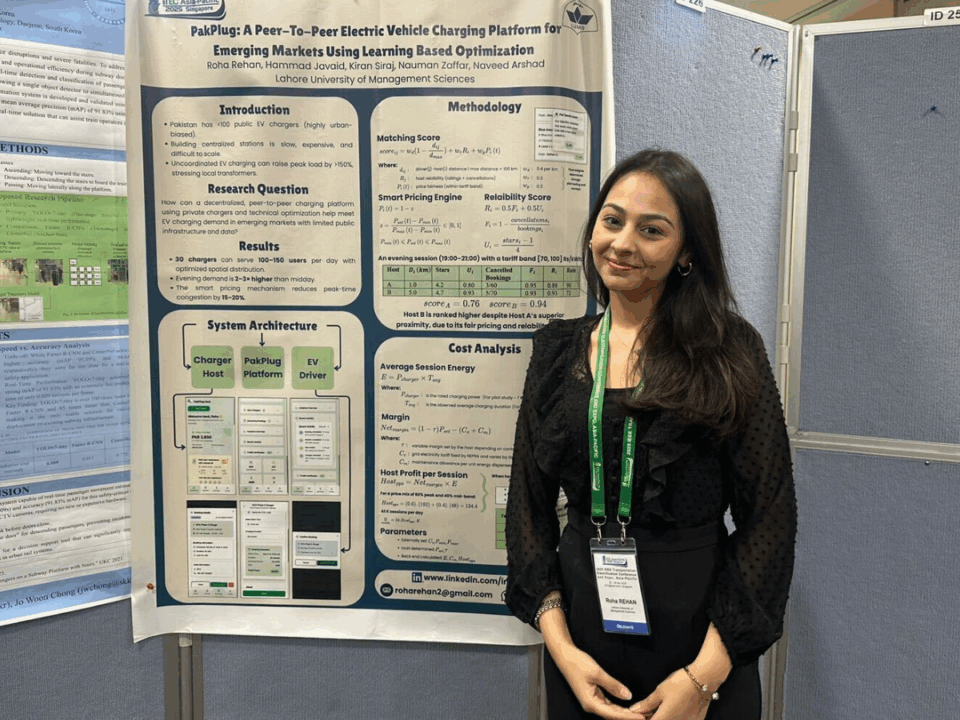
Roha Rehan presents her paper on PakPlug at the 2025 IEEE Transportaton Electrification Conference and Expo, Asia-Pacific (ITEC-AP) in Singapore.
Could the “Airbnb” of charging stations be the key to unlock an EV revolution?
Electric vehicles (EVs) in Pakistan are more than just a passing fad. The stage is set for explosive growth, with an ambitious aim of 30% of new vehicles sold by 2030 being EVs, and Chinese EV giant BYD building a manufacturing plant in Karachi to produce 25,000 vehicles annually starting this year.
But is the infrastructure in place to support such a rapid boom? After all, EV charging stations are about to become as huge a commodity as gas stations.
This is where clean energy entrepreneurs like Roha Rehan, a recent electrical engineering graduate from Lahore, come in. Roha’s business, PakPlug, wants to be the “Airbnb” of EV charging stations for Pakistan’s growing EV market.
The spark
Roha’s journey starts at home.
She said her father, an electrical engineer himself, is very “into EVs.” Her family started with hybrid cars in 2012 and has exclusively driven EVs since 2023. While it has helped them cut fuel costs, it wasn’t all smooth driving.
“When we have to travel from Lahore to any other city, we really need to borrow a car from somebody else, because we don’t know if we can locate chargers for our electric car,” Roha said.
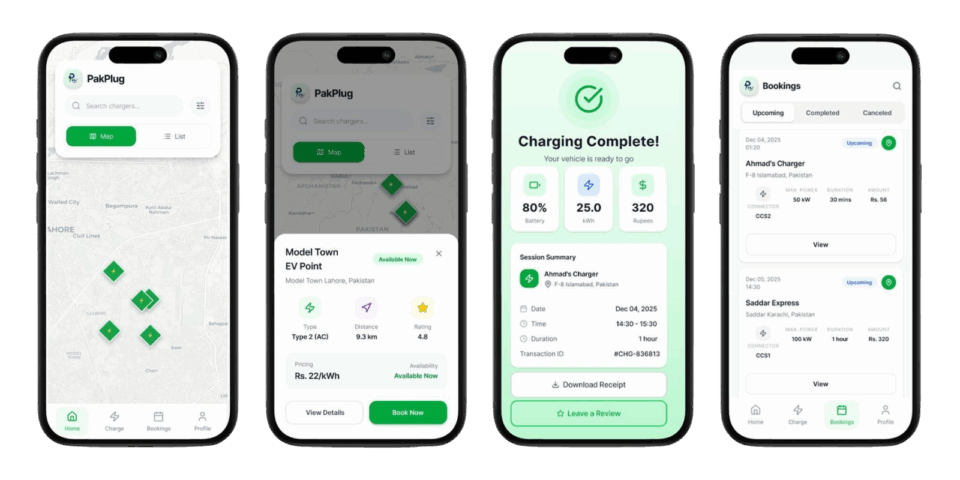
She and co-founder Hammad Javaid found that even if charging stations were in an area, a local would have a hard time finding them, as they’re not being marketed properly nor geotagged. That led to the development of PakPlug—an app where anyone can find a place to recharge their vehicles in Pakistan.
The PakPlug app.
Here’s how it works: People who own an EV charger at home or at an establishment can add it to PakPlug’s system. Users can then find this charging station through the app, and the owner will be able to charge a fee for renting it out.
As a plus for the energy transition, 85% of EV charging stations currently in PakPlug’s systems use solar energy, keeping in pace with Pakistan’s solar boom.
Speed bumps
Currently pre-launch, the app is still going through growing pains. Onboarding customers, ensuring the security of people lending chargers at home, and deciding a price point for renting—these are a few of the barriers for customers and owners, which the team is actively solving.
For example, Roha says they’ve recommended that owners only install their chargers near their gate, so they run a wire into the driveway, and customers don’t have to go inside the home. They’re also testing dynamic pricing, where people can charge more if they own other facilities like restaurants beside their charging station, as it means drivers have something to do while recharging.
Aside from app development, being a woman in STEM comes with its own set of challenges. Roha shared that even in university, her electrical engineering classes had a ratio of 40 men to nine women, and doubts in her abilities continued after graduating.
“When I started this startup, a lot of people had questions like, ‘do you know how EVs charge?’ ‘Do you know this and that?’ And I was like, yes, that’s literally my degree,” Roha said. “People tend to think that women aren’t able to do much in a startup ecosystem, and that they will always need some backing.”
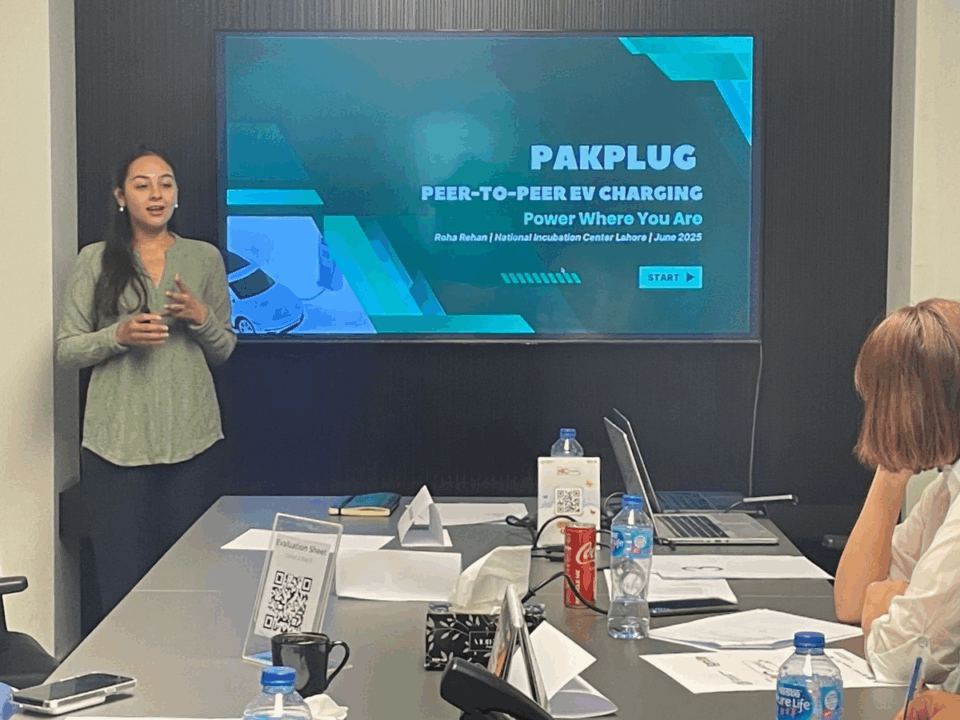
Roha Rehan presents at the National Incubation Center Lahore in 2025.
Despite these, Roha has gotten a lot of encouragement from the field. But to break out into the market and scale fast in Pakistan’s changing EV landscape, she saw the need for stronger, more tailored support.
Revving up
Enter Climate Innovation Pakistan (CLIP), a collaboration between New Energy Nexus and Renewables First. Roha was selected for the first cohort of the CLIP Incubator: a 12-week, equity-free program helping entrepreneurs validate products, run pilots, refine business models, and connect with investors and partners across Pakistan.
“I was also incubated somewhere else before, but those were for a wide range of startups. There wasn’t any direct climate-related guidance,” Roha said. “As we discussed in one of our last sessions [in the CLIP incubator], it’s really hard for climate startups to get initial funding, because their impact is going to be long-term and you can only project numbers for the future.”
As she expected, Roha is picking up a lot from sessions dedicated to climate and clean energy solutions like hers, such as emissions impact analysis and what climate investors look for in pitch decks. She’s also getting mentored by Shah Talha Sohail, CEO & Co-founder of Pakistani EV startup Mode Mobility, as part of the program.
“The mentorship sessions that I’m having with Talha are also great, because he’s been working in the startup ecosystem for a while now and he’s really willing to help us out wherever possible,” Roha said. “He even told us that he’ll help us set up our initial grant phase, where we can start applying to grants, if not proper investments, for now.”
The road ahead
As they get PakPlug ready for launch, Roha shared big plans for the app. They’ve set an initial goal of 200 customers in the first three months post-launch. They are also developing a smart switch for EV charger owners, which would track electricity usage and inform changes in pricing.
The team also envisions partnering with the national government and taking on a bigger role in the country’s energy transition.
“So, in the future, when I’m traveling from Lahore to Islamabad, I want to say ‘I don’t have to borrow somebody else’s petrol car and add to the emissions,’” Roha said. “‘I can use my electric car to travel, and I can easily locate chargers as well.’”
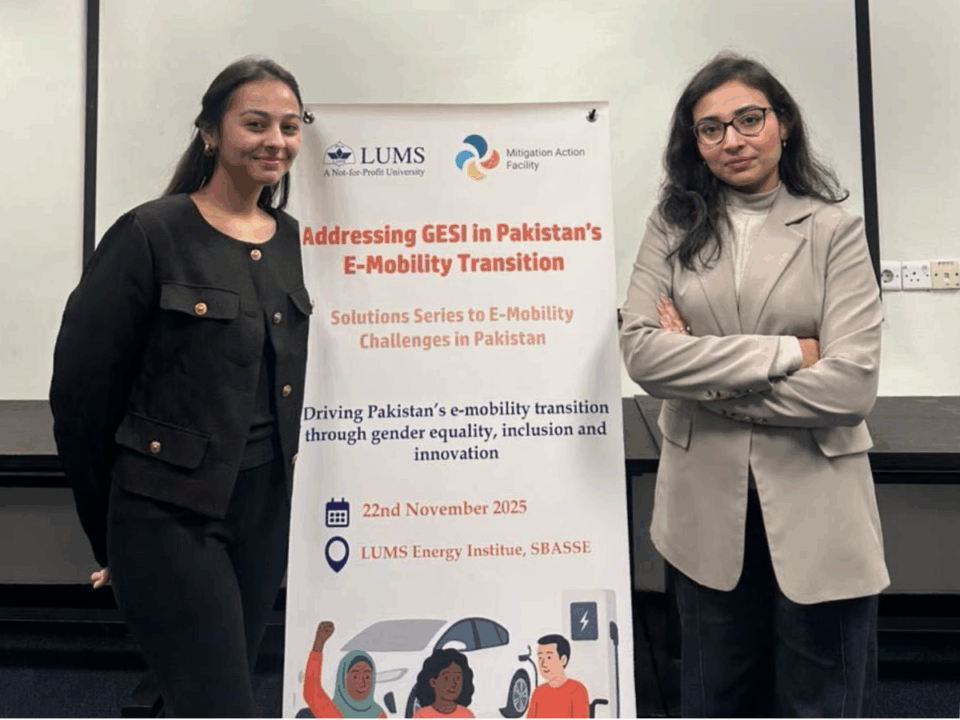
Roha Rehan presents an event on addressing e-mobility challenges in Pakistan.
Her advice to fellow young entrepreneurs and women in STEM venturing into clean energy?
“I think for someone young, I would say that startups don’t happen overnight. It takes a lot of time and a lot of patience. So if you come up with an idea, you shouldn’t just give up because it’s not happening right now,” Roha said.
“And for women, it doesn’t matter how big or small the idea is, and you shouldn’t let people tell you otherwise… You don’t particularly need to have a co-founder that’s a man who knows all this stuff. You can figure it out on your own.”
If you’re a founder like Roha looking to scale your climate solution, in Pakistan and beyond, check out how we can support you here.
Bridges, not walls: Linking China’s clean energy to the world
February 6, 2026
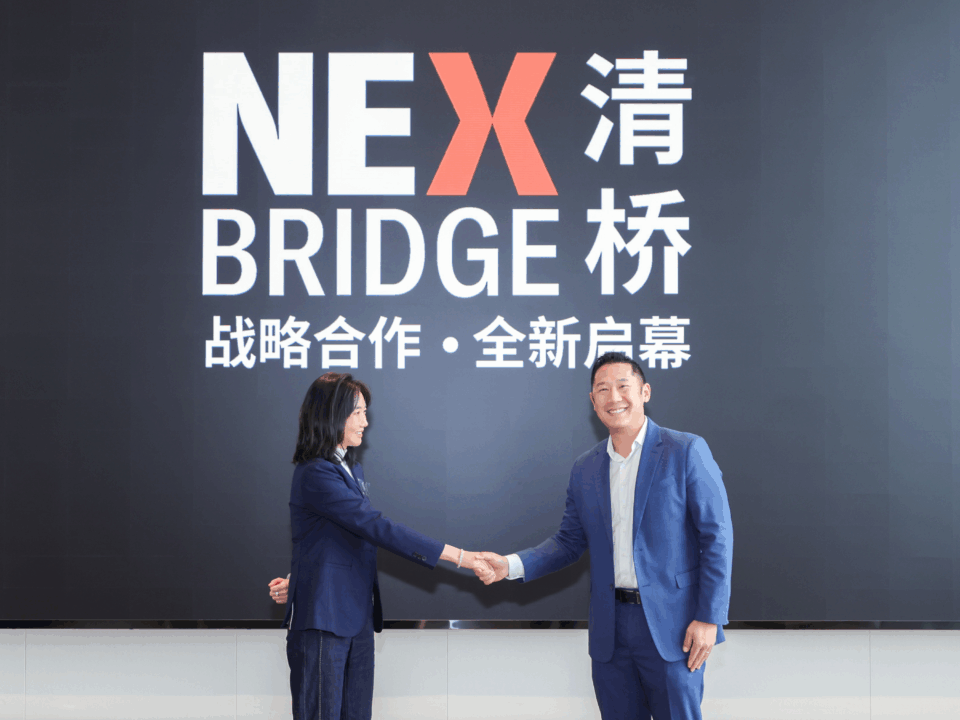
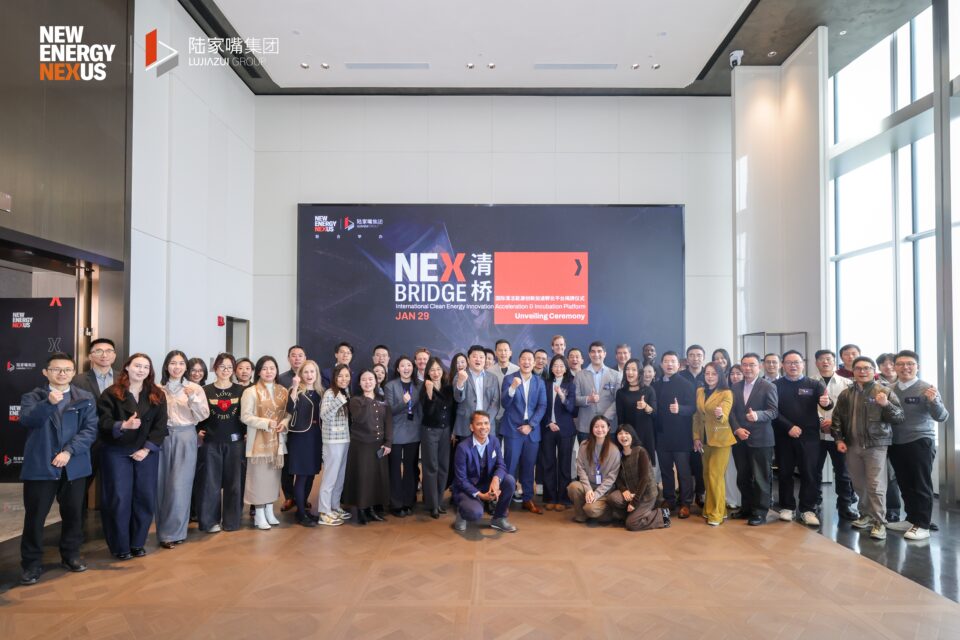
The NEX Bridge Unveiling Ceremony at Zhangjiang Science Gate, Shanghai, China.
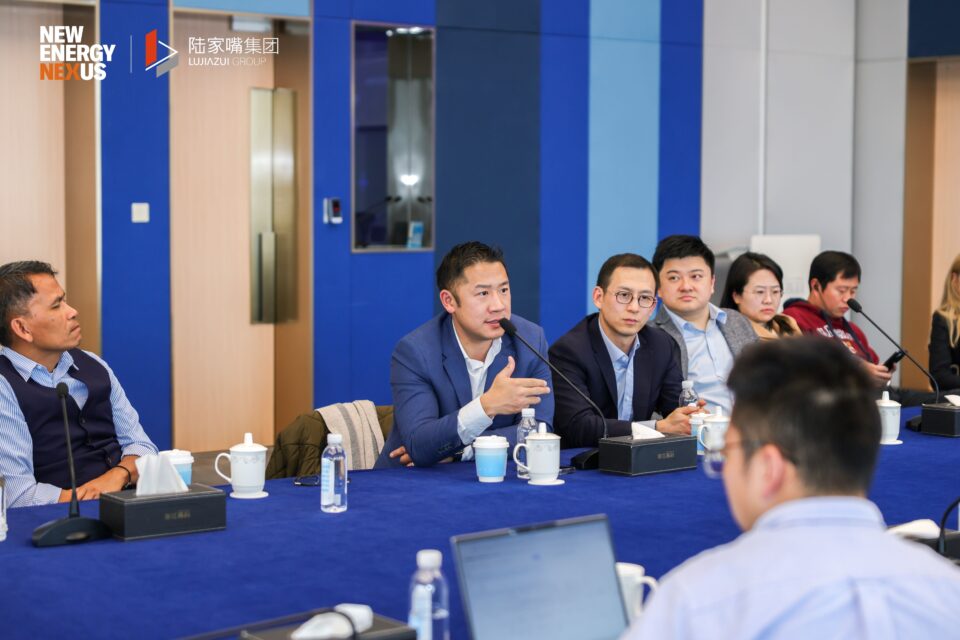
Over two days, New Energy Nexus and the Lujiazui Group brought 100 founders, investors, suppliers, and ecosystem partners together in Shanghai to explore one practical question: how can climate solutions move faster across borders?
The challenge isn’t technology. Instead, it’s about deploying clean energy solutions fast enough around the world. To do that, we need trust, partnerships, and pathways that turn manufacturing strength into global impact.
That’s NEX Bridge’s mission: a new initiative that connects China’s clean energy suppliers and global markets. The program provides an incubator space in Zhangjiang, alongside training, events, industry exchanges, and technology demonstrations to help companies scale and reach international opportunities.
Here are five key takeaways from the launch that highlight how NEX Bridge is turning connections into action.
Andrew Chang, CEO of New Energy Nexus.
1. Market access is the new climate lever.
For many startups, the problem isn’t building great technology. It’s getting it out to the world. NEX Bridge positions China not just as a manufacturing hub, but as a launchpad for global expansion, while giving international founders a front-row seat to what’s possible here.
“We’re incredibly excited because this is a fantastic opportunity, not only for startups to be able to go out to the world… but also for other startups to be able to see what’s happening within the Chinese market, in this clean energy powerhouse.” — Andrew Chang, CEO, New Energy Nexus
When suppliers and startups share the same room, deals happen faster. Pilots happen sooner. Markets open.
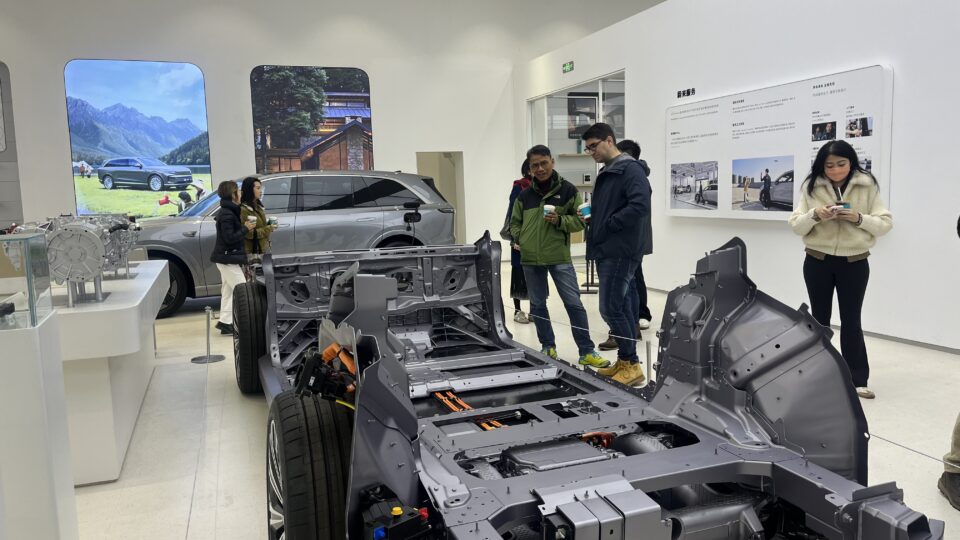
Puon Penn, CEO and Managing Partner of New Energy Nexus Ventures, and David Fishman, Principal at The Lantau Group, during the tour of the NIO House Experience Center.
2. Seeing solutions in person changes everything.
Slides and Zoom calls can only go so far. Walking factory floors, testing vehicles, and meeting founders face-to-face turns abstract ideas into tangible opportunities.
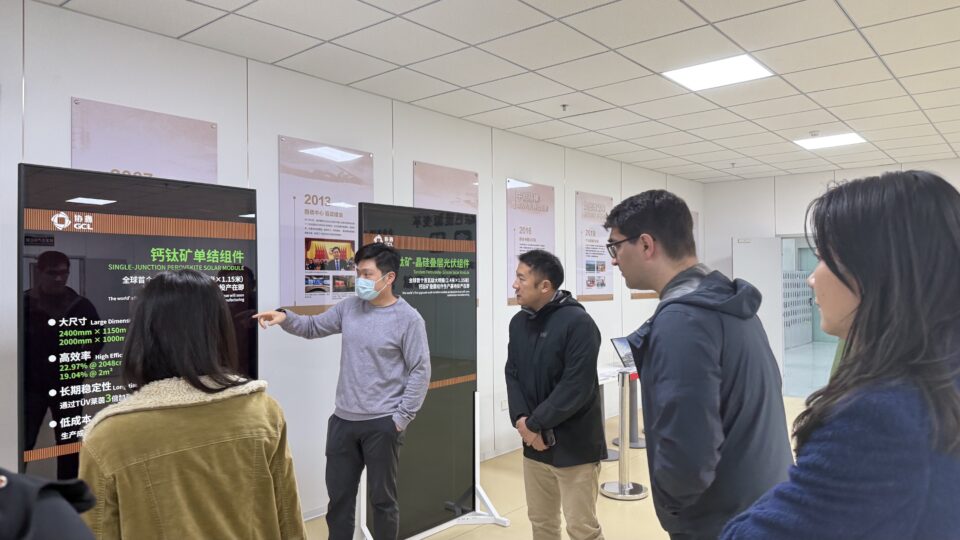
That was clear during visits to the NIO House Experience Center and the GCL Perovskite Facility, where guests saw battery swapping in action and next-generation solar manufacturing at scale.
“Seeing is really believing… having entrepreneurs meet with each other to really witness with their own eyes the solution that’s possible is key for their success.” — Puon Penn, Managing Partner, New Energy Nexus
Trust grows faster when you know how the technology works in reality.
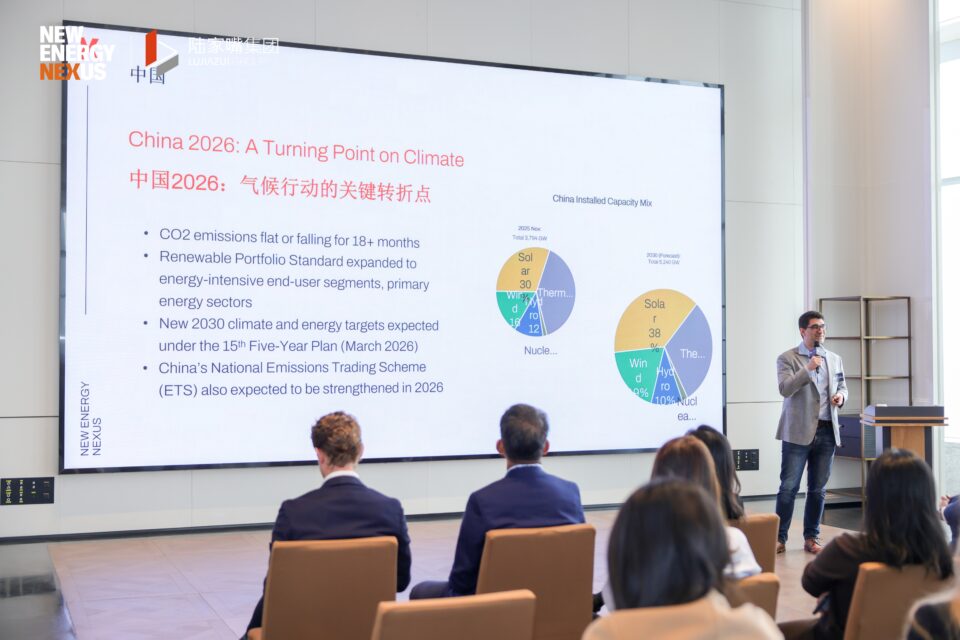
Kirk McDonald, Project Manager – Supercharge Australia at New Energy Nexus, presents during the Unveiling Ceremony.
3. China’s speed moves the rest of the world faster.
From Southeast Asia to Australia, partners shared the same reality: climate impacts are accelerating, and deployment must match that urgency.
China’s production capacity offers a rare advantage. The challenge now is moving solutions across borders quickly and responsibly.
“China has a huge advantage in the production capacity of renewable energy technologies. The world desperately needs them… and we need to get more of them out of the country as quickly as possible.” — Kirk McDonald, Project Director, Supercharge Australia
Bridging supply with demand isn’t just good business. It’s a climate necessity.
David Fishman, Principal of The Lantau Group, presents at the Unveiling Ceremony.
4. The next wave of innovation is about flexibility.
As grids add more renewables, the opportunities shift. It’s not only about generating clean power, but storing it, moving it, and using it smarter.
Entrepreneurs working on storage, demand response, and intelligent energy management will play an outsized role in what comes next.
“Anything that contributes to flexibility should continue to be an extremely important and hot area for innovation.” — David Fishman, Principal, The Lantau Group
In other words, the future grid needs as much brains as hardware.
Tour of the GCL Perovskite Facility.
5. Ecosystems beat isolated wins.
No single company can solve climate change alone. What works is a system: incubators, capital, partners, policymakers, and entrepreneurs moving together.
NEX Bridge is designed as that connective tissue, combining workspace, demonstrations, training, and dealmaking under one roof in Zhangjiang.
“One of the most exciting things about Nex Bridge is that we’re bringing a holistic platform together… an incubator space, a demonstration area, expo… workshops and trainings to support clean energy suppliers in China to be able to go to global markets.” — Andrew Chang, CEO, New Energy Nexus
It’s not just a place to meet. It’s a place to move from idea to deployment.
The NEX Bridge Unveiling Ceremony at Zhangjiang Science Gate, Shanghai, China.
From Shanghai to the world
Clean energy isn’t only about building hardware and generating megawatts. It’s about trusting partners across borders and collaborating to make the clean energy shift happen—the fastest way possible.
At New Energy Nexus, this is how we work everywhere we operate: building ecosystems that help entrepreneurs scale across borders. In China and across 13 more countries, we connect founders with the training, capital, partners, and markets they need to grow.
Want to break down walls and build bridges with us? Take the next big step for your clean energy or climate startup: Check out programs and opportunities from our global network here.