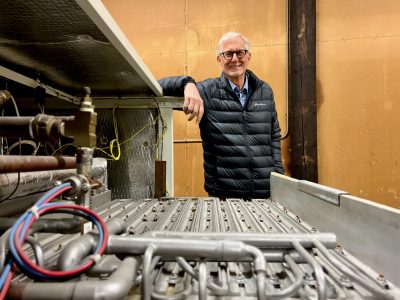
Michael Burz, EnZinc co-founder and president.
Advanced batteries are the linchpin of the energy transition, from stabilising energy grids to powering electric vehicles. But the critical minerals needed to produce them are sourced with limited transparency or accountability to workers, communities, or the environment. Recycling and reuse remain vastly underdeveloped, risking a repeat of fossil fuel-era harms through excessive extraction and mounting waste. Imagine if every battery were designed for maximum efficiency, reused before it was recycled, and re-entered the supply chain without ever becoming waste. By turning to circular solutions, we could reduce resource pressure and avoid the looming bottlenecks threatening this booming sector. The good news: entrepreneurs are embedding circularity throughout the battery lifecycle. This is what we’re building at New Energy Nexus. Our Just Batteries initiative has supported 116 startups across the battery value chain—from extraction to recycling—while shaping an innovation ecosystem rooted in equity, access, and sustainability. Here’s a closer look at some of the solutions we’re surfacing around the world.
1. Batteries aren’t designed for circularity
Solution: Upstream tech making batteries safer and recyclable
Most batteries today are built for cost and performance, not for reuse, disassembly, or recycling. This design blind spot leads to costly, waste-heavy end-of-life challenges. GRST presented its solution at our Thai team’s Decarbonize Thailand Symposium 2025: a water-based binder replacing toxic PFAS in lithium-ion batteries, which enables clean disassembly and water-based recycling without sacrificing performance or cost. Their tech has been proven at 1 GWh commercial scale, making it a practical upgrade for manufacturers and recyclers alike.
2. Second-life opportunities go untapped
Solution: Modular systems that extend battery life
Used EV batteries still hold significant energy, but most are retired prematurely. Without clear reuse pathways, valuable materials are lost too early. Norwegian startup Evyon gives these batteries a second life. Their modular energy storage systems repurpose EV packs into plug-and-play units for buildings and grids, already deployed in six countries and reducing emissions by over 90% compared to using new batteries. Evyon won 2024 LGES Battery Challenge, co-hosted by LG Energy Solution and NEX China—along with one other enterprise we’ll talk about later.
3. Recycling is inefficient and environmentally risky
Solution: Clean recovery of critical materials without toxic waste
Traditional recycling methods rely on high heat or harsh chemicals and generate hazardous byproducts like black mass. It’s costly, emissions-heavy, and difficult to scale. Renewable Metals, led by Luan Atkinson, developed an alkali-based process that recovers over 95% of battery minerals without generating toxic waste. Presenting a safer, cleaner, and more economically viable system for the future of battery recycling, Renewable Metals won the first Supercharge Australia Innovation Challenge, our collaboration with EnergyLab.
4. Battery lifespan is too short
Solution: Smarter charging that prevents degradation
Premature degradation drives up demand for raw materials and puts pressure on manufacturing and disposal systems. Thus, extending battery life is one of the most immediate ways to reduce resource consumption. US-based Iontra came up with a charging technology that adjusts in real time to battery conditions, significantly reducing wear and tear. Their solution extends battery life and improves performance, helping keep batteries in use longer and out of landfills. Iontra shared the win with Evyon at the 2024 LGES Battery Challenge, both receiving cash prizes and support from LG Energy Solution in their pilot projects.
5. We rely too much on critical minerals
Solution: Mineral-free storage that complements batteries
Building more batteries isn’t the only answer. To stabilize clean energy systems long-term, we also need alternative storage options that reduce pressure on mineral supply chains. California-based Sperra, which earned a US$500,000 grant from the CalSEED Prototype Awards, is developing subsea pumped hydro storage using 3D-printed concrete spheres. Deployed on the ocean floor, their system stores and releases energy without using a single battery cell, offering a durable, scalable complement to electrochemical storage. Also in the Golden State, Enzinc is rethinking battery chemistry altogether. Instead of lithium or cobalt, they’re developing high-performance batteries using zinc: a material that’s safer, more abundant, and fully recyclable. Their technology is designed to power everything from e-bikes to home storage, expanding access to affordable, sustainable energy storage without deepening reliance on critical minerals.
Powering the shift to circularity
There are more entrepreneurs around the world who could make battery circularity a reality, but they need a strong ecosystem backing them up and scaling their impact. We’re proud to support them, and we invite you to join us in powering what’s next. If you’re a clean energy entrepreneur with a unique battery solution, check out our programs. For potential partners and investors interested in getting involved, find out how.

Photo by Cory Mus
The clean energy transition is stalling where it matters most. Emerging markets and developing economies (EMDEs) receive just 20% of global clean energy investment—and only 12% of mitigation finance flows reach EMDEs, excluding China [IEA, 2021; CPI, 2024].
Climate innovation isn’t scarce, but access to capital, coordination, and visibility still are. That’s the reality facing thousands of climate entrepreneurs across the Global South, and it’s the challenge that brought 50 investors, entrepreneurs, ecosystem enablers and policy leaders together at the 2025 Global Climate Finance Forum (GCFF) in Montego Bay, Jamaica.
Hosted in a region that exemplifies both climate vulnerability and entrepreneurial resilience, GCFF was unlike most climate convenings. It wasn’t a stage for panelists; it was a platform for co-creation. Founders from across Asia, Africa, Latin America, and the Caribbean shared how they’re repowering communities, whether through distributed solar, agroforestry, or second-life batteries. Investors listened. And crucially, they rolled up their sleeves to ask: what’s stopping us from backing more of this?
Today’s climate finance architecture is not designed to serve the small and growing businesses building climate solutions in high-need, high-potential markets. Less than 15 cents of every climate finance dollar crosses a national border, as host Marilyn Waite mentioned, and just 12% of mitigation finance reaches emerging markets outside of China.
Worse still, clean energy entrepreneurs in the Global South face interest rates as high as 27%, currency swings of 300% or more, and investor mandates that demand “anchor” deals before deployment can even begin. These systemic distortions aren’t just barriers, they’re missed opportunities. And there are entrepreneurs brimming with ideas and already delivering results, from GridAfrica’s distributed energy systems in Zambia, to Swap Energy’s EV battery swapping stations in Bali, to SolarKita’s residential solar expansion across Indonesia.
Limited track records, gaps in financial literacy, and lack of exposure to global capital markets mean they often fall outside traditional investment criteria. And support systems—such as accelerators, impact measurement frameworks, and governance mentoring—are less accessible than for their Global North counterparts. Meanwhile, climate finance ecosystems and policy frameworks often skew toward larger, established firms, leaving SMEs underrepresented on global stages like COP and at investor convenings.
Participants at GCFF agreed that unlocking finance for climate SMEs demands:
These priorities echo the International Energy Agency’s findings: that unlocking clean energy in developing countries is twice as cost-effective as in advanced economies and requires seven times more investment than they currently receive.
At New Energy Nexus, we have provided that scale and expertise to ease the connection between investors and SMEs. Over our 20-year history, we’ve supported nearly 10,000 entrepreneurs across 12 countries through our locally-led incubators, accelerators and convenings—mobilizing over US$4.7 billion in follow-on investment with just US$84 million in catalytic capital.
Through our Financial Innovation programs, we structure and incubate catalytic structures like the Indonesia Fund I and our EV Guarantee Facility in India, to bring tailored approaches to mobilize private capital into Global South climate ecosystems. Our Financial Innovation focuses on three things:
The message from Montego Bay was clear: climate entrepreneurs across the Global South are ready. What they need now is finance that meets them where they are—structured for risk, region, and reality.
As the world moves toward COP30, the priority must be shifting more capital—faster—into the hands of local innovators. That means:
New Energy Nexus is one of many ecosystem actors already building these pathways. But to meet the moment, we need aligned action from funders, governments, and investors willing to back innovation—not just in technology, but in finance itself.
Let’s ensure the next wave of climate finance reaches the people and places where it matters most. Reach out to partner with us!
Jennifer Wang, Director of Financial Innovation at New Energy Nexus
At a recent panel hosted by New Energy Nexus, Momentum, and Women In Cleantech & Sustainability, women leaders shared hard-earned insights on leadership, mentorship, fundraising, and building community in a male-dominated industry.
The conversation was rich with practical strategies—here are the top takeaways for women navigating clean energy entrepreneurship today:
1. Lead with Authenticity
Stop minimizing yourself. Panelists emphasized the importance of showing up fully, without apology. Habits like prefacing comments with “this might be a dumb question” or over-apologizing diminish your presence and power. Build self-awareness, and support others in breaking these patterns. 🗝 Takeaway: Practice naming your expertise confidently, and gently call in peers who downplay their own contributions.
2. Embrace Mentorship as a Two-Way Street
Mentorship was framed as reciprocal, not top-down. Effective mentors listen as much as they guide and often grow just as much through the relationship. Whether formal or informal, these connections expand capacity and build resilience.
🗝 Takeaway: Seek out mentors who empower you with autonomy, and mentor others to strengthen the ecosystem.
3. Build and Lean on Peer Networks
Trusted communities of women founders serve as essential spaces for candid conversations, resource sharing, and emotional support. These groups offer not just solidarity, but strategy.
🗝 Takeaway: Join or form a founder circle. Use it to trade investor intel, prep for pitches, and celebrate wins.
4. Fundraising? Get Strategic and Targeted
Clean tech fundraising—especially in hardware—requires long timelines and investor alignment. Panelists offered this guidance: Find patient capital. Look for investors who understand infrastructure and R&D cycles. Do your homework. Identify who’s backing startups like yours—and how they frame their pitch. Tap public funding. Federal and state programs can offer critical non-dilutive capital. Broaden your use case. Consider how your tech applies to defense, logistics, or housing sectors. Partner smartly. Strategic partners can be your gateway to investor networks.
🗝 Takeaway: Build a diversified funding roadmap—and look beyond traditional VC.
5. Start with the Customer’s Pain Point
Understanding your customers’ daily friction is essential for building products that matter. Don’t assume—ask. One founder shared how constant customer interviews shifted her entire go-to-market strategy.
🗝 Takeaway: Make customer discovery a continuous habit, not a one-time step.
6. Set Boundaries to Sustain Your Leadership Many panelists spoke to the emotional labor women often carry in teams, especially in mission-driven work. Supporting others is critical, but so is protecting your energy.
🗝 Takeaway: Build recovery time into your schedule and model sustainable leadership for your team.
7. Plug Into Structured Support Programs like the Women in Cleantech and Sustainability Mentorship Initiative (running January–April) offer structured ways to connect with mentors, grow your network, and level up professionally.
🗝 Takeaway: Don’t wait for mentorship to happen organically—seek out programs that invest in your growth.
Closing Thought: Women aren’t just participating in the clean energy transition—they’re shaping it. They’re accelerating a more inclusive, innovative, and impactful future by sharing knowledge, funding each other’s ideas, and leading with intention.
By Julius Mujuni, Country Director – New Energy Nexus Uganda
I recently had the privilege of engaging with Otto Scharmer, a global thought leader in systems change. His call to adopt a systems thinking approach was a timely reminder of the complex and interconnected nature of energy access in Africa—and a rallying call to those of us working to address it.
For decades, a persistent and troubling figure has hovered over the sector: over 600 million people across Africa still live without access to electricity. We’ve seen incredible innovation—yet the challenge remains immense and deeply systemic.
Decades of innovation are laying the foundation
At New Energy Nexus Uganda, we have worked hard to meet this challenge. Over the past decade, models like Pay-As-You-Go (PAYGO) have enabled households to access solar technologies for the first time, especially in off-grid rural communities.

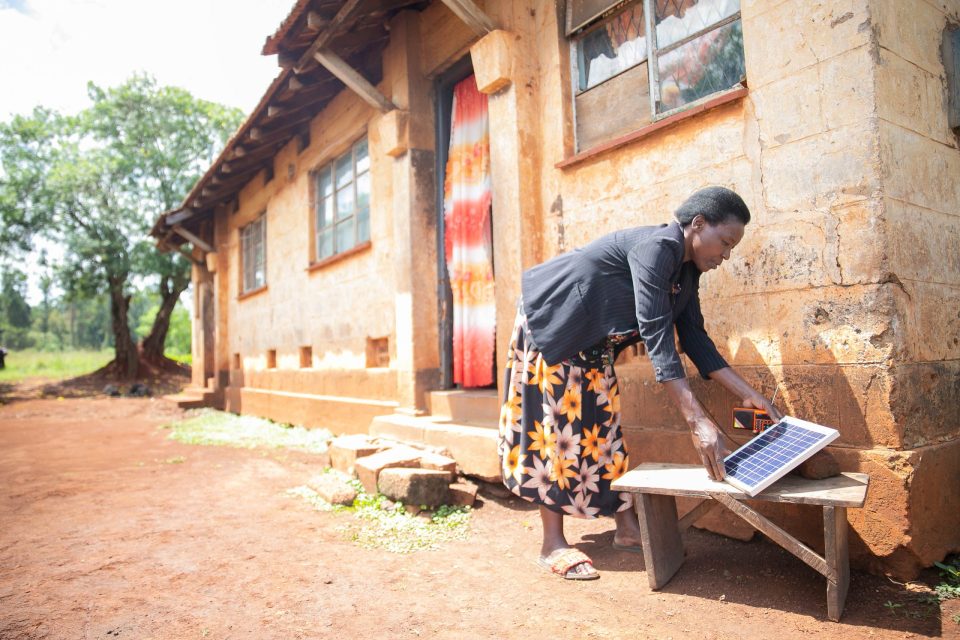
In rural Masindi District of Western Uganda, where access to electricity is very limited, a woman holds a solar panel that lights her home.
We’ve seen the catalytic role of micro finance institutions, helping families overcome high upfront costs. And through our own Results-Based Financing (RBF) program, we’ve delivered targeted support to Community-Based Organizations (CBOs) and Village Savings and Loan Associations (VSLAs)—trusted local actors uniquely positioned to drive last-mile distribution.
This approach is working:
Why a systems lens matters
Otto’s insight reminded me that energy access isn’t an isolated issue—it’s intimately tied to income, resilience, and opportunity. Even when the grid reaches rural areas, low-income families often can’t afford electricity or use it productively.
So what if we centered productive use of energy—clean energy that directly powers livelihoods? What if access to Productive Use of Renewable Energy (PUE) technologies is the answer to low income earners getting sustainable access to other off-grid energy products? What if access to PUE technologies enables increased access to health services and other health related products?
The PURE program: Energy for income and impact
That’s what we’re testing through our PURE (Productive Use of Renewable Energy) initiative. This program is designed to empower rural entrepreneurs and farmers with income-generating, solar-powered assets like irrigation systems to increase agricultural output, milling machines to process produce locally, and other small-scale tools that can boost productivity.
We believe this approach can create a self-reinforcing cycle: energy drives income, income drives further adoption of other off-grid technologies up the energy ladder, and communities become more economically and environmentally resilient.

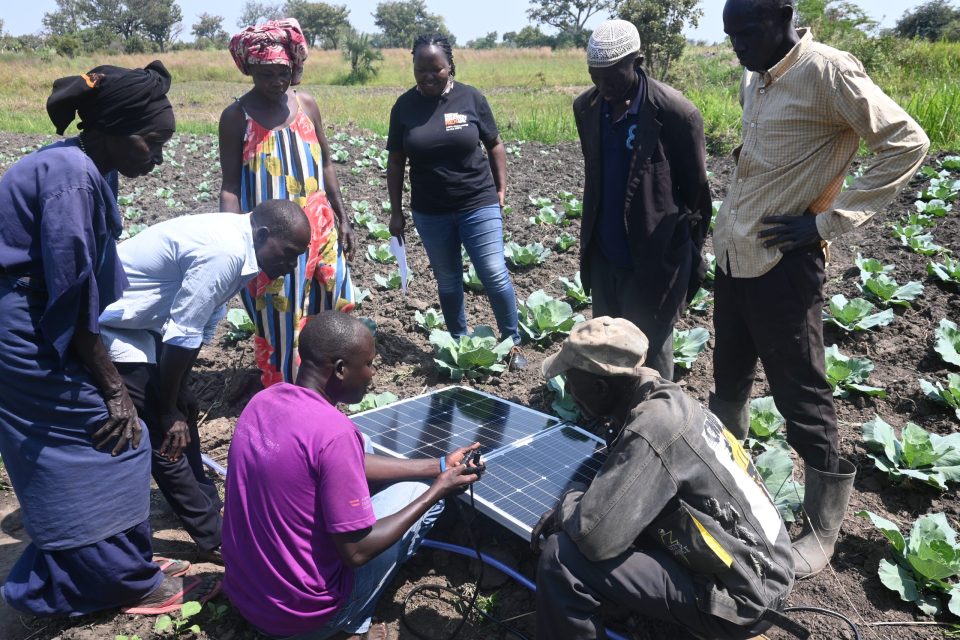
Asiazu Farmers’ Group in the West Nile region of Uganda receiving their solar-powered irrigation kit.
Community success stories: What’s already working
Take Utopia, a faith-based organization in western Uganda. With support from New Energy Nexus, they’ve:
Or look at KISE (Kitara Community Seed for Transformation) in Hoima, which has delivered clean tech to over 1,000 households and helped families redirect energy savings toward education and health.
These are not just stories of technology distribution. They are case studies in systems change—where energy is an enabler, not the end goal.
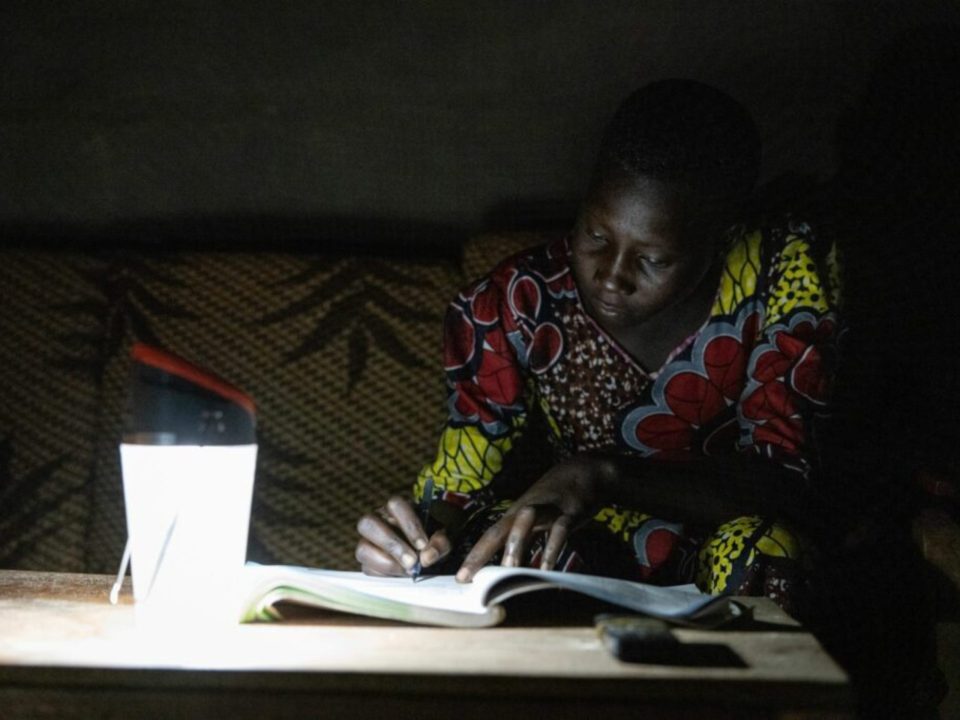
This solar lamp is her only source of light at night, in her home in rural Uganda.
A call to donors and funders: Help us go further
We know that unlocking Uganda’s clean energy future requires more than hardware. It requires patient, flexible capital, support for local leadership, and the willingness to fund models that may look different—but deliver a deeper, longer-term impact that leads to the growth of rural economies to tackle poverty, job creation, and inequality.
As we continue to gather evidence from our PURE pilots and deepen our partnerships with community led groups like CBOs and farmer groups, we invite funders and partners to join us in this journey. A journey that will enable us to create a business case for farmer groups and other entrepreneurs in off-grid communities to thrive and prosper as a result of running sustainable enterprises that use energy productively.
Let’s build an energy system that not only connects wires—but connects people to opportunity. Let’s go beyond access—toward income, equity, and resilience.
Learn more about New Energy Nexus Uganda.
The clean energy transition isn’t just happening in labs or boardrooms—it’s also being built on university campuses across the Philippines. At the heart of this movement are Technology Business Incubators (TBIs), which help entrepreneurs turn bold ideas into real-world solutions.

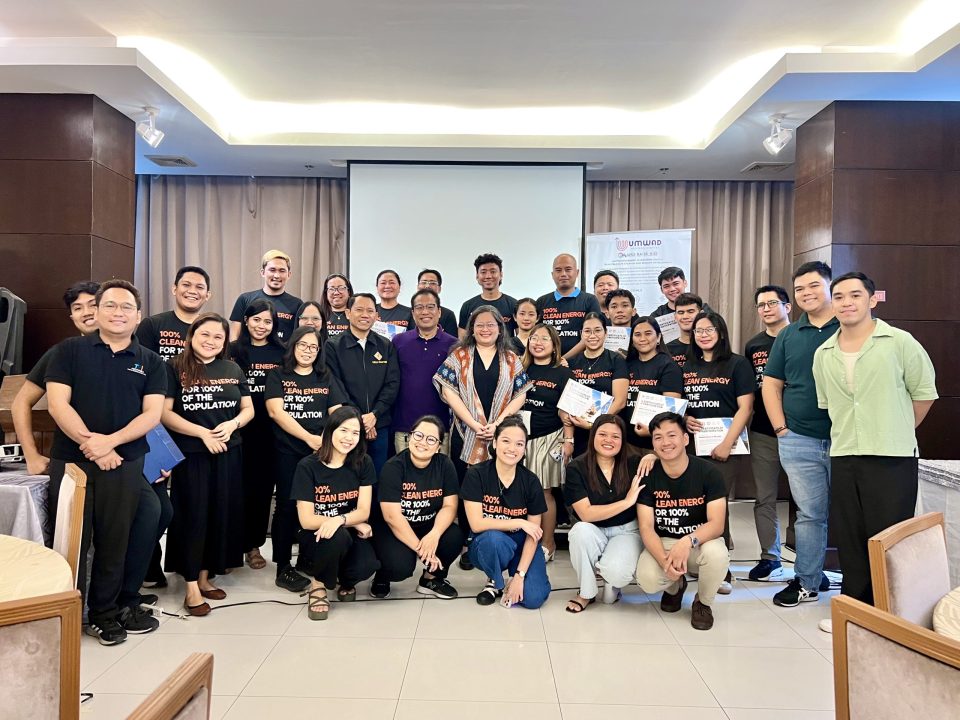
That’s why New Energy Nexus Philippines, together with UMWAD Consortium, DOST Region 6, Iloilo Science and Technology University (ISAT U), and Innovate Iloilo, recently hosted an Energy Incubation Program Training for university TBIs in Region 6. This hands-on training brought together 11 universities and institutions* from across the Visayas to build the skills, partnerships, and strategies needed to launch the next generation of climate-tech and clean energy startups.
Here’s what we learned—and why it matters.
1. 🚀 Energy innovation needs a boost from campus to market
From solar-powered aquaculture to digital energy audits, university teams in the Visayas are brimming with ideas. But many clean energy startups still struggle with business models and go-to-market strategies. TBIs are stepping up to fill this gap—but they need more support to guide founders from research to revenue.
2. 🔍 Manual energy audits are holding back progress
Several universities highlighted how energy auditing is still done manually—a time-consuming and inefficient process. Digitizing these audits presents a major opportunity for startups and researchers to develop tech-based solutions that can scale across the region.
3. 📚 Clean energy is sparking curiosity in classrooms
Interest in energy innovation is growing among students and faculty alike. At schools like the Iloilo State University of Fisheries Science and Technology, clean energy topics—from IoT to smart grids—are becoming central to research and student projects. That’s a strong sign of a rising talent pipeline.
4. 🏛️ Stronger university integration = stronger incubation
To thrive, TBIs need to be embedded into the fabric of the university—not siloed from students, researchers, or decision-makers. Active outreach and curriculum alignment can help make energy entrepreneurship a core part of the academic journey.
5. 🤝 Co-incubation is the way forward
NEX Philippines is inviting TBIs to co-incubate energy startups with us—combining resources, networks, and expertise. It’s a powerful model for supporting startups that are tackling the region’s biggest energy challenges. (This reflects NEX’s global strategy of ecosystem collaboration.)
6. 💸 Funding and experts are make-or-break for TBIs
TBIs need more than just enthusiasm. Sustained operations require access to technical experts, funding sources, and proven business models. Without this, even the most promising ideas risk stalling out before they leave the lab.
7. 🎓 Energy entrepreneurship needs to be taught
TBIs are exploring how to integrate clean energy into research, extension programs, and classroom instruction. Building climate-tech capacity isn’t just about startup competitions—it’s about transforming the entire education system to prepare innovators for the real world.

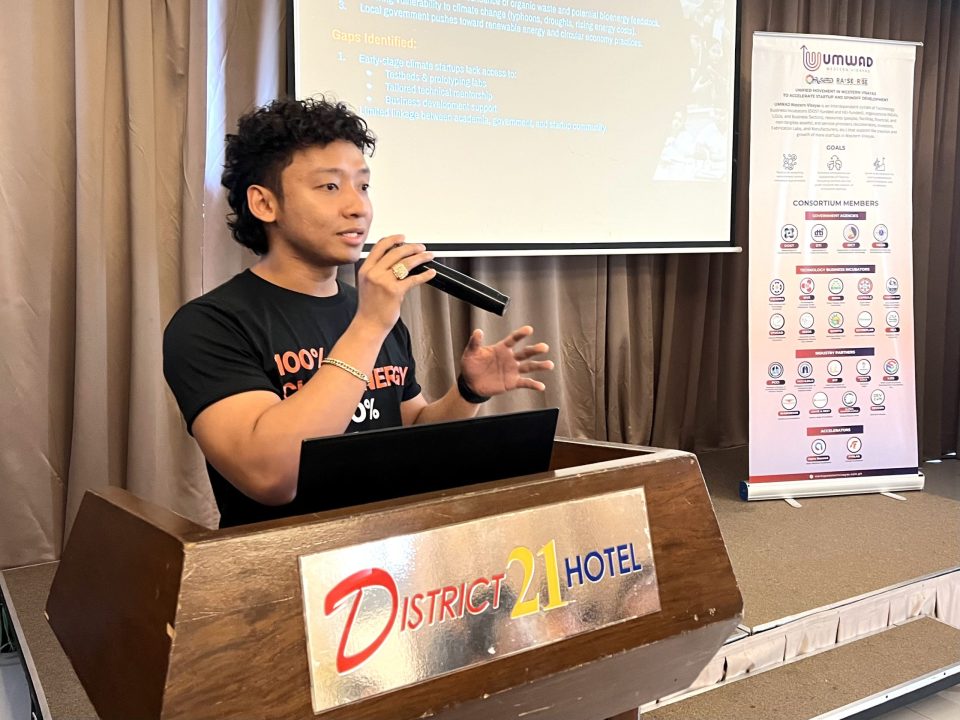
Mervin Perez of Technological University of the Philippines – Visayas HIVE TBI, presenting their startup incubation plan.
What’s Next for Region 6?
This training is just the beginning. NEX Philippines is already planning:
Behind every climate-tech startup is an ecosystem that helped make it happen. And as this training showed, Region 6 is full of institutions ready to lead.
NEX Philippines is proud to support this momentum—and we’re just getting started. Find out more about our work in the Philippines!
The workshop brought together 11 TBIs and institutions across the region:
West Visayas State University BINHI TBI | University of the Philippines – Visayas Seeds TBI | Iloilo Science and Technology University KWADRA TBI | Technological University of the Philippines – Visayas HIVE | Northern Iloilo State University QUINTO | Capiz State University CAPSULE Agri-Aqua TBI | Central Philippines University CPUGAD TBI | Guimaras State University ISLA TBI | University of Antique | Coastline 5023: DOST – UP Visayas Fisheries TBI | Iloilo State University of Fisheries Science and Technology DIKE

A report from the International Energy Agency found that 35 percent of emissions reductions needed to reach net zero depend on technology that has yet to be commercialized. That’s why supporting early-stage clean energy innovators is critical to the energy transition and reducing emissions. California’s clean energy transition depends on better energy storage; some of the most exciting breakthroughs are happening now. The latest CalSEED Prototype Award winners are tackling big questions about battery lifespan, recyclability, and how we store power more efficiently and sustainably. From next-gen potassium-ion batteries to innovative battery recycling techniques, these startups are reshaping energy storage. Let’s look at five game-changing solutions in battery storage:
1. ExPost Technology: Giving Batteries a Second Life
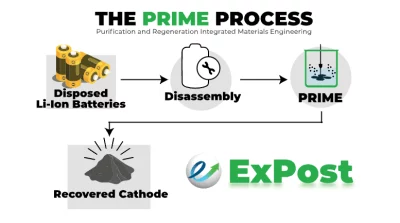
We rely on lithium-ion batteries for everything from smartphones to electric vehicles, but what happens when they reach the end of their life? ExPost Technology is rethinking battery recycling—a process that extracts valuable materials without fully breaking down components.. This means less waste, fewer new materials needed, and a stronger circular economy for batteries—something we’ll need as energy storage demand skyrockets. Using Purification and Regeneration Integrated Materials Engineering (PRIME), ExPost recovers pristine quality battery components from battery scraps and end-of-life batteries. With its prominent economic, efficient, and eco-friendly process, this scalable method has the potential to reshape the battery recycling industry.

Photo from ExPost Technology
2. Project K Energy:Making Lithium-Free Batteries a Reality
Lithium has long been the go-to material for batteries, but it’s expensive and difficult to source sustainably. Project K Energy is developing potassium-ion batteries—a cheaper, longer-lasting alternative for large-scale energy storage. Since potassium is much more abundant than lithium, this technology has the potential to cut costs and make clean energy storage more accessible. Project K’s innovation lies in optimizing potassium-based cathode, anode, and electrolyte components with fundamentally different properties than their lithium-ion counterparts. The potential benefits of these potassium-ion batteries include faster charging, lower costs (and less price volatility), better performance at low temperatures, and improved safety.
3. Activated Energy: A Safer, More Sustainable Way to Store Power
Battery safety is a huge concern, especially when dealing with flammable or toxic materials. Activated Energy is reimagining energy storage—making it safer, sustainable, and even carbon-negative. Their innovative solid-state system stores energy by compressing carbon dioxide using eco-friendly materials, creating a compact solution that’s both scalable and long-lasting. Activated Energy’s product builds on compressed air energy storage (CAES) and CO2 energy storage combined with innovative solid-state sorption technology. It has reduced costs and sourcing concerns, as well as increased stability over lithium technologies. In addition to being non-toxic and nonflammable, the proprietary low-pressure storage technology reduces the footprint of the storage system, making it more suitable for congested urban environments than competing large-footprint gas-based storage systems, which require land resources most likely unavailable in urban areas. This long-duration energy storage system improves grid resilience for urban communities, reduces strain on electrical transmission lines, is non-flammable, and enables greater renewable energy adoption.
4. Sperra: Storing Energy Beneath the Ocean
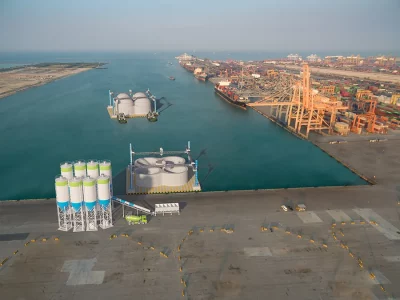
One of the biggest challenges with renewable energy is ensuring we can store power when it is needed most. Sperra has a fascinating solution: Marine Pumped Hydroelectric (MPH) Storage. They’re designing 3D-printed concrete spheres on the ocean floor that store and release energy in sync with offshore wind farms. Unlike traditional energy storage, this system could last decades without losing efficiency. This approach bypasses the land use and permitting challenges that often limit pumped hydro projects. It can be deployed along coastlines or paired directly with offshore wind farms to boost efficiency and lower costs. With innovations like their patented multi-sphere “pod” design, automated 3D-printed manufacturing, and shared infrastructure with other ocean energy projects, Sperra is creating a new, cost-effective path for long-duration energy storage beneath the waves.

Sperra’s SPSH systems are designed to be manufactured in 2 MW to 5 MW modules in US ports using locally available materials and labor. Photo from Sperra
5. Aepnus Technology: Cleaning Up Battery Manufacturing
It’s not just about how long batteries last—how they’re made also matters. Aepnus Technology is working on a cleaner, more cost-effective way to produce lithium salts and other battery materials. By making the production process more sustainable, they’re helping reduce the overall carbon footprint of energy storage systems from the start. Aepnus Technology’s innovation uses electricity instead of fossil fuel-based chemicals, reducing waste disposal costs and mitigating carbon emissions, especially when powered by renewable energy. By integrating the system on-site, manufacturers can cut waste disposal costs and achieve up to 35% savings on chemical expenditures. This solution enhances the sustainability and circularity of the battery industry while addressing critical chemical management challenges and contributing to the decarbonization of emissions-heavy chemical manufacturing processes. Aepnus’s ultra-efficient electrolyzers run on renewable energy to process essential materials like lithium salts and other reagents. They are advancing a novel electrolysis platform that recycles sodium sulfate—a common chemical waste in the battery supply chain—into valuable reagents (sulfuric acid and caustic soda), essential for refining battery metals and manufacturing cathode active materials.
Where Energy Storage Is Headed
The energy storage industry is evolving fast, and these companies are leading the charge toward longer-lasting, more sustainable solutions. Whether it’s recycling old batteries, developing new materials, or rethinking how we store power, these innovations will be critical in the clean energy transition. A future energy system won’t just rely on making better batteries—it’ll depend on keeping valuable materials in use through smart recycling and circular design. With continued investment and support, we’re looking at a future where energy storage isn’t just an afterthought—it’s a key pillar of a cleaner, more resilient, and circular power system. If these startups are any indication, the best is yet to come.
Each Earth Day, we’re reminded of the stakes. Wildfires, floods, and rising seas make it obvious that climate change isn’t just a looming threat; it’s here.
But amid the urgency, there’s also momentum on the solutions front—quietly building in labs, garages, solar farms, and startup accelerators around the world.
In over 20 years building ecosystems for climate and clean energy innovation, we’ve seen founders come up with ingenious ideas that are now driving decarbonization. Startups start small but can deliver exponential impact at scale, and we can actually model potential mitigated emissions as they grow (based on factors including current performance, projected growth trajectories, and market penetration rates).
In fact, from our portfolio of nearly 1,500 climate startups and businesses, we’re spotlighting seven that could collectively reduce over four million metric tons of emissions (CO2e) by 2030. That’s the equivalent of taking nearly 59,000 cars off the road. Learn more below.

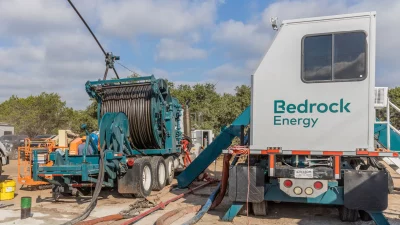
Photo from Bedrock Energy
Bedrock Energy (United States)
Emissions (CO2e) reduced (2024): 32 tons
Potential emissions mitigated (2025-2030): 212,498 tons
Bedrock Energy is making geothermal heating and cooling viable for buildings in dense cities, through a proprietary drilling and tech platform that cuts cost, space, time, and risk by 3–5x. The company was named one of America’s Top Greentech Companies in 2024 by TIME and Statista. In early 2025, Bedrock raised US$12 million in Series A funding to advance and expand their technology.
Bedrock Energy joined our New York program The Clean Fight’s Food Service cohort, focused on decarbonizing the storage, distribution, and retail of food. On top of matchmaking opportunities, expert insights, and bespoke support services, Bedrock became eligible to receive up to US$125,000 to implement their demonstration project in New York State.

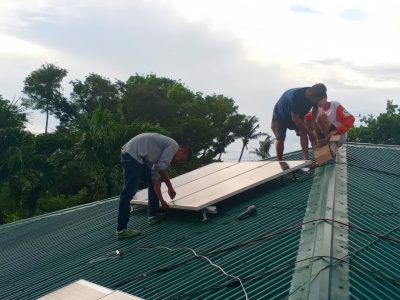
Hive Energy PH installs a 1.7kWh solar energy system for an off-grid community in 2021, then their largest project. Photo from Hive Energy
Hive Energy PH (Philippines)
Emissions (CO2e) reduced (2024): 127 tons
Potential emissions mitigated (2025-2030): 5,703 tons
Hive Energy PH delivers portable solar generators, battery storage, and solar installations to provide reliable, clean power—especially for underserved communities, students, and remote workers.
CEO & Founder Joseph Amiel Camingal first joined our online course with BARAS TBI in July 2020, where he sparked the idea for a portable energy backup solution. Six months later, he entered our Startup Acceleration Program to strengthen his business skills and scale his startup.
Now, Amiel is joining NEXAccelerate Philippines 2025 to further grow Hive Energy PH and expand access to sustainable, dependable energy across the country.
Kazam (India)
Emissions (CO2e) reduced (2022-2024): 35,310 tons
Kazam was founded by Akshay Shekar and Vaibhav Tyagi to make clean mobility more accessible. Today, it’s one of India’s leading EV charging networks—smart, affordable, and built for everyone, from two-wheelers to commercial fleets. With 50,000+ chargers deployed, Kazam is breaking down barriers to EV adoption nationwide.
Through our ElectronVibe program, Kazam partnered with an Indian utility to tackle real-world EV infrastructure challenges, earning first place in the 2022 EV Infrastructure Management Track.
In 2024, Kazam raised US$8 million in Series A3 funding to expand its network and boost its technology.
Sepion (California)
Potential emissions (CO2e) mitigated (2025-2030): 1.4 million tons
Sepion is advancing lithium-metal batteries that boost EV range by 40% and cut energy costs by 15%, using breakthrough membrane technology that protects lithium and integrates with existing lithium-ion manufacturing. In 2023, Sepion also developed an AI-driven liquid electrolyte that reduces EV fire risks.
New Energy Nexus supported Sepion early on through our CalSEED program’s concept and prototype awards, helping de-risk their membrane tech. This support enabled Sepion to retire key technical risks, close an oversubscribed Series A in 2021, and bring on Solvay as a strategic investor.
Solar Run Energy (China)
Emissions (CO2e) reduced (2024): 127 tons
Potential emissions mitigated (2025-2030): 5,703 tons
Li Xia grew up in rural China without electricity—an experience that inspired her mission to bring power to off-grid communities. In 2016, she founded Solar Run Energy, delivering clean, affordable solar solutions across sub-Saharan Africa, from solar lights to full home systems.
In 2022, she launched Solar Media, bringing solar-powered tablets with educational and vocational content to remote Kenyan villages—impacting over 3,000 people so far.
With support from New Energy Nexus, Li gained mentorship, capital access, and a global platform through the NEX COP28 Climate Tech Accelerator to scale her vision.
SWAP Energi (Indonesia)
Emissions (CO2e) reduced (2021-2024): 50,448 tons
SWAP Energi is a pioneering e-mobility start-up focusing on tech-driven swappable energy infrastructure, including portable battery packs, swapping stations, and SMOOT e-motorcycles in Indonesia. The company also developed a user-friendly SWAP Energi app, which helps riders locate stations, track reservations, and receive maintenance alerts.
New Energy Nexus supported them by connecting with investors, assisting with funding documents, and offering acceleration program guidance. As a result, SWAP Energi now operates over 800 swap stations across 14 provinces as of 2023.
Through partnerships with Grab and PLN, SWAP Energi is building an integrated EV ecosystem, advancing the adoption of electric motorcycles in Indonesia’s growing market.

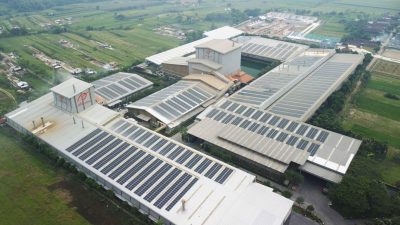
Photo from Xurya Daya Indonesia
Xurya (Indonesia)
Emissions (CO2e) reduced (2020-2024): 225,673 tons
Potential emissions mitigated (2025-2030): 570,252 tons
In Indonesia, high upfront costs have long blocked businesses from switching to solar—slowing progress on climate goals and energy affordability. Xurya Daya solves this with an innovative zero-upfront-cost rooftop solar rental model, enabling commercial and industrial clients to access clean power without capital barriers. Xurya is scaling fast—deploying over 170 projects, and mitigating 225,674MT of GHG emissions since we first supported them.
New Energy Nexus, through its Indonesia 1 Fund, co-invested alongside East Ventures, Saratoga, and Schneider Electric in its US$21.5 million Series A round — the largest Series A funding ever raised by a clean energy startup in Indonesia. They have also received extensive support through programs we operate in Indonesia.
What else can be done?
Strong policy support
Governments must create a more conducive environment for climate solutions through procurement, tax incentives, and regulatory clarity—making it easier for entrepreneurs to start and scale their businesses.
Accessible, early-stage capital
Climate innovation is risky, but necessary. Blended finance, catalytic funds, and climate-aligned venture capital can unlock growth where private capital alone won’t go.
Thriving innovation ecosystem
Accelerators, manufacturing hubs, distribution networks, and cross-border partnerships are essential for solutions to move fast and far.
If you’re an entrepreneur with a groundbreaking climate solution, we’re here to support your success. Explore our programs and subscribe to our newsletter to stay ahead of opportunities in the sector.
Sydney, 8 April 2025 – Supercharge Australia is proud to announce the cohort selected for its latest program, the inaugural Supercharge Australia Incubator, designed to accelerate Australia’s lithium battery manufacturing and innovation capabilities through support of early-stage companies in prototype phase.
From battery chemistry breakthroughs and AI-powered energy technologies to materials innovation, recycling, second-life systems, and electrified mobility and infrastructure, this diverse group of startups represents a wave of transformative solutions for Australia’s battery value chain.
“Supercharge Australia aims to dramatically increase the flow of Australian founders and new businesses in the lithium battery value chain that can be supported by and take advantage of new funding programs like the AU$500M Battery Breakthrough Initiative, the AU$15B National Reconstruction Fund and the AU$23B Future Made in Australia program,” said Kirk McDonald, Project Manager for Supercharge Australia.
“This cohort is a great reflection of the breadth and ambition of Australian startup innovation in the battery sector,” said Megan Fisher, CEO of EnergyLab. Strengthening Australia’s innovation capability is critical—not only to securing our clean energy supply chain but also to fostering new companies, future employers, and manufacturers that will drive our economy forward.”

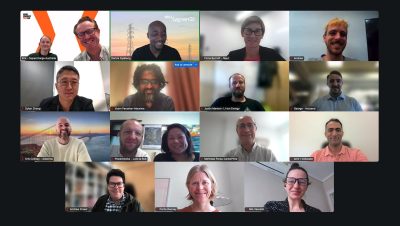
The first-ever Supercharge Australia Incubator cohort, during the virtual kickoff.
Meet the 2025 cohort:
Over 12 weeks, the incubator provides hands-on support, strategic guidance, and ecosystem and investor connections for Australian founders building the future of energy storage and electrification. For more information on the Supercharge Australia Incubator, click here.
Supercharge Australia, a joint project of New Energy Nexus and EnergyLab, is accelerating Australia’s lithium battery value chain, catalyzing sovereign capability across the battery supply chain—from critical minerals to manufacturing, deployment, second-life and recycling.
About EnergyLab
EnergyLab is Australia’s largest climate tech startup accelerator and innovation network dedicated to reaching net zero emissions. EnergyLab connects talented founders to the mentors, advisors, partners, peers and investors they need to succeed and has so far supported over 240 startups and 150 aspiring founders through its various programs.
In addition to running 10 programs, EnergyLab operates a climate focused angel platform with a network of over 200 angel investors, a mentor network with over 450 experts, coworking and events space at UTS in Sydney all of these services are leveraged to support the clean energy and decarbonisation startup ecosystem in Australia.
Kirk McDonald
Project Manager, Supercharge Australia
kirk.mcdonald@newenergynexus.com
+61 412 336 848
Tristan Tremschnig
Global Communications Director, New Energy Nexus
tristan.tremschnig@newenergynexus.com
(based in San Francisco)
About New Energy Nexus
New Energy Nexus (NEX) is the world’s leading clean energy ecosystem builder, working toward a 100% clean energy economy for 100% of the population. It does this with a laser focus on diverse entrepreneurs, supporting them with accelerators, funds, skills, and building the local and global connections they need to thrive. NEX has accelerated 1,700+ startups and businesses, empowered over 11,500+ entrepreneurs, and mobilized more than US$5.4 billion in investment.
Since its founding in California in 2004, NEX now operates programs or services in Australia, China, India, Japan, Indonesia, Nigeria, Pakistan, the Philippines, South Korea, Thailand, Uganda, the USA (California and New York), and Vietnam.

Eva Lisa Adoremos, Senior Vice President of GAIA Corp—a participant of NEXAccelerate Philippines 2025.
While the Philippines’ startup ecosystem is expanding rapidly, clean energy startups remain underrepresented in mainstream acceleration programs.
According to the 2024 ecosystem report by New Energy Nexus (NEX) Philippines, there has been a sixfold increase in clean energy startups, collectively raising nearly $1.3 million. However, 87% of these funds came from grants and competitions, underscoring the sector’s reliance on non-investment-based funding sources.
Recognizing the need for targeted support, NEX Philippines launched NEXAccelerate Philippines 2025, an 8-month program dedicated to helping early-revenue and growth-stage clean energy and climate-tech startups scale their ventures. This year, six startups have joined the cohort, bringing innovative solutions across various sectors, from sustainable mobility to waste management and energy analytics.
Meet the startups with brilliant solutions in a country brimming with clean energy potential:

Photo from Lycan Motorcycles, a participant of NEXAccelerate Philippines 2025
Startup accelerators like NEXAccelerate Philippines are key to driving clean energy innovation. By providing mentorship, funding access, and business development support, they help startups tackle capital constraints, regulatory challenges, and market barriers.
This year’s cohort—Lycan Motorcycles advancing EV adoption, GAIA enhancing climate resilience with reflective tech, and Next2Fly innovating waste management through circular economy principles—are solving urgent environmental challenges. The program isn’t just about scaling startups; it’s about accelerating the Philippines’ energy transition through homegrown solutions.
With sustained support from investors, policymakers, and industry leaders, initiatives like NEXAccelerate are bridging the funding gap, strengthening ecosystems, and unlocking opportunities for climate-focused entrepreneurs—powering a cleaner, more resilient future.
The Philippines’ clean energy startup ecosystem is gaining momentum, with more entrepreneurs developing solutions to tackle climate change and advance the energy transition.
NEXAccelerate Philippines empowers startups with the skills, networks, and resources to secure investment and scale. The program includes tailored learning on fundraising and market expansion, expert mentorship, strategic networking, and pitching opportunities to investors and partners.