News
California
Transportation tech
New research reveals steps California must take to capture more jobs from lithium battery boom

Oakland, 26 March 2024 – California is capturing only 2.4% of projected jobs in planned operations in the nation’s lithium battery supply chain, with most going to states that are ranked low in terms of labor protection, worker health and safety, and wage laws.

The findings released today in a new report from New Energy Nexus, with partners at the Institute for Social Transformation at UC Santa Cruz and the UC Berkeley Labor Center, detail how even the state’s very own “Lithium Valley” initiative in the Salton Sea region is projected to miss out on the growing lithium boom, where less than 1% of jobs are associated with lithium extraction. The vast majority of the more than 100,000 expected new jobs are projected to be in battery and electric vehicle (EV) manufacturing.

The report – “Powering Prosperity: Building an Inclusive Lithium Supply Chain in California’s Salton Sea Region” – analyzes employment data in the supply chain through an interactive online platform, “Lithium Battery Supply Chains of North America,” which for the first time ever maps jobs in relation to labor, climate, and economic justice indicators. It also recommends how the region could capture more “high-road” jobs and community benefits from lithium extraction with greater policy focus, targeted public investment, and stronger industry, labor, community and tribal partnerships.

“The decisions taken now will determine whether the lithium battery boom will be a race to the top or a race to the bottom,” said Rebecca Lee, co-author of the report and Managing Director of New Energy Nexus California.

“California has been a world leader in EV and battery innovation, and to stay ahead of the curve, it needs to support companies that take the high-road, and that stay and manufacture their technologies in the state. This could be a global model for shared prosperity, generating family-supporting jobs and benefits for local communities, while also decarbonizing the economy.”

California’s Salton Sea region is an underinvested corner of the state where a quarter of the total population, and half of the region’s Native American population, live below the poverty line. It is also home to some of the largest lithium reserves in the world, which has given rise to the name “Lithium Valley.”

The Bipartisan Infrastructure Law and Inflation Reduction Act created major financial incentives for domestic lithium battery and EV production. Building out a domestic lithium value chain – from processing, battery manufacturing, and recycling – could potentially create good jobs, new business opportunities, and meaningful benefits for local communities.

“We need to ensure that the jobs in lithium extraction itself in Imperial County are good jobs, but a larger benefit to the region could come from co-locating battery and electric vehicle manufacturing,” said Chris Benner, co-author of the report and Professor and Faculty Director at the Institute for Social Transformation, UC Santa Cruz. 

“Battery and electric vehicle firms locating here would gain reputational and marketing benefits of being tied to one of the cleanest sources of lithium on the planet, as well as close access to a large environmentally conscious consumer market – the largest consumer base for electric vehicles in the country.”

Key findings:

  • California is currently the core of the nation’s electric vehicle industry, accounting for roughly 19% of existing jobs in the full lithium and electric vehicle supply chain, by far the highest share of any state.
  • California, Arizona and Nevada account for nearly a third (31%) of jobs in the full lithium battery and EV value chain, but only 10% of planned new investment. These states rank highly in the nation for policies that support good jobs and wages (1).
  • Kentucky, Tennessee, Alabama, and Georgia currently account for approximately 16% of total existing employment along the value chain, but represent nearly 34% of projected jobs in new sites. These states are low-to-bottom ranked in terms of labor protection, worker health and safety, and wages.
  • Of the more than 150,000 existing jobs in the lithium value chain in the USA, 43% are in EV manufacturing, 26% are in battery component, cell, and pack manufacturing, and only 6% of jobs are in mining or critical minerals extraction.
  • In the Salton Sea region, the number of direct jobs from direct lithium extraction will be relatively modest: a few hundred jobs initially, rising to roughly 2,000 ongoing jobs at projected full build-out many years from now.
  • The vast majority of jobs associated with the lithium from the Salton Sea region will be created further along the value chain: roughly 1,600 jobs in cathode manufacturing, 20,000 jobs in battery cell and pack manufacturing, and over 100,000 jobs in EV manufacturing (2).  There are currently no agreements in place to bring these jobs to the Salton Sea region, much less ensure these jobs are high-quality or will be targeted for local residents (3).

Noemí O. Gallardo, Commissioner, California Energy Commission: “The Lithium Valley vision has the potential to provide tremendous economic opportunity that simultaneously uplifts industry, workers, and residents. Building on existing state efforts, the recommendations outlined in this report can help realize this possibility and boost the Salton Sea region.”

Brigette Browning, Executive Secretary-General, San Diego and Imperial Counties Labor Council: “This report shows that California must urgently build on its clean energy leadership, and ensure it captures and retains family supporting jobs in the lithium battery boom. Both in the construction phase of projects and ongoing operations and maintenance, the sector must support good union jobs and career pathways in new green industries jobs, especially for local residents.”

Sanjiv Malhotra, Founder and CEO, SPARKZ: “We’ve seen real value in taking the “high-road” approach in Lithium Valley, focusing on innovation, investing in our workforce, and generating good jobs. We are proud to partner with the United Auto Workers to secure the American worker’s place in the new energy economy, while also growing the battery supply chain domestically.”

California could provide a global model for the inclusive and environmentally friendly economic development of lithium and battery supply chains. Recommendations include:

  • Support “high-road” workforce development. This should include conditional public funding for businesses based on negotiated Community Benefits Agreements, as well as training for construction trades, blue collar, and professional and technical workers in Imperial County.
  • Strengthen the “innovation to implementation pipeline”: provide benefits for “high-road” companies that develop and manufacture technologies in the state. This should include an increase in funding to clean energy entrepreneur support organizations that support high-road pathways for startup commercialization.
  • Invest in local infrastructure. This includes physical and social infrastructure such as public health services, public transportation, climate resilient housing, and environmental restoration related to Salton Sea management and air quality.
  • Address permitting barriers. For instance, expedited permitting could be made available for projects that have formalized agreements and support from communities.
  • Battery supply chain transparency. Mechanisms must be in place that monitor, measure, and uphold environmental, labor and air quality standards, such as the Global Battery Passport.

The report and the Lithium Battery Supply Chain map are supported by a grant from The James Irvine Foundation, and represents the culmination of more than a year of research, including input from a wide range of labor, community, industry, public sector and tribal stakeholders.

Notes to editors:

(1) California comes in first, Arizona at 18th, and Nevada at 20th according to Oxfam’s Best States to Work Index.

(2) This calculation is based on the annual amount of lithium extracted from all existing geothermal plants and used to make batteries.

(3) At least two developers have signed project labor agreements (PLAs) with building trades unions for the construction phase of the projects.

About the Institute for Social Transformation, UC Santa Cruz

Rooted in the Social Sciences Division at UC Santa Cruz, the institute supports innovative scholarship that changes the world. The institute is a critical intellectual and social hub, connecting scholars across UC Santa Cruz and partners beyond the university, developing research-based solutions to urgent social, environmental and political problems in the world. The institute’s research aims to understand and transform the underlying systemic causes of problems in these areas and brings the research-based expertise and resources of UC Santa Cruz to collaborations with others committed to building local and global societies that are rooted in equity, access and opportunity for all people, environmental regeneration and democratic revitalization. https://transform.ucsc.edu/
Media contacts:

Tristan Tremschnig
Global Communications Director, New Energy Nexus (based in San Francisco)
tristan.tremschnig@newenergynexus.com

About New Energy Nexus

New Energy Nexus (NEX) is the world’s leading clean energy ecosystem builder, working toward a 100% clean energy economy for 100% of the population. It does this with a laser focus on diverse entrepreneurs, supporting them with accelerators, funds, skills, and building the local and global connections they need to thrive. NEX has accelerated 1,700+ startups and businesses, empowered over 11,500+ entrepreneurs, and mobilized more than US$5.4 billion in investment.

Since its founding in California in 2004, NEX now operates programs or services in Australia, China, India, Japan, Indonesia, Nigeria, Pakistan, the Philippines, South Korea, Thailand, Uganda, the USA (California and New York), and Vietnam.

Follow NEX on LinkedIn, X, Facebook, and YouTube

Story
California
Transportation tech
Reflecting on 12 years of battery innovation, from CalCharge to Just Batteries

The California Clean Energy Fund (CalCEF) realised over a decade ago that batteries play a critical role in the energy transition. Since its inception, CalCEF, which evolved into New Energy Nexus in 2016, has been at the forefront of global initiatives to foster a robust and inclusive advanced battery ecosystem.

Reflecting on the end of the CalCharge program that started it all, New Energy Nexus CEO Danny Kennedy shares insights into the role the organization played in connecting the dots between energy storage technology, innovation, and policy.

8 (1)

Batteries are the secret ingredient to unlocking the potential of renewable energy, but it wasn’t always inevitable that this nascent technology would take off as it has this decade. CalCEF – the organization I led back in 2106 and which later became New Energy Nexus – had seen the importance of lithium-ion batteries for electric mobility potential; in fact, it had even invested in a fledgling company called Tesla, that some of you may know, around 2005. Several CalCEF board members and staff, who included long time solar and utility executives, knew that grid storage would become “a thing” as the penetration of variable renewable energy increased on the grids.

Fast forward to 26 January this year, the UN’s first ever International Day of Clean Energy, and I’m at the groundbreaking of California’s first commercial lithium production facility, and the world’s first “fully integrated lithium facility and clean energy campus”. Picture this: John Podesta is leading the groundbreaking with a Congressman, Assembly member, and union heads. Senior officials from Sacramento have trekked down to this side road off Highway 111 near Niland (look it up on Google Maps – we’re not in Kansas nor the California many know) along with former Secretary of Transport, Rod Slater. Rod Colwell, the CEO of Controlled Thermal Resources, the startup commissioning this billion dollar facility, is beaming from head to toe after years of talking about getting this thing going.

Key to the story of Lithium Valley is the buy-in of the traditional custodians of the place, the Torres Martinez tribe of the Cahuilla Bands of Indians, who live throughout this part of desert California and northern Mexico. Councilman Butcher was present at the ceremony and his community are working to host energy projects to power some of the Lithium processing that will ensue from commercial production of the powder. Questions remain about the footprint of all this industrial activity and as Eduardo Garcia, the local representative, said the skeptics have to be given a hearing, which they will. But the prospect of a green Lithium battery supply chain, powered by renewable electricity throughout the manufacturing, which could provide enough batteries for all the cars in America, is tantalizingly close. Even a pundit who has long poo-poo’ed this possibility is changing his tune in the LA Times.

Living the CalCharge dream: 2012-2016

This was always the dream of CalCharge: to engender a soup-to-nuts, next-gen technology based on the brains and clean resources of the Golden State, rich with good, so-called “high road” jobs capable of paying family-supporting wages while ushering in climate solutions.

There was no certainty batteries would even be a big part of the mix, given the hype cycles that ensued about everything from a nuclear renaissance to hydrogen. Solar and wind were far from streaking ahead as they are now. As such, storage on the grid wasn’t perceived to be that important and people thought cars would be “fueled” forever. But CalCEF’s founders had also seen the green shoots of effort by entrepreneurs in California doing creative things with an alphabet soup of chemistries (Li, Zn, Br, Na) and their job was to support these entrepreneurs, which they did systematically.

In particular, in 2012 we formed a new trade association for energy storage companies called CalCharge around a cluster of around 18 startups. The mandate was to create a “center of gravity” for the California energy storage sector that enables diverse stakeholders to collaborate, identify barriers to emerging technology success, and develop solutions that help clear the path to commercialization.

In the early years of Calcharge the main event was literally an event known as the “Bay Area Battery Summit”. This gathering of geeks and scientists and journalists covering new tech was held each year at one of the Bay Area’s three national labs – Lawrence Livermore, Lawrence Berkeley or SLAC, the Stanford Linear Accelerator. It became the place “to be” if you were in batteries in the United States of America. I remember the first BABS (as it became known) that I attended in 2015. It was thrilling in only the way that a lecture theater behind the high security fence line of one of the US’ national labs can be!

We were discussing information that seemed critical for national and dare I say it, planetary security. Speaker after speaker talked of the potential of breakthroughs in energy density and other improvements in battery storage that would allow renewables to take up more than 100% of power demand by pairing wind and solar with the right storage. That their energy density could also move cars, bikes and all modes of transport quickly and cheaper became clearer as well. But challenges for this fledgling industry were also clear.

Supercharging the work: 2017-2021

This is when the CalCharge board decided to supercharge the information-sharing. We made a proposal to the federal government to develop a national networked manufacturing initiative on advanced batteries called Supercharge. This NNMI was supposed to bring together all of the interests, not only in California but across the country, including the American Jobs Project, many labor unions, some of the automobile industry, and New York’s Battery Energy Storage Technology (BEST). Over the course of 2016 we put together a powerful coalition of state agencies and industry, unions and universities and presented to the Department of Commerce our proposed strategy. In October 2016 we were deemed to be worthy of federal support and approved for a US$70 million grant to build out the vision.

As you might remember a month later a new government was formed in the United States, which did not seem interested in the energy transition or promoting new technologies with industrial strategies. We were never awarded the actual funds from the grant despite winning the bid, and instead the United States went into a period of uncoordinated effort around these issues.

There was a small grouping inside the federal government known as the Federal Consortium on Advanced Batteries (FCAB) that kept the light on for such thinking and of course many entrepreneurs and scientists and others in nonprofit and for-profit sectors, who pursued better batteries for those four years of the Trump administration. In parallel, the European Union, China and many other nations really stepped up their efforts in the formation of their own industrial strategies for batteries.

Back to the future: 2021-now

By the time Trump lost his second election the United States was behind, and in some ways had had a sort of “Sputnik moment” – bested in its own tech. Lithium-ion chemistries in particular, which American companies and scientists had contributed to more than any, were now being made at scale mostly in China and in a value chain that mostly left America out except as the buyer of these batteries.

On the first day of the Biden administration an executive order was put out to work out the problem of dependency that America had on a number of critical supply chains including pharmaceuticals, semiconductors and batteries. CalCEF, now known as New Energy Nexus, was asked along with the NY BEST and NattBatt, the national battery industry association, to support the government in its quest to solve this problem.

New Energy Nexus was engaged a number of times by LG Energy Solutions, at the time the top battery maker in the world, to find the best and brightest chemists and startups in the battery space. These “Battery Challenges”, which we went on to develop for Kia and Hyundai as well, have helped keep the Korean battery industry abreast of the cutting edge in chemistries.

We also grew our programs in California to support energy storage companies because so much of the state’s climate and energy mandate required more storage on the grid. We developed support for dozens of startups including Cuberg, Coreshell, Sepion and SparkZ. In New York we teamed up with Stan Whittingham’s lab and our old friends at New York BEST and others upstate to pitch to the Department of Commerce again a vision called New Energy New York. And in Australia we built a program to decarbonise the upstream production of raw lithium from spodumene resources through our innovation challenge with our partner, EnergyLab.

Bringing it home

In a little known corner of the country, literally where Arizona and Mexico meet California there is a nationally significant resource of lithium coming out of the geothermal brines that also produce about 5% of California’s electricity. If this resource were turned into reserves and a productive capacity, which has been the focus of many startups since 2010 with a company called Simbal, then America could provision its own batteries with a no-carbon source of lithium. As incredible as that sounds this is the prospect facing California and in particular Imperial County with its Lithium Valley now that CTR has begun building a Li powder and power production facility.

Lithium Valley is the name that has been given to this potential eco-industrial precinct that could grow up around the geothermal power plants already operating by the Salton Sea. Here in the poorest county in California there is an opportunity to produce clean lithium and turn it into precursor chemicals, active cathode materials, battery cells and ultimately battery packs. We published a report “Building Lithium Valley” in 2020, which became the basis for consideration by a Blue Ribbon Commission of the California Legislature and other efforts around the vision of a clean industry hub in the southern Californian inland counties. The local indigenous community have taken a lead in advancing this vision, governed by their values and long-term commitment to the place. Watch this space for more on this concept soon.

New Energy Nexus now stands ready to work with the Torres Martinez and the Cahuilla Indians, on whose land this potential could be achieved. Our aim is to do this right, by which we mean include communities who have historically been taken advantage of by extractive industries at the design phase of the industrial development.

If lithium is recovered from the geothermal sector at scale and gigafactories spring up in and around Imperial County it will be important that the tribal communities as well as farm workers and others who live in the area are at the table. To enable this, we are working with the Torres Martinez on a tribal innovation accelerator proposal, as well as with young people interested in STEM education on a Youth Entrepreneurship Accelerator (YEA!) last year.

yea iv 009 2048x1152

Youth Entrepreneurship Accelerator (YEA!)

Just Batteries

Across the globe, New Energy Nexus teams are looking for ways to advance this linchpin technology – batteries – in ways that are just and equitable. Our impact reports have started to track our progress with the cohorts of entrepreneurs who we train and introduce to partners and capitalise each year. We call this updated vision Just Batteries and look forward to keeping you posted on our progress.

The exciting prospect is that we imagine a world just a few decades hence wherein sufficient lithium and other battery metals have been recovered from the earth’s crust or its brines and need never be extracted again as virgin raw material. Instead, by the ‘40s we could be in a fully circular economy, recovering sufficient material for our energy storage needs from an urban mining process which will be much more economic than new mines or geothermal recovery of lithium. If this is to be realized it is important that those communities this decade and next, from whose land lithium and other battery metals will be recovered, are involved in the full cradle-to-cradle value chain of better batteries.

As for CalCharge, we have wound it up (as of late January 2024, I am resigning as President and we have mothballed the entity and its CRADAs with the national labs). Entrepreneurs looking for support from New Energy Nexus in California for battery-related technologies can apply to our CalSEED and CalTestBed programs. These offerings have all of the advantages and many more than Calcharge provided. Moreover we think we have come to a time that requires global collaboration – not just national – in order to both advance advanced batteries and ensure that they do not become the plaything of geopolitics. Charge on!

Explore More
Transportation tech
Youth
How we’re supporting young people to transform the US lithium supply chain

Advanced batteries are the linchpin technology in the energy transition and a critical climate solution. Without reliable access to battery technology, many countries such as the USA have no chance of meeting their 2050 carbon emissions goals. 

At New Energy Nexus we are focused on going beyond just growing this industry. The “how” matters and is reflected in our commitment to building a mission oriented battery innovation ecosystem.

yea! iv 009

Imperial County is brimming with innovative talent and entrepreneurial spirit. At NEX, we believe that frontline communities are often those best suited to solve economic and climate challenges. What would happen if we were to flip the script and demonstrate how young people in Imperial Valley are precisely the kinds of entrepreneurs who will help lead a more inclusive economy in California?

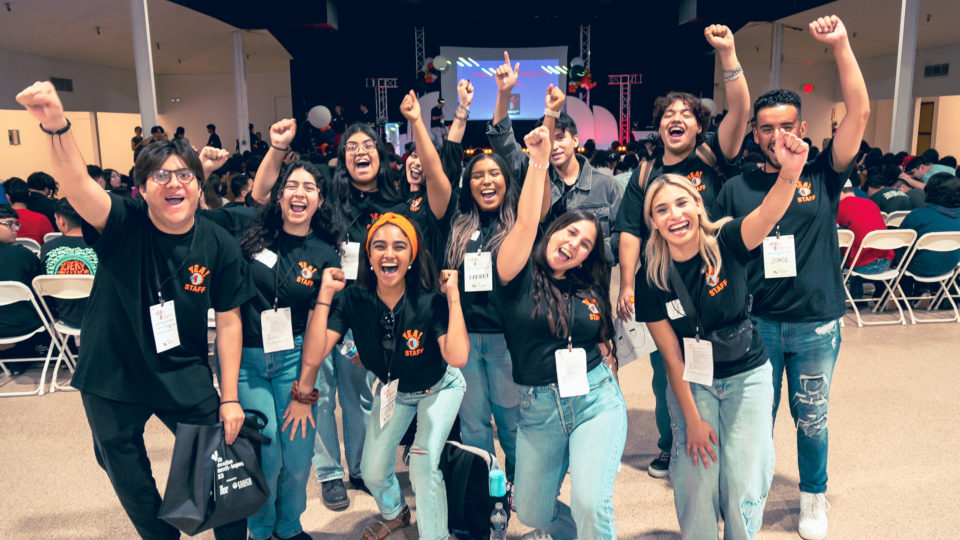
That’s why we’ve partnered with local organizations and the Center for Social Innovation at UC Riverside to launch the Youth Entrepreneurial Accelerator (YEA!) in Imperial County  – the first of its kind in California aiming to cultivate a new generation of innovators.

yea! iv 023

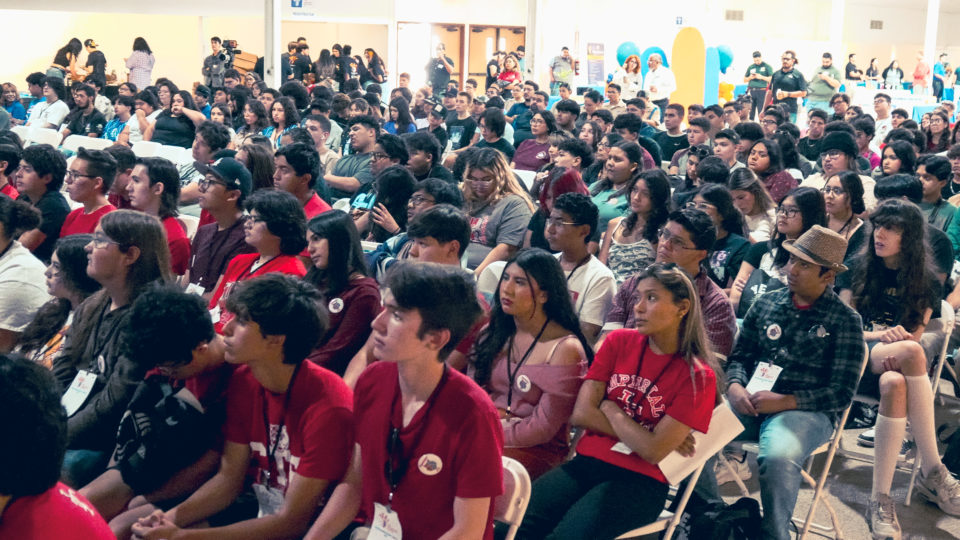
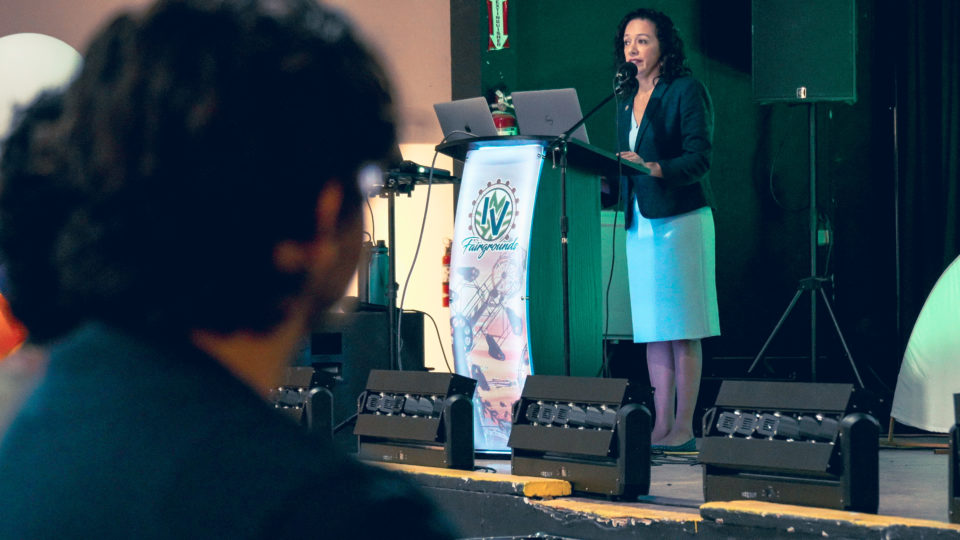
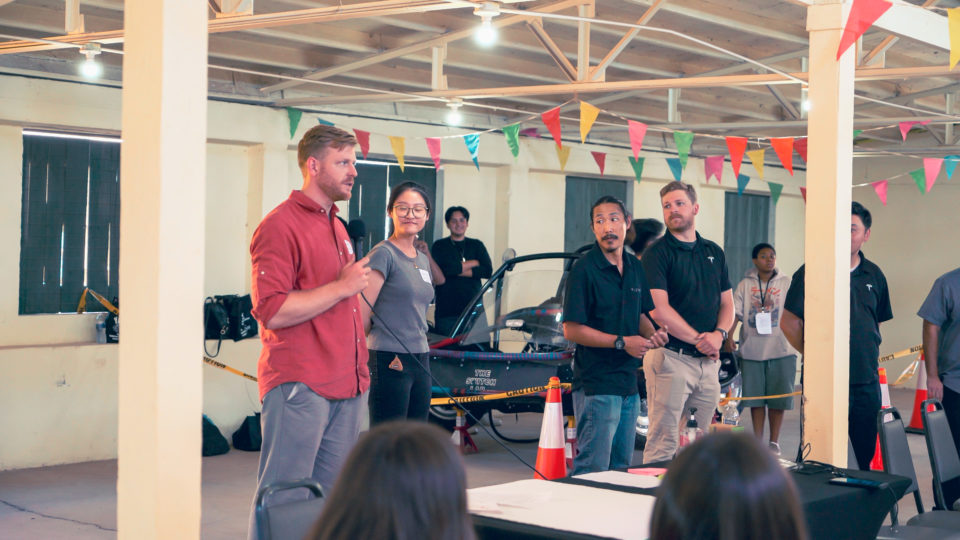
On 29 September, over 300 students from across Imperial County engaged with clean tech companies, entrepreneurs, labor partners, government officials and community organizations, and the California Energy Commission.

Our aim to connect young people to social and technology trailblazers in the community and engage them in hands-on experiences to spark their interest in areas of the advanced battery sector.

yea! iv 008

We see opportunities like this as essential to putting youth at the center of the clean energy transition, and to help surface solutions that can accelerate a more equitable clean energy transition in the state.

yea! iv 019

Thank you…

Thank you to the Center for Social Innovation at UC Riverside for co-hosting the Youth Innovation Summit, as well as our local partners at Imperial Valley College, the Imperial County Workforce Development Board, Imperial Valley Regional Occupational Programs, and all the high schools that participated.

A special thank you to Danna Padilla, a student from Southwest High School in El Centro, who was first place winner of our YEA! logo design competition. We’d also like to thank the rest of the graphic design students from Southwest High School for their design submissions and the Imperial High School Tigerbotics Team for being part of our youth innovation workshop.


Explore More
News
Transportation tech
New Energy Nexus response to White House’s $15.5 billion EV investment announcement

Oakland, 31 August 2023 The Biden-Harris Administration’s announcement today of US$15.5 billion for domestic EV production and workforce development is a welcome signal but questions remain around implementation. Danny Kennedy, CEO of New Energy Nexus, said:

“This announcement shows the USA is finally getting real about onshoring a resilient and clean lithium and EV supply chain. This is a huge opportunity for innovators, with dozens of startups potentially receiving the backing they need to scale up production.

“It’s time we unleash American ingenuity, and support diverse entrepreneurs working to  address critical issues in the clean transition: building a low carbon lithium battery supply chain, with high quality job creation and inclusive economic development at its core.”

Li-Bridge [1], a public-private alliance convened by the U.S. Department of Energy (DOE) and which New Energy Nexus is a core member, released a report in February 2023 – “Building a Robust and Resilient U.S. Lithium Battery Supply Chain” – that included 26 recommendations to boost the domestic lithium battery industry.

According to the report, the U.S. will not achieve complete lithium battery supply chain independence by 2030, but it estimates the country can capture 60% of the economic value consumed by domestic demand for lithium batteries by that year, generating $33 billion in revenues and creating 100,000 jobs.

“Without reliable access to lithium battery technology, the U.S. has no chance of meeting its 2050 net-zero carbon emissions goal or ensuring an inclusive and socially responsible industry.

“The Administration’s statement is vague on details at this stage, but we will want to see strong measures securing high-road jobs, and partnerships with local communities, tribes and labor groups to ensure benefits flow across the country. This should be especially so in Southern California, where abundant lithium can be produced as a byproduct of geothermal power.

“This vision could lead to a profound transformation of the Salton Sea region, moving beyond primary resources to an economic transformation rooted in innovation and value-added enterprises linking lithium mining with the full lithium-ion battery and electric vehicle value chain.

“This could provide good paying jobs in everything from critical minerals refining, to battery components and electric vehicle manufacturing, to battery recycling and reuse activities.”

Notes:

[1]  Announced in October 2021 by DOE and Argonne, Li-Bridge is spearheaded by three industry trade groups — New Energy Nexus, NAATBatt International, and the New York Battery and Energy Storage Technology (NY-BESTTM) Consortium — with active involvement from DOE national labs and Boston Consulting Group.

Media contacts:

Tristan Tremschnig
Communications Director, New Energy Nexus
tristan.tremschnig@newenergynexus.com
(based in San Francisco, USA)

About New Energy Nexus

New Energy Nexus (NEX) is the world’s leading clean energy ecosystem builder, working toward a 100% clean energy economy for 100% of the population. It does this with a laser focus on diverse entrepreneurs, supporting them with accelerators, funds, skills, and building the local and global connections they need to thrive. NEX has accelerated 1,700+ startups and businesses, empowered over 11,500+ entrepreneurs, and mobilized more than US$5.4 billion in investment.

Since its founding in California in 2004, NEX now operates programs or services in Australia, China, India, Japan, Indonesia, Nigeria, Pakistan, the Philippines, South Korea, Thailand, Uganda, the USA (California and New York), and Vietnam.

Follow NEX on LinkedIn, X, Facebook, and YouTube

Story
Indonesia
Transportation tech
The startup on a mission to electrify Indonesia’s 125 million motorcycles

Battery life is a crucial pain point for EV users. SWAP Energi aims to solve this by building a network of battery swapping stations for e-motorcycle riders. New Energy Nexus introduced SWAP to potential investors, helped prepare funding documents, and offered business acceleration program support. The startup now has more than 800 swap charging stations in 14 provinces.

We spoke to the team at SWAP Energi about their mission to electrify Indonesia’s booming two-wheeler market.

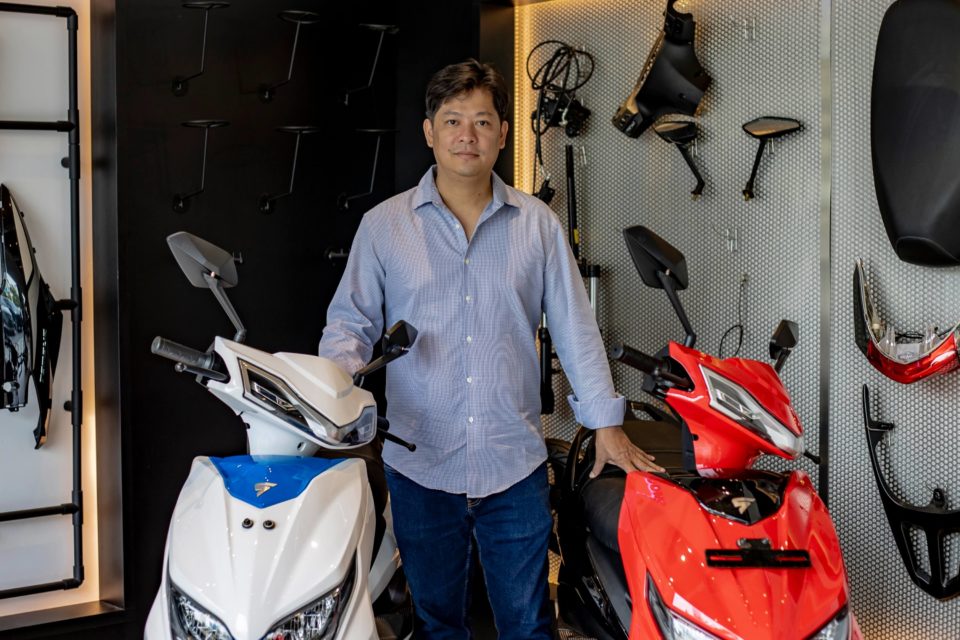
“Lots of prospective users are curious. Our duty is to explain to them so they will be interested,” said Irwan Tjahaja, CEO at Swap Energi Indonesia. So far, SWAP Energi Indonesia has been educating people about electric vehicles and “Swap Stations” by collaborating with their users, and making them a brand ambassador.

Potential users have many questions: is this vehicle strong enough and can it match gasoline fueled vehicles in terms of cruising range? Also, how cheap are the spare parts and maintenance?

Irwan Tjahaja, CEO at Swap Energi Indonesia

Irwan Tjahaja, CEO at Swap Energi Indonesia

In 2021, the startup launched its electric motorcycle brand Smoot. A year later, Swap Energy and Smoot partnered with Grab and state-owned electric company PLN to develop an integrated EV ecosystem in Indonesia.

“Every Smoot motorcycle user is a brand ambassador,” said Keving Phang, CPO of Swap Energi Indonesia. Kevin believes when a user is satisfied with the product and finds it convenient, they will share their experience with their family and friends, and even form a community that can raise awareness of EVs with their immediate community.

Later on, SWAP Energi Indonesia began focusing on the development of the Swap Energi app, making it more sophisticated and user-friendly.

“A key feature of the app is the ability to find the nearest Swap Station, integrated with Google maps, and track your battery reservation , find parking, analyze the machine’s health, and receive a notification for service or change spare parts,” Kevin said.

These convenient features have been noticed by users.

SWAP Energi Indonesia

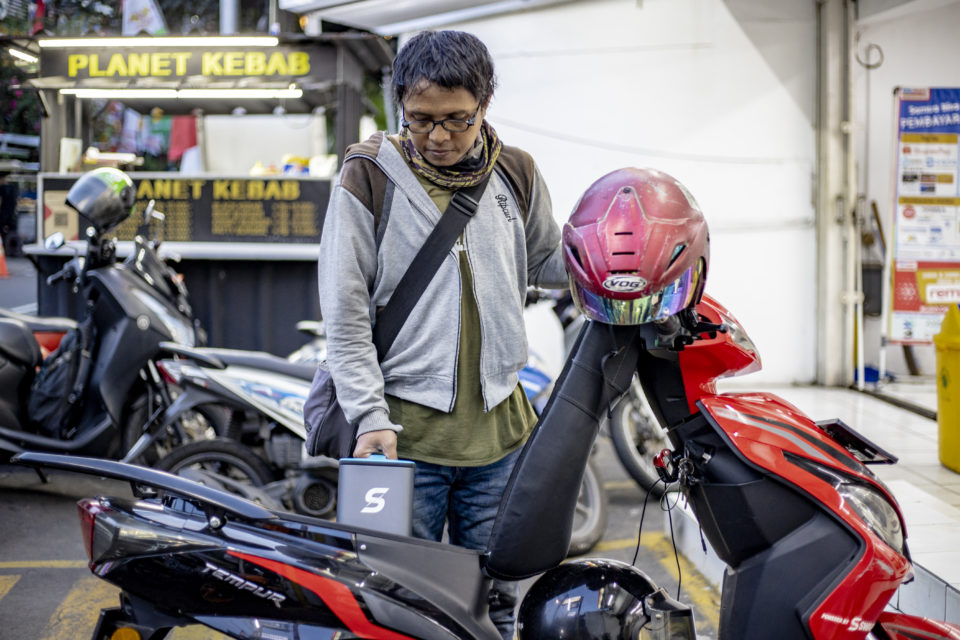
“SWAP Energi app is easy, everything is there. There is no more coming and finding out that the station has run out of battery,” said Ongko, one of the users of electric motorbike Tempur from Smoot Motor Indonesia.

As an office worker, he admits that electric motorbikes make his life easier.

“I don’t need a charging station at home. It is like you go to the gas station but with an electric motorbike and the app makes it more efficient as I don’t have to wait in line.”

Andi, an online taxi driver has the same experience. “I changed to an electric motorbike because it is environmentally friendly and cheaper. I don’t have to pay for routine services such as getting an oil change.

An online taxi driver such as  him covers a lot of ground: “It could be tens of kilometers each day.”.

However, this isn’t a problem because there are more than 350 points in Jabodetabek (an area of Jakarta, the capital city of Indonesia. He no longer worries about running out of battery while carrying passengers. SWAP Energi Indonesia also provides a special price for battery exchange for online taxi drivers, which is IDR 17,000 (US$1.14)/100 km. This price is twice as cheap as petrol fuel.

Since 2019, New Energy Nexus Indonesia in collaboration with IKEA Foundation acts as a bridge between different sectors and stakeholders, running incubation, acceleration, and funding programs to urgently develop the clean energy startup ecosystem. Find out more.

Explore More
News
Indonesia
Transportation tech
The startup on a mission to electrify Indonesia’s 125 million motorcycles

Battery life is a crucial pain point for EV users. SWAP Energi aims to solve this by building a network of battery swapping stations for e-motorcycle riders. New Energy Nexus introduced SWAP to potential investors, helped prepare funding documents, and offered business acceleration program support.. The startup now has more than 800 swap charging stations in 14 provinces.

We spoke to the team at SWAP Energi about their mission to electrify Indonesia’s booming two-wheeler market.

“Lots of prospective users are curious. Our duty is to explain to them so they will be interested,” said Irwan Tjahaja, CEO at Swap Energi Indonesia So far, SWAP Energi Indonesia has been educating people about electric vehicles and “Swap Stations” by collaborating with their users, and making them a brand ambassador.

Potential users have many questions: ; is this vehicle strong enough and can it match gasoline-fueled vehicles in terms of cruising range? Also, how cheap are the spare parts and maintenance?

In 2021, the startup launched its electric motorcycle brand Smoot. A year later, Swap Energy and Smoot partnered with Grab and state-owned electric company PLN to develop an integrated EV ecosystem in Indonesia.

“Every Smoot motorcycle user is a brand ambassador,” said Keving Phang, CPO of Swap Energi Indonesia.. Kevin believes when a user is satisfied with the product and finds it convenient, they will share their experience with their family and friends, and even form a community that can raise awareness of EVs with their immediate community.

Later on,  SWAP Energi Indonesia began focusing on the development of the Swap Energi app, making it more sophisticated and user-friendly.

“A key feature of the app is the ability to find the nearest Swap Station, integrated with Google maps, and track your battery reservation , find parking, analyze the machine’s health, and receive a notification for service or change spare parts,” Kevin said.

These convenient features have been noticed by users.

“SWAP Energi app is easy, everything is there. There is no more coming and finding out that the station has run out of battery,” said Ongko, one of the users of electric motorbike Tempur from Smoot Motor Indonesia.

As an office worker, he admits that electric motorbikes make his life easier.

“I don’t need a charging station at home. It is like you go to the gas station but with an electric motorbike and the app makes it more efficient as I don’t have to wait in line.”

Media contacts:

Tristan Tremschnig
Communications Director, New Energy Nexus (based in San Francisco, USA)
tristan.tremschnig@newenergynexus.com 

About New Energy Nexus

New Energy Nexus (NEX) is the world’s leading clean energy ecosystem builder, working toward a 100% clean energy economy for 100% of the population. It does this with a laser focus on diverse entrepreneurs, supporting them with accelerators, funds, skills, and building the local and global connections they need to thrive. NEX has accelerated 1,700+ startups and businesses, empowered over 11,500+ entrepreneurs, and mobilized more than US$5.4 billion in investment.

Since its founding in California in 2004, NEX now operates programs or services in Australia, China, India, Japan, Indonesia, Nigeria, Pakistan, the Philippines, South Korea, Thailand, Uganda, the USA (California and New York), and Vietnam.

Follow NEX on LinkedIn, X, Facebook, and YouTube

News
Transportation tech
Ten finalists selected for LG Energy Solution’s startup competition for future battery technologies

Seoul, 19 June 2023 – LG Energy Solution (LGES), in partnership with New Energy Nexus, has successfully closed its “LGES Battery Challenge 2022,” a battery startup competition geared toward open innovation. The startup competition demonstrates LGES’ pursuit towards pioneering future battery technologies and is part of a suite of programs by New Energy Nexus to support battery innovation around the world.

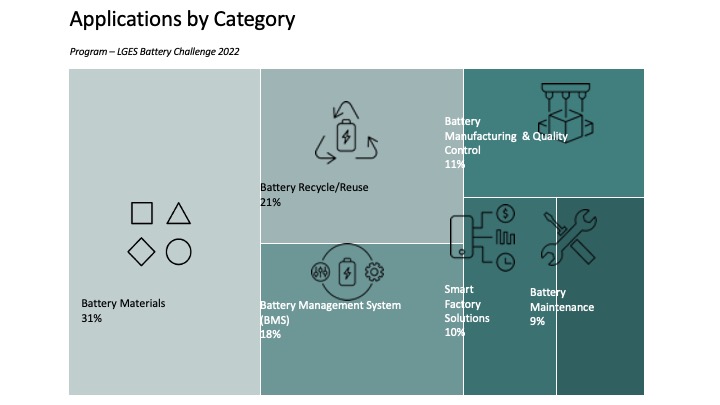
The competition received applications from 117 startups from 23 countries, including the United States, South Korea, Canada, United Kingdom, Germany, and India,. The proposals came from various fields, such as next-generation battery materials, battery management systems (BMS), battery recycling and reuse, battery maintenance, and smart factory technologies.

slide1

                    Source: LGES Battery Challenge 2022 Report, Applications by Category

Through a meticulous evaluation process, LGES has chosen ten finalists developing technologies in battery materials, battery cells and packs, and BMS. The finalists will be entitled to cash rewards, potential opportunities to collaborate with LG Energy Solution on a proof-of-concept pilot project, and further investment opportunities.

This marks the third time New Energy Nexus has supported LGES to host this startup competition, and while the majority of the proposals were on battery material technologies, “LGES Battery Challenge 2022” saw a meaningful increase in the proposals related to LGES’s new business areas, including BMS technologies incorporated with digital transformation (DX) using artificial intelligence and machine learning, battery swapping stations (BSS), energy management system (EMS), and power trading platforms.

“As a front-runner in the fast-growing battery industry, it is imperative that we secure leadership in future battery technologies as well,” said Sungrok Bang, Research Fellow at LG Energy Solution. “We will continue on with a variety of open innovation programs to advance our technological competitiveness in the battery field.”

“There’s no doubt that the dawn of the battery era is upon us, and fierce competition is underway between the battery giants of the world – creative collaborations, new technology innovations and speed to market will be a key differentiator,” said Andrew Chang, Program Director at New Energy Nexus. “LGES is a key player in this ecosystem and I’m excited to see what the future holds between the ten startup finalists and LGES.”

[END]

New Energy Nexus

New Energy Nexus (NEX) is the world’s leading ecosystem of funds and accelerators supporting diverse clean energy entrepreneurs. NEX started in Silicon Valley and now runs programs in Australia, China, India, Indonesia, Nigeria, the Philippines, Singapore, Thailand, Vietnam, Uganda, and the USA, providing accelerator services, capital, mentoring, skills training, and networks to help clean energy entrepreneurs thrive.

Since 2004, NEX has accelerated over 600 startups, supported over 3000 entrepreneurs, and mobilized over US$1.5 billion in investment. For more information, please visit www.newenergynexus.com

LG Energy Solution

LG Energy Solution (KRX: 373220), a split-off from LG Chem, is a leading global manufacturer of lithium-ion batteries for electric vehicles, mobility, IT, and energy storage systems. With 30 years of experience in revolutionary battery technology and extensive research and development (R&D), the company is the top battery-related patent holder in the world with over 25,000 patents. Its robust global network, which spans North America, Europe, Asia, and Australia, includes battery manufacturing facilities established through joint ventures with major automakers such as General Motors, Stellantis N.V., Hyundai Motor Group, and Honda Motor Co., Ltd. At the forefront of green business and sustainability, LG Energy Solution aims to achieve carbon neutral operations by 2050, while embodying the value of shared growth and promoting diverse and inclusive corporate culture.

To learn more about LG Energy Solution’s ideas and innovations, visit https://news.lgensol.com

Media contacts:

Tristan Tremschnig
Communications Director, New Energy Nexus
tristan.tremschnig@newenergynexus.com
(based in San Francisco, USA)

About New Energy Nexus

New Energy Nexus (NEX) is the world’s leading clean energy ecosystem builder, working toward a 100% clean energy economy for 100% of the population. It does this with a laser focus on diverse entrepreneurs, supporting them with accelerators, funds, skills, and building the local and global connections they need to thrive. NEX has accelerated 1,700+ startups and businesses, empowered over 11,500+ entrepreneurs, and mobilized more than US$5.4 billion in investment.

Since its founding in California in 2004, NEX now operates programs or services in Australia, China, India, Japan, Indonesia, Nigeria, Pakistan, the Philippines, South Korea, Thailand, Uganda, the USA (California and New York), and Vietnam.

Follow NEX on LinkedIn, X, Facebook, and YouTube

News
Australia
Transportation tech
Lithium battery recycling startup wins Supercharge Australia Award
supercharge australia

Luan Atkinson, CEO Renewable Metals

A lithium battery recycler, Renewable Metals, has won the inaugural Supercharge Australia Innovation Challenge Award with its unique technology that turns battery waste into battery metals.

During the Supercharge Australia Innovation Challenge awards event hosted by Dan Ilic at EnergyLab in Sydney, Renewable Metals took out the win with a process that achieves more than 95% recovery of the valuable materials in lithium batteries including lithium, nickel, cobalt, copper, manganese and graphite, without creating black mass and saving 20-30% of the costs of standard recycling.

Sicona came second, with a University of Wollongong-developed technology to produce next gen battery materials technology used in the anodes of lithium-ion batteries for electric-mobility and storage of renewable energy.

Roev, came third – they convert large fleets of utes to electric, solving unmet demand and managing energy usage.

Fourth place getter was Vaulta, who make recyclable and repairable high-performance batteries. Vaulta’s batteries are designed, assembled and tested at their manufacturing facility in Brisbane.

supercharge australia

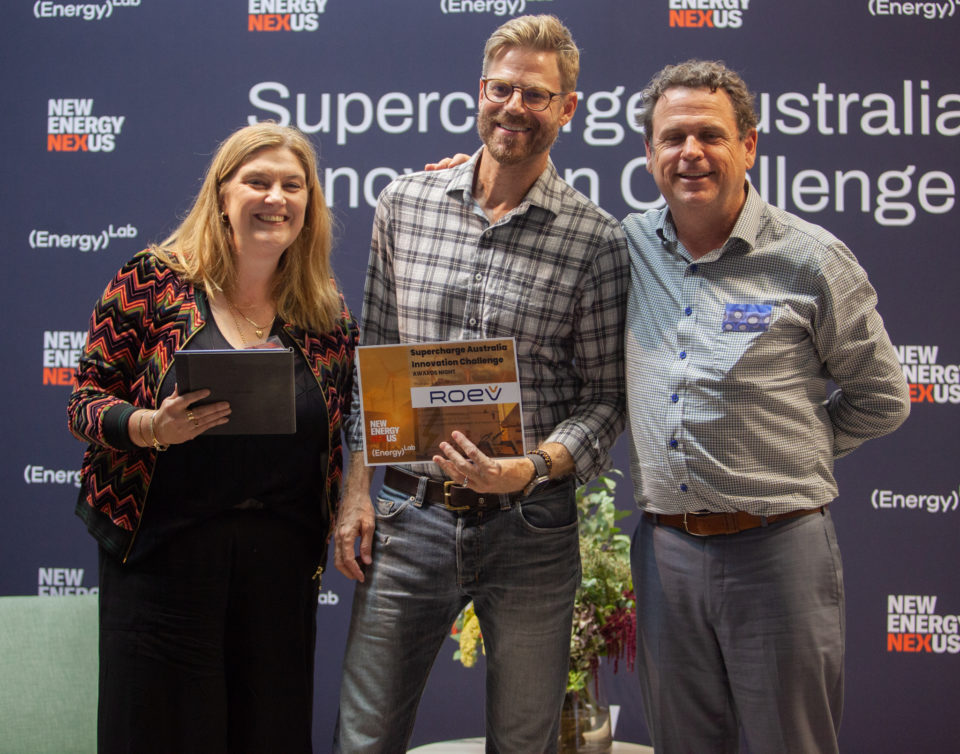
Megan, EnergyLab; Noah, Roev; Danny, New Energy Nexus

Despite producing almost 60% of the world’s lithium, Australia retains less than 1% of the US$400 billion and rising annual product value. As Australian Prime Minister Anthony Albanese said: “Lithium has an extraordinary capacity. We need to not just dig it up. I want to make sure we use the lithium and nickel and other products we have to make batteries here.”[1]

Ninety-eight percent of the lithium mined in Australia is refined overseas.

Supercharge Australia aims to support lithium battery innovation in Australia and capture more of the lithium value chain, by encouraging export-oriented lithium battery value chain start-ups.

Supercharge Australia is a project of New Energy Nexus, and our partners, Australia’s largest climate tech start-up accelerator, EnergyLab.

Since 2016 New Energy Nexus has supported 5,268 entrepreneurs globally, created more than 6,000 green jobs and mobilized more than $US1.5 billion in investments.

“Australian innovators are uniquely placed to supply emerging and mature global markets with low impact lithium products and resources to support our energy transition with better batteries,” says Danny Kennedy, CEO New Energy Nexus.

“I’ve seen billion-dollar battery recycling start-ups in the United States emerging in the last few years and none have technology as exciting as this.”

EnergyLab has supported Australian start-ups focused on clean energy and climate tech since 2017, with more than 150 program alumni.

“Supercharge Australia helps ensure Australia’s energy security by supporting the development of the technology needed here for the renewable energy transition,”  EnergyLab CEO Megan Fisher says.

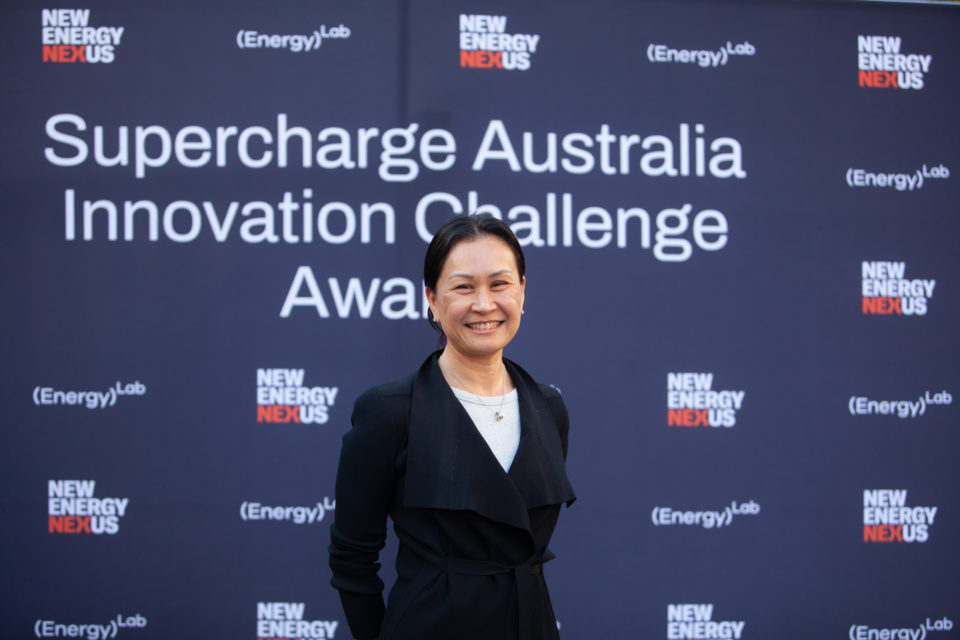
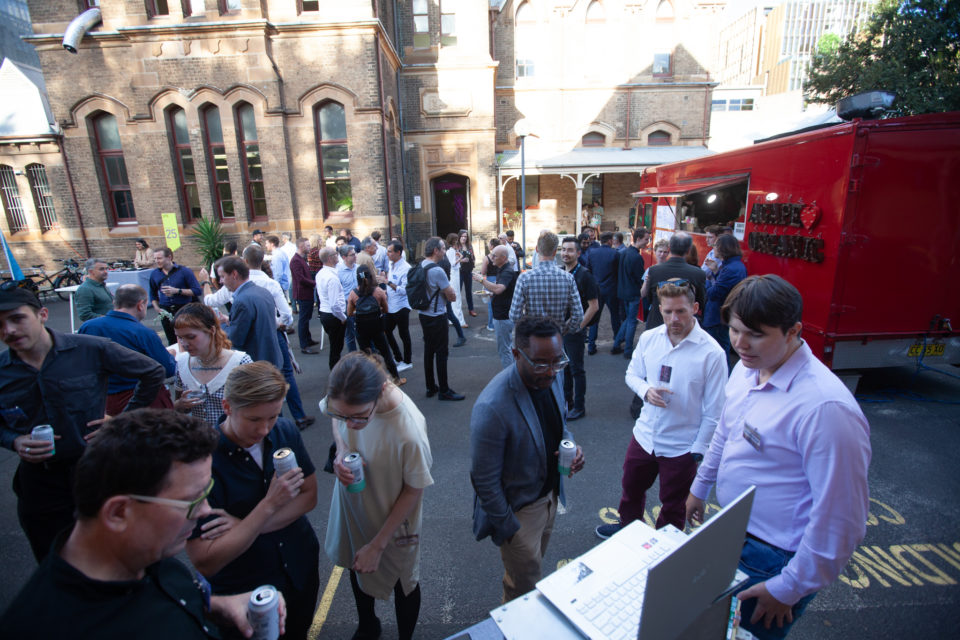
Supercharge Australia Innovation Challenge Awards event

Supercharge Australia Innovation Challenge Awards event

“Australia is well positioned to capture the full value of the battery and electrification revolution,” she says.

“Australia can become a leader in lithium battery technology, from sourcing to advanced battery and EV manufacturing, and capture massive market opportunities as the world electrifies. But to do this, we need much more activity across all phases of the lithium battery value chain, and this requires more investment and more start-ups to meet the innovation challenge,” Fisher says.

In a fantastic fundraising announcement saved for the awards night, our first follow-on philanthropic donor, Stephen Pfeiffer, generously pledged AUD$300,000 in core funding to Supercharge Australia to charge up the next phase of work on Australian lithium value chain startups.

In the Supercharge Australia Innovation Challenge 11 start-ups ranging from developers of novel cell chemistries to electric vehicle up-scalers and critical metals recyclers, were matched with mentors and experts with the aim of bolstering a vibrant national battery ecosystem.

The 11 finalists:
  • EV FireSafe for Business, co-founded by firefighters to provide electric vehicle (EV) fire and safety knowledge for everyone working with electrified transport.
  • FARSTE DRIVE – Geelong-based, developed a cost-effective hub motor to counter EV motor inefficiency and allow internal combustion engine vehicles to be converted to EVs.
  • Gelion – Sydney-based, battery storage innovator developing new lithium-sulfur and lithium-silicon-sulfur technologies to improve battery performance, cost and safety.
  • The Good Car Company, founded in Hobart, provides affordable EVs through bulk-buys, direct sales and subscription. They import new and second-hand EVs to help drive a second-hand EV market in Australia.
  • Prohelion, founded in Brisbane, designs and sells battery monitoring systems, bespoke lightweight high-power battery solutions, accessories, monitoring and consulting services.
  • Renewable Metals, based in Perth, recycles lithium batteries using a novel technology to recover 6 critical metals – lithium, nickel, cobalt, copper, manganese, and graphite – from end-of-life batteries minimising waste by-products.
  • Roev, converts large fleets of utes to electric, solving unmet demand and managing energy usage.
  • Sicona Battery Technologies uses a University of Wollongong-developed technology to produce next gen battery materials technology used in the anodes of lithium-ion batteries for electric-mobility and storage of renewable energy.
  • Sustainable Lithium Cells Australia – Brisbane-based, enables lithium battery recycling and reduces the carbon footprint of lithium battery construction and provides a cost-effective supply of good condition second-life cells for use in e-mobility and energy projects.
  • Syenta by the Australian National University,  which makes multi-material additive manufacturing devices for electronics such as solar cells, batteries, sensors, and circuit boards with high resolution and high speed.
  • Vaulta – Brisbane-based, makes recyclable and repairable high-performance batteries. Vaulta’s batteries are designed, assembled and tested at their manufacturing facility in Brisbane’s inner north.
Media contacts:

Tristan Tremschnig
Communications Director, New Energy Nexus
tristan.tremschnig@newenergynexus.com
(based in San Francisco, USA)

About New Energy Nexus

New Energy Nexus (NEX) is the world’s leading clean energy ecosystem builder, working toward a 100% clean energy economy for 100% of the population. It does this with a laser focus on diverse entrepreneurs, supporting them with accelerators, funds, skills, and building the local and global connections they need to thrive. NEX has accelerated 1,700+ startups and businesses, empowered over 11,500+ entrepreneurs, and mobilized more than US$5.4 billion in investment.

Since its founding in California in 2004, NEX now operates programs or services in Australia, China, India, Japan, Indonesia, Nigeria, Pakistan, the Philippines, South Korea, Thailand, Uganda, the USA (California and New York), and Vietnam.

Follow NEX on LinkedIn, X, Facebook, and YouTube

News
Australia
Transportation tech
New international initiative calls for more Australian startups to supercharge battery innovation

Sydney, 28 September 2022 – Supercharge Australia, a new initiative that aims to develop an ecosystem in Australia to support lithium battery innovation and capture more of the lithium value chain, launches today, backed by Boundless. This follows the recent Clean Energy Demand Initiative between the US and Australia, which aims to unlock  to unlock up to $US2.8 billion in funding for Australia’s clean energy sector, and the Australia–United States Net-Zero Technology Acceleration Partnership signed in July 2022. 

danny and megan 1 (3) edited

EnergyLab’s Megan Fisher (left) and NEX’s Danny Kennedy (right). Image: EnergyLab

Supercharge Australia is the first initiative of the recently announced partnership between global clean energy startup accelerator New Energy Nexus, and Australia and New Zealand’s largest climate tech startup accelerator EnergyLab.

Despite producing almost 60% of the world’s lithium, Australia retains less than 1% of the US$200 billion and rising annual product value, with 98% of the lithium mined in Australia being refined overseas.

“Australia can become a leader in lithium battery technology, from sourcing to advanced battery and EV manufacturing, and capture massive market opportunities as the world electrifies. But to do this, we need much more activity across all phases of the lithium battery value chain, and this requires more investment and more startups to meet the innovation challenge,” said Kirk McDonald, Project Manager of Supercharge Australia.

Supercharge Australia will bring the industry together to understand where innovation is required and leverage New Energy Nexus’ global expertise, including its role in the US Department of Energy’s Lithium Bridge project to accelerate the development of a robust and secure domestic supply chain for lithium-based batteries. EnergyLab’s Australian cleantech startup ecosystem experience and connections will be applied to establish a lithium battery  innovation challenge in early 2023, and to support Australian startups with expansion to international markets. Another critical element is ensuring Australia builds equity into the innovation ecosystem – recruiting diverse entrepreneurs and ensuring benefits flow to impacted communities and those traditionally excluded from the fossil fuel boom of last century.

There are already several startups in the Australian lithium battery value chain that are ready to scale [1].

ze photography

Kirk McDonald, Project Manager for Supercharge Australia at the Battery GigaFactories APAC conference in Perth, Australia.


Roev is focused on providing energy-smart electric utes to Australia, with fully integrated conversions today and a locally built electric ute in the future. We support the work of Supercharge and see local battery supply as a key driver for sustainable growth in our business and the broader EV industry in Australia,” said Noah Wasmer, CEO of Roev

“EnergyLab has supported startups focused on clean energy and climate tech since 2017, Supercharge Australia means we can provide support and focus on the startups innovating in the lithium battery value chain. Australia is well positioned to capture the full value of the battery and electrification revolution. If you’re an aspiring founder, a startup, an investor, an expert, an industry player in this space and want to see growth supercharged then get involved,” said Megan Fisher, CEO EnergyLab.

“Supercharge will pave the groundwork for a battery manufacturing industry that Australia is well-placed to develop. An industry that can create quality jobs, income and carbon benefits for Australia,” said Eytan Lenko, CEO of Boundless.

“We call all Australian startups along the lithium battery value chain to massively grow Australia and the world’s most carbon-efficient and cost-effective lithium battery industry. If Australia can produce more throughout the lithium battery value chain, faster, cheaper, better, then that’s good news for the global climate, and Australia’s economy,” said Danny Kennedy, CEO of New Energy Nexus and Managing Director of the California Clean Energy Fund.

Kirk McDonald, Project Manager for Supercharge Australia, joined a panel session on “Aligning critical mineral supply chains with finance and government policy” at Benchmark Mineral Intelligence’s inaugural Battery Gigafactories Asia-Pacific Conference in Perth today.

Join Supercharge Australia at: energylab.org.au/programs/supercharge-australia 

About EnergyLab: 

EnergyLab is Australia and New Zealand’s largest climate tech startup accelerator and innovation network dedicated to reaching net zero emissions. With over 140 alumni supported through its programs, EnergyLab connects talented founders to the mentors, advisors, partners, peers and investors they need to succeed. EnergyLab programs include the Women in Climate and Energy Fellowship building the next generation of women founders; the Climate Solutions Accelerator; the Scale Up Program for later stage clean energy startups; and a climate focused angel investor network.

Notes to editor:

[1] Other startups in Australia in the lithium battery value chain include Calix, which has has developed a pilot plant with Pilbara Minerals to decarbonise and increase recovery efficiency of lithium salts from hard-rock ore in the Pilbara; Magnis has begun producing lithium ion battery cells in New York State and seeks to replicate their efforts with a new gigafactory in Townsville; Energy Renaissance is making Australian conditions-optimised lithium batteries in Tomago; Novalith has a novel CO2-based lithium recovery technology and Sicona a world-leading silicon graphite composite anode and polymer binder technology they are taking to the world from Wollongong; Janus Electric seeks to retrofit prime-movers and build large-scale, grid-supporting battery swap stations from their headquarters in Berkeley Vale; Sustainable Lithium Cells Australia refurbishes lithium battery packs in Brisbane removing them from the waste stream and extending their useful life; and Envirostream operates Australia’s first onshore, mixed-battery recycling facility in Laverton North.

Media contacts:

Kirk McDonald
Project Manager, Supercharge Australia
kirk.mcdonald@newenergynexus.com
(+61) 412 336 848

Tristan Tremschnig
Communications Director, New Energy Nexus
tristan.tremschnig@newenergynexus.com
(based in San Francisco, USA)

About New Energy Nexus

New Energy Nexus (NEX) is the world’s leading clean energy ecosystem builder, working toward a 100% clean energy economy for 100% of the population. It does this with a laser focus on diverse entrepreneurs, supporting them with accelerators, funds, skills, and building the local and global connections they need to thrive. NEX has accelerated 1,700+ startups and businesses, empowered over 11,500+ entrepreneurs, and mobilized more than US$5.4 billion in investment.

Since its founding in California in 2004, NEX now operates programs or services in Australia, China, India, Japan, Indonesia, Nigeria, Pakistan, the Philippines, South Korea, Thailand, Uganda, the USA (California and New York), and Vietnam.

Follow NEX on LinkedIn, X, Facebook, and YouTube

Transportation tech
LG Energy Solution launches second Battery Challenge, in partnership with New Energy Nexus

29 August 2022, Seoul – LG Energy Solution (LGES), in partnership with New Energy Nexus launched its second Battery Challenge (BC), a global startup program aimed to accelerate next generation battery technologies to meet the increasing demands of the energy transition.

Up to ten startups will have the opportunity to work together with LG Energy Solutions research and innovation team to implement proof of concept projects or pilots. This challenge originated from the success of the Battery Challenge in 2019, which resulted in seven finalists participating in a workshop and pitch day at LG Chem R&D Center in Daejeon and LG Chem Headquarters in Seoul respectively. Five winners received prize money.

This year the prize pool has increased to $1,000,000 total and up to ten winners will be selected, the goal is to award the startups that have the highest potential of collaboration with LGES and that have presented a strong proof-of-concept (POC) proposal.

The LGES Battery Challenge is recruiting early-stage battery startups in areas of battery materials, battery management system, battery manufacturing and quality control, battery maintenance, battery recycling and reuse technology, and newly added smart factory solutions. The program’s selection criteria will favor applicants with competitive solutions, experienced teams, customer traction and an execution ready POC proposal.

“LG Energy Solution’s has continued to pave the way for battery innovation. We are excited to be working with LGES again to help realize their ambition and most importantly supporting startups along the way,” says Andrew Chang, Program Director, New Energy Nexus.

The LGES Battery Challenge application window is from August 8 to September 16. New Energy Nexus is the manager and facilitator for this challenge.

www.lgesbatterychallenge2022.com

LG Energy Solution

LG Energy Solution is a global leader delivering advanced lithium-ion batteries for Electric Vehicles (EV), Mobility & IT applications, and Energy Storage Systems (ESS). With 30 years of experience in advanced battery technology, it continues to grow rapidly towards the realization of sustainable life. With its robust global network that spans the US, Europe, Asia, and Australia, LG Energy Solution is more committed than ever to developing innovative technologies that will bring the future energy a step closer. Under its ESG vision “We CHARGE toward a better future,” LG Energy Solution is doing its utmost to prioritize the environment, fulfill social responsibilities and shape a sustainable future.

For more information, please visit https://www.lgensol.com.

Media contacts:

Jenny Kao
Program Manager
jenny.kao@newenergynexus.com

Tristan Tremschnig
Communications Director, New Energy Nexus (based in San Francisco, USA)
tristan.tremschnig@newenergynexus.com 

About New Energy Nexus

New Energy Nexus (NEX) is the world’s leading clean energy ecosystem builder, working toward a 100% clean energy economy for 100% of the population. It does this with a laser focus on diverse entrepreneurs, supporting them with accelerators, funds, skills, and building the local and global connections they need to thrive. NEX has accelerated 1,700+ startups and businesses, empowered over 11,500+ entrepreneurs, and mobilized more than US$5.4 billion in investment.

Since its founding in California in 2004, NEX now operates programs or services in Australia, China, India, Japan, Indonesia, Nigeria, Pakistan, the Philippines, South Korea, Thailand, Uganda, the USA (California and New York), and Vietnam.

Follow NEX on LinkedIn, X, Facebook, and YouTube

About New Energy Nexus

New Energy Nexus (NEX) is an international organization that strives towards a 100% clean energy economy for 100% of the population. It does this with a laser focus on diverse entrepreneurs, supporting them with accelerators, funds, skills, and networks they need to thrive. NEX has accelerated 1,400 startups, empowered over 9,500 entrepreneurs, and mobilized over US$3.7 billion in investment. Since its founding in California in 2004, NEX now operates programs or advisory services in Australia, China, India, Indonesia, Nigeria, Pakistan, the Philippines, Thailand, the UAE, Uganda, the USA (California and New York), and Vietnam.

Follow NEX on LinkedIn, X, Facebook, and YouTube