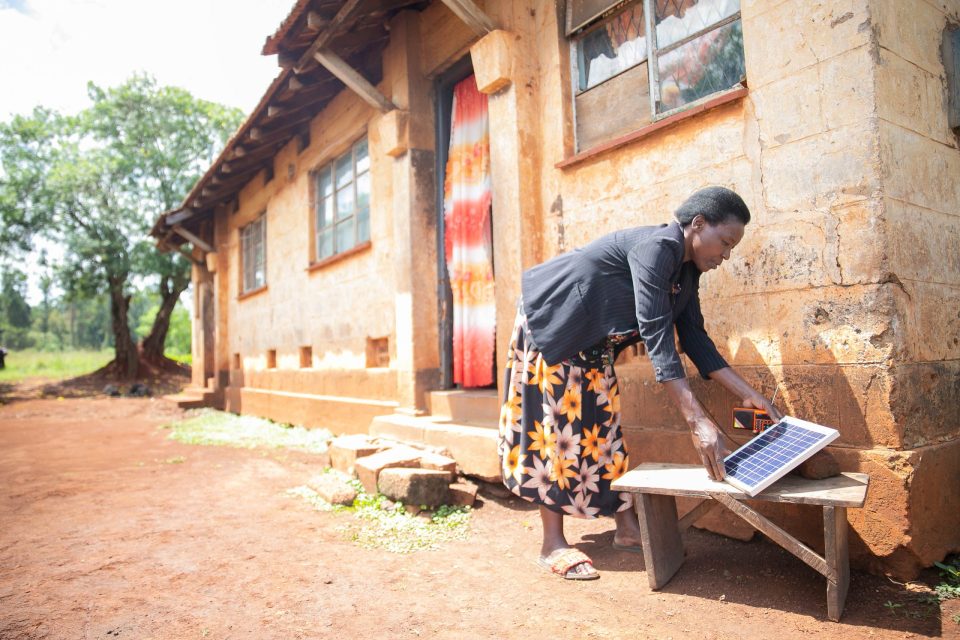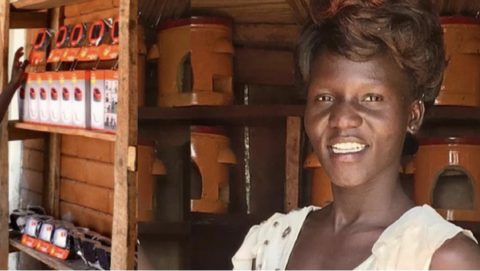
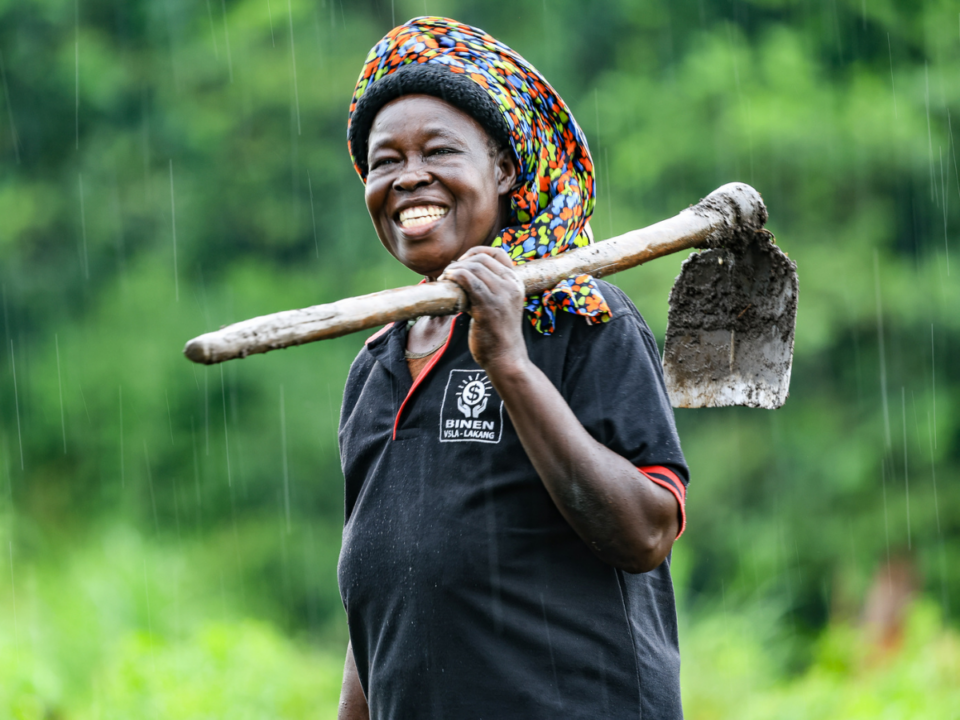
Mama Eveline Lakot, member of the Binen Farmers Group in Amuru District, Northern Uganda.
Farmers feed Uganda, but the balance is shifting fast. Crop production has grown only about 2% annually, while population growth has outpaced it at 3.3%, widening the gap in food security. At the same time, nearly 90% of farmers still depend on manual labor to work their land.
For farming communities in Northern Uganda, these national pressures are felt daily through failed harvests and unstable incomes. Prolonged dry spells repeatedly destroyed vegetable crops, disrupting household earnings and making it difficult for families to consistently pay school fees or meet basic needs.
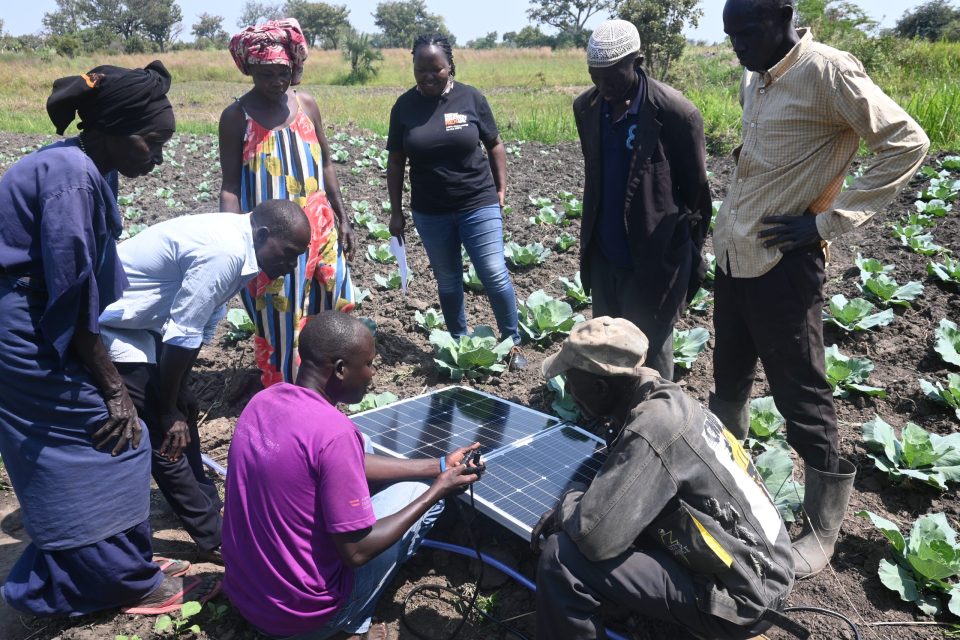
For Chairperson Apio Josephine and her 80-member Atek Ki Lwak Farmers Group, the constraint was not effort or land, but the sun and water, the very elements meant to sustain their crops.
“When we plant in February or March, by April, when our vegetables have grown properly, the sun comes and destroys them,” Josephine said. “In the time of harvest, we get only half of what we were supposed to get.”
Their fortunes began to shift when the group joined New Energy Nexus Uganda’s Productive Use of Renewable Energy (PURE) program.
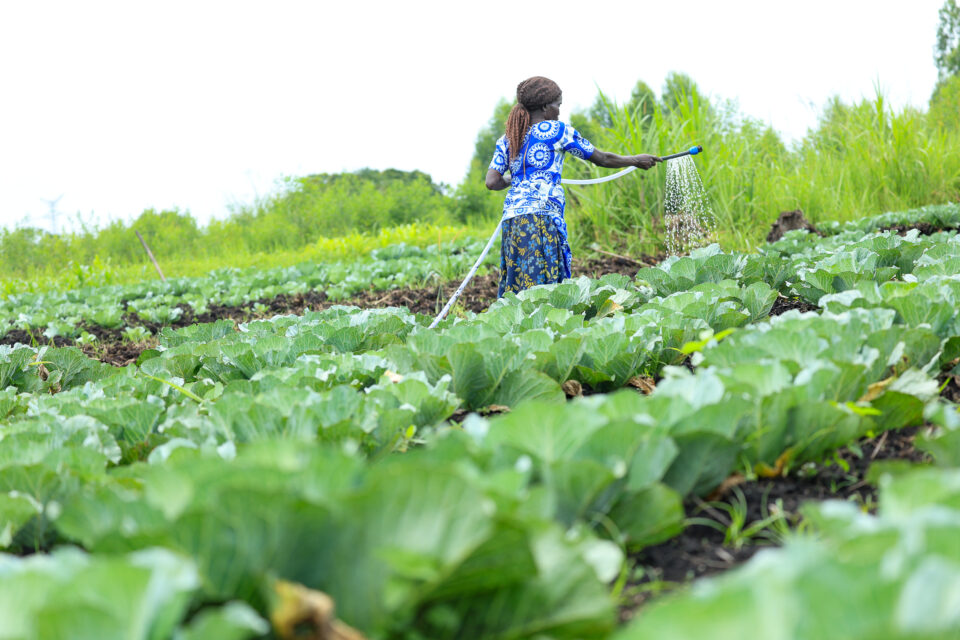
Apio Josephine, Atek Ki Lwak Farmers Group chairperson, waters her cabbage farm using solar-powered pumps.
Working with farmers to find solutions
The PURE program helps agricultural cooperatives access solar-powered irrigation equipment through affordable financing. Alongside the equipment, farmers receive training in agronomy, business management, and cooperative savings models.
“A farmer does not earn income monthly, and that is why a different repayment model must be created for them to facilitate fair repayments,” said Joy Musiimenta, Project Officer at New Energy Nexus Uganda, in an interview with The Independent Uganda.
“With our model, a farmer can have time to produce, sell, and then repay the loan in quarterly installments.”
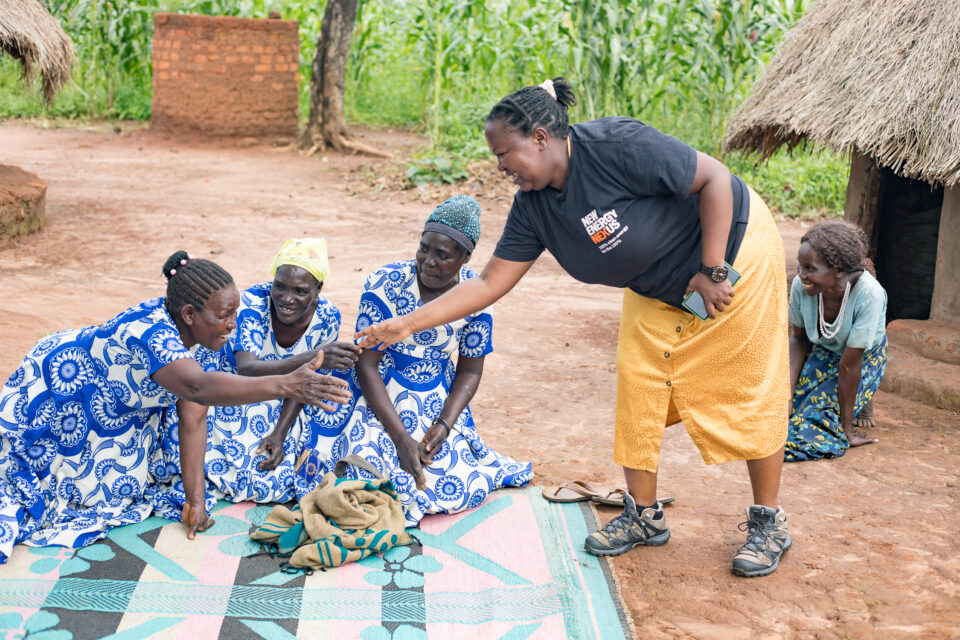
Joy Musiimenta, Project Officer at New Energy Nexus Uganda, greets members of the Atek Ki Lwak Farmers Group.
Together, this integrated approach helps farmers shift from reacting to the weather to planning production cycles, managing cash flow, and building resilience against climate variability.
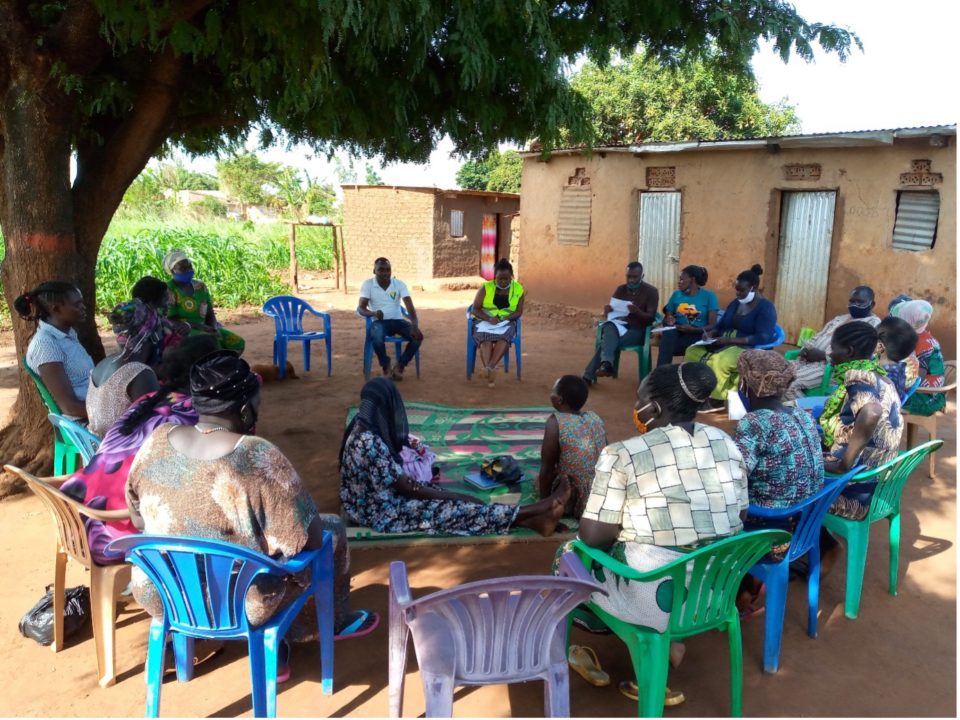
Most participating groups also operate under the Village Savings and Loan Association (VSLA) model, in which members pool savings, access internal credit, and reduce dependence on external lenders. This strengthens financial resilience at the community level.
Since joining the program last year, Josephine and the Atek Ki Lwak Farmers Group now cultivate three acres of vegetables and expect to earn over UGX 3 million (US$807). With stronger relationships among members and improved yields, they are preparing to expand to seven acres next season.
“Unlike those days when the sun used to disturb us, now when the sun comes, we have our solar water pump… and we irrigate sufficiently for our crops,” Josephine said of their new equipment.
The impact is not limited to one group. In Lakang Village in Amuru District, about 100 kilometers from Nwoya, the Binen Farmers Group is experiencing similar shifts in how they farm and what they can produce.
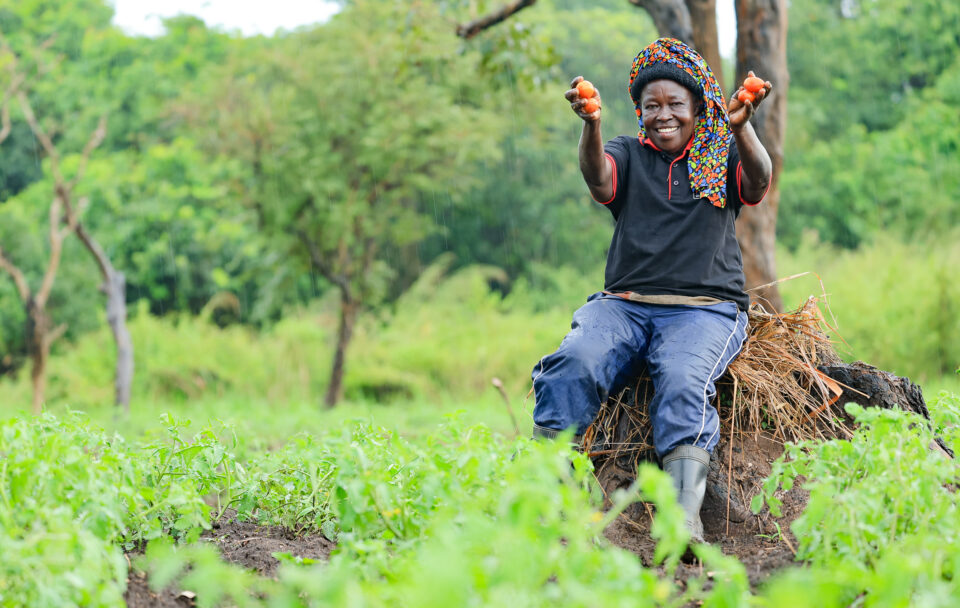
Mama Eveline Lakot, member of the Binen Farmers Group, holds tomatoes she grew in her farm with the help of solar-powered irrigation.
The results
The Binen Farmers Group faced the same challenge on a larger scale. With 102 members, farming was once limited to small plots because water had to be carried manually, and dry seasons routinely destroyed crops.
“We used to fetch water from wells and carry it on our heads… we could only plant in a very small place,” said Mama Eveline Lakot, Member, Binen Farmers Group
The PURE program’s combination of energy access and financial coordination has shifted how farmers operate. Members now save together, borrow from group funds, and reinvest in tools and inputs that expand production.
Some, like Nyeko Micheal, have expanded their planting capacity.
“I used to plant a quarter- or a half-acre. But when I received this solar water pump… I now plant one or 2 acres,” Micheal said.
Others, like Achaa Magarete Oum, have used group savings to acquire individual pumps and scale their own farms independently.
“Now my capacity to grow has increased… I have planted 3 acres of eggplant, cabbage, and tomatoes,” said Oum
What was once largely subsistence farming is increasingly becoming coordinated, income-generating production for Oum, Micheal, and the wider group.
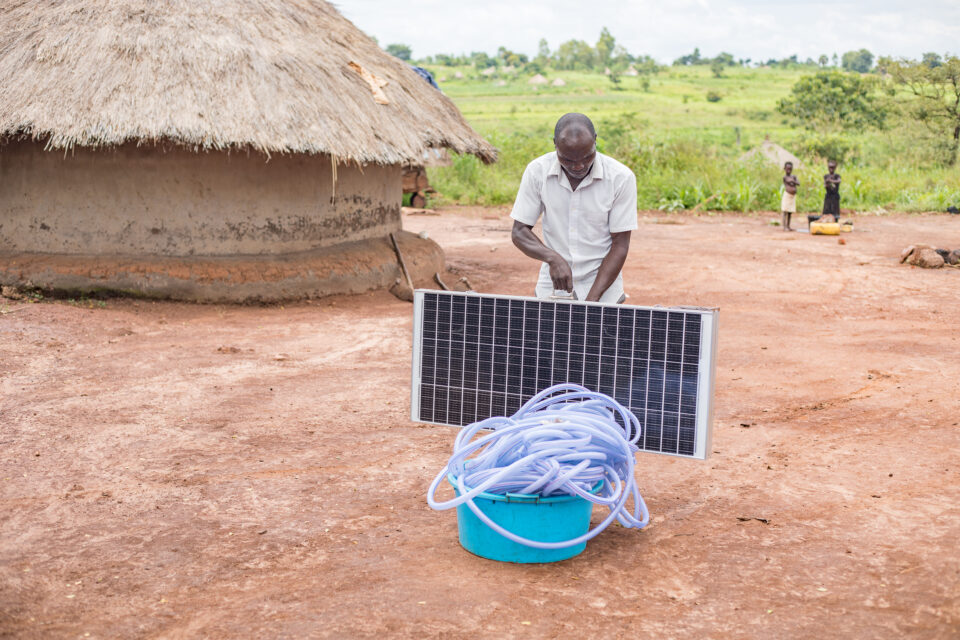
Nyeko Micheal, member of the Binen Farmer Groups, inspects a solar panel used to power their water pumps.
From survival to resilience
With year-round irrigation, farmers are no longer limited by seasons.
And when their production increases, their families experience immediate, positive changes. School fees are more consistently paid. Food security is improving. Families are investing in better housing and planning for the future, not merely worrying about the next harvest.
The PURE program shows what becomes possible when clean energy is designed for real economic use. By equipping farmer groups with solar irrigation systems, training, and financing pathways, New Energy Nexus Uganda is helping turn climate vulnerability into agricultural resilience.
Whether you’re in a farmers’ group looking for support in Uganda or an investor interested in backing this program, learn more about it here.