Story
Uganda
Energy Access
Women
How we’re increasing energy access & supporting women entrepreneurs in Uganda
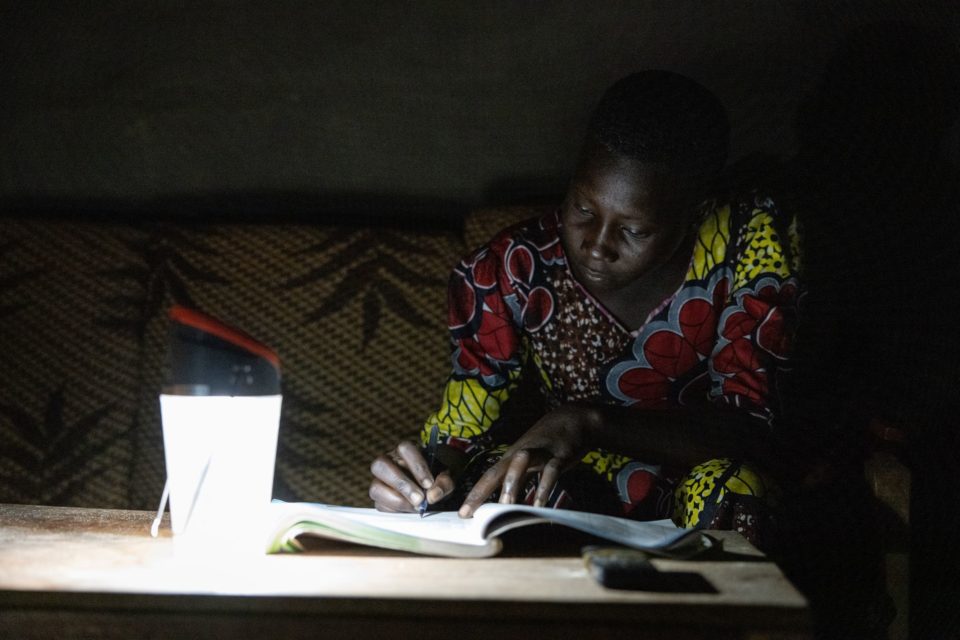
Woman in Uganda using a solar energy lamp

Woman in rural Uganda using a solar-powered lamp

International Women’s Day is a time to celebrate the achievements of women and to recognize the challenges that women continue to face around the world. In Uganda, where more than 80 percent of the population lives in rural areas, the lack of access to energy is a major impediment to women’s economic and social empowerment.

Energy poverty in Uganda disproportionately affects women, who often spend hours each day collecting firewood, cooking on open fires, and using kerosene lamps for lighting. This not only puts their health at risk due to exposure to smoke and other pollutants, but it also limits their ability to participate in education, earn a living, and engage in other productive activities.

However, there are efforts underway to improve access to energy in Uganda, particularly through the use of renewable energy sources such as solar power. Distributed solar energy is particularly well-suited to rural areas because it is easy to install, low-maintenance, and does not require a connection to the national power grid. In Uganda, New Energy Nexus supports last mile clean energy entrepreneurs to deliver low cost and high quality entry-level clean energy technologies.
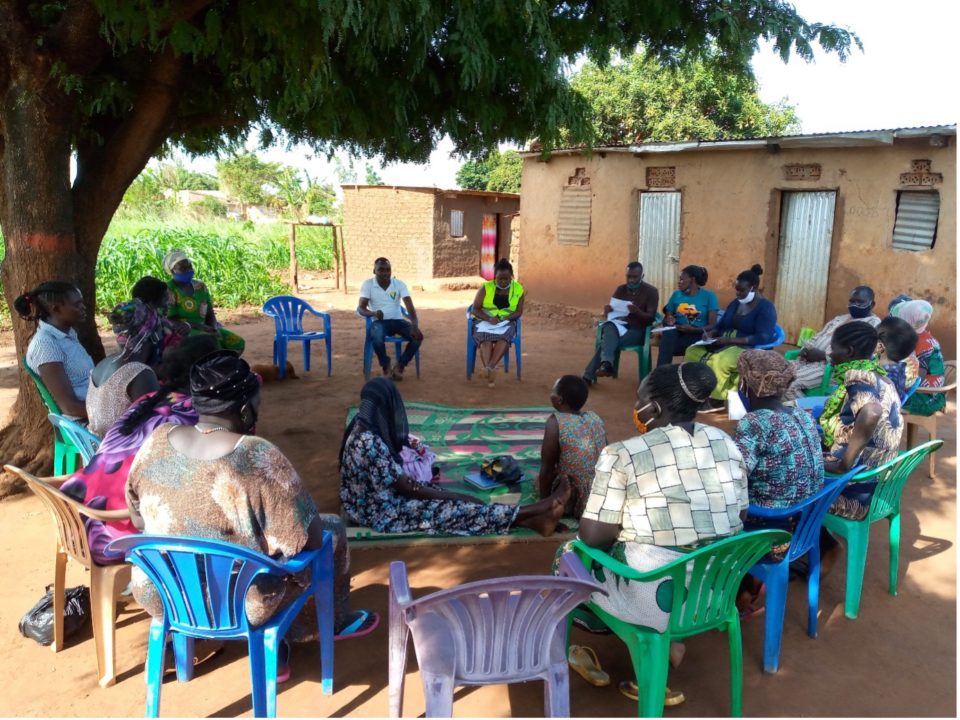
ENVENTURE helps women in northern Uganda to learn how to start a clean energy business.

ENVENTURE helps women in northern Uganda to learn how to start a clean energy business.

Supporting woman entrepreneurs in Uganda’s last mile communities.

The majority of entrepreneurs we support at New Energy Nexus Uganda are women and 70% of the jobs created by our entrepreneurs are taken by women. Ultimately, the majority of these women have testified that their quality of live has improved due to access and use of these high-quality energy products in their households,, and those involved in Village Savings and Loan Schemes (VSLS) have increased their financial savings due to lower energy costs.

New Energy Nexus also teaches women entrepreneurs recordkeeping skills as part of its curriculum. We created the ENVision platform, an open-source web-based application to track inventory, sales, and orders in 2G and Edge networks for low-literate sales agents and micro-entrepreneurs. This helps women entrepreneurs to manage their sales and performance more effectively, and allows us to receive real-time product updates to help monitor and measure success. This also ensures that entrepreneurs don’t lose time and information on their businesses through cloud-based storage.

We put justice, equity, diversity, and inclusion at the heart of our work.

Efforts to improve access to energy in Uganda are still in their early stages, but the progress that has been made is encouraging. As we celebrate International Women’s Day, let us recognize the important role that access to energy plays in women’s empowerment and support the organizations and initiatives that are working to improve energy access in Uganda and the Global South. By doing so, we can help to create a more just, equitable and inclusive world for women and girls everywhere which is possible if we work with diverse clean energy entrepreneurs with a focus on women.


Explore More
Story
Uganda
Energy Access
Uganda’s rural entrepreneurs are a model for clean energy access in Africa

It’s a little known fact outside of this part of the world, that Uganda is a hotspot for entrepreneurs. My home of Uganda is brimming with an enterprising community ranked as one of the most entrepreneurial in the world. So as someone working in the climate space for 7 years, I didnt just see the climate talks in Glasgow as an opportunity to tackle climate change, but also as an opportunity for entrepreneurs to help Uganda leapfrog dirty fossil fuels and serve communities across the country with clean energy. 

This is particularly urgent for remote and marginalised communities that risk being left behind in the global clean energy transition. In Uganda, only 19% of the country’s rural communities have access to electricity, and less than 2% have access to modern cooking facilities. But rather than rely on highly centralised dirty fossil fuels, there’s an opportunity to transition directly to clean energy.

The nonprofit I work for, New Energy Nexus, helps create new markets for clean energy products in these remote areas – a model that won the Ashden Award for clean energy access at COP26.  There are several lessons we’ve learned in the last 5 years that can help scale the clean energy transition.

Firstly, access to funding in rural entrepreneurs is crucial to unlocking innovation.

Uganda’s startup scene is booming, but all too often, the benefits of clean energy don’t make it beyond the nation’s major cities or towns and the reason is often lack of access to stable funding.

For instance, if you look at the local economies in rural communities, most villages are dependent on agriculture and are exposed to its climate change-induced seasonal challenges. So if you run a shop and sell products there, you will have on average about six months of very good income and six months of very low income. And yet there are fixed costs over the whole period: you have to pay the rent and your employees. This is how easier access to funding can help an entrepreneur such as a farmer who may need to access a solar water pump for production during dry spells and rent it out to another farmer for a fee.

However, funding for such initiatives is not easily available for rural farmers or individuals because of the conditions that come with acquiring the fund with the most common one being high interest rates and collateral. 

Secondly, increasing uptake of clean energy products depends on a bottom-up approach.

In rural Uganda, community-based organisations (CBOs) provide many essential services – supporting better health, education, sanitation and work for local people. We learned very quickly that these organisations have the networks, trust, and community reputation to bring new technologies, such as solar lights, water filters, briquettes and clean energy cookstoves, to rural villages.  

Their vital social role can be leveraged to increase uptake of renewable energy through retail and advocacy. It is these CBOs that understand the buying patterns of their customers by providing credit payment facilities like installments payment, which are most favorable for customers. It is not just CBOs that can drive this change forward. 

Uganda, like much of Subsaharan Africa, is home to tens of thousands of village-level nonprofit groups like Farming Groups and SACCOs that are typically self organised and self managed to address gaps in service delivery. Working with such networks is one way an ecosystem can be built and grown from the ground up.

Finally, skills training is as important as technology and hardware.

Providing loans and hardware is only one part of the solution. Developing skills to run a business and maintain the products are an essential – though far less glamorous aspect – of the clean energy transition.

For example, we provided RFCare in the Rwenzori Highlands a US$2,000 loan to support the sale of cookstoves that create less air pollution than traditional models, as well as fuel briquettes and water filters. The loan also helped train young people in cookstove manufacture and repair and so far, the CBO has sold 1,800 stoves.

Entities like RFCare are staffed by passionate young people who are now exposed, more than ever, to the increasing innovation we see around today. If they are equipped with the technical or business expertise of running a clean energy enterprise, they are able to serve growing populations with solutions that fulfill our energy demands. 

Tackling climate change in Uganda provides essential lessons on how the continent can scale climate action, while also increasing access to clean energy products. Entrepreneurs are weighting in the wings – they just need the funding and the skills.  Local governments and funders must throw their weight behind supporting and scaling small and medium-sized clean energy businesses before it’s too late.

Marvin Tumusiime is the New Energy Nexus Uganda, Abundance Team Manager. This article was first published in Business Daily Africa as an op-ed.

Explore More