Energy Access
Energy for Agriculture
How New Energy Nexus is supporting food systems entrepreneurs

What does New York City and rural Uganda have in common? Not a whole lot, except that the food system in both locations are an enormous emitter of greenhouse gas emissions – in fact the global food system contributes 30% of emissions.

Enhancing the resilience of food systems is not just a mitigation concern, but an adaptation concern, as climate-resilient infrastructure is critical for human survival with  climate and economic shocks likely to cause more food inflation and hunger globally. That’s why it is essential for the clean energy sector and food sector to come together urgently to solve for food security.

Accelerating Productive Use Energy technologies in Uganda…
5

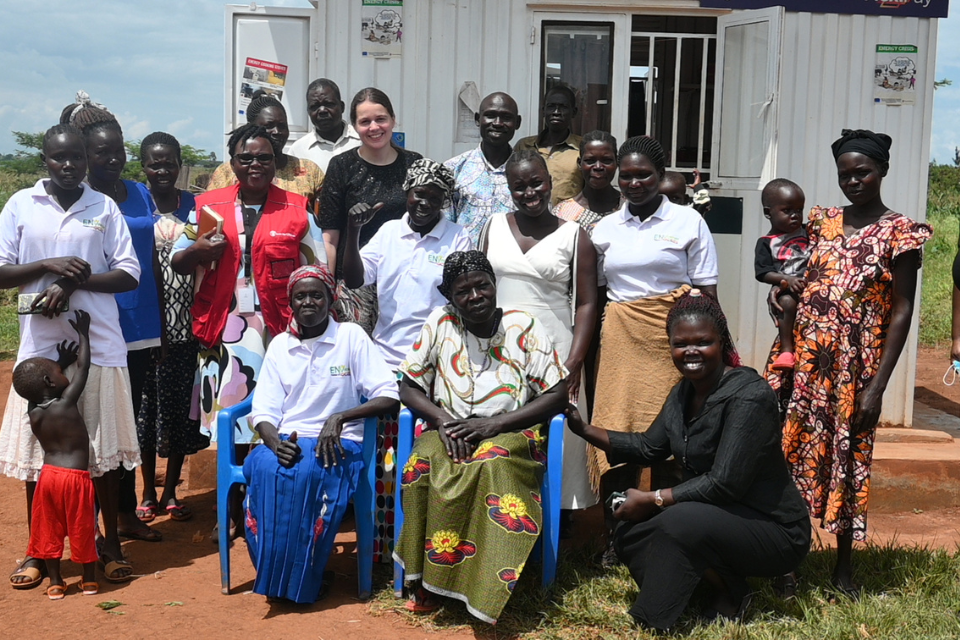
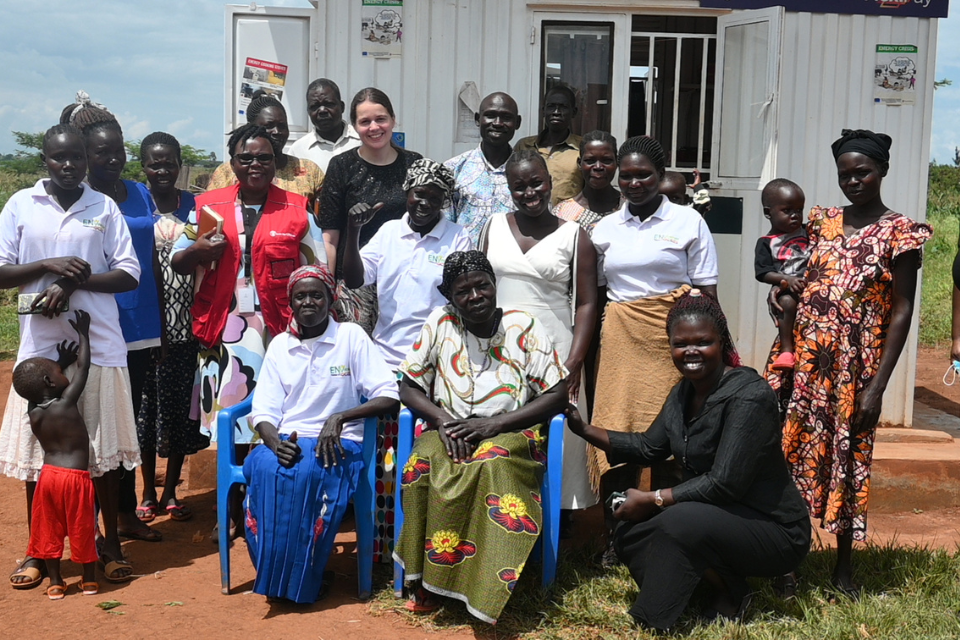
Oribcing Energy Cooperative Association (OCECA). A cooperative in Uganda led by 22 refugees that provides clean energy to their communities.

New Energy Nexus is seeking to address and promote Productive Use Technologies (PUEs) in our Uganda and Indonesia chapters. Although Uganda has access to enormous renewable energy resources, including solar and hydro, biomass, and wind energy, only about 40% of Uganda’s population has access to energy. In rural areas, this is less than 38%, yet over 70% of the population resides there. The agriculture sector employs 80% of the Ugandan population, 70% of whom are women and youth. However, due to limited capital in the country for clean energy technologies, energy for agriculture solutions tend to be underutilized. There is a huge opportunity for agricultural and farmer cooperatives to replace diesel-generated electricity with renewable energy to add value to their produce, increase productivity, reduce the cost of cooling, extend the shelf life of produce, and mechanize operations.

… and in Indonesia.

Indonesia, on the other hand, is mostly electrified with the electrification rate reaching more than 98% in 2018. However, access to productive use of clean energy remains low. Horticultures require direct and indirect energy inputs in the typical agriculture value chains in the production, post-harvest processing, storing and cooling that are generally energy intensive. While reducing energy consumption at these value chains is essential, other viable options in providing PUEs can help farmers in increasing their livelihood and have additional income by adding values to their agriculture products. This can be done, for example, by utilizing the energy to perform controlled drying of fruits and vegetables, off-season production through controlled irrigation, and optimizing crops by providing additional lighting.

Driving food systems change in New York City

Our New York Chapter, The Clean Fight, is currently accepting applications for its fourth cohort to decarbonise the food services industry.

Why the food services industry? Besides contributing to more than 30% of the city’s greenhouse gas emissions, food is the leading source of household consumption-based emissions. An average grocery store emits the equivalent emissions of 635 cars a year. The good news is the city has taken notice and in addition to legislative action, PlanNYC aims to reduce the emissions of city agency food purchases by 33% by 2030.

The Clean Fight, upon consultations with the community including NYSERDA, corporates, financiers, growth start-ups, and industry experts advised on this theme, supported by New York City’s LL97 to force groceries and supermarkets to drastically reduce their energy usage or face fines. Adoption, however, requires a mindset and cultural shift in a traditional and change-resistant industry.

Margins are razor thin in this sector, thus decarbonization goals can face intense push-back if the community is not brought into the solutions as a partner, not just a beneficiary. 60% of food workers are women and ethnic minorities; increasing diversity, equity, and inclusion in entrepreneurship programming is critical in addressing decarbonization goals.
untitled design (73)

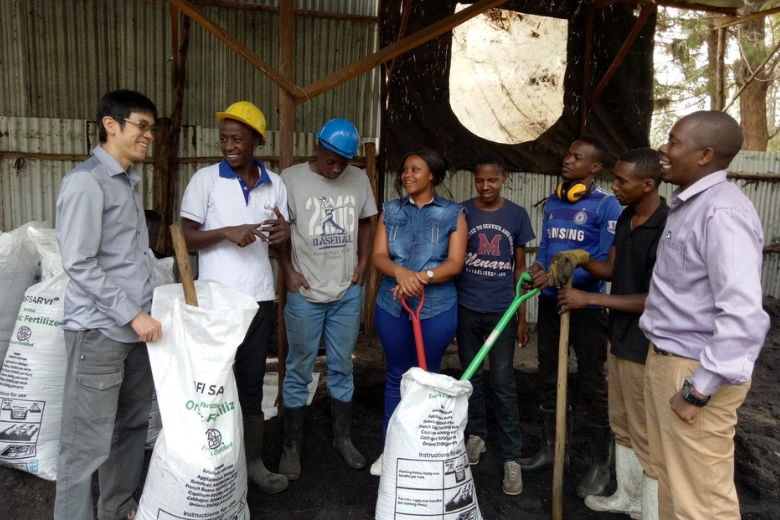
Takachar, a Boston based startup turns crop and forest residues in rural communities into carbon-negative bio-products.

Empowering women agribusiness entrepreneurs in Vietnam’s Mekong Delta

New Energy Nexus Vietnam has also launched the Women’s Agribusiness Climate Adaptation Accelerator in collaboration with the Australian Department of Foreign Affairs and Trade (DFAT). Through tailored mentorship, training, access to finance, small grants, and networking support, the accelerator aims to empower women-led small and medium enterprises to navigate climate change challenges, build resilience, and contribute to the economic and social well-being of the region.

How can Entrepreneur Support Organizations (ESOs) drive a just transition in agriculture and food systems?

ESO’s such as New Energy Nexus are the connectors, funders, and accelerators for startups and small businesses around the world. They play a powerful role in convening and strategically identifying where support is needed. Here are five ways we believe ESOs can play a role in the food systems sector.

1. Financing

– ESOs can offer tailored financing solutions designed to empower smallholder farmers and agricultural cooperatives, such as affordable loans, pay-as-you-go, rent-to-own, fee-for-service models to avoid the very high capital expenditure of purchasing PUEs, such as a $700 solar irrigation pump.

– Encourage collective buying and selling of agricultural products and offer mechanization through PUEs.

– Create revolving funds where repayments from one cooperative are reinvested to finance clean energy projects in other cooperatives.

2. Community engagement

– Engage a wide range of stakeholders at the community level by providing training sessions for cooperatives and farmers, address biases in food practices, encourage collective and inclusive problem-solving, enhance financial management skills, as well as foster connections and network support.

– Create early adopters that demonstrate and locally champion technologies in their communities.

– Develop crisis response and recovery strategies together through entrepreneur networks that can quickly and readily respond to potential disasters.

3. Work with the government

– Work with the government to establish benchmarks and standards to measure and compare energy efficiency technologies for the agriculture and food sector and set industry targets.

– Support tax incentives and/or subsidies to support the food industry to adopt clean energy and sustainable practices as well as funding to support entrepreneur support programming.

– Support more comprehensive research on energy efficiency to enable more transparency and data-driven decision-making.

4. Gender equity

– Design programming that supports women’s entrepreneurship in creating technologies to address the food systems

– Enable funding support for women-led businesses

5. Address circularity in food systems

– Create programming to support anaerobic digestion companies, which utilize processes to break down organic by-waste and food waste. One of our NEX portfolio companies, Takachar, transforms waste biomass into marketable bio-products for rural communities in India.

– Create programming to support recycling nutrient-rich by-products into animal feed, compost, or fertilizers, reducing waste and enhancing soil health.

– Create programming to upcycle food by-products to explore innovative upcycling methods to convert by-products into new food products, such as turning fruit peels into snacks.

– Encourage companies to seek sustainable packaging solutions, such as recycled and recyclable materials.

– Encourage collaboration across the supply chain such as producers, processors, distributors, and retailers, to create a closed-loop system where waste and by-products are managed collectively.

Written by Aneri Pradhan, COO of New Energy Nexus with contributions from Julius Mujuni, New Energy Nexus Uganda Program Director, Diyanto Imam, New Energy Nexus Indonesia Program Director, and Nick Ng, Program Manager at The Clean Fight
Explore More
Story
Uganda
Energy Access
Meet the entrepreneurs behind rural Uganda’s transition to clean energy

New Energy Nexus has been supporting clean energy startups longer than any other accelerator in Uganda. What we find most exciting is the unique way in which we operate here, empowering entrepreneurs in off-the-grid communities.

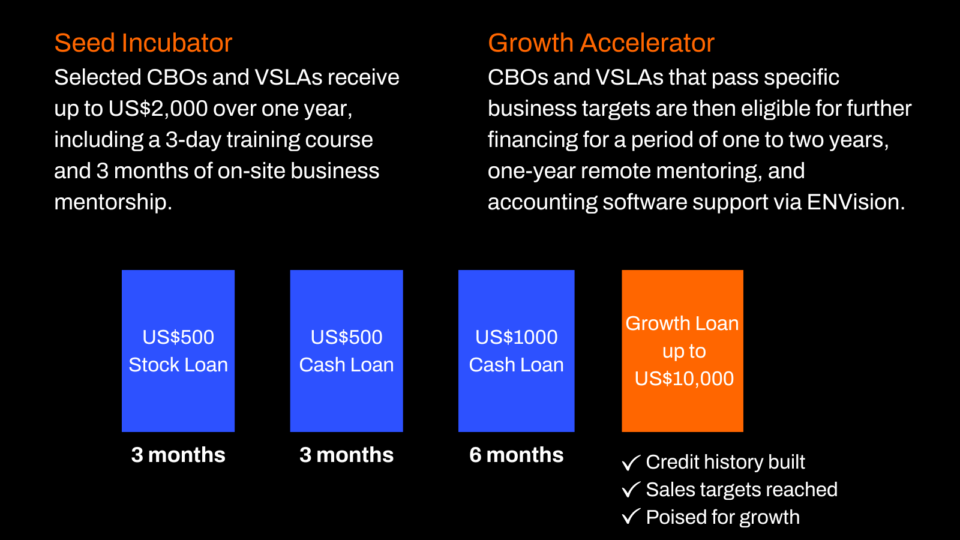
New Energy Nexus Uganda’s model leverages the untapped potential of local Community Based Organizations (CBOs) and Village Savings and Loans Associations (VSLAs) to incubate clean energy entrepreneurs and distribute clean energy technologies to last mile communities.

Furthermore, our program supports local entrepreneurs through financing, and capacity building such as bootcamps, mentoring and coaching, as well as cloud bookkeeping technology via our own ENVision software.

Only 32.8% (as of 2020) of the rural population in Uganda have access to electricity, and very few  have access to clean cooking facilities. There’s an opportunity for Uganda to leapfrog fossil fuels and transition directly to clean energy and cleantech products.

nex uganda model


The CBOs provide many essential services – supporting better health, education, sanitation and work for local people. We learned very quickly that these organizations have the networks, trust, and community reputation to bring new technologies, such as solar lighting, water filters, briquettes and clean energy cookstoves to rural villages. That was the basis for our program in Uganda, ENVenture – a social enterprise that empowers rural distributors to start sustainable clean energy businesses – that started in 2016. ENVEnture became part of New Energy Nexus in 2020.

ENVenture is also an award winning program having won the Ashden Award for Energy Access Innovation’ at COP26 in 2021.

Read on to learn about some of the inspiring people we support in northern Uganda’s last mile and refugee communities.

Lubanga Ngeyo group members after successfully sharing their achievements and the project's impact on the community.

1. Gabriel runs a retail store selling clean energy products

Tampia Nyim Energy Cooperative (TECA) is an energy enterprise in the Kiryandongo refugee settlement in Uganda. With the support from the ENVenture program they were able to set up a clean energy kiosk selling a host of clean energy products to both refugees as well as others in their host communities. With the kiosk running successfully, Gabriel, one of the members of TECA, used part of the savings to build a permanent physical retail store beside the kiosk. Opening this store has not only given more refugees access to clean energy sources (often being their only source of energy), but the sales generated from the store also helps Gabierl provide for his family.

2. Harriet manages a clean energy kiosk to support her family

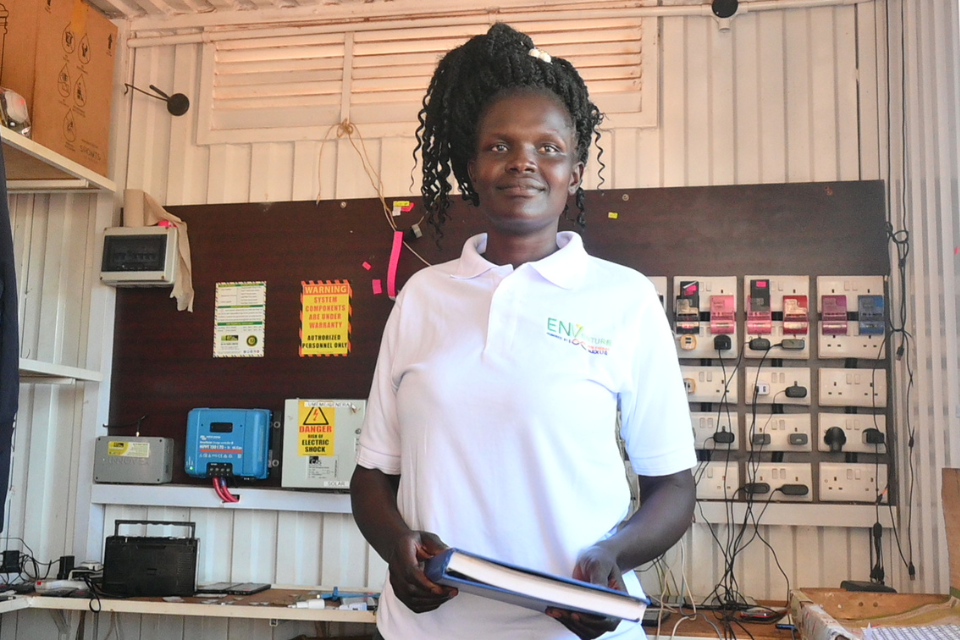
Harriet, another member of TECA who has been employed as the kiosk secretary, and is trusted with managing the day-to-day operations. Working here has turned her life around. Through the ENVenture program she was able to receive continued mentoring and coaching that has helped her upskill, and track sales and inventory. This job has given her the financial independence to provide for her family. Other than having the perks of being able to charge her phone at the kiosk for free, with her salary she has been able to purchase a solar kit to improve the quality of life at home and provide security for her family in the settlement.

“I now have the knowledge I did not have before. Now I own a solar kit that helps my children read at night, and we use it while eating food at night…’’ – Harriet, TECA member

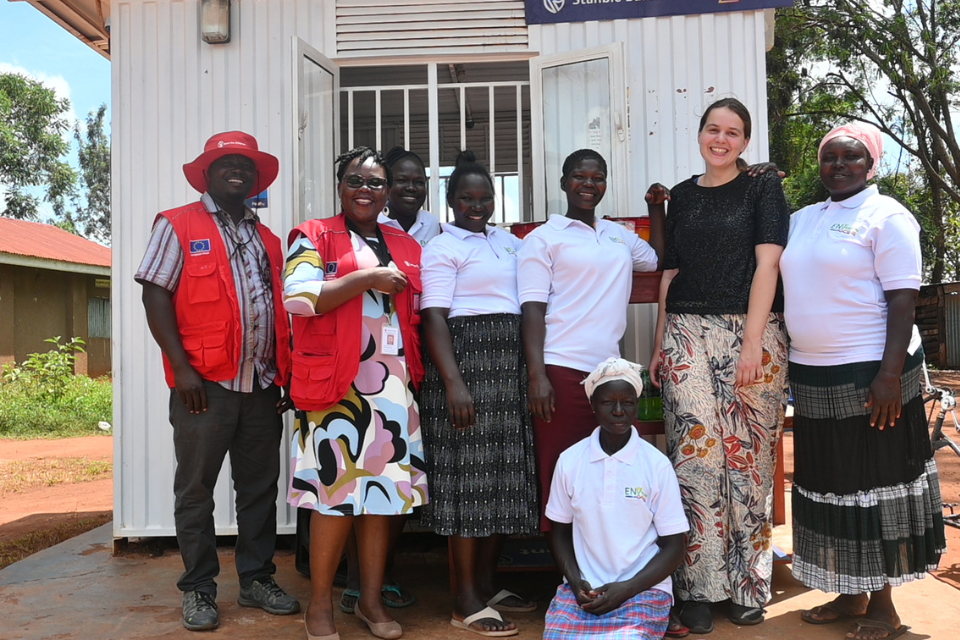
A group photo with Oribcing members after completing a project verification exercise with the donor.

3. A clean energy cooperative led by 22 refugees 

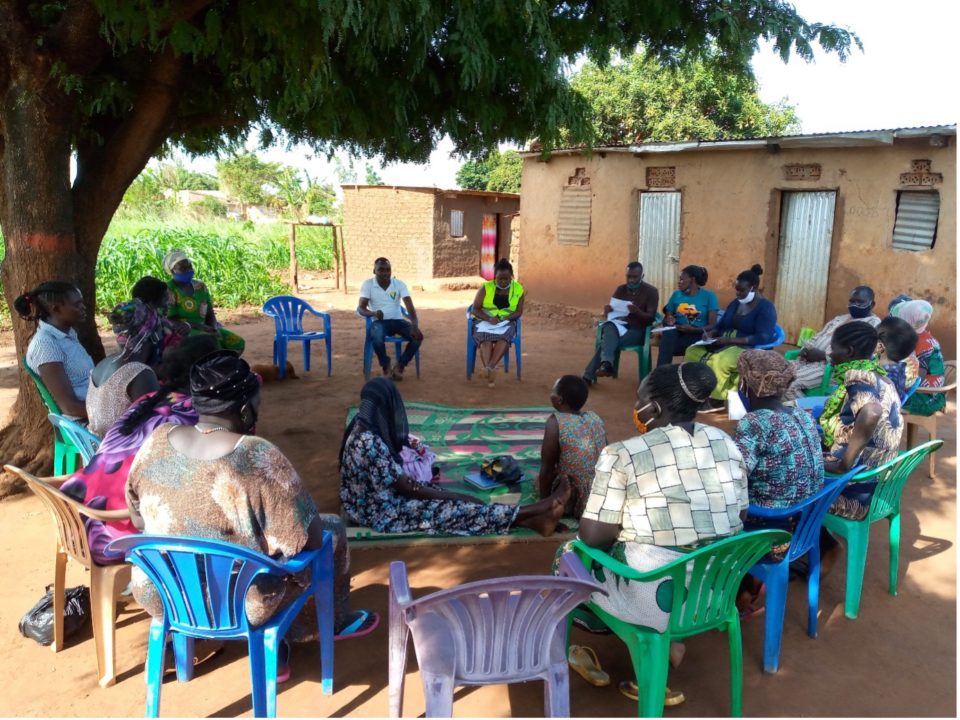
A group of 22 refugees from the Kiryandongo Refugee Settlement, Cluster D, Ranch 37, in northern Uganda came together to form the Oribcing Energy Cooperative Association (OCECA). This refugee-led cooperative provides clean energy to their communities. Their products include solar lanterns, water purifiers, briquettes and cook stoves, and they offer phone charging services and sell cold beverages. . This is particularly important for those living in refugee settlements where access to electricity is limited. With the profits generated from selling these energy products and services, OCECA has invested in offering financial services to the community. Having been officially registered and acquiring an agent banking system, a point of sale (POS) device, OCECA is now empowered to offer banking services via a cost-effective route to serve its unbanked enterprising customers within their community, including offering access to loans.

4. Abau Joyce manages a clean energy kiosk and a vegetable business  

An all-women team of 20 refugees set up the Lubanga Ngeyo Energy Cooperative (LNECA). Apart from managing and operating an energy kiosk that sells clean energy products like solar lanterns, briquettes and improved cookstoves, LNECA also offers financial agent banking services, phone and laptop charging services, and refrigeration services.

“Our kiosk is more than just an energy shop” – Joyce Achirokop, Chairperson, LNECA

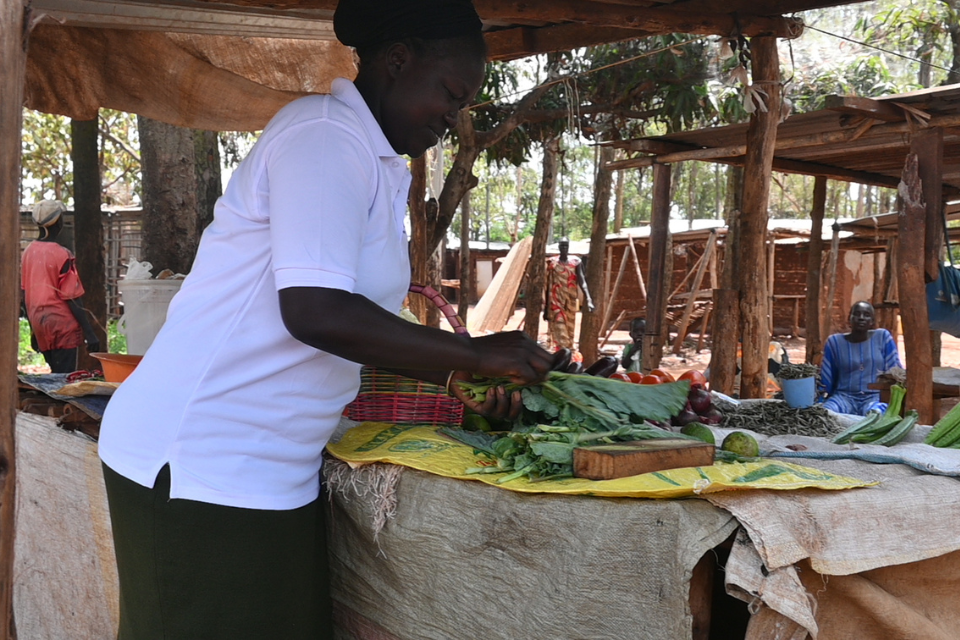
Meet Abau Joyce, a mother of six who took a non-interest loan of UGX150,000 (US$40) from LNECA’s energy kiosk savings to set up a vegetable selling stall in the market near the kiosk. She also manages the energy kiosk, ensuring its daily operations run smoothly. Abau’s husband is unemployed, and without the kiosk, feeding her family would entirely depend on handouts. Thanks to the energy kiosk, Abau has a daily income, and her family can buy the food they need. The capital she required to set up and successfully run a vegetable business came from the savings and profits generated by the kiosk, offering her a level of financial independence.

Another ENVenture program is the ‘Energy for Productive Use’ (PUE) project, which offers financing to entrepreneurs to purchase solar powered appliances that enable them to grow their businesses.

13

5. Nangobi Sophia

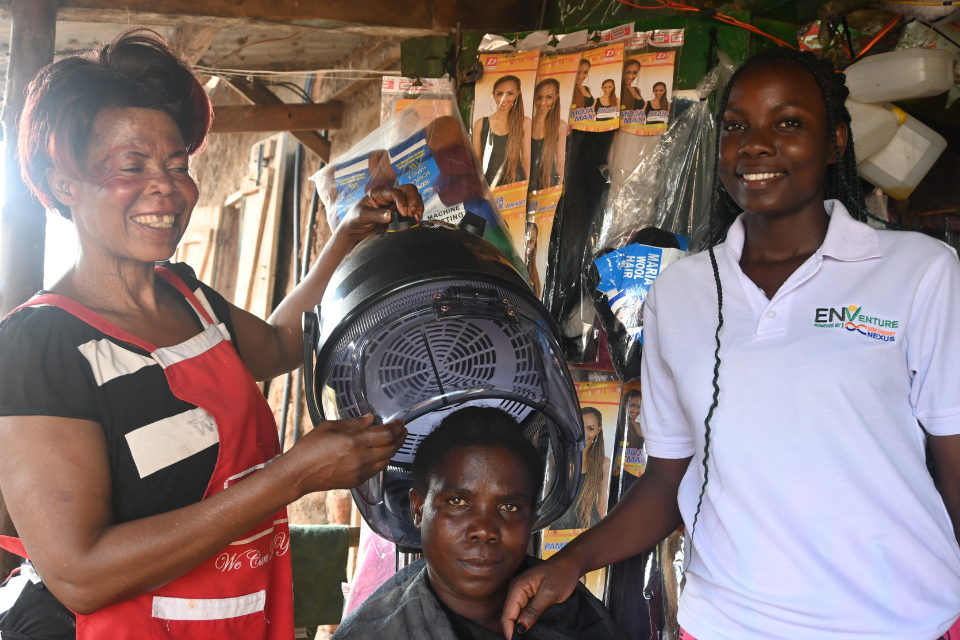
Nangobi Sophia, a 38-year-old entrepreneur from Singila, had a dream of expanding her hair salon business. She knew that in order to achieve her goal, she needed to invest in new equipment. With the help of the ‘Energy for Productive Use’ (PUE) project, another initiative by our ENVenture program, that offers Appliance Financing Loans, Sophia was able to buy hair dryer equipment on loan, which she now uses to offer her customers a wider range of higher quality services

“I am grateful for the Appliance Financing Program because it has helped me to grow my business. Now I can offer my customers the best services using modern equipment, which has attracted more customers to my salon.” – Nangobi Sophia, Hair Salon Owner

6. Wanda Alex

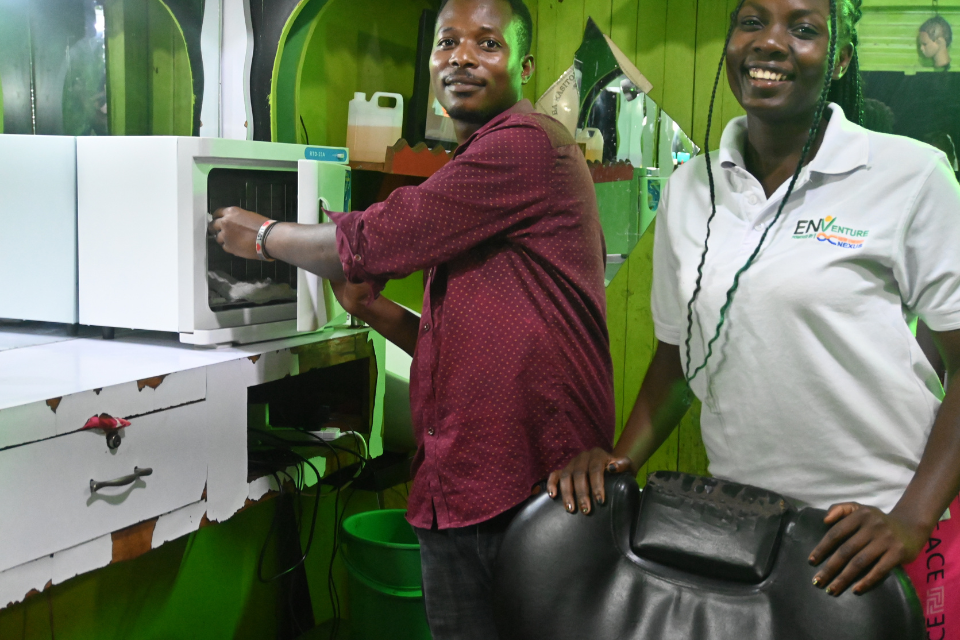
Wanda Alex, is a young entrepreneur from Golofa. He recently acquired towel warmers and hair clippers through our PUE Appliance Financing Program, which has allowed him to expand the services he offers at his salon. Now, his customers can enjoy a variety of grooming services all in one place. With increased sales, Wanda is confident that he can continue to grow his business and attract even more customers to his salon.

14

11

7. Namudiba Aisha

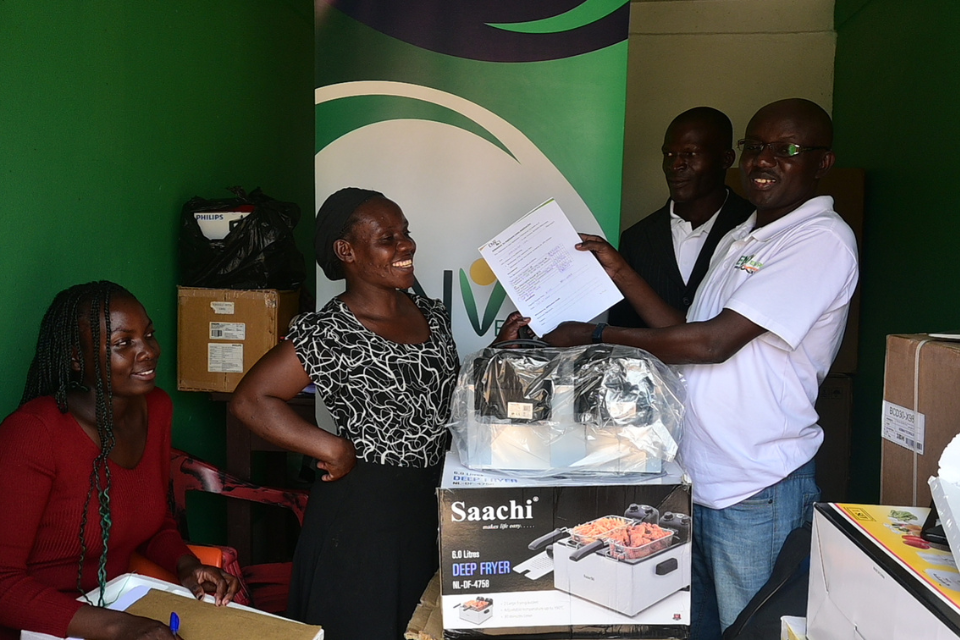
Namudiba Aisha, a 34-year-old entrepreneur from Singila, had big dreams of starting her own fast food business selling fried chicken and chips. With the help of our PUE Appliance Financing Program, she was able to purchase a deep fryer to kickstart her venture. Now, Aisha can provide for her family while also sharing her love for food with her community.

8. Kaamu Obbo

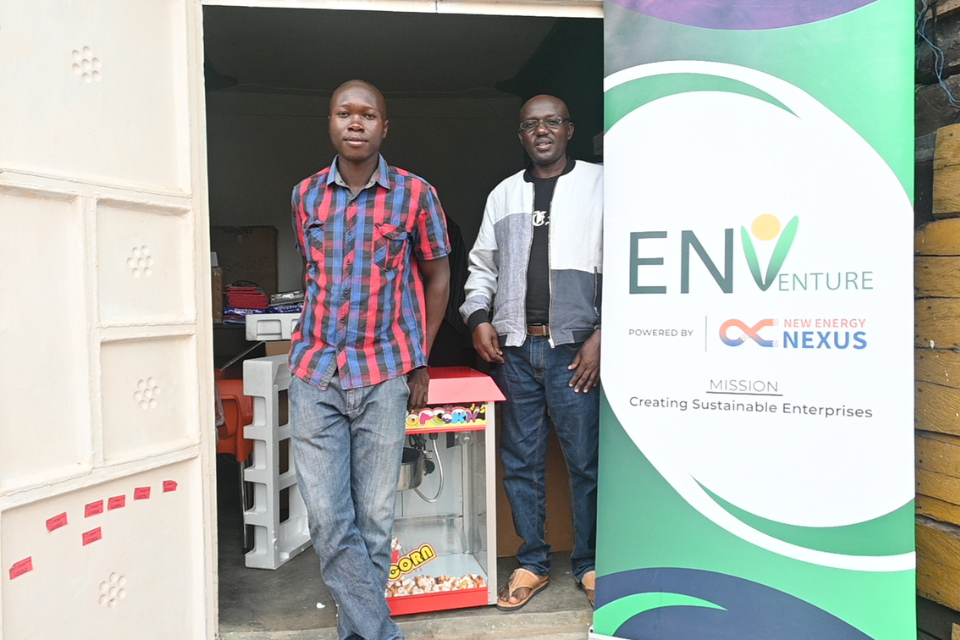
Kaamu Obbo, a 24-year-old entrepreneur from Golofa has set up a new business selling popcorn. With the help of ENVenture’s PUE project initiative, Kaamu was able to acquire a popcorn machine on loan and start his business. He now sells fresh popcorn everyday to all the happy customers in his community, while also creating a steady source of income for himself.

12

New Energy Nexus is incredibly proud to support these entrepreneurs. With affordable loan terms and support from our expert team on the ground, they have been able to grow their businesses, increase their income and help Uganda transition to clean energy.

Find out more about our programs in Uganda here.

Explore More
Story
Uganda
Energy Access
Women
How we’re increasing energy access & supporting women entrepreneurs in Uganda
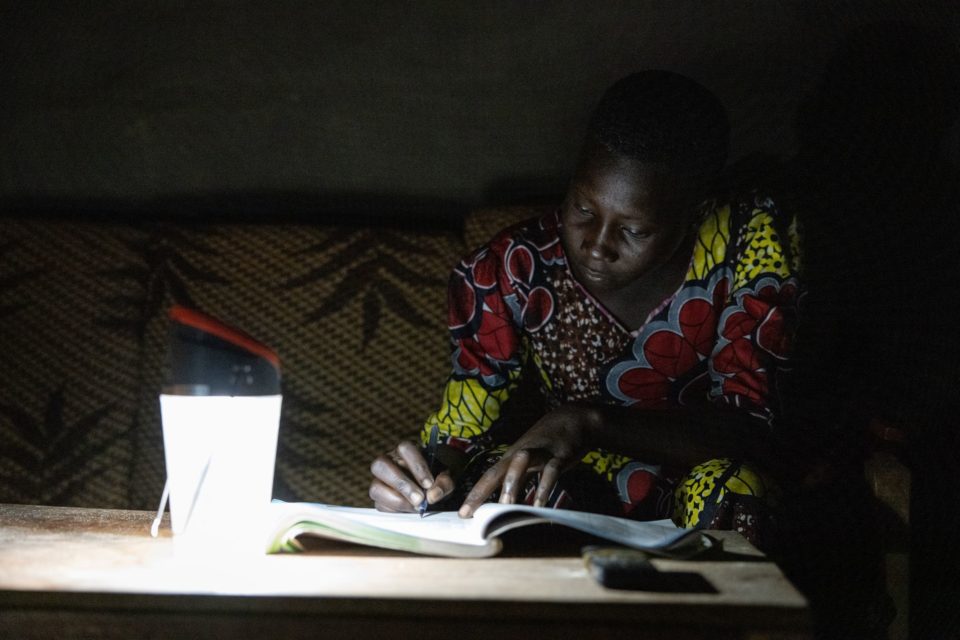
Woman in Uganda using a solar energy lamp

Woman in rural Uganda using a solar-powered lamp

International Women’s Day is a time to celebrate the achievements of women and to recognize the challenges that women continue to face around the world. In Uganda, where more than 80 percent of the population lives in rural areas, the lack of access to energy is a major impediment to women’s economic and social empowerment.

Energy poverty in Uganda disproportionately affects women, who often spend hours each day collecting firewood, cooking on open fires, and using kerosene lamps for lighting. This not only puts their health at risk due to exposure to smoke and other pollutants, but it also limits their ability to participate in education, earn a living, and engage in other productive activities.

However, there are efforts underway to improve access to energy in Uganda, particularly through the use of renewable energy sources such as solar power. Distributed solar energy is particularly well-suited to rural areas because it is easy to install, low-maintenance, and does not require a connection to the national power grid. In Uganda, New Energy Nexus supports last mile clean energy entrepreneurs to deliver low cost and high quality entry-level clean energy technologies.

ENVENTURE helps women in northern Uganda to learn how to start a clean energy business.

ENVENTURE helps women in northern Uganda to learn how to start a clean energy business.

Supporting woman entrepreneurs in Uganda’s last mile communities.

The majority of entrepreneurs we support at New Energy Nexus Uganda are women and 70% of the jobs created by our entrepreneurs are taken by women. Ultimately, the majority of these women have testified that their quality of live has improved due to access and use of these high-quality energy products in their households,, and those involved in Village Savings and Loan Schemes (VSLS) have increased their financial savings due to lower energy costs.

New Energy Nexus also teaches women entrepreneurs recordkeeping skills as part of its curriculum. We created the ENVision platform, an open-source web-based application to track inventory, sales, and orders in 2G and Edge networks for low-literate sales agents and micro-entrepreneurs. This helps women entrepreneurs to manage their sales and performance more effectively, and allows us to receive real-time product updates to help monitor and measure success. This also ensures that entrepreneurs don’t lose time and information on their businesses through cloud-based storage.

We put justice, equity, diversity, and inclusion at the heart of our work.

Efforts to improve access to energy in Uganda are still in their early stages, but the progress that has been made is encouraging. As we celebrate International Women’s Day, let us recognize the important role that access to energy plays in women’s empowerment and support the organizations and initiatives that are working to improve energy access in Uganda and the Global South. By doing so, we can help to create a more just, equitable and inclusive world for women and girls everywhere which is possible if we work with diverse clean energy entrepreneurs with a focus on women.


Explore More
Story
Uganda
Energy Access
Uganda’s rural entrepreneurs are a model for clean energy access in Africa

It’s a little known fact outside of this part of the world, that Uganda is a hotspot for entrepreneurs. My home of Uganda is brimming with an enterprising community ranked as one of the most entrepreneurial in the world. So as someone working in the climate space for 7 years, I didnt just see the climate talks in Glasgow as an opportunity to tackle climate change, but also as an opportunity for entrepreneurs to help Uganda leapfrog dirty fossil fuels and serve communities across the country with clean energy. 

This is particularly urgent for remote and marginalised communities that risk being left behind in the global clean energy transition. In Uganda, only 19% of the country’s rural communities have access to electricity, and less than 2% have access to modern cooking facilities. But rather than rely on highly centralised dirty fossil fuels, there’s an opportunity to transition directly to clean energy.

The nonprofit I work for, New Energy Nexus, helps create new markets for clean energy products in these remote areas – a model that won the Ashden Award for clean energy access at COP26.  There are several lessons we’ve learned in the last 5 years that can help scale the clean energy transition.

Firstly, access to funding in rural entrepreneurs is crucial to unlocking innovation.

Uganda’s startup scene is booming, but all too often, the benefits of clean energy don’t make it beyond the nation’s major cities or towns and the reason is often lack of access to stable funding.

For instance, if you look at the local economies in rural communities, most villages are dependent on agriculture and are exposed to its climate change-induced seasonal challenges. So if you run a shop and sell products there, you will have on average about six months of very good income and six months of very low income. And yet there are fixed costs over the whole period: you have to pay the rent and your employees. This is how easier access to funding can help an entrepreneur such as a farmer who may need to access a solar water pump for production during dry spells and rent it out to another farmer for a fee.

However, funding for such initiatives is not easily available for rural farmers or individuals because of the conditions that come with acquiring the fund with the most common one being high interest rates and collateral. 

Secondly, increasing uptake of clean energy products depends on a bottom-up approach.

In rural Uganda, community-based organisations (CBOs) provide many essential services – supporting better health, education, sanitation and work for local people. We learned very quickly that these organisations have the networks, trust, and community reputation to bring new technologies, such as solar lights, water filters, briquettes and clean energy cookstoves, to rural villages.  

Their vital social role can be leveraged to increase uptake of renewable energy through retail and advocacy. It is these CBOs that understand the buying patterns of their customers by providing credit payment facilities like installments payment, which are most favorable for customers. It is not just CBOs that can drive this change forward. 

Uganda, like much of Subsaharan Africa, is home to tens of thousands of village-level nonprofit groups like Farming Groups and SACCOs that are typically self organised and self managed to address gaps in service delivery. Working with such networks is one way an ecosystem can be built and grown from the ground up.

Finally, skills training is as important as technology and hardware.

Providing loans and hardware is only one part of the solution. Developing skills to run a business and maintain the products are an essential – though far less glamorous aspect – of the clean energy transition.

For example, we provided RFCare in the Rwenzori Highlands a US$2,000 loan to support the sale of cookstoves that create less air pollution than traditional models, as well as fuel briquettes and water filters. The loan also helped train young people in cookstove manufacture and repair and so far, the CBO has sold 1,800 stoves.

Entities like RFCare are staffed by passionate young people who are now exposed, more than ever, to the increasing innovation we see around today. If they are equipped with the technical or business expertise of running a clean energy enterprise, they are able to serve growing populations with solutions that fulfill our energy demands. 

Tackling climate change in Uganda provides essential lessons on how the continent can scale climate action, while also increasing access to clean energy products. Entrepreneurs are weighting in the wings – they just need the funding and the skills.  Local governments and funders must throw their weight behind supporting and scaling small and medium-sized clean energy businesses before it’s too late.

Marvin Tumusiime is the New Energy Nexus Uganda, Abundance Team Manager. This article was first published in Business Daily Africa as an op-ed.

Explore More