News
California
New Energy Nexus announces Denise Rushing to lead California efforts

d bw

Oakland, CA, 28 January 2022 — New Energy Nexus announced today that energy technology industry veteran, Denise Rushing, has joined the management team as California’s Managing Director, the latest in several key additions to New Energy Nexus’ growing global team.

“Denise brings a wonderful combination of public and private sector experience along with time as an entrepreneur to New Energy Nexus,” said New Energy Nexus CEO Danny Kennedy. “She will strengthen our global management team and provide the leadership needed to propel us to the next level in California as we collectively strive to meet our 100% clean energy goal for 100% of the population”

Rushing will bring diverse perspectives from the areas of energy technology, market development, program leadership, and community transformation.

“I am thrilled to be joining New Energy Nexus, an organization that understands the scope and scale needed to face global climate challenges, but also leverages its efforts for the greatest impact,” said Rushing. “I am most excited about tackling clean energy’s equity challenges to achieve clean energy for everyone in the shortest time possible.

“The New Energy Nexus team has a solid track record of collaboration, program leadership and building justice, equity, diversity, and inclusion into the clean energy economy. Together, we are looking forward to supporting California’s leaders, stakeholders, and innovators in this important work.”

Rushing earned her bachelor’s degree in environmental engineering from Stanford University and devoted her career to clean technology market development. Her pioneering work in the energy industry began as a renewable energy engineer at PG&E, where she soon rose to Director of Customer Energy Efficiency, launching award-winning initiatives adopted by utilities around the world. Over the past twenty-five years, she has led and advised a number of disruptive energy technology start-ups and innovators. Key roles included Vice President of Marketing and Sales for eMeter, CellNet Data Systems, and Sage Systems, and General Manager for Invensys Goodwatts home control division.

She was elected to public office and served two terms on the Lake County Board of Supervisors from 2007 to 2014, where she was best known for her environmental advocacy and community revitalization efforts. Rushing led rural Lake County to two State-wide Green California Leadership awards and championed two of the largest public solar energy installations in the Western United States.  

In her new role, Rushing will be overseeing the exciting work that is coming out of New Energy Nexus’s California programs, including the California Sustainable Energy Entrepreneur Development (CalSEED) initiative, The California Test Bed (CalTestBed) initiative, the Clean Energy Business Roundtable (CEBR), Lithium Valley, and Lithium Bridge with the Federal Department of Energy. Rushing is joining at a pivotal time with both CalSEED and CalTestBed preparing to support new cohorts of early-stage clean energy innovators in 2022, and she will be instrumental in ensuring that the development of Lithium Valley is a part of the equitable recovery from the impacts of COVID-19. Her main goal this year will be to enhance and amplify the tremendous efforts that New Energy Nexus is making in California to build a robust and equitable energy innovation pipeline that supports diverse entrepreneurs to bring their clean energy innovations to the marketplace.

Media contacts:

Tristan Tremschnig
Communications Director, New Energy Nexus (based in San Francisco, USA)
tristan.tremschnig@newenergynexus.com

About New Energy Nexus

New Energy Nexus (NEX) is the world’s leading clean energy ecosystem builder, working toward a 100% clean energy economy for 100% of the population. It does this with a laser focus on diverse entrepreneurs, supporting them with accelerators, funds, skills, and building the local and global connections they need to thrive. NEX has accelerated 1,700+ startups and businesses, empowered over 11,500+ entrepreneurs, and mobilized more than US$5.4 billion in investment.

Since its founding in California in 2004, NEX now operates programs or services in Australia, China, India, Japan, Indonesia, Nigeria, Pakistan, the Philippines, South Korea, Thailand, Uganda, the USA (California and New York), and Vietnam.

Follow NEX on LinkedIn, X, Facebook, and YouTube

Story
Uganda
Energy Access
Uganda’s rural entrepreneurs are a model for clean energy access in Africa

It’s a little known fact outside of this part of the world, that Uganda is a hotspot for entrepreneurs. My home of Uganda is brimming with an enterprising community ranked as one of the most entrepreneurial in the world. So as someone working in the climate space for 7 years, I didnt just see the climate talks in Glasgow as an opportunity to tackle climate change, but also as an opportunity for entrepreneurs to help Uganda leapfrog dirty fossil fuels and serve communities across the country with clean energy. 

This is particularly urgent for remote and marginalised communities that risk being left behind in the global clean energy transition. In Uganda, only 19% of the country’s rural communities have access to electricity, and less than 2% have access to modern cooking facilities. But rather than rely on highly centralised dirty fossil fuels, there’s an opportunity to transition directly to clean energy.

The nonprofit I work for, New Energy Nexus, helps create new markets for clean energy products in these remote areas – a model that won the Ashden Award for clean energy access at COP26.  There are several lessons we’ve learned in the last 5 years that can help scale the clean energy transition.

Firstly, access to funding in rural entrepreneurs is crucial to unlocking innovation.

Uganda’s startup scene is booming, but all too often, the benefits of clean energy don’t make it beyond the nation’s major cities or towns and the reason is often lack of access to stable funding.

For instance, if you look at the local economies in rural communities, most villages are dependent on agriculture and are exposed to its climate change-induced seasonal challenges. So if you run a shop and sell products there, you will have on average about six months of very good income and six months of very low income. And yet there are fixed costs over the whole period: you have to pay the rent and your employees. This is how easier access to funding can help an entrepreneur such as a farmer who may need to access a solar water pump for production during dry spells and rent it out to another farmer for a fee.

However, funding for such initiatives is not easily available for rural farmers or individuals because of the conditions that come with acquiring the fund with the most common one being high interest rates and collateral. 

Secondly, increasing uptake of clean energy products depends on a bottom-up approach.

In rural Uganda, community-based organisations (CBOs) provide many essential services – supporting better health, education, sanitation and work for local people. We learned very quickly that these organisations have the networks, trust, and community reputation to bring new technologies, such as solar lights, water filters, briquettes and clean energy cookstoves, to rural villages.  

Their vital social role can be leveraged to increase uptake of renewable energy through retail and advocacy. It is these CBOs that understand the buying patterns of their customers by providing credit payment facilities like installments payment, which are most favorable for customers. It is not just CBOs that can drive this change forward. 

Uganda, like much of Subsaharan Africa, is home to tens of thousands of village-level nonprofit groups like Farming Groups and SACCOs that are typically self organised and self managed to address gaps in service delivery. Working with such networks is one way an ecosystem can be built and grown from the ground up.

Finally, skills training is as important as technology and hardware.

Providing loans and hardware is only one part of the solution. Developing skills to run a business and maintain the products are an essential – though far less glamorous aspect – of the clean energy transition.

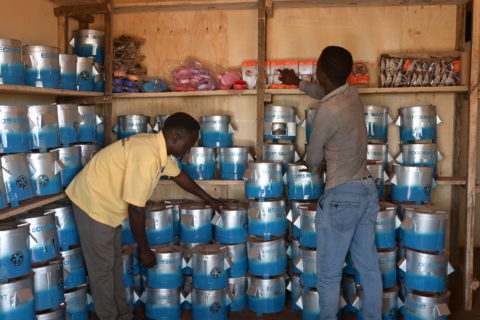
For example, we provided RFCare in the Rwenzori Highlands a US$2,000 loan to support the sale of cookstoves that create less air pollution than traditional models, as well as fuel briquettes and water filters. The loan also helped train young people in cookstove manufacture and repair and so far, the CBO has sold 1,800 stoves.

Entities like RFCare are staffed by passionate young people who are now exposed, more than ever, to the increasing innovation we see around today. If they are equipped with the technical or business expertise of running a clean energy enterprise, they are able to serve growing populations with solutions that fulfill our energy demands. 

Tackling climate change in Uganda provides essential lessons on how the continent can scale climate action, while also increasing access to clean energy products. Entrepreneurs are weighting in the wings – they just need the funding and the skills.  Local governments and funders must throw their weight behind supporting and scaling small and medium-sized clean energy businesses before it’s too late.

Marvin Tumusiime is the New Energy Nexus Uganda, Abundance Team Manager. This article was first published in Business Daily Africa as an op-ed.

Explore More
Story
Indonesia
Women
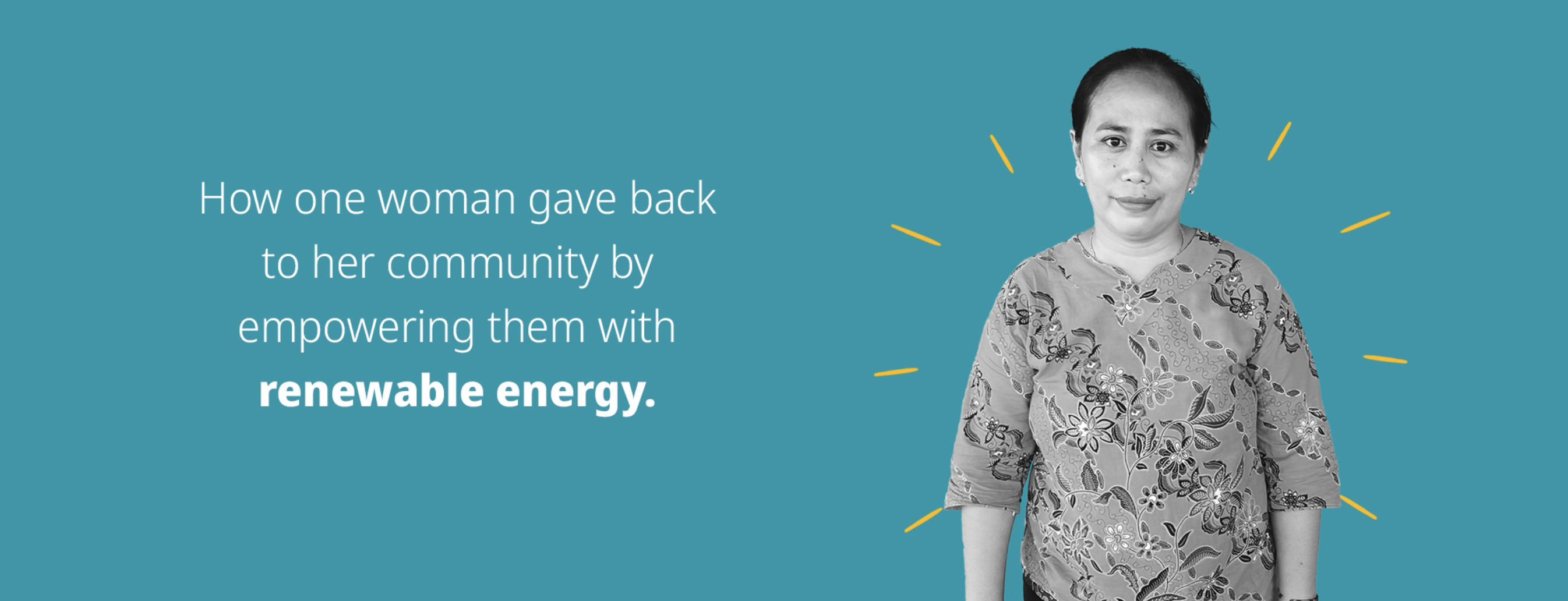
Empowering women with renewable energy in Indonesia

rambu yati

Rambu Yati Radandima, a finance manager in Indonesian start-up Sumba Sustainable Solutions (3S), is giving back to her community. A start-up with a focus on inclusive and sustainable innovations in Sumba Island, 3S provides local schools, villages and community health centres with access to solar power.

Rambu Yati’s work has personal meaning. She knows what it’s like to live without reliable access to electricity. Sumba, an island in the East Nusa Tenggara Province of Indonesia, has a unique geographical character that makes tapping into the national electricity grid difficult. In the past, over 500,000 families living there—roughly 38% of the island’s population—struggled with little or no electricity.

Rambu Yati says: “Life in the village was very different. Back in the 90s, my family relied on kerosene lamps to light up our home when we cooked or when we wove palm mats. We had to manually pound rice and corns because we had no access to milling machines.”

While the Indonesian government committed to electrifying the entire country by 2020 (RUEN 2017)[1], only 62% of the East Nusa Tenggara population has access to electricity, the lowest energy access level in Indonesia (IESR, 2019).

Stepping stones

In 2000, Rambu Yati enrolled in the Warmadewa University in Bali. She successfully graduated with an undergraduate degree in Agricultural Science. Today, as finance manager at 3S, Rambu Yati is involved in solving energy access issues in her community by providing solar-powered technologies to local institutions. An ethical, profitable business, 3S’s work focuses on bridging the energy gap in rural communities.

The distribution of solar-powered lighting solutions has significantly improved Rambu Yati’s community. Today, Sumba’s children can finally do their homework and study at night. Power has also improved people’s livelihoods, allowing more hours for local artisans to weave tenun ikat, a traditional handwoven fabric. Unique to Sumba, tenun ikat is part of Indonesia’s artistic heritage.

Mission for productivity

3S also provides solar systems for people’s homes and solar-powered productivity centres, which are energy hubs for the community. These solutions are powering livelihoods in Sumba by enabling villagers to mill crops and process bamboo. They are not only making people’s livelihoods more sustainable but are also improving the quality of life for many women in Sumba.

Before, women had to spend several hours a day pounding corn and were left with just half a day free. The solar-powered productivity centres enable villagers to make better use of their time. The men take corn to the mill while the women shell candlenut, which they can later sell at a higher price.

Renewable energy is also saving money and improving people’s health. According to the Indonesian Central Agency of Statistics, villagers typically spend 10% of their monthly living costs on expensive fossil-fuel-based lighting, like kerosene lamps, which emit harmful fumes that can damage the lungs.

With solar-power solutions, Sumba’s villagers now have a greatly reduced electricity bill. Rambu Ina is one of 3S’s local customers. She says: “In the past, we only used the kerosene candle for one hour because it was too expensive. In the evenings, now I have light for four or more hours. At night, often we sit around and talk to our neighbours while shelling our candlenuts or working on woven palm mats to be sold at the market.”

Work in progress

Rambu Yati aspires to keep helping Sumba’s local communities to access renewable energy, so they can increase their incomes and afford a better education for their children. Ensuring 3S has operational and financial sustainability is crucial so they can maintain the solar home systems and solar-powered productivity centres that the villagers depend on.

Like many other start-up employees, Rambu Yati struggled with data collection and creating a balance sheet that was fundamental to 3S’s growth. That’s where New Energy Nexus stepped in.

New Energy Nexus connected Rambu Yati and her colleagues to experts in HR, marketing communications and finance, through a programme called Mentor-in-Residence. Thanks to this programme, Rambu Yati now has the essential resources and skills to move forward. She can confidently draft financial forecasts to determine what the start-up needs to scale up, and ultimately, empower more villages with renewable energy.

3S is no longer a start-up struggling to survive but a sustainable business instilled with a healthy company culture that upholds transparency and communications between team members and stakeholders. And the skills Rambu Yati has learned in areas like communications are helping her nurture a new generation of skilled workers on the island.

She says: “Before we started with the New Energy Nexus accelerator, we were just dealing with problems as they came up, feeling like there must a better way. With New Energy Nexus’ guidance, we now have a clear plan for all parts of the business and our whole team is committed to achieving the goals that we have set together.

“I feel that we now have a shared responsibility to make our company vision and mission—to empower rural communities through access to energy and appliances for productive use—a success.”

[1] Indonesia’s National Energy Plan (Rencana Umum Energi Nasional (RUEN)).

Explore More
News
Uganda
New Energy Nexus Uganda wins global climate prize at COP26 climate summit

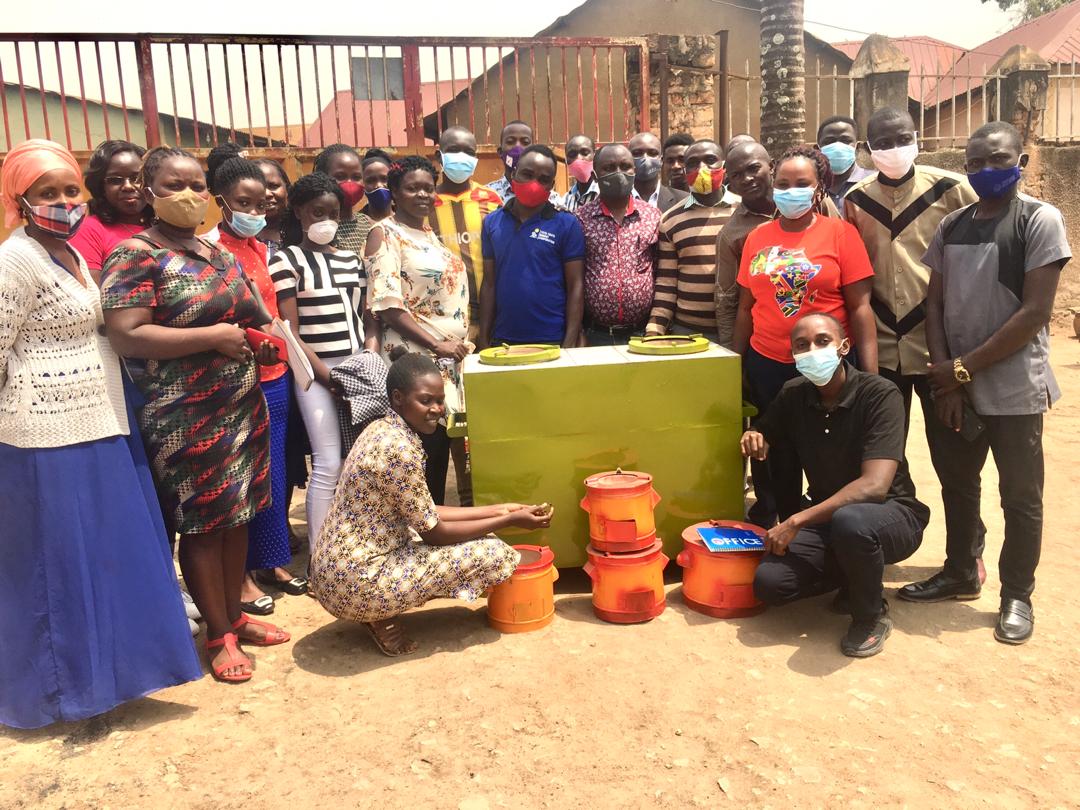
the 2020 cohort of energy enterpreneurs supported by new energy nexus uganda in a post training group photo

4 November – New Energy Nexus Uganda – an organisation supporting entrepreneurs to provide clean energy products in Uganda’s rural communities, where only 19% of the population have access to electricity – is a winner of the Ashden Award for energy access innovation.

Presented at COP26 at a ceremony attended by the President of Costa Rica Carlos Alvarado, the Award honours pioneering organisations lowering carbon emissions and building a fairer world. Winners receive grants, publicity and support to grow and replicate their innovation.

New Energy Nexus Uganda connects people in rural areas with clean energy, through financing, training, technology and investment. In rural Uganda, Community-Based Organisations (CBOs) provide many essential services – supporting better health, education, sanitation and work for local people. New Energy Nexus partners with these locally structured, small organisations to bring affordable renewable energy to the country’s remote (or last-mile) villages.

Aneri Pradhan, founder of ENVenture and Board Director of New Energy Nexus Uganda, said:

“This award is a testament to the entrepreneurs in rural Uganda who are powering their communities with clean energy. We have proven that clean energy distribution is scalable through local Community-Based Organisations, who not only increase access to clean energy in their localities, but create jobs too.

“We are thrilled that Ashden has recognised that empowering grassroots networks are key for increasing access to energy in under-resourced areas, and we hope our model for inclusive distribution will be replicated across the world.”

New Energy Nexus has incubated 123 small clean energy enterprises across Uganda. This has created 650 jobs, 70% of which are occupied by women. These organisations have sold more than 15,000 clean energy products, benefiting 100,000 people, and 77% of customers say their quality of life has improved as a result of their new product. Just over 120 investments have been made to the value of US$200,000 and US$2.9 million income has been saved annually as a result of transition to clean technologies.

Before working with New Energy Nexus, most community-based organisations relied on donations for income. New Energy Nexus provides entrepreneurship training and mentoring, and energy loans to buy clean energy products such as solar lanterns, briquettes, water filters and cookstoves. Organisations sell these at affordable prices to local people. Once organisations have established a successful business model, they unlock another level of credit access qualifying for further support and larger energy loans to buy more products and invest in marketing and sales teams.

Other innovation from New Energy Nexus Uganda includes an offline bookkeeping application for the energy merchants and street vendors. This tracks inventory and sales, works well with limited internet connection, and relies on pictures to ensure it is usable by people with low literacy levels.

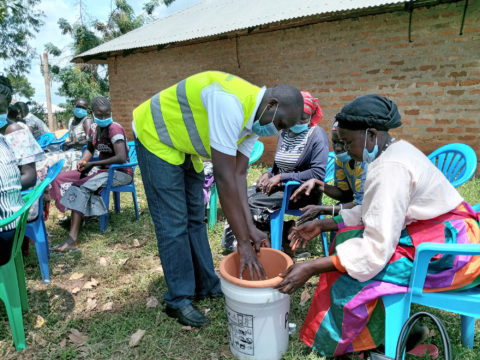
One successful partnership is with RFCare, a community-based organisation empowering women and youngpeople in the Rwenzori Highlands region. Through New Energy Nexus’ incubation program, it received a loan of US$2,000 to support the sale of cookstoves that create less air pollution than traditional models, as well as fuel briquettes and non-electric water filters. The loan also helped train young people in cook stove installation and repair. So far, the enterprises have sold 1,800 stoves.
51582692628 dc6482a9e9 o

Biira Imelda RFCare cofounder (a New Energy Nexus Uganda partner), said:

“RFCare has been able to work with communities in hard-to-reach areas in Kasese district, due to the business loans accessed from New Energy Nexus Uganda. The elderly are proudly cooking with an improved cook stove.”

Violet Nyakuru, Executive Director at Nile Community Empowerment (a New Energy Nexus Uganda partner), said:

“Madiokoll, Rhino camp has no access to electricity and households rely on kerosene lamps for lighting. With solar lanterns, my clients can now save off kerosene and their children are able to read at night with ease. I believe this is just the beginning of an energy transition for my community.”

David Olodi, Director and Founder of Agri-Light Limited (a New Energy Nexus Uganda partner), said:

“Thanks to ENVenture’s growth fund, we expanded our clean energy business from selling clean energy products to just 5 groups to now operating in over five districts in the northern part of Uganda. 17 out of 30 people in each of our groups have either a pico system or a cookstove.”

Harriet Lamb, CEO of UK-based Ashden, said:

“The Ashden Awards have showcased bold, brilliant and ground-breaking initiatives at COP26. Our winners show what is possible in the shift to a fairer low carbon future and should inspire world leaders to take decisive action to slash carbon emissions. The message to leaders at COP26 is clear – if they get behind such practical and proven climate solutions a zero carbon world is within our reach.”

H.E. President of the Republic of Costa Rica Carlos Alvarado, said:

“All the nominees to the 2021 Ashden Awards have chosen to lead by example. In Costa Rica we share the conviction that sustainable development goes hand in hand with economic growth, as well as a deep commitment to decarbonisation and to promote nature-based solutions to the climate crisis and biodiversity loss challenges we face. For that, I do believe the great endeavour of our generation is to abolish fossil fuels.”
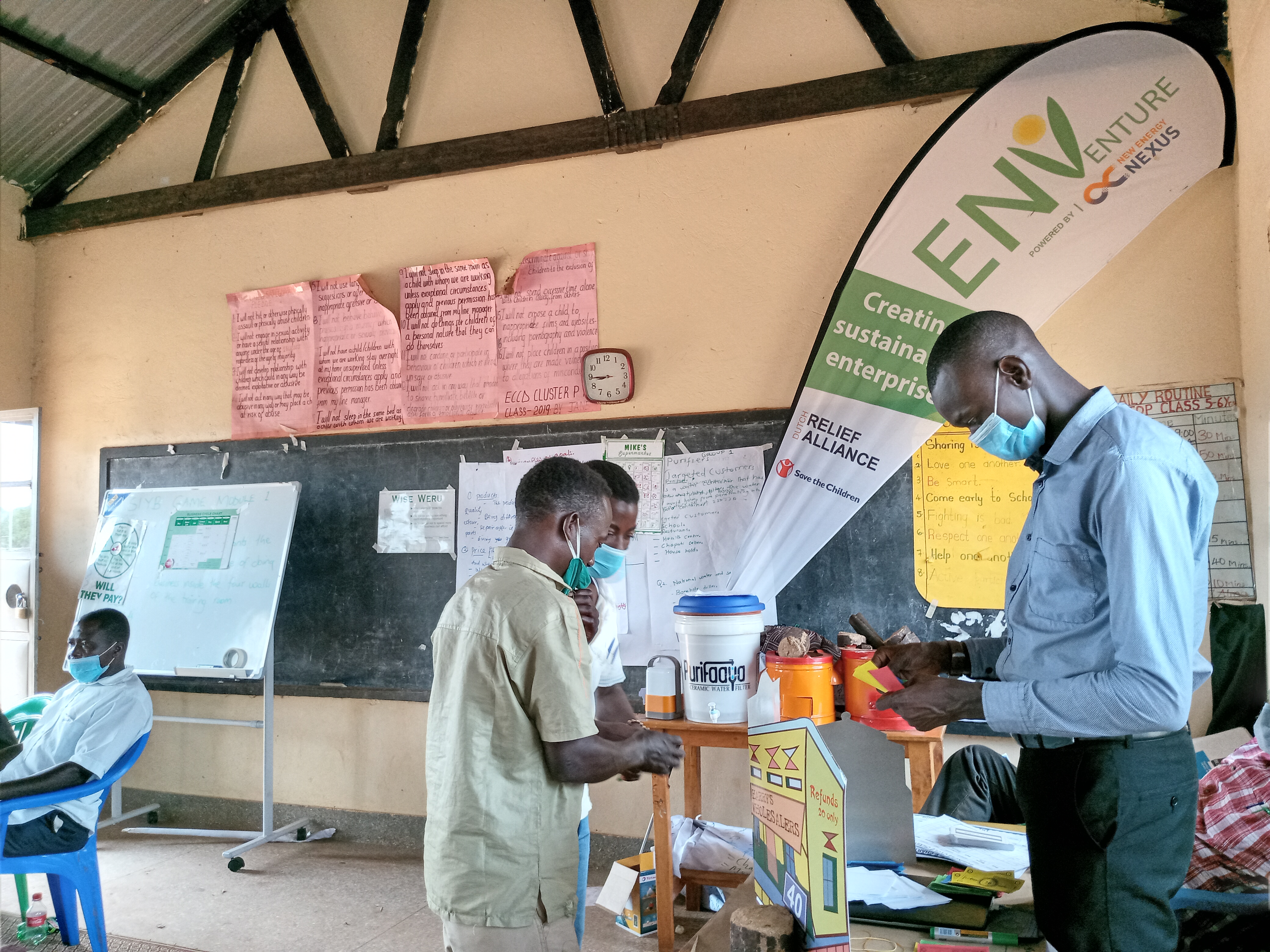
 

members from oribcing energy cooperative agreeing on a savings plan during a business development game

About the Ashden Awards

Climate solutions charity Ashden spotlights and supports climate and energy innovators in the UK and low-income countries delivering proven, ready-to-scale climate solutions. It works with businesses, non-profits and public sector organisations. The Ashden Awards were launched in 2001, and this year’s ceremony took place in the Green Zone at COP26. World leaders and international organisations are gathering in Glasgow from 1-13 November to agree a global plan for tackling the climate crisis.

The 2021 winners were chosen from over 800 applicants for their work creating resilience, green economies – including jobs and training – and fairer societies.

Photos are available here

Media contacts:

Tristan Tremschnig
Global Communications Director, New Energy Nexus (based in San Francisco, USA)
tristan.tremschnig@newenergynexus.com

About New Energy Nexus

New Energy Nexus (NEX) is the world’s leading clean energy ecosystem builder, working toward a 100% clean energy economy for 100% of the population. It does this with a laser focus on diverse entrepreneurs, supporting them with accelerators, funds, skills, and building the local and global connections they need to thrive. NEX has accelerated 1,700+ startups and businesses, empowered over 11,500+ entrepreneurs, and mobilized more than US$5.4 billion in investment.

Since its founding in California in 2004, NEX now operates programs or services in Australia, China, India, Japan, Indonesia, Nigeria, Pakistan, the Philippines, South Korea, Thailand, Uganda, the USA (California and New York), and Vietnam.

Follow NEX on LinkedIn, X, Facebook, and YouTube

News
California
New Energy Nexus CEO, Danny Kennedy, selected as a California 100 Commissioner
The California 100 Commission

The California 100 Commission


Danny Kennedy will be one of 26 commissioners bringing their expertise to California 100, a new statewide initiative focused on long-term planning and visioning for California future

12 October 2021 – New Energy Nexus CEO, Danny Kennedy, has been selected as a Commissioner for California 100, bringing his expertise in clean energy to this new statewide initiative focused on inspiring a vision and strategy for California’s next century.

Incubated at the University of California and Stanford University, California 100 is establishing a 26-member multigenerational commission with diverse backgrounds and expertise to advise on, and engage in, the initiative’s transformative streams of work and activities. Earlier this summer, California 100 announced research awards to 18 centers and institutes across the state to examine future scenarios with the potential to shape California’s leadership in the coming century.

“California has been a leader in energy and climate in many ways, and yet the benefits of the energy transition are not accruing to everyone. As we enter the next 100 years and foster the clean energy startups that will power this transition, I am committed to ensuring diverse entrepreneurs come first and communities get their fair share of the wealth created from these solutions,” said Danny Kennedy, who was born in Los Angeles and lives in Oakland.

“We are thrilled to draw on the expertise of these transformative leaders who are making a difference in their respective fields and already leaving a mark on California,” said Karthick Ramakrishnan, executive director of California 100. “ We will draw on their unique perspectives to inform our work to create a vision and strategy for the next century that is inclusive, equitable and sustainable.”

In addition to research, California 100 will also sponsor original policy innovation projects across California working in partnership with local and statewide agencies. Commissioners will organize engagement sessions throughout California with key stakeholders across the state to test California 100’s research and policy innovation efforts to ensure that Californians are directly included in the initiative’s work. 

The California 100 Commission can be found here.

The Commission brings expertise within the thirteen issue areas of focus for California 100:

  • Advanced Technology
  • Arts, Culture, Entertainment
  • Education
  • Economic Mobility, Inequality and Workforce
  • Energy, Environment, and Natural Resources
  • Federalism and Foreign Policy
  • Fiscal Reform
  • Governance, Media and Civil Society
  • Health and Wellness
  • Housing and Community Development
  • Immigrant Integration
  • Public Safety and Criminal Justice
  • Transportation and Urban Planning

Commissioners will serve a two-year term and meet regularly throughout the life of the initiative. They will hold listening sessions across the state to engage key stakeholders in the Spring and Summer of 2022. 

The goal of California 100 is to lift up and support transformative ideas, people and projects that accelerate progress with a focus on inspiring a vision and strategy for California’s next century that is innovative, sustainable, and equitable. In addition to sponsoring original work, the California 100 Platform will promote the best of what is happening in California. Through these various projects and activities, California 100 seeks to move California towards an aspirational vision—changing policies and practices, attitudes and mindsets, for a more vibrant future.

Media contacts:

Tristan Tremschnig
Global Communications Director, New Energy Nexus (based in San Francisco, USA)
tristan.tremschnig@newenergynexus.com

About New Energy Nexus

New Energy Nexus (NEX) is the world’s leading clean energy ecosystem builder, working toward a 100% clean energy economy for 100% of the population. It does this with a laser focus on diverse entrepreneurs, supporting them with accelerators, funds, skills, and building the local and global connections they need to thrive. NEX has accelerated 1,700+ startups and businesses, empowered over 11,500+ entrepreneurs, and mobilized more than US$5.4 billion in investment.

Since its founding in California in 2004, NEX now operates programs or services in Australia, China, India, Japan, Indonesia, Nigeria, Pakistan, the Philippines, South Korea, Thailand, Uganda, the USA (California and New York), and Vietnam.

Follow NEX on LinkedIn, X, Facebook, and YouTube