News
Philippines
Renewable energy tech
Philippine solar industry pushes for easier consumer access, regional support


August 28, 2025, Sta. Rosa — As the Philippines races to meet its 35% renewable energy target by 2030, solar industry leaders said regional support for clean energy innovation will be critical in translating national renewable energy targets into on-ground adoption.

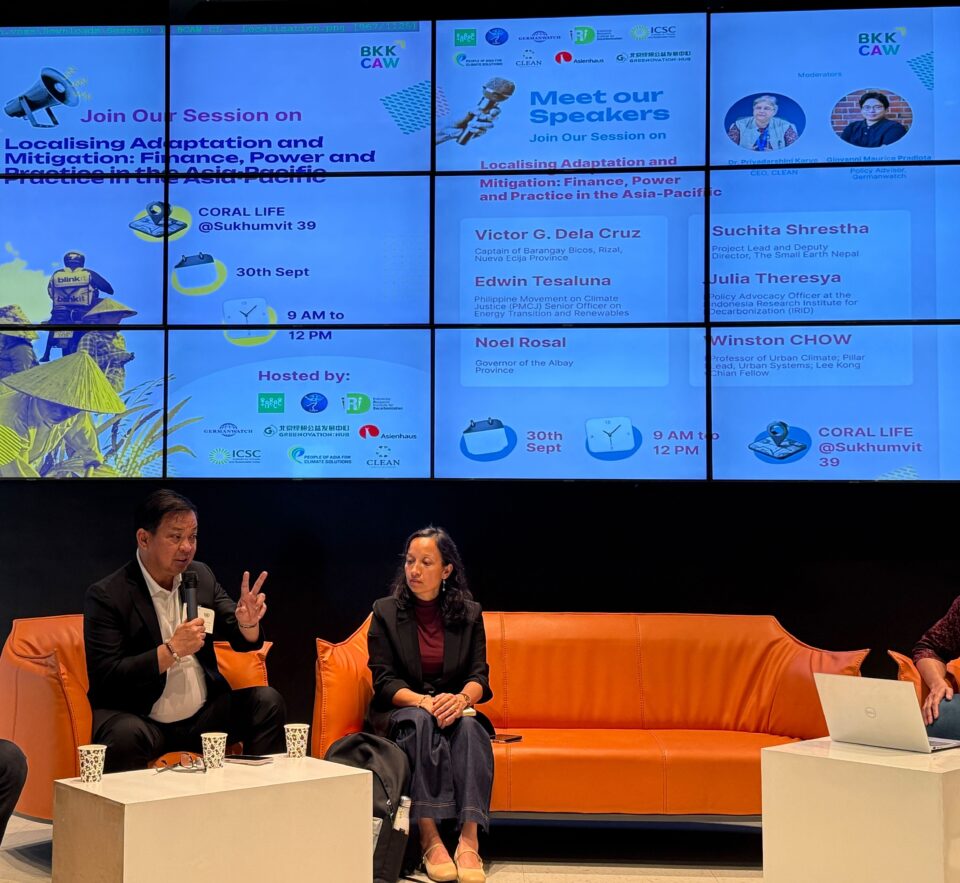
This was highlighted through back-to-back Solar Community Meetups hosted by New Energy Nexus Philippines in Cebu City and Sta. Rosa, Laguna, on August 20 and 28, respectively. Both events convened key government officials, utilities, financiers, and solar entrepreneurs.

Consisting of panel and breakout discussions among the participating stakeholders, the Solar Community Meetup not only surfaced challenges in both Central Visayas and CALABARZON, but also brought out insights and solutions to address these gaps.

“By connecting solar entrepreneurs with potential clients, facilitating dialogues between LGUs and utilities, and offering capacity-building programs tailored to local needs, we’re ensuring that solar adoption doesn’t happen in silos. Instead, it’s driven by a collaborative ecosystem where innovation, financing, and policy support move in sync. That’s the unique role New Energy Nexus fills,” said Jacob Taguinod, Partnerships Manager at New Energy Nexus Philippines.

The two regions have made significant progress in solar adoption, from Cebu hosting the country’s first floating solar project to CALABARZON rapidly scaling rooftop installations across factories, malls, and municipal buildings. However, this momentum is slowed by common challenges: cumbersome net metering processes, supply chain constraints, and consumer concerns over unaccredited installers.

Reforms are starting to take shape. Cebu officials are committing to streamlined permitting, while in CALABARZON, MERALCO has begun improving interconnection procedures.

“One of our priorities at the DOE is to ensure that national renewable energy policies are effectively implemented at the local level. In regions like CALABARZON, this means working closely with LGUs to strengthen permitting guidelines, and with utilities to make net metering more accessible,” said Edward V. Neri, OIC-Division Chief at the Department of Energy – Solar Energy Management Division.

“We are committed to making the interconnection process simpler and clearer for our customers who want to adopt solar. Through initiatives like net metering and distributed energy resources (DER), we aim to empower consumers to become prosumers while ensuring that every installation is safe, reliable, stable, and sustainable for the grid. By working hand-in-hand with local governments, solar installers, and industry partners, we can accelerate rooftop solar adoption across CALABARZON,” said Engr. Botany KC Anne Sevilleja-Briones, Executive Assistant to the Chief Revenue Officer at MERALCO.

“To make the solar adoption easier, Cebu City will ensure, with the new administration, that the Office of the Building Official streamlines net metering requirements by minimizing red tape,” said Cebu City Councilor Joel Garganera. “Cebuanos should expect changes that will make the process faster and simpler, with more incentives for those who choose renewable energy.”

Civil society groups such as the Clean Energy Advocates Association of the Philippines (CEAAPI), which was formed as a result of previous Solar Community Meetups, and the Philippine Solar and Storage Energy Alliance (PSSEA) are also pushing to raise industry standards and build consumer confidence.

Meanwhile, solar installers highlighted that stronger policy support at both the national and regional levels is critical to accelerating adoption.

“Beyond financing and market competition, installers face challenges from unclear or inconsistent implementation of standards. Stronger national and regional policies that enforce safety and quality, while supporting accredited practitioners, will raise industry standards and protect the installers and consumers,” said Bernard Torralba, Owner of Solar Hyperion, a solar installation company.

New Energy Nexus builds ecosystems that enable clean energy entrepreneurs, including those in the solar business, to scale their solutions in the Philippines and beyond. The Solar Community Meetups are part of its ongoing programs backing the country’s solar industry — more information can be found here.

Media contacts:

Dayther Manubag, Communications Lead, New Energy Nexus Philippines, dayther.manubag@newenergynexus.com (based in Mandaluyong City)

Maverick Flores, Senior Content Producer, New Energy Nexus, maverick.flores@newenergynexus.com (based in Quezon City)

About New Energy Nexus

New Energy Nexus (NEX) is an international organization that strives towards a 100% clean energy economy for 100% of the population. It does this with a laser focus on diverse entrepreneurs, supporting them with accelerators, funds, skills, and networks they need to thrive. NEX has accelerated 1,500+ startups, empowered over 10,400+ entrepreneurs, and mobilized over US$4.7 billion in investment. Since its founding in California in 2004, NEX now operates programs or advisory services in Australia, China, India, Indonesia, Nigeria, Pakistan, the Philippines, Thailand, the UAE, Uganda, the USA (California and New York), and Vietnam.

Follow NEX on LinkedIn, X, Facebook, and YouTube

Story
Pakistan
Built Environment
Climate entrepreneurs are powering Pakistan’s solar momentum – here’s how

Pakistan is experiencing a solar boom unlike any other. In just the first half of 2024, the country imported over 13 GW of solar panels – more than the total installed capacity of some entire countries (The Great Solar Rush in Pakistan, 2024). This unprecedented growth could push it ahead of its 2030 renewable energy targets years in advance.

The impact is already rippling through communities: farmers are swapping diesel pumps for solar-powered tubewells, industries are securing their own reliable power, and families are reducing their reliance on an overstretched grid. Clean energy is reshaping daily life, and climate entrepreneurship is multiplying its benefits across the country.

From waste-to-energy ventures in Karachi to e-mobility startups in Lahore, Pakistan’s climate innovators are finding practical solutions to real problems. But without stronger support systems, many promising ideas struggle to scale.

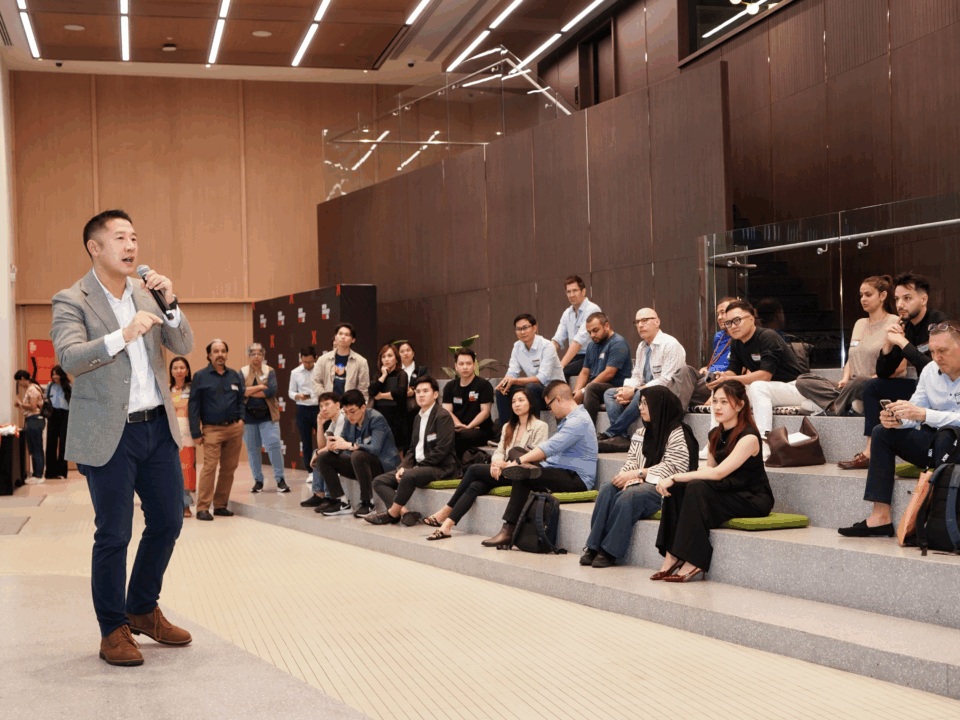
pakistan 1 768x512

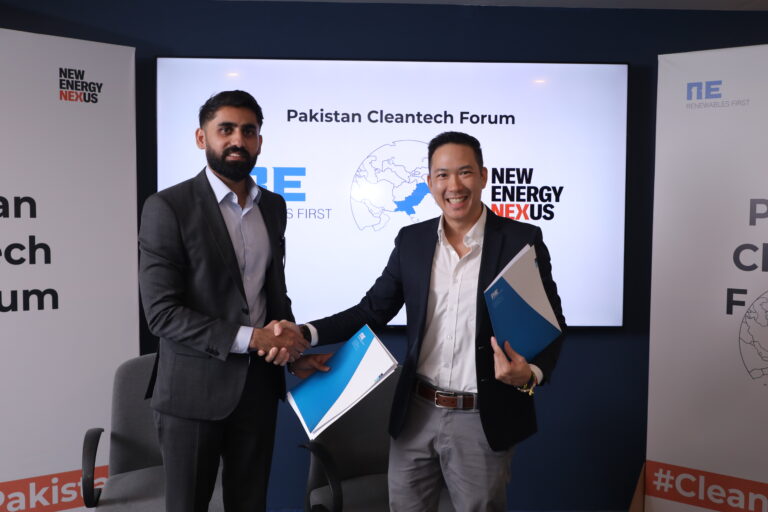
From left: Zeeshan Ashfaq, CEO of Renewables First, and Stanley Ng, Global Partnerships Director at New Energy Nexus

That’s why New Energy Nexus has partnered with Renewables First to launch Climate Innovation Pakistan (CLIP): a national platform designed to empower entrepreneurs, develop a skilled workforce, and shape policies that unlock clean energy innovation for the long run.

Through CLIP, we’re building the kind of ecosystem that helps climate entrepreneurs move from idea to impact:

  • CLIP Incubator – Turning early-stage ideas into market-ready solutions.
  • New Energy Academy – Training the solar workforce powering Pakistan’s transition.
  • ThinkLab – Publishing actionable insights on what’s working or not in Pakistan’s climate innovation landscape, informing smarter policy and investment decisions.
CLIP Incubator: From idea to traction

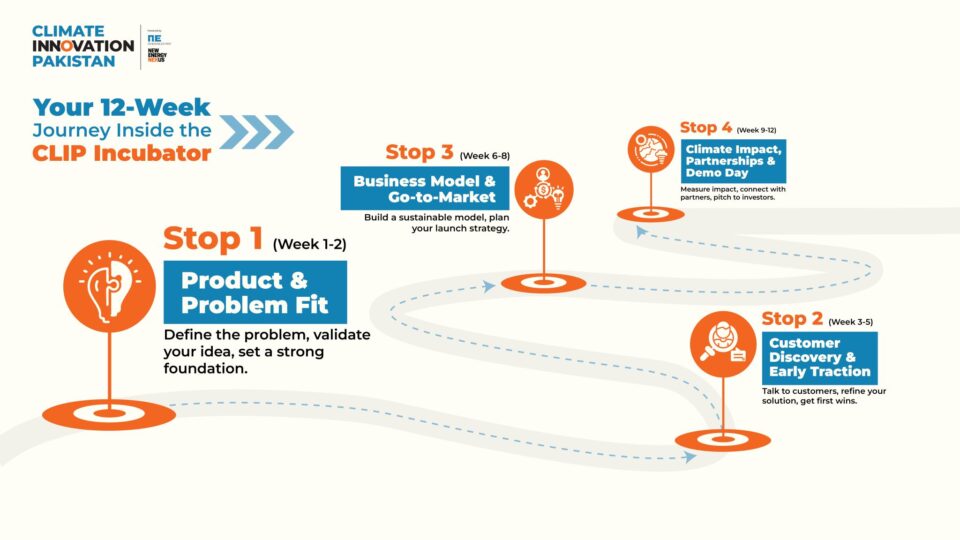
Inside the CLIP Incubator, founders spend 12 weeks transforming their vision into traction. The program helps them validate products, test solutions with real customers, and refine their go-to-market strategies.

With guidance from mentors who have built and scaled in challenging markets, startups gain not only technical advice but also access to pilots, partnerships, and investors across Pakistan’s growing climate ecosystem.

clip journey

The Clip Incubator journey. Photo from Climate Innovation Pakistan

This is a space designed for entrepreneurs who want to move faster, smarter, and stronger – without giving up equity, and with support tailored to Pakistan’s realities. Learn more and apply here.

New Energy Academy: Building the solar workforce

Pakistan’s solar boom cannot succeed without skilled workers ready to deliver it. That’s why CLIP is launching the New Energy Academy: Solar Fundamentals Training in Islamabad this September.

Developed by New Energy Nexus, GSES Global Sustainable Energy Solutions, and OpenSolar, and implemented in collaboration with Renewables First and the Pakistan Solar Association, the program blends online and in-person learning to train young people for jobs in installation and maintenance. Participants will gain hands-on skills, mentorship, and connections with employers in a sector that’s growing faster than ever.

By preparing the next generation of solar professionals, the Academy ensures Pakistan’s clean energy transition is powered by people as well as panels. Find out more and sign up by August 22.

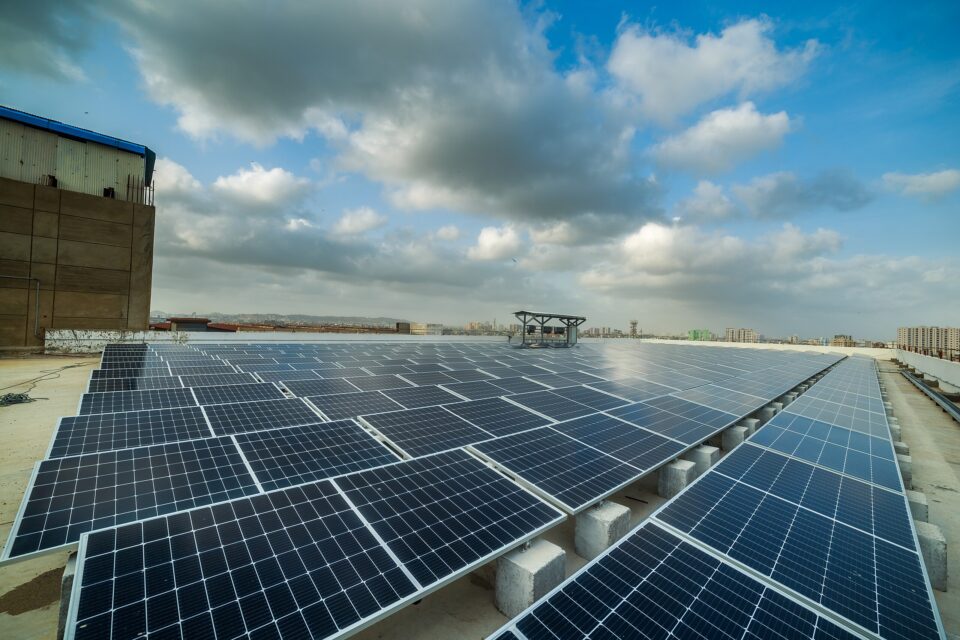
site karachi

A solar installation in Karachi, Pakistan. Photo from Wikimedia Commons, User: Crosji

Breaking down barriers

Pakistan is one of the world’s most populous countries and one of the most climate-vulnerable. At the same time, it holds enormous potential for clean energy to drive inclusive growth. Yet for many entrepreneurs, barriers to progress persist: limited financing, scarce data, and policy barriers.

CLIP aims to change that. By combining New Energy Nexus’s global expertise in building startup ecosystems with Renewables First’s deep local insights, the platform will help unlock new opportunities for entrepreneurs, investors, and communities alike.

At New Energy Nexus, we support diverse climate entrepreneurs worldwide, giving them the accelerators, funding, skills, and connections to thrive. Through CLIP, we’re expanding that mission in Pakistan, helping climate tech founders transform a historic solar rush into long-term impact for communities and industries across the country.

The path is clear: Build on this clean energy growth in Pakistan and carry it over to the rest of the world. Now it’s time to give innovators worldwide the tools to carry it further.

Ready to scale your own innovation? Check out our programs here.

Explore More
News
Philippines
Renewable energy tech
Cebu City solar industry gathers in bid to fast-track clean energy adoption

Cebu City, Philippines, 20 August 2025 — Clean energy leaders revealed how Cebu City is an emerging hub for solar energy at a convening today of government and industry leaders, highlighting the massive potential to scale if financing, supply chain constraints, and bureaucratic delays in net metering are addressed.

“Our [New Energy Nexus Philippines] goal is not just to convene, but to strengthen the solar community by helping set standards, address bottlenecks, and connect stakeholders across the value chain. What we saw in this meetup is that Cebu has the workforce, demand, and commitment—it just needs the right ecosystem support. That’s where NEX Philippines comes in.” said Sheryl Estella, Academy Manager of the New Energy Academy, a learning platform for clean energy professionals and entrepreneurs – powered by New Energy Nexus, GSES, and OpenSolar.

Key leaders in government, utilities, finance, and the local solar industry came together for New Energy Nexus Philippines’ Solar Community Meetup, its second run in the city. The event included panels and breakout discussions on scaling the local clean energy economy and the adoption of renewables in the Central Visayas.

The region’s solar landscape has seen promising yet modest growth over the past few years. Notably, Visayas now hosts around 472 MW of rooftop solar capacity, according to the Institute for Climate and Sustainable Cities’ SPECTRUM platform, which is still only a fraction of the Philippines’ total potential. Cebu Province is also home to pioneering projects such as the country’s first megawatt-scale floating solar facility in Toledo City – which has a capacity of nearly 5 MW. Meanwhile, battery storage integration is starting to emerge, while interest from households and SMEs continues to grow.

Despite this momentum, barriers persist. A recent report highlighted challenges such as high upfront costs, limited financing access, bureaucratic delays in net metering, and supply chain constraints, which threaten to slow down solar adoption across the country.

“To make the solar adoption easier, Cebu City will ensure, with the new administration, that the Office of the Building Official streamlines net metering requirements by minimizing red tape. Cebuanos should expect changes that will make the process faster and simpler, with more incentives for those who choose renewable energy,” said Cebu City Councilor Joel Garganera.

One solution is the formation of the Clean Energy Advocates Association of the Philippines (CEAAPI), which emerged from the 2024 Solar Community Meetup in Cebu City. CEAAPI is a network of installers, service providers, and advocates working together to accelerate clean energy adoption in the region. By promoting certifications, transparency, and quality standards, the organization also helps address the growing issue of fly-by-night installers and low-quality systems that undermine consumer zhetrust. CEAAPI is also the official hub partner for the 2025 run.

This year’s meetup comes at a pivotal moment, with a large-scale floating solar project starting in the city and local government buildings being upgraded to solar. Establishing strong relationships between the solar industry, local government, and other key stakeholders can be a powerful catalyst for solar adoption – streamlining permitting processes, improving access to financing programs, and integrating solar into public infrastructure plans.

New Energy Nexus Philippines is set to conduct another SCM in the CALABARZON Region on August 28, part of their ongoing and future programs equipping the local solar community with the tools to scale their solutions. More information can be found here.

Media contacts:

Dayther Manubag, Communications Lead, New Energy Nexus Philippines. dayther.manubag@newenergynexus.com (based in Mandaluyong City)

Maverick Flores, Senior Content Producer, New Energy Nexus. maverick.flores@newenergynexus.com (based in Quezon City)

About New Energy Nexus

New Energy Nexus (NEX) is an international organization that strives towards a 100% clean energy economy for 100% of the population. It does this with a laser focus on diverse entrepreneurs, supporting them with accelerators, funds, skills, and networks they need to thrive. NEX has accelerated 1,500+ startups, empowered over 10,400+ entrepreneurs, and mobilized over US$4.7 billion in investment. Since its founding in California in 2004, NEX now operates programs or advisory services in Australia, China, India, Indonesia, Nigeria, Pakistan, the Philippines, Thailand, the UAE, Uganda, the USA (California and New York), and Vietnam.

Follow NEX on LinkedIn, X, Facebook, and YouTube

Story
California
Renewable energy tech
From prototype to powerhouse: how CalSEED helped spark Antora Energy’s growth
antora

Antora thermal battery on a crane.

Antora Energy is no longer a startup to watch; it’s a force to be reckoned with in the race to onshore American manufacturing and decarbonize industry. But before it raised $150 million in Series B funding, partnered with industrial giants, or landed on the pages of Fast Company and The Wall Street Journal, Antora was an early-stage startup facing a very familiar challenge: proving that the tech worked.

Back in 2019, that’s where CalSEED stepped in.

The Innovation: Turning Heat into Electricity

Antora’s core innovation is a thermal battery system that stores renewable energy as heat in inexpensive, earth-abundant materials. While Antora’s first product outputs that energy as industrial heat to drive manufacturing processes, its second product will also convert that heat back into electricity using thermophotovoltaic (TPV) cells. These cells function like solar cells designed to capture the wavelengths of light from Antora’s glowing-hot carbon blocks inside the battery.

This approach unlocks cost-effective, long-duration energy storage—the solution California and other clean energy leaders need to power the industry and ensure grid reliability as they deploy more intermittent energy resources, such as wind and solar.

But when Antora applied to CalSEED, the concept was still early. The company needed to prove that its TPV cells could reliably deliver electricity at the required efficiency, durability, and scale.

The Support: What CalSEED Made Possible

With support from the CalSEED Concept and Prototype awards, Antora conducted critical engineering validation and reliability testing of its TPV technology.

Throughout the grant in 2019, Antora:

  • Characterized over 100 TPV cells, measuring reflectance, electrical performance, and power density
  • Tested complete module prototypes at 1500°C conditions to simulate real-world battery operation
  • Ran thousands of hours of reliability tests, de-risking failure modes, and validating lifespans
  • Improved design and manufacturing processes, incorporating feedback from stress tests and failure analysis

This work helped establish that Antora’s TPV technology could convert heat to electricity at efficiencies of 40%+ and operate under extreme conditions with minimal degradation. More importantly, it laid the foundation for scaling production and building investor confidence.

“The work of this project, including the thousands of hours of reliability that have already been demonstrated, has greatly de-risked the commercial viability of TPV in long-duration energy storage.”
— Antora Energy, CalSEED Final Report

The Results: Rapid Growth and Real-World Impact

Since completing the CalSEED project, Antora has:

The company’s technology is now seen as a leader in powering industry with clean, low-cost energy. Antora’s batteries can keep industry running 24/7, even during extreme heatwaves and wildfire shutdowns.

Why It Matters: A Clear Path to Grid Decarbonization

Thermal energy storage, like Antora’s, could save California $1.5 billion annually, improve grid reliability, and reduce 25 million metric tons of CO₂ annually. That’s equivalent to taking nearly 6 million cars off the road. [Source]

And it all started with a prototype.

Antora’s success is a textbook example of how CalSEED helps bridge the “valley of death” for climate tech startups—de-risking early innovations, validating performance, and clearing the path from lab to market.

From Concept to Commercialization with CalSEED’s Spark

Every major clean energy company was once a concept seeking support. Antora’s journey demonstrates that targeted, early-stage funding and validation programs, such as CalSEED and CalTestBed, make the difference between promising ideas and scalable solutions.

Antora is now powering toward a clean future, and CalSEED helped light the way.

CalSEED Story: Antora


This story was originally posted by CalSEED.fund, our program in California.

Explore More

DTS 2025 – Summary Report

August 8, 2025
Story
Indonesia
Built Environment
Rooted in reality: Kuantek’s community-driven climate solutions

In the vast and varied landscapes of East Nusa Tenggara (Nusa Tenggara Timur or NTT), innovation doesn’t just mean new technology. It means survival. For many communities across this archipelagic province, daily life is shaped by scarcity: of water, electricity, and reliable infrastructure. But it’s also shaped by resilience, creativity, and a deep sense of adaptation.

This is where Kuantek, short for Kuan Timor Technology (Teknologi Kampung Timor), is planting its roots and building climate solutions that emerge not from abstract theory, but from the lived experiences of the people they aim to serve.

Co-founders Ben Vasco Tarigan, Abraham Talluta (CEO), and Abdi Nenotek (CTO) do not claim to have all the answers to NTT’s struggles. But they do have one thing that many technology companies overlook: they listen.

dsc05086

Kuantek Co-Founders: Abraham Talluta (CEO), Abdi Nenotek (CTO), and Ben Vasco Tarigan.

“We always ask our users: Apa yang paling menyakitkan? What’s the most painful part of your day?” says Ben. “We design our products from there.”

To Kuantek, listening isn’t just a design principle – it’s their business model.

Three years after its founding, Kuantek connected with New Energy Nexus Indonesia through the IKEA Foundation-funded Smart Energy Incubation Program and the [RE]Spark Hackathon. At the time, they had a clear target – addressing NTT’s lack of access to clean water. Their solution was to build an affordable seawater desalination system to produce drinkable water for coastal communities.

From this one idea, Kuantek kept evolving. They began developing a range of environmental technologies designed to address the needs of rural and remote populations, from preserving produce with little energy cost to making water out of air.

The three innovators weren’t siloed in labs. Instead, they co-created their products with the very communities that will reap the benefits. Each innovation started with a simple premise: Making life easier, using what the community already has.

The dehydrator that changed the game

One of Kuantek’s most talked-about products is their low-power dehydrator, a tool that’s now helping farmers in Timor dry and preserve chili and vanilla crops for longer shelf life and higher selling prices.

Getting dehydrators is a smart economic move for farmers. It allows farmers the option to dry and store fresh produce, instead of having to sell it quickly to avoid spoilage. This gives them more control over pricing and market timing.

However, commercial dehydrators often require up to 1000 watts to operate, and in rural areas such as those in Nusa Tenggara Timur, the power capacity per household only reaches up to 500 watts. That’s where Kuantek came in.

“We designed ours to run at just 270 watts,” says Ben. The secret is a combination of energy-efficient lighting systems and localized materials. “It’s not just about being energy-efficient. It’s about making sure people can actually use it.”

dsc05116

Kuantek’s low-watt food dehydrator

Harvesting water from thin air

Another of Kuantek’s solutions is a system that converts humidity from the atmosphere into potable water, using solar energy. This technology is particularly suited for some areas in NTT, where air humidity is high, but water sources are often inaccessible or unsafe.

Ben envisions installing these atmospheric water systems in schools and highland tourism areas, especially in places where groundwater is either unavailable or requires expensive and unsustainable drilling.

“We want to eliminate the need for groundwater wells in hard-to-reach areas,” he said. “Instead, let’s use what we already have: heat, air, and sunlight.”

In a pilot project, they installed a solar thermal-powered water station in a coastal village. Three months later, the local pastor reported something profound: for the first time, they had no trouble getting clean water. “That’s when we knew we were doing something right,” Ben said.

dsc05097

Solar-powered water harvesting system

Designing through constraint

While their ideas may be bold, implementation is often difficult, as NTT’s geography presents a host of logistical barriers.

Some islands can only be accessed by small boats that can’t carry heavy machinery. Roads are narrow, winding, and poorly maintained. In many villages, bridges don’t exist, and rivers swell during the rainy season, cutting off access altogether.

This makes even the most well-designed product a challenge to deliver. Kuantek had to rethink their seawater desalination system when they realized the original version was too large for local transport networks.

“So we redesigned the whole thing to be smaller, but with the same capacity,” Ben explains. “It wasn’t just about making it small, it was about making the technology mobile, modular, and manageable.”

A culture of listening

For Kuantek, the job doesn’t end at innovation. Often, it begins long before product design, and continues well beyond delivery.

Their team frequently plays the role of advocate, helping villages navigate complex systems like reporting power outages to PLN, the state-owned power company. They also introduce basic feedback mechanisms so that communities feel empowered to ask for improvements or raise concerns.

“Sometimes our work is as simple as showing people how to talk to PLN,” Ben said, laughing. “Other times, we’re advocating for completely new systems to be built.”

They are also aware of the challenges of behavior change. Many people in rural NTT have adapted to unreliable electricity and limited water access, often without realizing it. That makes introducing new technologies tricky.

“It’s incredibly difficult to ask someone to adopt new behaviors,” Abraham said. “So instead, we look at the things they’re already doing, and we design from there.”

This empathetic approach ensures that technologies don’t feel foreign or intrusive, but intuitive.

When it comes to criticism of their business, Ben sees it as very valuable insight. Rather than resisting feedback, they see it as an invitation to collaborate.

This philosophy has allowed Kuantek to keep improving, even with limited resources.

“Disagreements and pushback are something I see as gifts. When people tell us what’s wrong, they’re actually helping us make the product fit better,” he reflects. “It’s our job to listen, iterate, and make it real.”

dsc05152

Kupang, East Nusa Tenggara

A data-driven dream

Looking to the future, Kuantek is embarking on an ambitious initiative: mapping the infrastructure, climate, and behavioral patterns of every district in NTT.

They want to build a data bank – a library of regional insights that can guide future innovations and help them develop tailored, low-emission technologies suited to each community’s unique needs.

“Some areas are hot, dry, and windy. Others are humid or rich in seawater. Every place is different,” says Ben. “But if we know the conditions, we can create the right solutions.”

Beyond the benefit to their business, Kuantek wants the database to be an open reference point for governments, entrepreneurs, universities, and other innovators who want to build effective, community-centered technology in rural Indonesia.

Their dream is to make technology accessible and replicable. “Even if it’s simple, if people understand how it works, they can build it themselves,” Ben says.

Kuantek sums up their entire approach in five words: “Datang, Duduk, Diskusi, Design, Diseminasi (5D),” which translates to “Come. Sit. Discuss. Design. Disseminate.

More than a method, it’s a mindset that values patience over speed, trust over disruption, and purpose over profit.

“Where there are a thousand problems, there are also a thousand solutions,” says Ben. “Our job is to figure out how to tackle them.”

For all the challenges NTT presents, the people soldier on every day to live on to the next. They are what inspires each small invention at Kuantek. In turn, the company’s technologies seek to ease their burdens and build a cleaner future, in NTT and beyond.


Want more clean energy stories and opportunities in Indonesia? Check out New Energy Nexus Indonesia here.

Explore More
Story
Australia
Renewable energy tech
These early-stage startups are shaping Australia’s battery future

Ten pioneering startups from across the lithium battery value chain presented their vision of Australia’s battery sector to an engaged audience of investors, policymakers, and industry participants at the inaugural Supercharge Australia Incubator Pitch Day.

After three months of tailored support from EnergyLab and New Energy Nexus, these founders now stand poised to accelerate the country’s battery manufacturing capabilities –  with solutions ranging from raw material innovation, marine applications, embedding safe energy storage into our living spaces, to cell reuse and repair.

Here are the participating startups and their lithium battery value chain focus:

  • Adoxima, Carbophite, Voltavate: Carbon emissions-free, better, and cheaper lithium battery materials
  • InnovoltIQ: Cell production
  • Li-ion Energy and Sustainable Lithium Cells Australia: Reuse, repair, and recycling
  • Naut: Marine electrification
  • Net Zero Energy Solutions: V2G adoption acceleration
  • Noizend: Enhancing battery energy storage system (BESS) community livability via intelligent noise-cancellation
  • Powerblocks: Embedded energy storage

The completion of the first Incubator marks a key milestone in Supercharge Australia’s broader mission – to support over 150 startups in the lithium battery value chain and catalyse a thriving, interconnected lithium battery innovation sector – by adding a second program focused on supporting earlier-stage startups. The new program provided mentorship, expert advice, pilot opportunities, early customer connections, investor engagement, and international exposure, helping the teams to build the foundations of Australia’s battery future. We thank all of the experts for their generous contributions.

Launched in 2022, Supercharge Australia has now completed two Innovation Challenges. With the addition of the Incubator, it is now supporting 31 startups that have raised over AU$71 million in funding since they participated in its programs.

Building a circular battery value chain

Australia has a generational opportunity to move beyond exporting lithium ore and build a competitive, homegrown battery value chain. The startups in this year’s Incubator show how this is already taking shape: connecting technologies across the life cycle of a battery, from production to application to reuse. Their innovations don’t just solve isolated problems; they strengthen each link in the chain, multiplying impact along the chain to make the entire system cheaper, cleaner, and more efficient. This is how Australian batteries can compete.

Together, they demonstrate what a circular, high-value battery ecosystem could look like:

  • Producing battery components with higher performance, many times lower costs, CO2 emissions, and up to 99% less production wastage – thanks to Adoxima, Carbophite, and Voltavate
  • Manufacturing lithium battery cells at scale – with InnovoltIQ facility producing their first 500 MW per annum
  • Deploying batteries in end-use applications – such as marine electrification (Naut) and vehicle-to-grid systems (Net Zero Engineering Solutions)
  • Integrating batteries into communities – through quieter energy storage (Noizend) and attractive, modular battery systems for shared spaces (Powerblocks)
  • Recovering value at end-of-life – with smart reuse and recycling solutions from Li-ion Energy and Sustainable Lithium Cells Australia

With coordinated support, these early-stage innovations can accelerate Australia’s transition from resource supplier to battery technology leader.

Backing Australia’s battery future

Australia remains the world’s leading lithium producer, supplying over one-third of global demand. With the global lithium battery market still forecast to be significantly undersupplied by 2030, Australian producers are seeking efficiency improvements and are investing in downstream opportunities to secure vertical capacity and greater profitability.

Each startup in the Incubator cohort is developing a critical piece of the emerging ecosystem and the kinds of investment opportunities the sector is seeking. Their solutions highlight the scale of opportunity when early-stage innovation is backed with intent, speed, and coordinated support.

While early traction for the cohort members was strong – from prototypes to paid pilots – the startups were all facing the same uphill challenge: securing capital, facilities, and support to go from validated concepts to scalable commercial impact. The Incubator addresses this gap by de-risking particularly early innovation, reducing barriers to commercialisation, and helping Australia retain its battery IP rather than lose it offshore.

Powering the clean energy transition

As global warming trends continue toward a 3°C pathway, and the risks of overshoot, consequent tipping points, and heavy reliance on unproven carbon capture and storage technologies rise, building a high-functioning cleantech sector that can dramatically accelerate decarbonisation becomes a strategic, global imperative.

Batteries power the clean energy transition, making it an important piece of this response – and battery startups have tremendous potential to pave the way, especially when supported early.

To further develop this economic opportunity, Australia can adopt proven models like our CalTestBed program in California, which turned US$22 million in early-stage testing access into over US$438 million in follow-on investment by offering non-dilutive, non-matching grants to startups solving big climate problems. If a similar system were applied here, it would rapidly increase the volume and readiness of battery startups ready to attract private capital or integrate into gigafactory supply chains.

“Building Australian lithium battery capability begins with supporting innovation at its earliest stages — with non-matched and non-dilutive funding to produce prototypes, pilots and real-world testing opportunities,” said Kirk McDonald, Project Manager at Supercharge Australia.

Australia has a generational opportunity to do the same: Supercharge Australia is calling for new initiatives to:

  • Provide non-dilutive, non-matching seed funding for early-stage lithium battery value chain startups.
  • Open access to testing, certification, and demonstration facilities.
  • Support pilot customers and fleet procurement to validate new tech.
  • Connect investors and government with the pipeline of founders building the sector.

To continue building the momentum for this sector, our next program is launching now. This will be our third Supercharge Australia Innovation Challenge – applications are open.


The inaugural Supercharge Australia Incubator cohort
adoxima
carbophite
innovolt
li ion
naut
net zero
noizend
powerblocks
sustainable lithium
voltavate
Explore More
Story
Philippines
Renewable energy tech
How entrepreneurs address rooftop solar challenges in the Philippines
ph rooftop solar

Rooftop solar panel. Stock photo

A recent study by Ateneo de Manila University, published in Challenges in Sustainability, sheds light on the persistent barriers preventing the widespread adoption of rooftop solar power (RTSP) in Metro Manila and nearby provinces. Led by Professor Rosalina Palanca-Tan, the study surveyed 403 respondents to understand why households remain hesitant to invest in solar technology despite its clear economic and environmental benefits.

The study’s findings were recently featured in the Philippine Daily Inquirer, sparking a public discussion on its Facebook post, which highlighted several recurring concerns: high upfront costs, lengthy return on investment (ROI) periods, bureaucratic hurdles, technical challenges, and a lack of government support. Let’s look into the key challenges raised around rooftop solar adoption, and explore potential solutions.

wordcloud (3)

A word cloud generated from people’s responses on the Facebook post.

Why aren’t more Filipinos switching to solar?

1. High cost of installation and ROI concerns

Many consumers cited the high initial cost of installing solar power systems as a major barrier. The upfront investment often matches several years’ worth of electricity bills, making it difficult for households to justify the expense. Additionally, long return-on-investment (ROI) periods discourage adoption, particularly in the absence of accessible financing options.

2. Lack of financing options

Access to financing remains a significant barrier to rooftop solar adoption. With limited options for low-interest loans or flexible payment schemes, households struggle to afford the initial investment, making solar installations less accessible to the broader public, especially to residential consumers.

3. Regulatory and bureaucratic hurdles

The slow and complex application process for net metering was another major concern. Many consumers reported waiting over six months and encountering excessive requirements that hindered their ability to connect their solar systems to the grid.

4. Service and maintenance issues

Some consumers highlighted issues related to improper system sizing, inefficiency, and high maintenance costs. Concerns included roof leaks due to poor installation, the lifespan of batteries, and the disposal of solar panels. These barriers make the transition to solar more challenging for prospective users.

5. Quality of solar technologies & local manufacturing

The absence of local solar manufacturers results in reliance on expensive imported components. Concerns about substandard or inefficient technologies make consumers hesitant to invest.

6. Lack of government support and incentives

Unlike countries such as Australia and Canada, which offer tax breaks, subsidies, and no-interest loans, the Philippine government provides minimal financial incentives for residential RTSP. This lack of support further discourages households from making the switch to solar energy.

7. Limited competition in the market

The industry is still dominated by a few major players, limiting consumer choices and competitive pricing. More players entering the market could drive innovation and lower costs through competition.

Who’s addressing these gaps?

At New Energy Nexus Philippines, we recognize that overcoming these barriers requires a multi-faceted approach—one that not only enhances technical expertise but also builds trust within communities. This is why it’s important to empower the solar industry, especially smaller players, with the right tools and knowledge to drive solutions forward. Our programs, particularly the Solar Innovation Program (SIP) and Solar Community Meetups, are designed to do just that.

Strengthening the Solar Industry

SIP provides targeted support for solar PV installers, engineering, procurement, and construction (EPC) companies, and solar equipment suppliers to improve their competitiveness in the market. Through learning sessions and workshops, participants gain essential knowledge in:

  • Addressing common challenges in closing deals with clients;
  • Effectively promoting and marketing their services;
  • Exploring financing mechanisms with financial institutions to make solar more affordable for households; and;
  • Expanding business opportunities beyond residential installations.

By empowering solar entrepreneurs, SIP tackles concerns related to business growth, financing gaps, and limited competition in the market. A stronger and more competitive solar industry ultimately leads to better installation quality, reduced costs, and more accessible financing options for households.

2

SIP 2024 graduates during the culminating activity in Cebu City.

Building Trust in the Industry

Beyond technical training, shifting public perception is crucial for accelerating RTSP adoption. Our Solar Community Meetups serve as a bridge between solar entrepreneurs, technical experts, policymakers, and consumers by fostering collaboration and knowledge-sharing. These gatherings provide a space for entrepreneurs to exchange insights and share best practices, address bureaucratic challenges with government stakeholders, streamline net metering processes, and advocate for stronger policy support. Additionally, they highlight success stories from early adopters, encouraging more households to consider solar power.

By fostering an ecosystem of collaboration and trust, Solar Community Meetups contribute to addressing skepticism and misinformation surrounding RTSP. The insights gathered from these discussions also help inform future policy recommendations, ensuring that the needs of solar entrepreneurs and consumers are effectively addressed.

3

DOE Assistant Secretary Mylene Capongcol presenting the Department of Energy’s renewable energy plans at the SCM in Davao.

A collective effort for solar growth

The concerns raised in the Facebook post reflect the frustrations and aspirations of many Filipinos when it comes to solar energy adoption. While challenges such as high costs, bureaucratic red tape, and technical difficulties persist, programs like the SIP and Solar Community Meetups provide platforms that empower solar entrepreneurs to drive industry-wide improvements.

Panel discussion during the SIP 2024 culmination featuring Hon. Nestor Archival (Cebu City Government), Engr. Titus Ragrario (Jinko Solar), Engr. Richard Alfafara (Visayan Electric Company – VECO), and Engr. Woodrow Pino (Woodrow Solar Power), sharing insights on accelerating rooftop solar adoption. Photo

Ultimately, expanding the adoption of RTSP in the Philippines requires a collective effort from businesses, the government, private companies, and Filipino communities. By equipping solar entrepreneurs with knowledge and resources, and by fostering trust through community engagement, we can create a more inclusive and resilient solar industry that benefits both consumers and the environment.


Want to get more involved in the Filipino clean energy space? Learn more about our programs in the Philippines here.

Explore More
Story
California
USA
How US$22M in clean energy testing turned into US$438M in investment

A case for public funding that accelerates climate tech and pays off.

One of the biggest hurdles clean energy entrepreneurs face is bridging the “valley of death” between promising technology and a market-ready product. Since 2019, New Energy Nexus’s CalTestBed Initiative has tackled that challenge head-on (thanks to a US$22M investment made through the EPIC program by the California Energy Commission).

By offering startups vouchers for third-party testing at world-class facilities, CalTestBed helped 63 companies validate their technology, gain investor trust, and accelerate their path toward commercialization. The return?

A 19.9x multiplier:

  • US$22M in testing support led to
  • US$438M in follow-on funding
  • 300+ jobs created

Why it works: Trusted testing builds investor confidence

Startups received up to US$300,000 each in testing vouchers, redeemable at over 70 labs across Lawrence Berkeley National Lab and nine UC campuses. This provided them with access to rigorous, independent validation – exactly what investors and customers need to mitigate the risks associated with early-stage technologies.

And the benefits went beyond funding.

58% of companies that completed testing reported TRL advancement; on average, their Technology Readiness Level (TRL) increased by 2.1.

Several jumped from prototype to market-ready.

“We went from TRL 6 to 9,” said a representative from Delphire Inc., a grid tech company. “That shift helped us unlock market access and investor interest.”

Innovation in action: real-world success stories

The companies that came through CalTestBed aren’t just testing, they’re scaling:

  • Community Energy Labs is helping over 20 school districts reduce their energy bills with smart building controls.
  • EH Group signed a deal to develop hydrogen fuel cell drivetrains for maritime shipping.
  • Enzinc opened a 10,000 sq. ft. plant in Oakland to scale zinc batteries—a safer, more sustainable alternative to lithium-ion batteries.
  • Gridware partnered with S&C Electric to launch a grid resilience solution.
  • ReJoule, an award-winning startup, enables EV battery reuse, building the circular economy for clean transportation.
The Enzinc team at the facility ribbon cutting.

The Enzinc team at the facility’s ribbon-cutting ceremony.

Why Californians should care

The impact of CalTestBed goes beyond investor returns. For ratepayers, it means:

  • More reliable energy from proven, efficient tech
  • Lower bills from faster deployment of cost-saving innovations
  • Safer systems through standardized testing
  • A stronger economy from job creation and homegrown climate solutions

A smart bet on the future

CalTestBed, funded by the California Energy Commission’s EPIC program and administered by New Energy Nexus, is a model of how modest public investment of US$22M can unlock climate, economic, and equity wins. As the current funding cycle concludes in 2025, one thing is clear: this model works. It bridges the innovation gap, supports diverse entrepreneurs, and delivers value to investors and the public.

Read the CalTestBed impact report.


Explore More
News
Indonesia
KINETIK NEX to supercharge early-stage clean energy & climate startups in Indonesia
olat maras

A resident of Bungin Village, Indonesia, uses solar-powered cold storage to store fish catch. Photo by Yudha Baskoro

Jakarta, 25 June 2025 — Up to 15 early-stage climate and clean energy startups will be eligible to win grants totaling IDR 1.6 billion (US$98,000), as well as mentoring and access to investors under a new program to support innovation across Indonesia. 

The KINETIK NEX startup incubation program is led by New Energy Nexus and supported by KINETIK, the Australia-Indonesia Partnership for Climate, Renewable Energy and Infrastructure.

Five start-ups will be awarded funding for a total of IDR 1.6 billion to pilot their climate solutions.

The program will end with [RE]Spark, a clean energy and climate startup festival, where selected startups from the cohort will pitch their climate solutions to potential partners and investors. Under the program, journalists will also be trained in climate and clean energy reporting.

The KINETIK NEX aims to support Indonesia’s pledge to reach net-zero emissions by 2060 or earlier. Climate startups, which are critical to solving local challenges with homegrown solutions, continue to face barriers in accessing capital, market opportunities, and regulatory support. The initiative will prioritize women-led startups and those based in Eastern Indonesia.

According to a recent Climate Policy Initiative report, achieving Indonesia’s net-zero electricity target by 2060 will require renewable energy financing to increase more than five times, from around US$3 billion per year to approximately US$16 billion annually.

“Indonesia’s clean energy transition cannot succeed without empowering local innovators and ecosystem builders,” said Diyanto Imam, Director of New Energy Nexus Indonesia.

“Indonesia had huge clean energy potential, but fossil fuels still powered 80% of the country’s electricity. Through KINETIK NEX, we’re helping diverse startups to thrive and enabling local communities to drive clean energy solutions,” said Mr Imam.

“This is about unlocking talent and ideas from every corner of Indonesia, and making the energy transition inclusive, equitable, and locally driven.”


About KINETIK NEX

KINETIK NEX Initiative drives inclusive growth by supporting clean energy and climate startups and businesses across Indonesia.

Led by New Energy Nexus Indonesia with support from KINETIK, the Australia-Indonesia Partnership for Climate, Renewable Energy and Infrastructure, we champion local innovators, grow green jobs, and bring climate solutions to life beyond urban centres.

KINETIK NEX backs bold ideas for a prosperous Indonesia and a protected planet.

About New Energy Nexus Indonesia

New Energy Nexus is the world’s leading ecosystem of funds and accelerators supporting diverse clean energy entrepreneurs. In Indonesia, New Energy Nexus works to support the development of ecosystems that can support the needs of not only innovators, startups, and entrepreneurs, but also other stakeholders in the clean energy and climate solutions sectors.

Media contacts:

Raisha Fatya
Communications Manager, New Energy Nexus Indonesia
raisha.fatya@newenergynexus.com
+628118980051

About New Energy Nexus

New Energy Nexus (NEX) is an international organization that strives towards a 100% clean energy economy for 100% of the population. It does this with a laser focus on diverse entrepreneurs, supporting them with accelerators, funds, skills, and networks they need to thrive. NEX has accelerated 1,500+ startups, empowered over 10,400+ entrepreneurs, and mobilized over US$4.7 billion in investment. Since its founding in California in 2004, NEX now operates programs or advisory services in Australia, China, India, Indonesia, Nigeria, Pakistan, the Philippines, Thailand, the UAE, Uganda, the USA (California and New York), and Vietnam.

Follow NEX on LinkedIn, X, Facebook, and YouTube